
Display Korea 2026 Brings Together the Next-Generation Display Ecosystem… Comprehensive Technology Competition from Materials to Equipment and Applications
Hosted by UBI Research, Display Korea 2026 drew attention as a platform where the latest technology trends and value chain of the next-generation display industry—centered on OLED and Micro LED—could be examined at a glance. The exhibition featured a wide range of companies spanning materials, equipment, inspection solutions, and finished products, presenting the expansion trajectory of the display ecosystem.
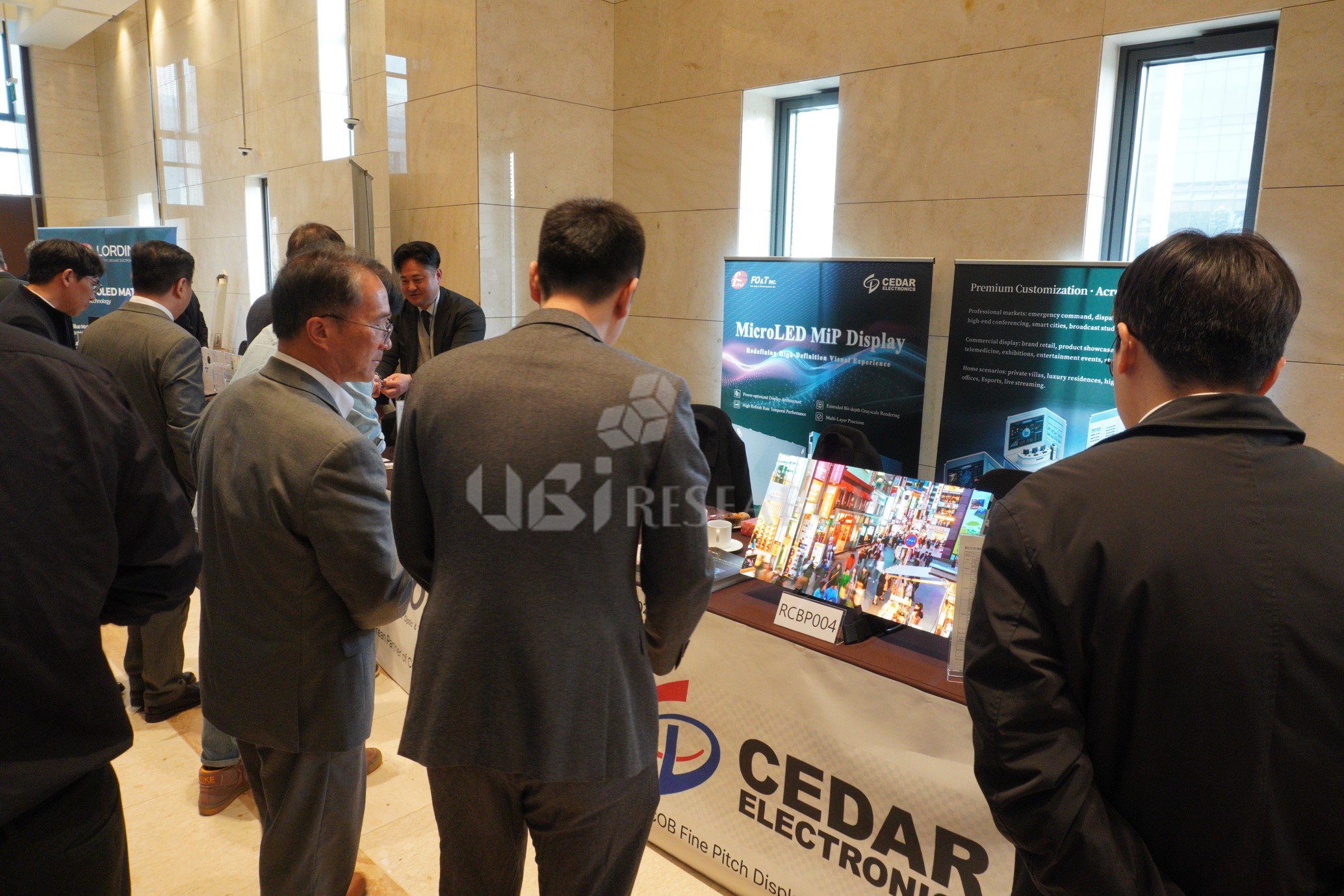
Cedar Electronics demonstrating COB-based Micro LED MiP (Micro-LED in Package) ultra-fine pitch display technology at Display Korea 2026. (Source: UBI Research)
In terms of finished products and display technologies, Micro LED and next-generation applications emerged as key themes. Cedar Electronics showcased an ultra-fine pitch display based on COB-type Micro LED MiP (Micro-LED in Package) technology, highlighting solutions targeting commercial displays as well as control room and broadcasting markets, leveraging high brightness and contrast. Its Korean partner, FO&T, served as a key channel for expanding this technology within Korea.
Samsung Display presented Micro LED displays for wearables along with next-generation form factor technologies, outlining its expansion strategy toward automotive and ultra-small display applications.
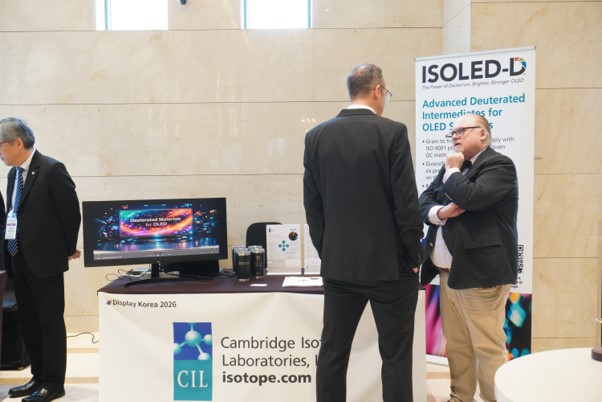
Cambridge Isotope Laboratories (CIL) presenting Deuterium-based materials and global supply capabilities for OLED performance improvement. (Source: UBI Research)
In the materials sector, core chemical technologies that determine OLED performance were emphasized. Cambridge Isotope Laboratories (CIL) introduced its global supply capabilities centered on deuterium-based materials, which can enhance OLED lifetime and efficiency. In particular, the company highlighted its cost competitiveness and environmental sustainability through deuterated compound recovery technologies and production infrastructure.
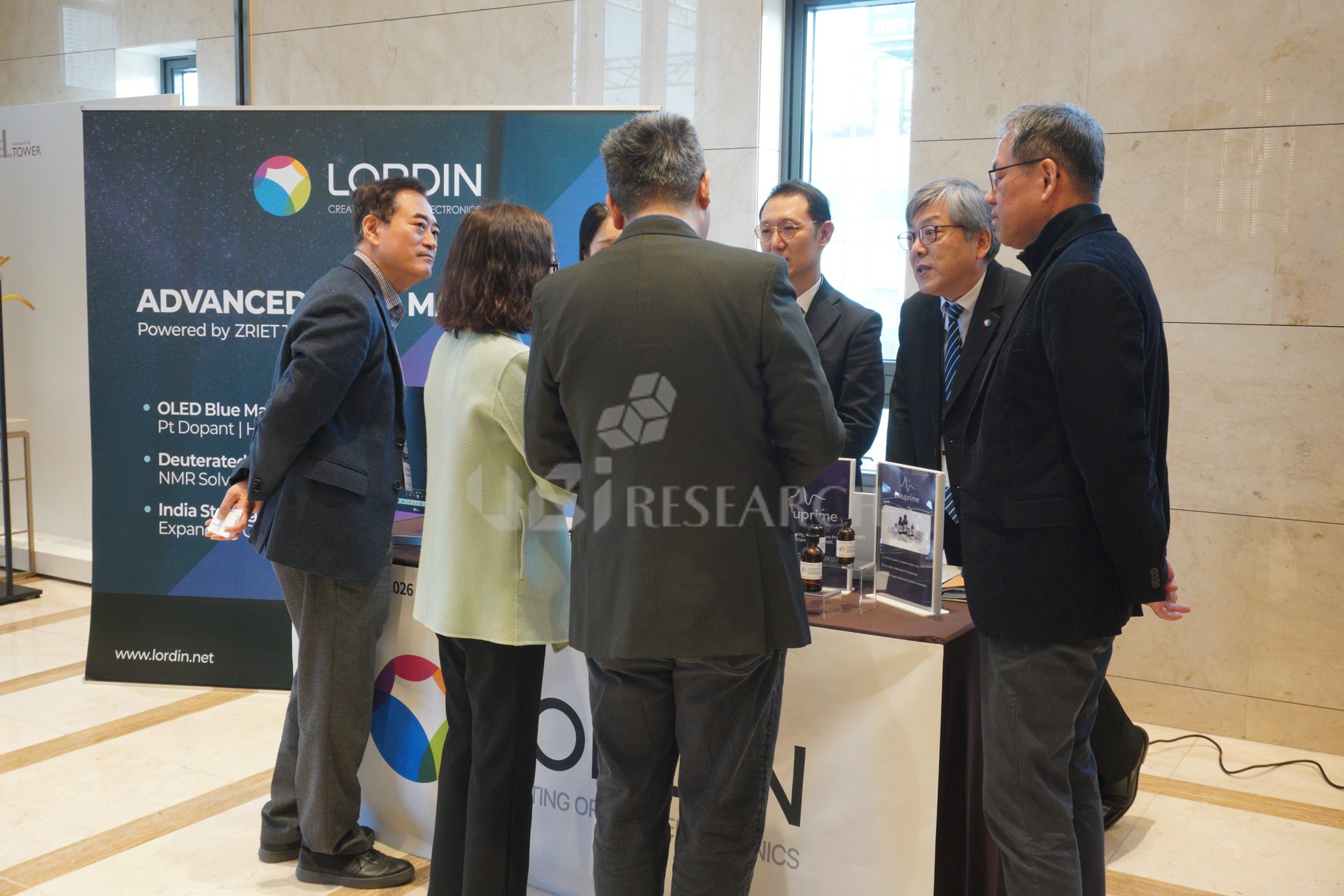
LORDIN outlining strategies to secure next-generation high-efficiency OLED materials, including blue emitting materials, Pt dopants, and Deuterium-based compounds. (Source: UBI Research)
LORDIN also demonstrated its presence in OLED emissive materials, presenting Pt dopants and host materials—including blue emissive materials—alongside deuterium-based compounds. The company outlined its strategy for securing next-generation high-efficiency OLED materials and expanding its global supply chain.
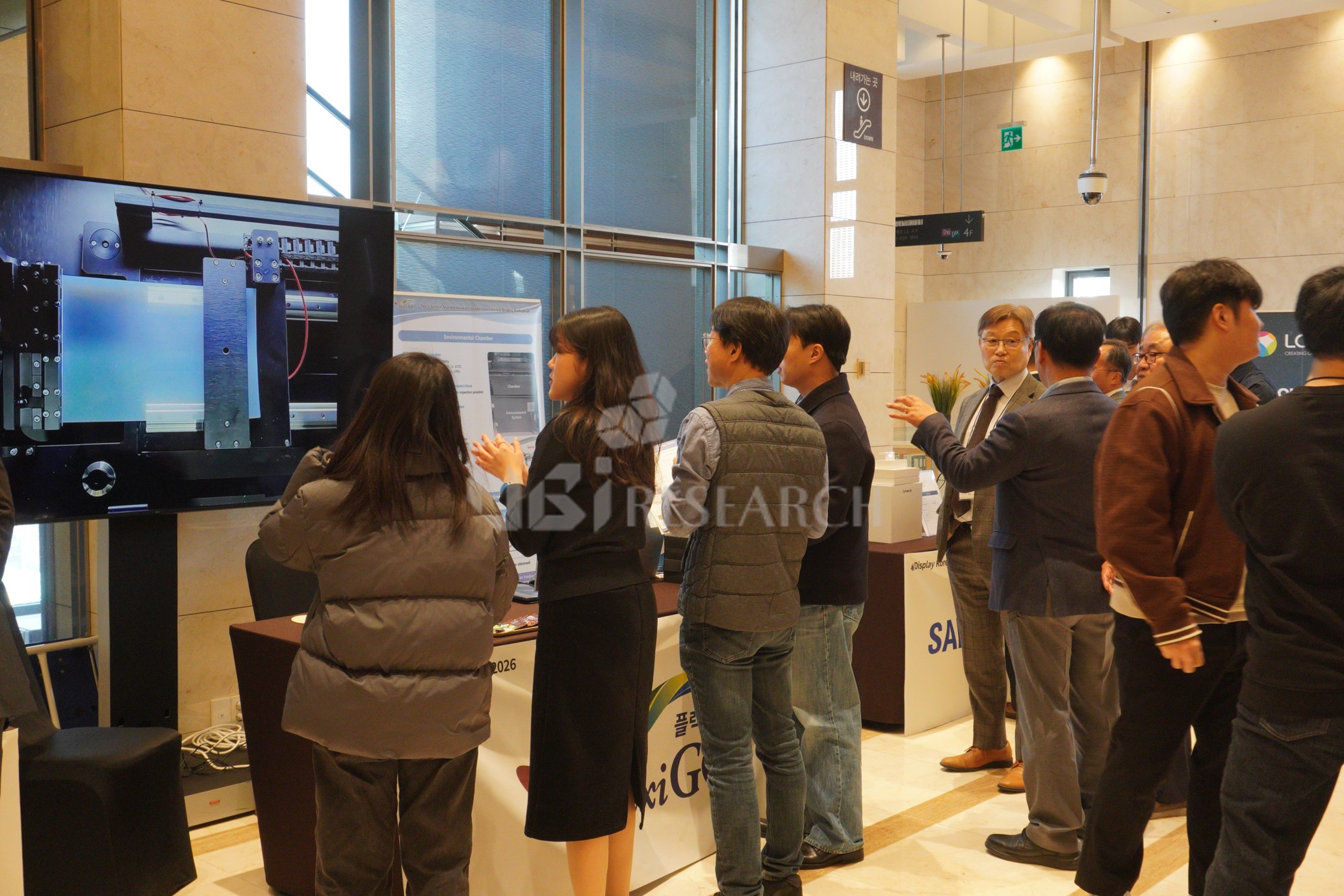
FlexiGO showcasing repetitive rolling and sliding environmental test equipment for reliability evaluation of foldable and rollable displays. (Source: UBI Research)
In the equipment and inspection solution segment, technologies addressing evolving form factors stood out. FlexiGO introduced environmental reliability testing equipment designed for foldable and rollable displays. The system enables repeated rolling and sliding tests under controlled temperature and humidity conditions, offering a solution optimized for durability validation of next-generation displays.
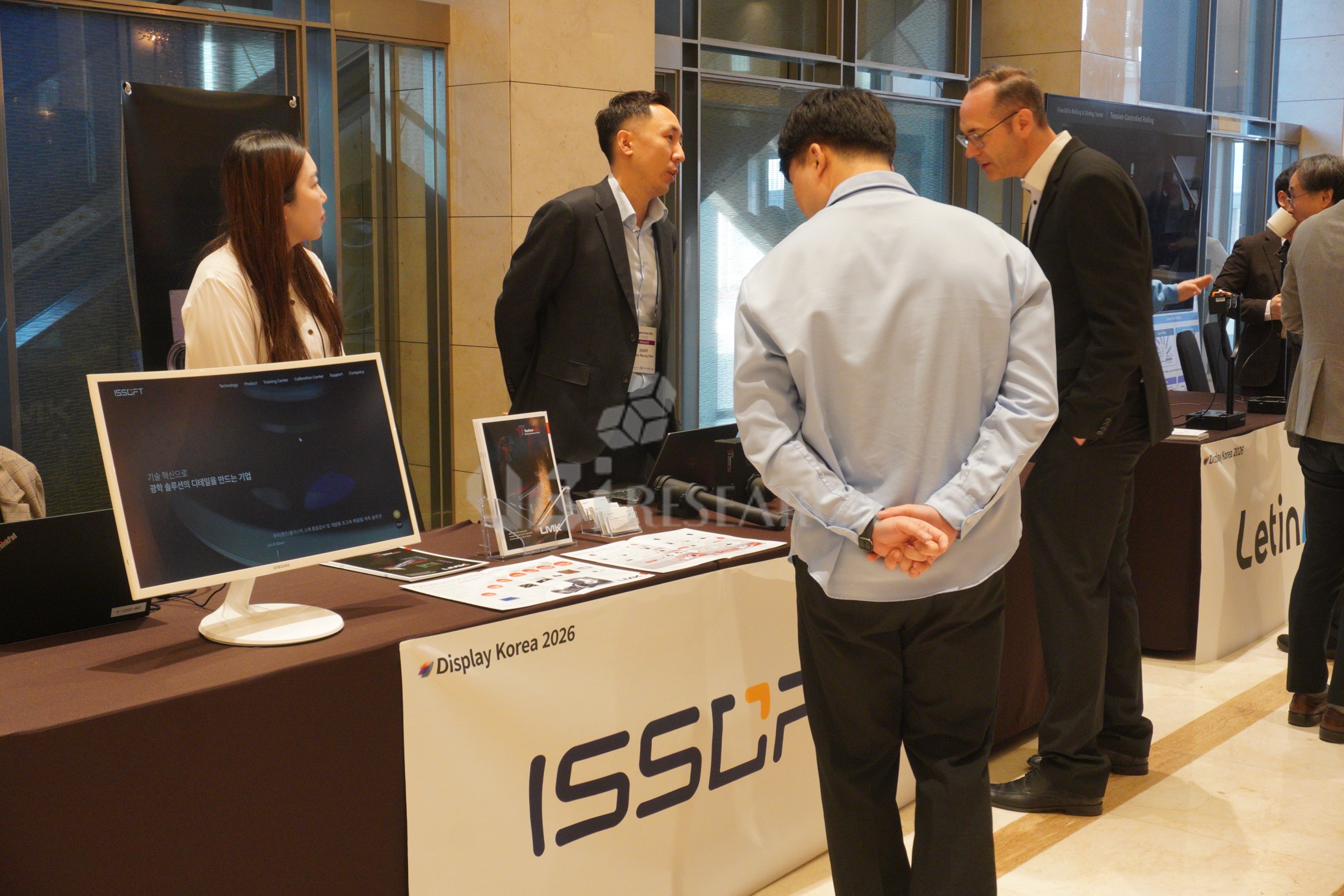
ISSOFT introducing precision measurement technology for analyzing OLED and Micro LED luminance and uniformity based on imaging photometry and colorimetry. (Source: UBI Research)
ISSOFT showcased imaging-based luminance and chromaticity measurement equipment capable of precise analysis of brightness, uniformity, and mura characteristics, emphasizing the growing importance of quality evaluation for OLED and Micro LED displays.
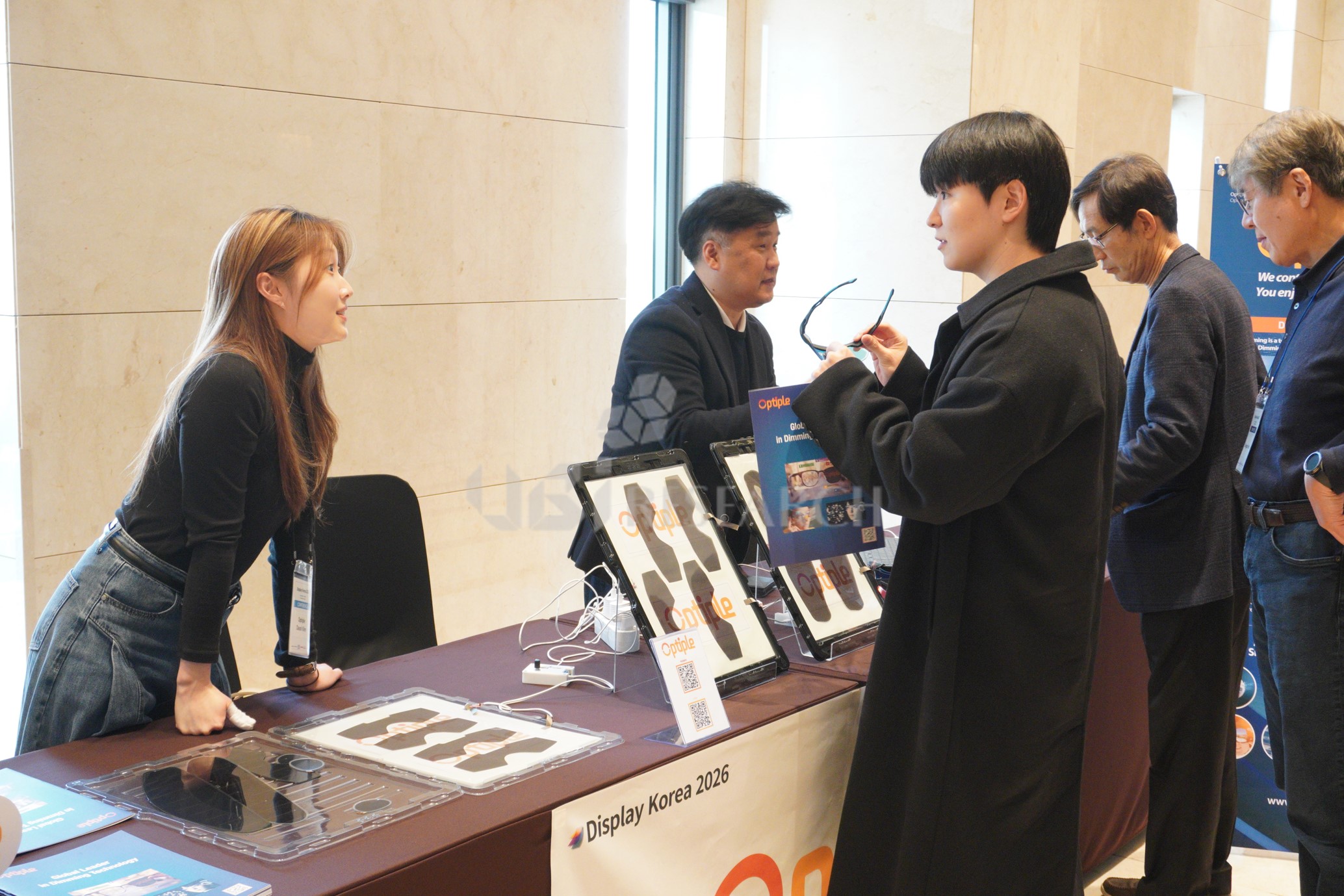
Optiple revealing dimming film technology that actively controls light transmittance based on the external environment to improve the UX of XR devices. (Source: UBI Research)
Optical and user experience enhancement technologies also gained attention. Optiple unveiled a dimming film capable of actively controlling light transmittance based on ambient conditions. This technology improves visibility and reduces glare in XR devices, smart eyewear, and automotive displays, positioning itself as a key enabler of next-generation user experience.
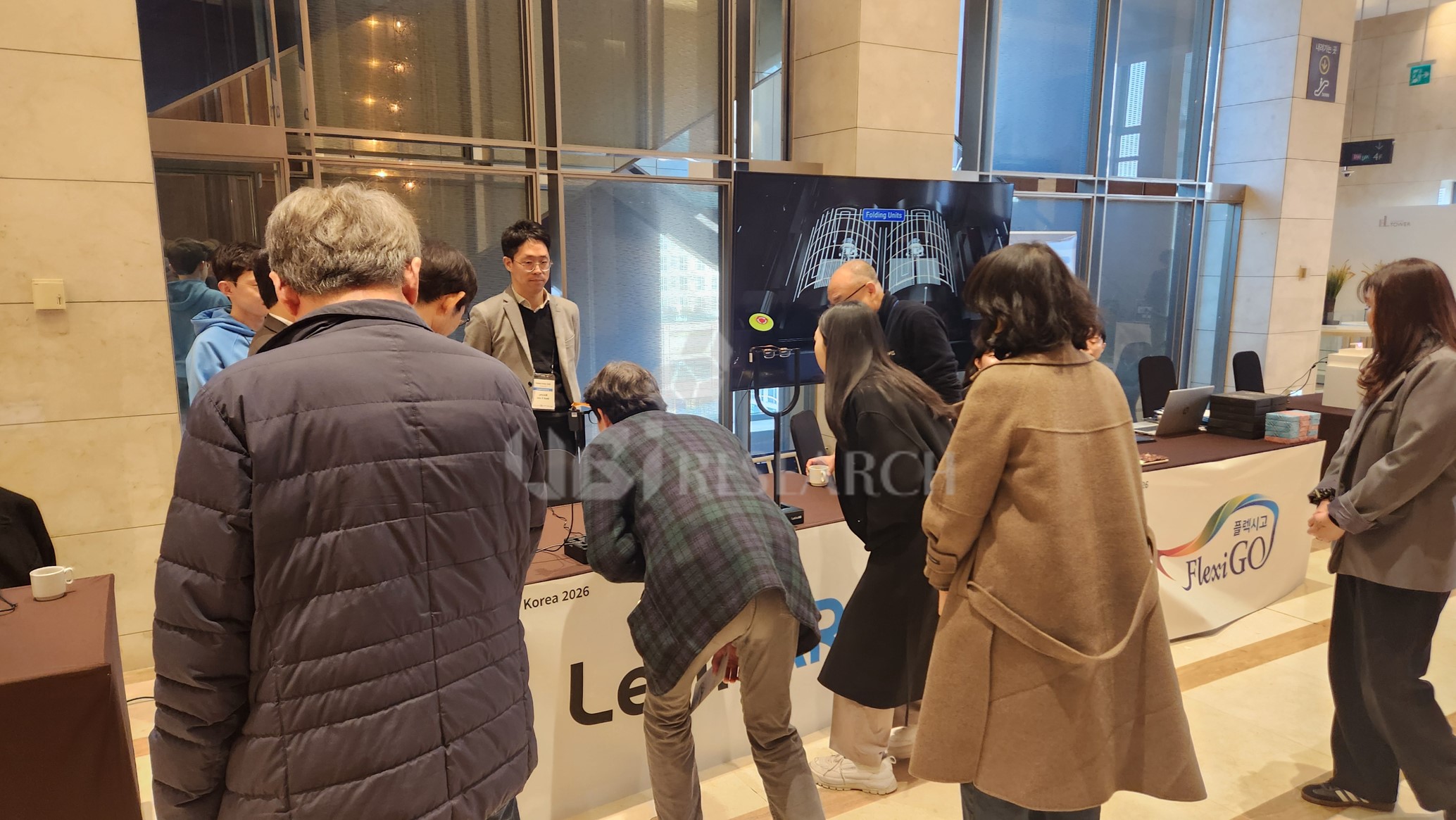
LetinAR showcasing AR glasses equipped with hybrid PinTILT optical technology, which combines the advantages of waveguide and Birdbath methods. (Source: UBI Research)
LetinAR introduced two AR glasses incorporating its proprietary optical technology, presenting a new direction for XR optics. Its PinTILT technology combines the advantages of waveguide and birdbath optics in a hybrid structure, enabling low power consumption, lightweight design, and slim eyewear form factors. The technology is compatible with various display types—including commercial OLEDoS, Micro LED, LCOS, and LCD—enhancing flexibility for future AR glasses commercialization.
Display Korea 2026 ultimately provided a comprehensive view of the technological trends and value chain shaping the next-generation display industry, centered on OLED and Micro LED. Participating companies presented advancements in high-efficiency materials, reliability testing equipment, optical performance enhancement, and applications across XR, wearables, and automotive displays. The event underscored a clear shift in industry competition—from individual panel performance toward the overall technological completeness and application scalability of the entire ecosystem.
Junho Kim, Analyst at UBI Research (alertriot@ubiresearch.com)
 2026 Small OLED Display Annual Report
101 inch Micro-LED Set BOM Cost Analysis For TVs
※ This article is produced by UBIResearchNet.
Unauthorized reproduction or citation without source attribution is prohibited.
When quoting, please clearly indicate the source (UBIResearchNet) and provide a link.