Posts

LG Display's advanced automotive OLED technology representing the smart cockpit trends at CES 2026.

Smart Cockpit Competition Accelerates… Automotive Displays to be Showcased at CES 2026

At CES 2026, it became clear that automotive display technology has emerged as a core competitive factor amid the broader transition of vehicles from mere means of transportation to intelligent living spaces. As the shift toward autonomous driving and Software Defined Vehicles (SDVs) accelerates, the amount of information and content required inside vehicles continues to increase. Accordingly, displays are no longer simple screens but have evolved into central technologies that define interior architecture and user experience. At this year’s exhibition, LG Display, Hyundai Mobis, AUO, and Corning each presented distinct technological approaches that together outlined the future direction of the smart cockpit.

LG Display showcased its “Automotive Dual View OLED” and “Automotive UDC (Under Display Camera)-IR OLED” at CES 2026, earning a CES Innovation Award in the In-Vehicle Entertainment category. Dual View OLED enables different content to be viewed simultaneously by the driver and the front passenger on a single panel, providing driving-related information exclusively to the driver while delivering entertainment content to the passenger. This technology is seen as an effective solution to information interference in increasingly large automotive displays, while significantly enhancing cockpit design flexibility. The UDC-IR OLED integrates an infrared camera beneath the display to support driver monitoring systems (DMS) without compromising screen continuity or image quality. Together, OLED’s inherent advantages in contrast and color reproduction, combined with advanced sensor integration, demonstrate a clear direction toward strengthening both in-vehicle entertainment and safety functions.

LG Display's CES 2026 Innovation Award-winning automotive Dual View OLED and UDC-IR OLED technology (Source: LG Display)

LG Display’s CES 2026 Innovation Award-winning automotive Dual View OLED and UDC-IR OLED technology (Source: LG Display)

Hyundai Mobis took center stage at CES 2026 after winning a CES Innovation Award for its holographic windshield display (HWD), integrated into its cockpit integration solution “M.BiCS 7.0.” Developed in collaboration with German optics company ZEISS, the HWD is the world’s first technology to apply a holographic film to the entire windshield, enabling the front glass to function as a large-scale transparent display. While conventional HUD systems face limitations in size, thermal management, and design due to their reflective optical architectures, holographic displays leverage diffractive optics to precisely control light paths, allowing the system to be realized with a compact optical engine of approximately 1.2 liters. In addition, the holographic film maintains a high transparency of over 95%, minimizing visual obstruction while driving, and supports customized eyebox designs that enable different information to be presented independently to the driver and front passenger. This technology is regarded as an effective solution for managing the rapidly increasing information density of the autonomous driving era, while simultaneously maximizing cockpit integration and design coherence.

Demonstration of Hyundai Mobis's CES 2026 Innovation Award-winning Holographic Windshield Display (HWD) (Source: Hyundai Mobis)

Demonstration of Hyundai Mobis’s CES 2026 Innovation Award-winning Holographic Windshield Display (HWD) (Source: Hyundai Mobis)

At CES 2026, AUO officially launched its new subsidiary, AUO Mobility Solutions Corporation (AMSC), declaring its transition beyond displays toward becoming a system-integrated smart cockpit solution provider. AMSC was established through the integration of AUO’s mobility solutions business with the climate control systems and HMI design expertise of Germany-based BHTC GmbH. At the exhibition, AMSC unveiled next-generation smart cockpit solutions that integrate immersive display experiences, intelligent sensing, and scalable computing platforms. By delivering visual elements, computing, and connectivity within a unified architecture, the company aims to realize cockpit environments optimized for software-defined vehicles, a strategy widely interpreted as an effort to strengthen both rapid development cycles and mass-production readiness demanded by OEMs.

In the materials segment, Corning drew attention with its advanced anti-reflective surface treatment technology for automotive displays. As large-format in-vehicle displays continue to expand toward pillar-to-pillar configurations, sunlight-induced reflections have emerged as a major challenge affecting visibility. Corning’s solution dramatically reduces surface reflections while enabling deep black performance, simultaneously enhancing image quality and driving safety. The technology offers high compatibility with a wide range of panel types, including OLED and Mini-LED, and is therefore regarded as a key enabler supporting the broader adoption of next-generation large automotive displays.

The technologies unveiled at CES 2026 collectively demonstrate that automotive displays are evolving beyond individual components into core platforms that integrate space, user experience, and safety. From OLED-driven image quality advancements and holographic displays that redefine interior space, to system-integrated smart cockpit strategies and the material innovations that underpin them, each company is pursuing a distinct approach. Yet all are converging toward a shared objective: delivering new user experiences tailored to the era of intelligent mobility.

Changwook Han, Executive Vice President/Analyst at UBI Research (cwhan@ubiresearch.com)

▶2025 Automotive Display Technology and Industry Trends Analysis Report

※ This article is produced by UBIResearchNet.
Unauthorized reproduction or citation without source attribution is prohibited.
When quoting, please clearly indicate the source (UBIResearchNet) and provide a link.
[SID2022] Corning Booth in Display Week

2022 OLED KOREA Conference Day1 (Session highlights)

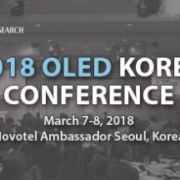
UBI Research, ‘2018 OLED KOREA Conference’ will be held on 7th to 8th of March

OLED Korea Conference, the global OLED conference, will be held on 7th(Wed) to 8th(Thu) of March.

The 4th OLED Korea Conference will be held on the theme of ‘OLED with opportunity & adding value to your business’ at the Novotel Ambassador Hotel in Seoul, Korea for two days. It is expected to provide a platform for various information and exchange of opinions regarding presentation of each theme.

OLED industry, which is continuing to grow at a high rate is expected to surpass the LCD market share in the small and mid-sized market of this year.

According to UBI Research, the OLED research organization, small and medium-sized OLED panel shipments for mobile devices are expected to grow up to 6.3 billion won in this year, which is 53.2% growth compared to last year. On the other side, OLED panel shipments for TV is expected to grow up to about 2.4 million won which is 47.2% growth compared to last year.

In this conference, there will be presentations on the topic; ▲ View from Panel Makers about OLED Market ▲ Solution Process Technology, yet to come ▲ New Performance Development from Major SCMs ▲ New Technology Discussions for Next Generation Display or Better Process from global companies such as Microsoft, Boeing, Sony and leading companies such as 3M, Applied Materials, Corning, Cynora and OLED panel company, set company, material/device company, university/research institute as well as domestic and foreign experts of OLED display.

Also, UBI Research, Japan Mizuho Security and French market research institute ‘Yole development’ planned a lecture about the title of “Opinion from Business and Industry Analysts.”

Especially, Yoshihiro Ono, TV business manager from Sony will present about OLED TV launch for the first time in Sony, which was one of the biggest issues in OLED industry of 2017. The title is ‘Designs for BRAVIA OLED TV and Expectations for large screen OLED devices’ and contents are about adoption background, BRAVIA OLED TV development history and different points of OLED TV from other companies.

In the 4th OLED KOREA Conference which will show trends and developments of OLED industry, it is expected that more than 200 major domestic and foreign experts and industry workers will participate. This conference has received much attention as it is planned to provide opportunities for networking and continuous exchanges of relevant information and know-how. For more information, please visit www.oledkoreaconference.com.

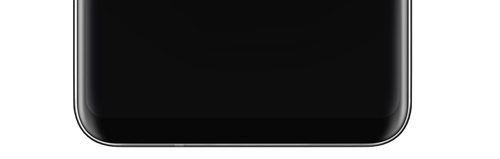
LG Electronics, watching bigger and clearer on ‘OLED FullVision’

<Source: LG Electronics>

LG Electronics will have a strategic premium smartphone equipped with OLED in the 2nd half this year.

LG Electronics will apply OLED FullVision, an 18: 9 aspect-ratio OLED display completely filling the entire screen panel to a strategic premium smartphone in the 2nd half. The size of the display is 6inch wide- larger than 5.7 inches of the previous model LG V20, but the size of the product is rather smaller by reducing the size of the bezel.
Based on the display technology obtained from LG OLED TV, which has been recognized as the world’s best premium TV, LG Electronics plans to provide a different level of visual experience of smartphone; “With OLED technology which has been accumulated over the years, we have completed the differentiated high-class design of the subsequent strategic premium smartphone.”
In the LG Electronics’ strategic premium smartphone, the “bezel bending” technology has been embedded in, which makes the circuit and insulating layers at the bottom of the panel bent backwards and the lower bezel reduced by about 50% compared to the previous model V20. Toughened glass on the outer layer of display is curved all around edge and is smoothened along the contour line of the backside to emphasize a sense of unity on the design,

OLED FullVision has a QHD + (1,440×2,880) resolution and an optimized screen quality algorithm equipped with a color gamut of 148% based on sRGB, default color space for photography and internet, and 109% based on digital cinema color standard DCI-P3.

LG Electronics stated that OLED FullVision should present a deep and vibrant screen with excellent contrast ratio and fast response time will provide a full-fledged screen without afterimages for fast-moving video or games.

LG Electronics also said, “The durability of the display has been upgraded as well, considering the portability of smartphone. OLED Full Vision is stronger than glass substrate displays because it is based on P-OLEDs with pixels placed on plastic substrates,”; “Cutting edge technologies are embedded in such as Corning®’s latest tempered glass ‘Gorilla® Glass 5’ and shatter-resistant technology that prevents the glass powder from scattering when the glass breaks. ” LG added.

Additionally LG Electronics said, “We have applied hardware and software technology to enhance durability. Also encapsulation technology that minimizes oxidation by covering the pixels with a protective film to prevent air contact, and pixel scanning program that identifies heavily used pixels and reduces their power consumption. OLED technology has minimized the burn-in phenomenon that can occur on the display. ”

Joon-ho Cho, president of LG’s MC business director emphasized, “We will provide a high end smartphone with a different level of design and screen quality, integrating the world’s best display technologies proven by LG OLED TV.