Posts

Samsung Galaxy Z TriFold smartphone demonstrating the latest ultra-thin, multi-fold technology at MWC 2026

MWC 2026 Wrap-up: Zero Crease, Ultra-Slim, Trifold… Technological parity and intensifying competition in the foldable phone market

Samsung's Galaxy Z TriFold smartphone featuring Galaxy AI, showcasing the multi-fold display technology

Samsung Electronics showcased the Galaxy Z TriFold at MWC 2026, highlighting next-generation multi-fold form factors and enhanced durability. (Source: Samsung Electronics)

The biggest talking point at MWC 2026, the world’s largest mobile exhibition that just wrapped up in Barcelona, Spain, was undoubtedly the evolution of foldable smartphones. Beyond the first-generation technology of simply folding the screen, the competition for technological supremacy among global manufacturers reached its peak, showcasing ultra-thin thickness surpassing conventional bar-style smartphones, near-perfect crease reduction, and even the tri-fold form factor that folds the screen twice.

The common weapon of the Chinese manufacturers that stood out at this event was the next-generation technology of display supplier BOE.

Honor’s unveiled ‘Magic V6’ achieved the world’s thinnest thickness at 4.0mm when unfolded and 8.75mm when folded. Notably, by applying BOE’s next-generation Q10 light-emitting material and ‘Tandem OLED’ structure to the smartphone, it achieved a high peak brightness of 6,000 nits on the external screen.

OPPO has unveiled its foldable smartphone, the Find N6, expected to launch in 2026. The device is anticipated to bring a 6.62-inch cover display using BOE’s Q10 OLED and an 8.12-inch main display based on Samsung’s E7 OLED. The internal panel is expected to deliver a large, nearly crease-free foldable screen, and it appears to incorporate an improved titanium alloy hinge structure for enhanced crease reduction and durability.

Huawei, after launching the world’s first mass-produced tri-fold phone, the Mate XT, unveiled its successor and more sophisticated hinge technology at this MWC. The Mate XT, featuring a large 10.2-inch Z-fold display, measures a mere 3.6mm thick when fully unfolded.

Samsung Electronics countered with refinement and user experience (UX). Its flagship model, the ‘Galaxy Z Fold7’, maintained its position as the lightest at 215g, offering superior portability even amid aggressive competition from Chinese manufacturers. Samsung displayed the Galaxy Z Tri-fold phone in person and demonstrated its durability by striking a golf ball directly against the screen.

According to UBI Research analysis, the entry barriers for consumers who previously hesitated to purchase foldable phones due to concerns over durability, thickness, and battery life are expected to significantly improve starting with MWC 2026. This year, global foldable smartphone shipments are projected to follow a steep upward trajectory, driven by form factor innovation, and break through double-digit market share in the overall premium smartphone market.

Notably, as thickness shrinks to the 4mm range while high-density silicon-carbon batteries exceeding 6,000mAh and extreme IP69-level water/dust resistance become industry standards, foldable phones have now firmly established themselves as the mainstream in the high-end smartphone market, perfectly replacing traditional bar-type devices. Attention is focused on how Samsung Electronics’ overwhelming software ecosystem and technological sophistication, combined with the fierce hardware innovation competition from Chinese smartphone manufacturers rapidly catching up through display panel self-reliance (e.g., BOE), will shake up the global smartphone market landscape and panel supply chain by 2026.

Changho Noh, Senior Analyst at UBI Research (chnoh@ubiresearch.com)

▶Pre-register for Display Korea 2026

▶ Quarterly Small OLED Display Market Tracker Sample

▶Quarterly Medium & Large OLED Display Market Tracker Sample

※ This article is produced by UBIResearchNet.

Unauthorized reproduction or citation without source attribution is prohibited.

When quoting, please clearly indicate the source (UBIResearchNet) and provide a link.

Display of Visionox's 4th generation pTSF OLED technology on smartphones at SID 2025.

Tsinghua-Visionox Officially Announces Mass Production of 4th-Generation OLED ‘pTSF’… “Beyond Catching Up with Korea, Achieving Technological Independence”

China’s display industry has set a milestone beyond leading global production volume, advancing toward self-reliance in core material technologies. Tsinghua University and Visionox officially announced the successful mass production of Phosphor-assisted Thermally Activated Delayed Fluorescence Sensitized Fluorescence (pTSF) technology—a fourth-generation OLED light-emitting technology—at a jointly hosted technology forum held at Tsinghua University in Beijing on the 7th. They also unveiled achievements utilizing this technology. This announcement is considered a significant event, to announce that next-generation material technology, previously confined to the realm of academic possibility, has been successfully introduced into actual mass production lines and entered the commercialization stage.

The Phosphor-assisted Thermally Activated Delayed Fluorescence Sensitized Fluorescence (pTSF) technology developed by the joint research team is a fourth-generation solution that resolves the ‘Impossible Triangle’ challenge faced by conventional OLEDs—the difficult task of simultaneously achieving high efficiency, long lifetime, and high color purity. This technology operates on the principle of maximizing efficiency and lifespan by establishing a unique triple energy transfer system composed of a TADF host, a phosphorescent sensitizer, and a fluorescent emitter. It captures internal energy without loss and rapidly transfers it to the emitter.

Particularly noteworthy at this forum was the reconfirmed mass production performance data for the Green Phosphor-assisted Thermally Activated Delayed Fluorescence Sensitized Fluorescence (pTSF) device. This device garnered significant academic attention at ‘SID 2025’, the world’s largest display conference, held last May.

Visionox's low-power 'Product A' (left) and ultra-high image quality 'Product B' (right) pTSF OLED panels demonstrated at SID 2025 (Source: SID 2025)

Visionox’s low-power ‘Product A’ (left) and ultra-high image quality ‘Product B’ (right) pTSF OLED panels demonstrated at SID 2025 (Source: SID 2025)

Visionox has disclosed the performance of two panel types (Product A, Product B) manufactured on its G6 mass production line. The low-power specialized model ‘Product A’ reduces power consumption by 12% compared to existing phosphorescent OLED products and improves lifetime (LT95) by over 15%. Furthermore, Product B’, an ultra-high-definition specialized model, achieved a color reproduction rate exceeding 99.5% for both DCI-P3 and AdobeRGB color gamuts, demonstrating significant progress in image quality. This was achieved by applying the research team’s independently developed Exciplex host and optimizing the device structure to enhance energy transfer efficiency, while also reducing the usage of expensive dopant materials by approximately 10%.

The newly unveiled technology is expected to be brought to Honor’s Magic series or Nubia’s latest models. Honor and Nubia are longstanding core partners of Visionox, with a history of being the first to adopt Visionox’s new technologies (such as high refresh rates and UDC) in their flagship lineups. Therefore, it is highly likely they have also secured priority supply for this 4th-generation technology.

Building on the success of mass-producing these green phosphors, Tsinghua University and Visionox have outlined a roadmap to expand the application of Phosphor-assisted Thermally Activated Delayed Fluorescence Sensitized Fluorescence (pTSF) technology into the red and blue phosphor domains. The research team is currently focusing on securing the stability of red MR emitters and blue auxiliary phosphors, which are considered major technical challenges. Through this, they plan to achieve complete independence in material technology across the entire OLED spectrum. The Chinese side views this achievement as a significant turning point for the Chinese display industry, marking its transition from a follower to a technology leader.

Visionox's high-efficiency pTSF OLED device displayed at SID 2025 (Source: Visionox)

Visionox’s high-efficiency pTSF OLED device displayed at SID 2025 (Source: Visionox)

Changho Noh,  Senior Analyst at UBI Research (chnoh@ubiresearch.com)

▶2025 OLED Emitting Materials Report Sample

▶OLED Emitting Material Market Tracker Sample

※ This article is produced by UBIResearchNet.
Unauthorized reproduction or citation without source attribution is prohibited.
When quoting, please clearly indicate the source (UBIResearchNet) and provide a link.

Tianma’s OLED shipments for smartphones were second only to BOE among Chinese makers

TIANMA

TIANMA

It was found that Tianma, a Chinese OLED panel supplier, supplied the second most OLED panels for smartphones after BOE in the first quarter of 2023. In the meantime, among Chinese companies, Visionox has always been in second place after BOE in OLED shipments for smartphones, but it gave way to Tianma for the first time in this first quarter.

Tianma’s major customers include Xiaomi, Vivo, Oppo, Honor, and Lenovo. It is analyzed that one of the reasons for Tianma’s increase in OLED shipments is that it brought some of TCL CSOT’s shipments to Xiaomi.

Thanks to orders from Xiaomi, Tianma’s panel shipments have soared since the fourth quarter of last year. Tianma’s OLED panel shipments for smartphones in the fourth quarter of 2022 increased by about 3 times compared to the previous quarter, and in the first quarter of 2023, OLED panel shipments for smartphones reached 8.5 million units, an increase of 430% compared to the same quarter of the previous year.

If this atmosphere continues, it is analyzed that there is a possibility that Tianma will overtake Visionox and produce the second largest number of OLED panels for smartphones after BOE in China for the first time this year.

▶ China Trend Report Inquiry

[IFA 2022] HONOR (Honor Magic4 Pro, Honor 70)

#ifa2022 #honormagic4pro #honor70

▶ UBI Research website
https://ubiresearch.com/en/

▶If you are curious about the latest news related to OLED?
https://en.olednet.com/

▶Business, display report inquiry
marketing@ubiresearch.com
+82-2-577-4391

Chinese Panel Makers in Crisis! Will the Display Business’s Deficit Increase This Year?

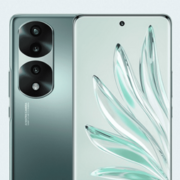
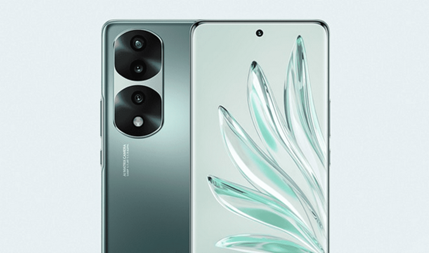
<Honor 70 With Panels Supplied by Visionox>

Chinese panel makers such as Visionox and BOE are expected to face losses due to cost pressures.
The operation rate of Visionox was analyzed to be high. This is because Visionox is exclusively producing 70-80% of Honor, a large Chinese smartphone manufacturer.
However, despite the high operation rate, Visionox’s business status is precarious at best. Through cooperative efforts, Visionox was allocated most of Honor’s panel production quantity, but it is known that Honor has requested additional panel price reduction. According to some sources, Visionox is currently facing a loss of about 200 million yuan per month due to the reduced panel price.
BOE, the largest panel maker in China is also facing trouble. BOE along with Visionox had previously been in charge of panel production for Honor but received almost no allocation of production volume from Honor. Earlier this year, BOE faced tremendous difficulty due to the cancellation of existing iPhone 13 shipments to Apple. In April, BOE’s CEO Gao Wenbao felt a sense of crisis due to pressure on OLED and LCD volume and price and gave direct orders on cost reduction. Currently, BOE’s OLED line operation rate is less than 40% and it is estimated that the OLED business unit may incur a loss of about 10 billion yuan this year.
LCD, which is one of the main businesses of Chinese panel makers, is continuously falling in prices and the supply and demand of panels from smartphone set makers are sluggish. If an appropriate countermeasure is not found, Chinese panel makers will continue to experience a growing deficit in the display business.

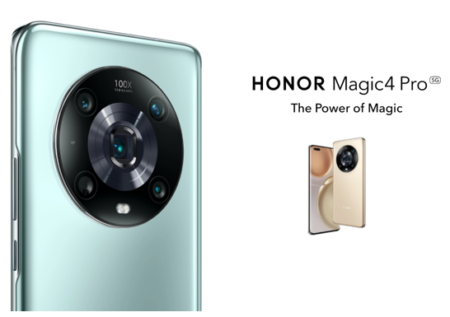
[China Trend Report] Honor Magic4 Series, Panel Supply from BOE and Visionox

According to the ‘China Trend Report’ published by UBI Research, Honor, a Chinese smartphone manufacturer, announced Magic4 and Magic4 Pro at MWC 2022 held on February 28th.

Both products are 6.81 inches in size. Magic4 has a resolution of 1224×2664 and Magic4 Pro has a resolution of 1312×2848. The peak brightness of both products is 1,000nits and the refresh rate is 120Hz. LTPO TFT and 1,920Hz high frequency PWM dimming technology are applied.

The display panel is supplied by Chinese panel makers BOE and Visionox. The DDIC is supplied by Taiwanese IC chip maker Novatek. BOE supplies panels of three models: Magic4, Magic4 Pro, and Magic4 Pro plus. Visionox supplies panels of two models, Magic4 and Magic4 Pro.

Detailed mass production line and quantity estimation of Honor Magic4 series are included in ‘China Trend Report’. The ‘China Trend Report’ provides various information on the Chinese display industry trends, such as the latest issues of major Chinese display companies, line trends and shipments, equipment disclosures by company, and introduction of new products in China. The report can be inquired on the UBI Research website.