Posts

LG Display's advanced automotive OLED technology representing the smart cockpit trends at CES 2026.

Smart Cockpit Competition Accelerates… Automotive Displays to be Showcased at CES 2026

At CES 2026, it became clear that automotive display technology has emerged as a core competitive factor amid the broader transition of vehicles from mere means of transportation to intelligent living spaces. As the shift toward autonomous driving and Software Defined Vehicles (SDVs) accelerates, the amount of information and content required inside vehicles continues to increase. Accordingly, displays are no longer simple screens but have evolved into central technologies that define interior architecture and user experience. At this year’s exhibition, LG Display, Hyundai Mobis, AUO, and Corning each presented distinct technological approaches that together outlined the future direction of the smart cockpit.

LG Display showcased its “Automotive Dual View OLED” and “Automotive UDC (Under Display Camera)-IR OLED” at CES 2026, earning a CES Innovation Award in the In-Vehicle Entertainment category. Dual View OLED enables different content to be viewed simultaneously by the driver and the front passenger on a single panel, providing driving-related information exclusively to the driver while delivering entertainment content to the passenger. This technology is seen as an effective solution to information interference in increasingly large automotive displays, while significantly enhancing cockpit design flexibility. The UDC-IR OLED integrates an infrared camera beneath the display to support driver monitoring systems (DMS) without compromising screen continuity or image quality. Together, OLED’s inherent advantages in contrast and color reproduction, combined with advanced sensor integration, demonstrate a clear direction toward strengthening both in-vehicle entertainment and safety functions.

LG Display's CES 2026 Innovation Award-winning automotive Dual View OLED and UDC-IR OLED technology (Source: LG Display)

LG Display’s CES 2026 Innovation Award-winning automotive Dual View OLED and UDC-IR OLED technology (Source: LG Display)

Hyundai Mobis took center stage at CES 2026 after winning a CES Innovation Award for its holographic windshield display (HWD), integrated into its cockpit integration solution “M.BiCS 7.0.” Developed in collaboration with German optics company ZEISS, the HWD is the world’s first technology to apply a holographic film to the entire windshield, enabling the front glass to function as a large-scale transparent display. While conventional HUD systems face limitations in size, thermal management, and design due to their reflective optical architectures, holographic displays leverage diffractive optics to precisely control light paths, allowing the system to be realized with a compact optical engine of approximately 1.2 liters. In addition, the holographic film maintains a high transparency of over 95%, minimizing visual obstruction while driving, and supports customized eyebox designs that enable different information to be presented independently to the driver and front passenger. This technology is regarded as an effective solution for managing the rapidly increasing information density of the autonomous driving era, while simultaneously maximizing cockpit integration and design coherence.

Demonstration of Hyundai Mobis's CES 2026 Innovation Award-winning Holographic Windshield Display (HWD) (Source: Hyundai Mobis)

Demonstration of Hyundai Mobis’s CES 2026 Innovation Award-winning Holographic Windshield Display (HWD) (Source: Hyundai Mobis)

At CES 2026, AUO officially launched its new subsidiary, AUO Mobility Solutions Corporation (AMSC), declaring its transition beyond displays toward becoming a system-integrated smart cockpit solution provider. AMSC was established through the integration of AUO’s mobility solutions business with the climate control systems and HMI design expertise of Germany-based BHTC GmbH. At the exhibition, AMSC unveiled next-generation smart cockpit solutions that integrate immersive display experiences, intelligent sensing, and scalable computing platforms. By delivering visual elements, computing, and connectivity within a unified architecture, the company aims to realize cockpit environments optimized for software-defined vehicles, a strategy widely interpreted as an effort to strengthen both rapid development cycles and mass-production readiness demanded by OEMs.

In the materials segment, Corning drew attention with its advanced anti-reflective surface treatment technology for automotive displays. As large-format in-vehicle displays continue to expand toward pillar-to-pillar configurations, sunlight-induced reflections have emerged as a major challenge affecting visibility. Corning’s solution dramatically reduces surface reflections while enabling deep black performance, simultaneously enhancing image quality and driving safety. The technology offers high compatibility with a wide range of panel types, including OLED and Mini-LED, and is therefore regarded as a key enabler supporting the broader adoption of next-generation large automotive displays.

The technologies unveiled at CES 2026 collectively demonstrate that automotive displays are evolving beyond individual components into core platforms that integrate space, user experience, and safety. From OLED-driven image quality advancements and holographic displays that redefine interior space, to system-integrated smart cockpit strategies and the material innovations that underpin them, each company is pursuing a distinct approach. Yet all are converging toward a shared objective: delivering new user experiences tailored to the era of intelligent mobility.

Changwook Han, Executive Vice President/Analyst at UBI Research (cwhan@ubiresearch.com)

▶2025 Automotive Display Technology and Industry Trends Analysis Report

※ This article is produced by UBIResearchNet.
Unauthorized reproduction or citation without source attribution is prohibited.
When quoting, please clearly indicate the source (UBIResearchNet) and provide a link.

Hyundai Mobis rollable OLED display technology for Genesis GV90

The GV90’s Vehicle HMI Evolves with Rollable OLED

The luxury car market is emerging as a new stage for display innovation. Rollable OLED displays are gaining attention as a key technology for achieving both minimalism and cutting-edge sensibilities in vehicle interiors, and major manufacturers such as Hyundai Mobis and Forvia are competing to apply this technology to luxury vehicles.

In China, this technology has already become a reality. Hongqi’s ultra-luxury sedan, the Guoya (aka Hongqi L1), features a 14.2-inch rollable OLED display developed by Visionox. This display is designed to be stored within the dashboard and unfolds upward when needed. When off, it is completely hidden, maximizing the sense of integration within the interior. While driving, it displays limited information, but when stationary, it expands to display navigation and entertainment functions full-screen. The Hongqi Guoya is an ultra-luxury sedan priced at approximately 1.4 million to 1.86 million yuan (approximately 250 million won), serving as a Chinese flagship model competing with the Mercedes-Maybach and Bentley Flying Spur. The inclusion of a rollable OLED display in this vehicle goes beyond a simple luxury strategy and is interpreted as an attempt by the Chinese automaker to secure technological leadership in the premium market through advanced display technology.

Similar trends are being detected in Korea. Hyundai Mobis filed a patent (US12422892B2) in 2021 for a “rollable display for vehicles,” which features a structure that allows the OLED panel to be rolled up or unfolded around a rotating roller within the housing. According to the patent, horizontal and vertical supports are arranged on the back of the display panel to prevent panel deformation due to vibration or touch pressure while driving. It also includes a wing-shaped support structure that ensures the entire panel remains flat when unfolded. In other words, it’s not simply a “rollable” technology that simply rolls up, but a structural design that ensures stable visibility and rigidity even in driving conditions.

Rollable OLED display structure for vehicles based on US12422892B2 patent

Rollable OLED Display Architecture (US12422892B2) (Source: Hyundai Mobis)

Hyundai Mobis unveiled an actual rollable OLED prototype based on this patented technology at CES 2024. The product can be expanded up to 30 inches and the screen can be adjusted to 1/3, 2/3, and full modes. When the ignition is turned off, it completely retracts and disappears into the dashboard, and its structure shows the screen only when needed, suggesting the concept of “the most luxurious display when it is invisible.” The installation space is only about 12 cm, allowing for a high degree of freedom in interior design, and it has achieved automotive QHD (2560×1440) picture quality. Hyundai Mobis is preparing for mass production, and Samsung Display and LG Display are known to be competing to supply the panels.

Hyundai Mobis rollable OLED display prototype for vehicles

Hyundai Mobis rollable OLED display prototype for vehicles (Source: Hyundai Mobis)

The Genesis GV90 is being considered as a potential application for this technology. Hyundai Motor Group’s flagship electric SUV, the GV90, is attracting industry attention as a model likely to feature a rollable OLED display. Genesis’s reasons for considering a rollable display are clear. First, it aims to create a minimalist and luxurious interior by displaying digitalized driving information only when needed. Second, it has a functional purpose: the large screen can adjust its viewing area to avoid obstructing the driver’s view while driving. Third, it serves as a technological differentiation strategy to compete with global luxury brands. Being the world’s first “luxury SUV equipped with rollable OLED” could help Genesis narrow the gap with premium electrified models like the Mercedes-Benz EQS SUV and BMW iX.

Industry experts don’t view this trend as a simple design change. UBI Research Executive Vice President Changwook Han analyzed, “The application of rollable OLED to vehicles is not just a simple display innovation, but a technological evolution that will reorganize the paradigm of space design and user interface (UI).” He added, “The transition from large fixed screens to variable displays will emerge as an important option for premium vehicle interiors in the future.”

Changwook Han, Executive Vice President/Analyst at UBI Research (cwhan@ubiresearch.com)

▶2025 Automotive Display Technology and Industry Trends Analysis Report

International Business Conference: 2024 OLED Korea & 2024 eXtended Reality Korea will be held in parallel!

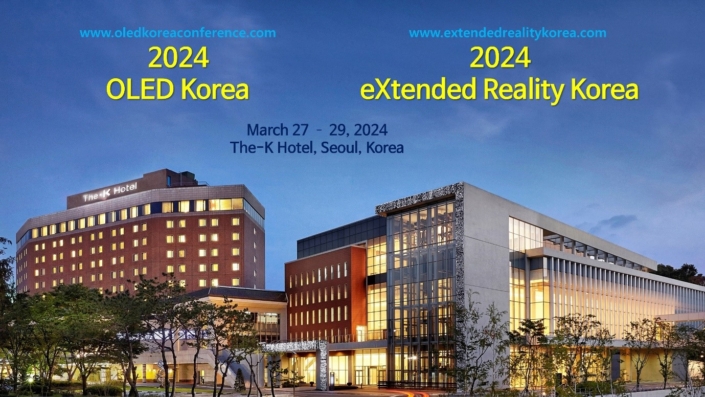
UBI Research, a display specialist research company, will hold the international business conferences OLED Korea and eXtended Reality Korea in parallel at The-K Hotel in Yangjae, Seoul from March 27 to 29, 2024. This event is expected to be an opportunity for people from companies, academia, and research institutes related to the display industry around the world to attend, exchange the best information, and form a global network.

eXtended Reality Korea is the first XR industry-related business conference held by UBI Research and will cover trends and outlook on micro display, XR Hardware/Software, materials, equipment, etc.

This event aims to provide attendees with the opportunity to deeply explore the display and XR areas through a comprehensive program including tutorials, keynote presentations, and panel discussions.

The tutorial on March 27th will feature presentations on the future of XR, micro LED display technology, and key technologies to realize the next generation OLED display.

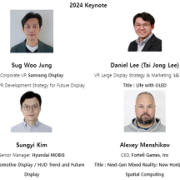
In addition, keynote presentations by ▲UBI Research, ▲Samsung Display, ▲LG Display, ▲Hyundai Mobis, and ▲Fortell Games are scheduled for the conference to be held on March 28th and 29th. Choong-Hoon Yi, CEO of UBI Research, will give a presentation on “OLED and XR industry outlook.” We will present the overall OLED industry, including OLED for IT, and the micro OLED industry that will be applied to MR equipment.

Samsung Display plans to introduce SDC’s roadmap for expanding the AR/VR market based on SDC’s plan to overcome technical obstacles in ultra-high-resolution displays under the title “AR/VR Development Strategy for Future Display.”

Under the theme of “Life with OLED,” LG Display will examine the field of OLED displays applied in daily life and present the continuous evolution and benefits of OLED technology.

Under the theme of “Automotive Display / HUD Trend and Future Display,” Hyundai Mobis presents trends and requirements for automotive displays, from Pillar To Pillar displays to Rollable displays, predicts future automotive displays, and announces development strategies.

Lastly, Fortell Games will discuss the topic of “Next-Gen Mixed Reality: New Horizons for Spatial Computing”, analyzing the latest developments in mixed reality technology and their impact on the future of the gaming industry.

In addition, it will be run by a total of 34 domestic and foreign speakers and programs, including AR/VR development and technology, automotive displays, OLED industry, backplane technology, and MicroLED display development.

Because it is a parallel event, attendees can attend both events even if they register for one event, and registration is possible at a special discount price during the early bird period until February 29th.

Detailed information can be found on the website (https://oledkoreaconference.com/, https://extendedrealitykorea.com/).

Automaker’s fierce competition for pre-occupying OLED for automobiles

In 2017, automakers are fiercely competing to pre-occupy OLED displays and lighting for automobiles. OLED display has good visibility and possible to design a curved surface, so it has advantages of design differentiation. Lighting is not irritating to the eyes and the surface emission is possible so that the frequency of adoption of OLED is expected to increase even more.

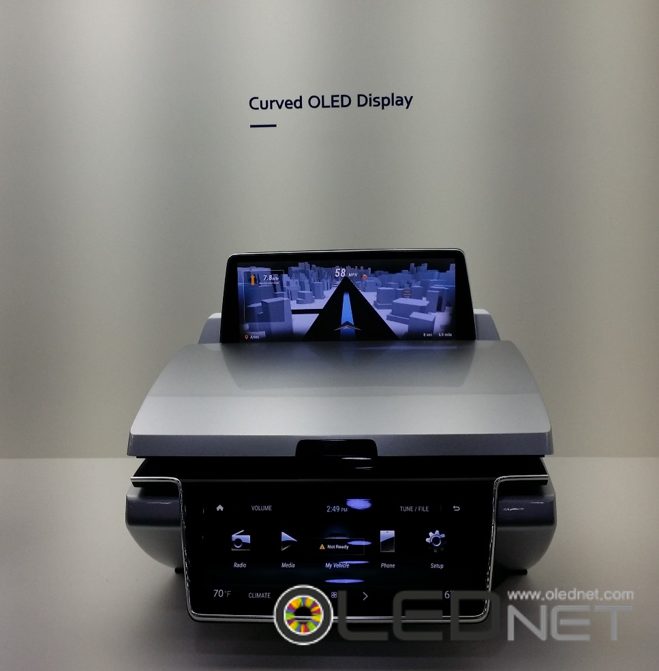
HYUNDAI Mobis actively promoted curved OLED for brand differentiation at 2017 Seoul Motor Show held in Ilsan KINTEX from March 31 to April 9. HYUNDAI Mobis official said “the display has a 12.3-inch flexible OLED with advantages of true black and fast response at all temperatures” also revealed “this product is under development for mass production in 2020 for cluster or CID”.

<Curved OLED Display unveiled by HYUNDAI Mobis>

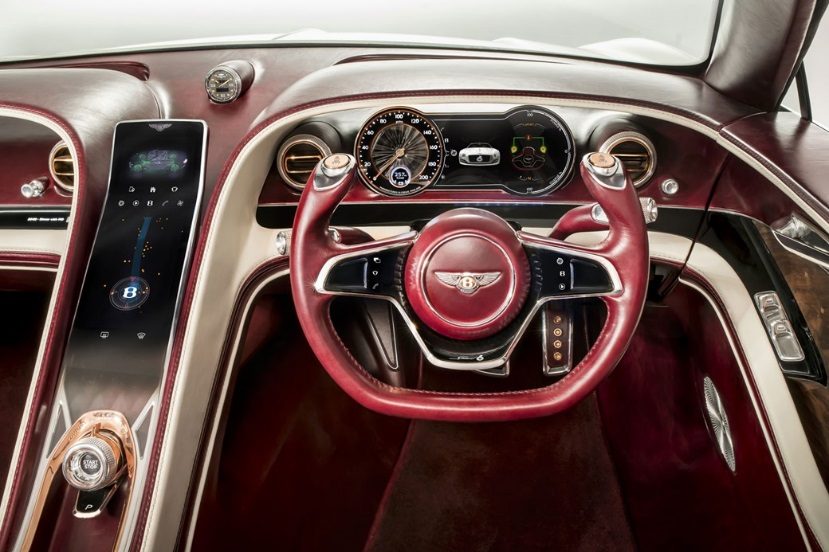
British automaker Bentley also introduced the key features of the ‘EXP 12 Speed 6e’, a pure electric concept car at the Geneva Motor Show in Switzerland on March 9, and announced that it would be equipped with a high-quality OLED display near the CID. Bentley official said “a curved glass OLED screen is applied near CID, it allows the occupants to operate navigation and to control the temperature freely,” in addition, “Access to social media, e-mail and entertainment will be easy”.

<OLED Display used near CID of EXP 12 Speed 6e, Source: Bentleymotos.com>

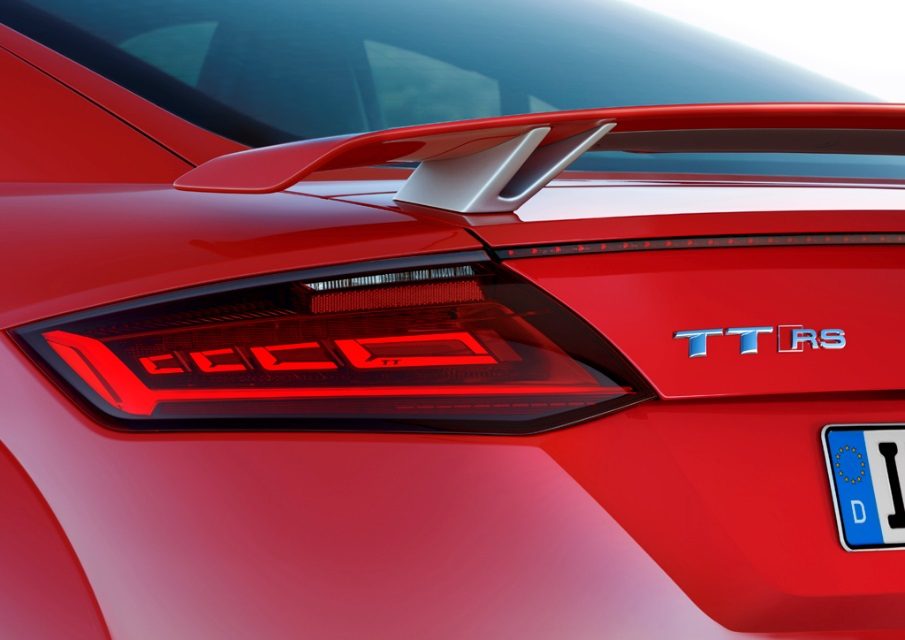
In addition, Audi Japan announced on March 28 that it decided to officially launch a small sports car “TT” applied an OLED tail lamp on some motels from mid of May. This is the first time that Audi has applied OLED tail lamps to mass-produced vehicles, allowed it to be optionally mounted on TT’s top models, the TT RS Coupe and TT RS Roadster. According to Audi Japan corporate, the option price is about 120,000 yen. The tail lamps commercialized by Audi this time are made up of 4 OLED panels and are known to have thicknesses of 1 to 2 mm per panel. Total 4 light-emitting areas are 49cm2 and brightness is 1000cd/m2, and German OSRAM supplies OLED panel.

<OLED rear lamp used for TT, Source: Audi.co.jp>

As such, the number of cars using OLED displays and lighting is increasing. According to “2017 Automotive Display Report – Application & Market Trend Analysis and The Market Forecast” published by UBI Research, market research company, demand for displays for automobiles is projected to grow at a CAGR(compound annual growth rate) of 17% from 2017 to 2022, reaching US $ 25,000 million by 2022. Also, OLED displays for automobiles are expected to grow rapidly from 2018 to 2022, reaching US $ 5 million in 2022, accounting for about 20% of the total automotive display market.

Hyun Jun Jang, senior researcher of UBI Research, mentioned that “OLED has the advantage of providing various convenience to the driver such as infinite contrast ratio and fast response speed above all, it can be applied in various forms inside and outside the car based on the flexibility so that it can be a great merit for premium cars that emphasize design and differentiation.”