Posts

Conceptual illustration of the iPhone Air display market showing Samsung and LG as primary suppliers and BOE as a future contender.

iPhone 18 Air Maintains a Conservative Display Strategy… COE Adoption Delayed

The iPhone 18 Air supply chain led by Samsung and LG Display, with BOE expected to enter after 2028

Samsung and LG will dominate the iPhone 18 Air supply chain as it retains existing panels, while BOE’s entry with COE tech is expected after 2028. (Created by Google Gemini 3)

The iPhone 18 Air, scheduled for release in the second half of 2026, is reportedly being developed with the same OLED panel used in its predecessor, the iPhone 17 Air. Rather than changing the panel itself, Apple is leaning toward a strategy that replaces only part of the module while reusing the existing panel. The fact that inventory of the previous-generation panels still remains is also believed to have influenced this decision.

Specification changes are likewise expected to focus more on usability improvements than on a full overhaul of display specifications. Industry sources suggest that the iPhone 18 Air will feature a dual-camera setup and increased speaker capacity. As a result, the Air model is likely to enhance overall product appeal by optimizing key components, without undergoing major structural changes.

This approach is closely linked to the timeline for adopting COE (Color on Encapsulation) technology. While COE application had previously been discussed for iPhones around 2027, current expectations point to a delay, pushing adoption to 2028 or later. In particular, the iPhone 17 Air series reportedly recorded annual panel shipments only slightly above 10 million units—the lowest volume among the iPhone lineup—making early adoption of new processes and technologies a potential burden. Given the limited volume of the Air series, prioritizing stable supply and cost efficiency over taking early process-transition risks appears to be a natural decision.

The panel supply chain is expected to remain centered on Samsung Display and LG Display, as in previous years. OLED panels for the iPhone 18 Air are likely to be supplied by Samsung Display and LG Display, while BOE is widely seen as having a low likelihood of entering the supply chain at this stage. BOE is preparing to supply Apple OLED panels with COE applied from 2028 onward, and accordingly, expectations are that BOE’s participation in supplying panels for the Air series would also come after 2028 at the earliest.

Changes in the launch strategy are also drawing attention. Starting with the iPhone 18, the “normal” model is expected to move away from the traditional simultaneous fall launch alongside other models. Instead, it is likely to be released together with the iPhone e series in the first half of the following year, with two models launching simultaneously. By reorganizing the lineup on a semiannual basis, Apple appears to be aiming to spread demand more evenly and improve efficiency in production and inventory management across models.

Junho Kim, Analyst at UBI Research (alertriot@ubiresearch.com)

▶Pre-register for Display Korea 2026

▶ China Trends Report Inquiry

※ This article is produced by UBIResearchNet.
Unauthorized reproduction or citation without source attribution is prohibited.
When quoting, please clearly indicate the source (UBIResearchNet) and provide a link.

Bar chart illustrating BOE B11's 72.9% operating ratio, signaling stable mass production for Apple.

BOE B11 Achieves 35 Million iPhone Panel Shipments…72.9% Utilization and Approximately 89% Yield Demonstrate Stable Apple Supply Capability

Graph showing the monthly operating ratio of BOE's B11 OLED line (Source: UBI Research)

BOE B11 proves iPhone supply stability with a 72.9% operating ratio. (Source: UBI Research)

BOE has been gradually expanding its presence as a supplier of OLED panels for Apple’s iPhones. Building on deliveries centered on the standard models from the iPhone 12 through iPhone 16 series, BOE has broadened its coverage to the iPhone 16e, and more recently, a trend has been observed in which its coverage extends even to the iPhone 17 Pro. This suggests that BOE is moving beyond a secondary supplier role limited to specific generations or base models, and is entering a phase where it can play a meaningful role within Apple’s supply allocation strategy.

This trend can also be explained by operating indicators for BOE’s B11 OLED line. B11 is said to have a monthly capacity of 45K and an average annual utilization rate of 72.9%, implying an annual effective input of approximately 390,000 glass substrates. Assuming a Gen-6 OLED line produces 6.1-inch iPhone-class panels with 220 cuts per glass, the annual theoretical output capacity is estimated at roughly 86.6 million panels. In other words, even under conditions where Apple-bound volume fluctuates and product changeovers recur, the line structure appears to retain a degree of operational headroom.

Given that BOE’s iPhone OLED panel shipments in 2025 are around 35 million units, it is more reasonable to take a conservative view that reflects product mix rather than simply back-calculating with a single yield assumption. For example, if LTPS volume is assumed at 32 million units with a 90% yield, and LTPO volume at 3 million units with a 60% yield, the required total process input (in cut terms) comes to approximately 40.56 million cuts. Converting this using 200 cuts per glass results in an annual required input of around 200,000 glass substrates—an amount that can be interpreted as being within B11’s effective input capability.

From a technology mix perspective, BOE currently appears to be driving shipments primarily in segments with a high LTPS share, while keeping LTPO contributions limited. This can be read as an operating strategy that prioritizes mass-production stability and delivery responsiveness, rather than aggressively expanding the share of higher-difficulty processes. At the same time, indications that BOE’s supply scope is extending to the Pro lineup align with a direction that gradually opens the door to entry into higher-spec segments.

In addition, there is a gap between B11’s annual effective input capability (about 390,000 glass substrates) and the conservatively converted iPhone-related required input (about 200,000). It would be premature to label this simply as “idle capacity,” but at a minimum, it suggests a structure that could allow partial parallel operation of additional product mix—such as non-Apple models, samples/pilot runs, or volumes used for line balancing—depending on conditions. In other words, B11 can be viewed more cautiously as having a certain buffer that helps optimize line utilization amid recurring demand swings and product transitions, while still prioritizing Apple-bound supply.

Overall, BOE’s strength lies less in any single technology point and more in its ability to run stable high-volume production with competitive performance in quality control and delivery execution. While sustaining volume primarily through LTPS, BOE has also retained room to expand LTPO adoption step by step, and B11’s operating flexibility can function as a buffer against demand volatility and product changeovers. As a result, BOE can be interpreted as steadily strengthening its position in Apple’s supply chain—from short-term volume supplementation toward a more sustainable long-term supply partner.

Junho Kim, Analyst at UBI Research (alertriot@ubiresearch.com)

▶ China Trends Report Inquiry

※ This article is produced by UBIResearchNet.
Unauthorized reproduction or citation without source attribution is prohibited.
When quoting, please clearly indicate the source (UBIResearchNet) and provide a link.

Global iPhone OLED panel supply forecast for 2026 by Samsung Display, LG Display, and BOE (Source: UBI Research)

2026 iPhone Panel Supply Outlook – Samsung Expands Foldable, LG Targets Bar-Type, BOE Aims to Prove Technology and Expand Supply

iPhone OLED panel supply forecast – Samsung, LG, BOE shipment volumes 2026 (Source: UBI Research)

iPhone OLED panel supply forecast 2026 (K pcs) (Source: UBI Research)

As the launch of the iPhone 17 series approaches, Samsung Display, LG Display, and BOE are accelerating their efforts in iPhone panel production. Samsung Display and LG Display are maintaining steady growth, while China’s BOE is seeking to expand its market share by supplying panels for the Pro models.

Samsung Display shipped 63.8 million units for the iPhone 16 series in 2024, with total iPhone shipments reaching 124 million units. In 2025, shipments for the iPhone 17 series are expected to rise to 78 million units, with total shipments projected at 125 million units. Leveraging stable quality and large-scale production capacity, Samsung is expected to firmly maintain its position as Apple’s largest panel supplier.

LG Display supplied 42 million panels for the iPhone 16 series in 2024, with total shipments reaching 67.42 million units. In 2025, these numbers are expected to increase to 45.6 million units for the iPhone 17 series and 75.1 million units in total. LG Display continues to solidify its standing as the second-largest supplier after Samsung, while also distinguishing itself in the high-end LTPO panel segment.

China’s BOE has secured LTPO production capacity (30K per month) at its Mianyang B11 line and began production of panels for the iPhone 17 Pro in 2025. Although BOE managed to supply panels for the iPhone 16 Normal model in 2024, initial setbacks limited its shipments to just 6.6 million units. Total shipments stood at 43 million units, with 2025 projections ranging between 45–50 million units, including approximately 5 million units for the iPhone 17 Pro.

2026 Outlook – All Three to Remain Core Suppliers

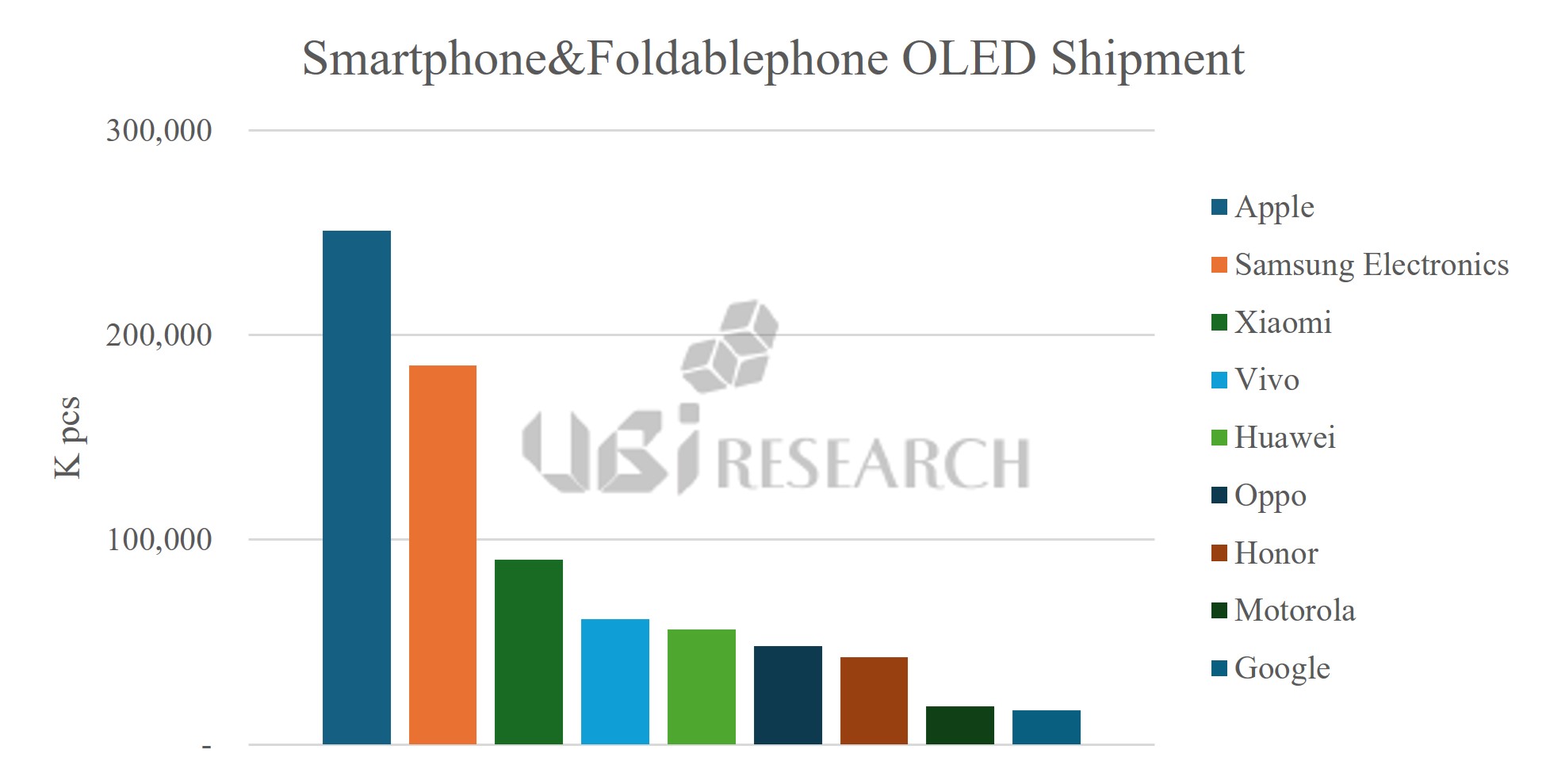
According to UBI Research’s Q3 Display Market Tracker, Samsung Display, LG Display, and BOE are all expected to remain Apple’s core panel suppliers in 2026. According to the 2026 outlook, Samsung Display is expected to supply around 120 million panels and LG Display about 85 million panels, continuing to provide a stable supply for all iPhone series. In particular, Samsung Display is projected to deliver approximately 10 million panels for the foldable iPhone in 2026, while LG Display is likely to secure additional orders for bar-type smartphones. BOE is also forecasted to ship around 55 million units, intensifying competition in the global OLED smartphone panel market.

Changwook Han, Executive Vice President of UBI Research, stated, “While Samsung and LG Display continue to lead the market with stable quality and supply capabilities, BOE is attempting to validate both its technology and reliability through its entry into the Pro models. Going forward, the technological competition and allocation of volumes among the three companies will become a critical factor in the global smartphone panel market.”

He added, “Particularly from 2026, as the launch schedule for the iPhone Normal models shifts to the first half of the following year, the global smartphone panel market is expected to enter a more fluid phase, making the strategic moves of the major suppliers a key focal point for the industry.”

Changwook Han, Executive Vice President/Analyst at UBI Research (cwhan@ubiresearch.com)

▶ Quarterly Small OLED Display Market Tracker Sample

▶Quarterly Medium & Large OLED Display Market Tracker Sample

BOE Clears Qualification for iPhone 17 Pro OLED Panels…Mass Production Expected to Begin in August

BOE iPhone 17

Chinese display maker BOE has reportedly cleared Apple’s qualification (Qual) process for producing OLED panels for the iPhone 17 Pro. Industry insiders had initially predicted that BOE would struggle to obtain approval for the premium model’s panels within this year, but the faster-than-expected qualification suggests the company is strengthening its readiness for Apple’s 2025 lineup.

While BOE has received panel-level qualification, it has yet to pass the module qualification stage. Nevertheless, the company is expected to begin risk production of iPhone 17 Pro panels as early as August. These early batches are believed to be for verification or initial delivery purposes.

With this additional qualification, BOE’s total shipment forecast for iPhone OLED panels in 2025 has been revised upward from 40 million units to approximately 45 million units, reflecting the newly approved volume for the iPhone 17 Pro.

BOE is currently operating its B11 facility in Mianyang, Sichuan Province, as a dedicated OLED production line for iPhones. The company has configured six module lines in total: two lines for iPhone 14 and 16e, two for iPhone 16, and two verification lines for the iPhone 17 Pro. Given the high complexity and stringent quality standards required for the Pro model, securing stable yield rates will be a key challenge moving forward.

Clearing this qualification marks a significant step for BOE toward entering Apple’s premium lineup in earnest. It also adds competitive pressure to the current iPhone OLED panel supply structure, which is largely dominated by Samsung Display and LG Display. However, since BOE has not yet secured module-level qualification, additional verification and technical stabilization will be necessary before full-scale deliveries can begin.

Junho Kim, Analyst at UBI Research (alertriot@ubiresearch.com)

▶ China Market Trend Report Inquiry

BOE Secures Annual Production Capacity of 100 Million iPhone OLED Panels with B11 Line… 350,000 Units per Module Line

BOE's panel shipments for iPhone

BOE’s panel shipments for iPhone

According to UBI Research’s China Industry Trends Report, BOE has established an annual production capacity of up to 100 million OLED panels for iPhones, primarily through its B11 line.

BOE currently operates 26 Apple-dedicated module lines, of which 11 lines are in mass production and 3 lines are being used for development purposes. With a tact time reduced to 5.5 seconds, each line can produce up to 350,000 modules per month, resulting in a total monthly capacity of around 8 million iPhone modules. If the B11 line is fully dedicated to iPhone production, BOE can produce 8–9 million panels per month, or approximately 100 million panels annually, based on a 90% utilization rate and 85% yield.

Despite this significant production capacity, BOE’s actual panel shipments remain well below this level. In the first half of 2025, BOE shipped approximately 21 million iPhone panels, marking a 13% increase compared to 18.6 million units during the same period in the previous year. The company is expected to ship 24 million units in the second half of 2025, with total annual shipments projected at 45 million units. Should BOE succeed in supplying panels for the iPhone 17 series, shipments could increase further. However, as with the iPhone 16, BOE is likely to face difficulties in the early phase of new model production.

Although BOE still lags behind Samsung Display and LG Display in terms of technology, industry analysts note that it is rapidly narrowing the gap.

UBI Research’s Analyst Junho Kim commented, “As BOE’s share of iPhone panel supply continues to grow, this is expected to put increasing pressure on Samsung Display and LG Display during pricing negotiations with Apple. With BOE aggressively catching up, it will be critical to see how the Korean companies maintain their technological lead and strategic partnership with Apple.”

Junho Kim, Analyst at UBI Research (alertriot@ubiresearch.com)

▶ China Industry Trend Report Inquiry

Apple iPhone 18 series, release schedule adjusted by specifications

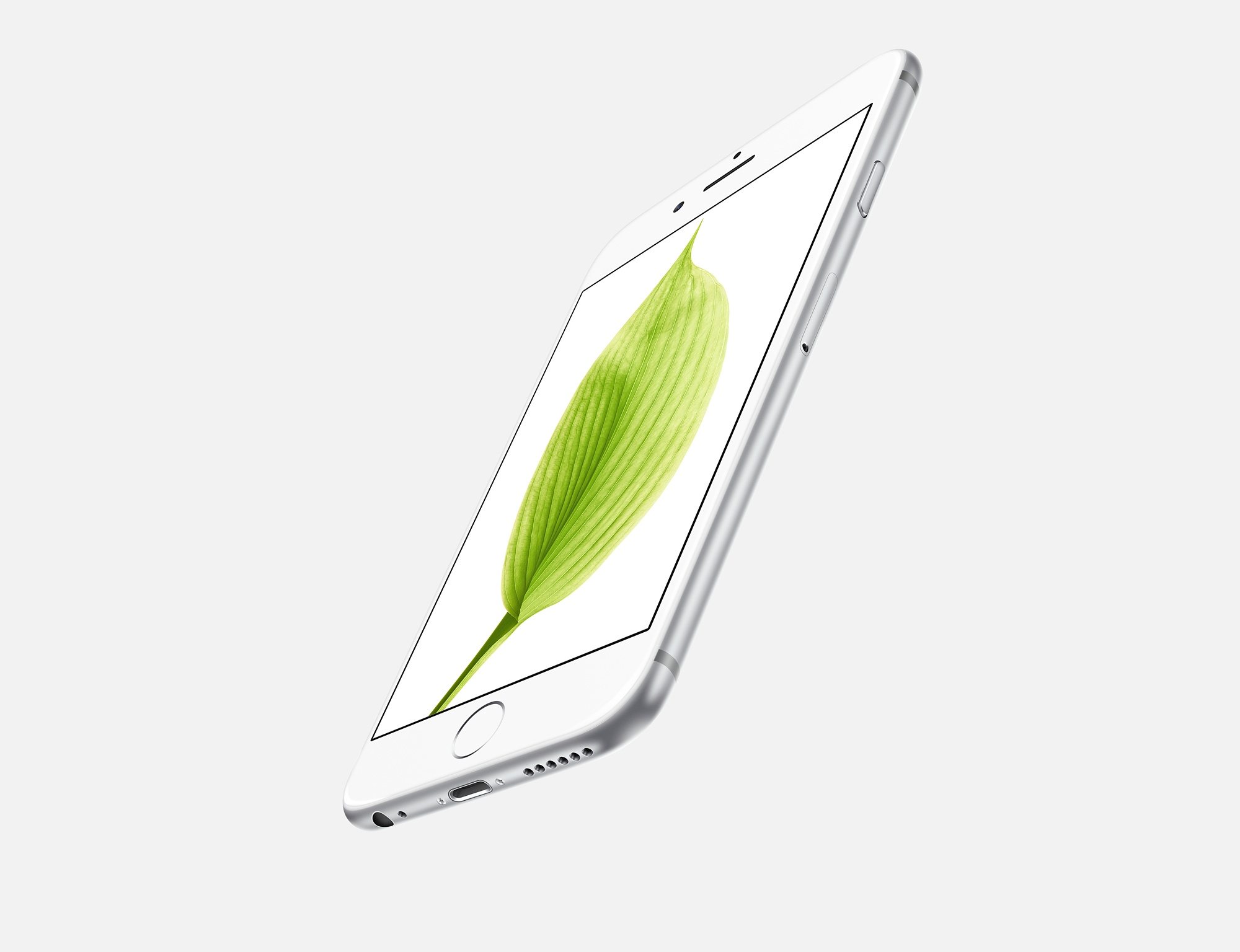
Apple iPhone 16  (Source: Apple)

Apple iPhone 16 (Source: Apple)

It is anticipated that Apple will delay the launch of the standard model in the iPhone 18 series, which is expected to be released in 2026.

Until now, Apple has released four models for each iPhone series: the standard model, Max, Pro, and Pro Max. In the 2025 iPhone 17 series, the Max model is expected to be replaced by a new Air model, and the Air model is projected to be the most expensive among the four.

While four smartphone models are expected to be released through 2025, it is now anticipated that the standard model will not be launched in 2026 and will be postponed to 2027.

In 2026, when Apple is expected to release the iPhone 18 series, the company is also likely to introduce its first foldable phone. Since the launch of the foldable phone could disperse sales volume, this strategic move seems to be under consideration.

If the release of the iPhone 18 standard model is delayed to the first half of 2027, it is expected to launch alongside the successor to the iPhone 16e, which is also anticipated to debut around that time. In this scenario, Apple would release higher-end models—such as the Pro, Air, and foldable phone—in the second half of the year, and lower-priced models in the first half of the following year, thereby securing different sales routes throughout the year.

Should Apple adopt this biannual product release strategy, it may affect the performance of panel suppliers such as Samsung Display, LG Display, and BOE. Historically, the release of the iPhone series in Q3 boosted the earnings of Korean panel makers starting in the third quarter, peaking in Q4. However, if new iPhone models are also released in the first half going forward, the earnings gap between the first and second halves of the year may narrow. On the other hand, if BOE continues to fall short in technology and only supplies panels for the standard model, its strong performance in the second half may shift to the first half instead.

Junho Kim, UBI Research analyst(alertriot@ubiresearch.com)

▶2025 Small OLED Display Annual Report Sample

BOE is reviewing investment in a module line for certification evaluation for Apple iPhone

It was found that BOE is considering investing in the golden line of modules for Apple’s iPhone at the B11 Mianyang plant. The module golden line invested this time is a line for iPhone certification evaluation, and the investment is expected to be confirmed in early 2023. Since evaluation and verification take a lot of time, it is analyzed that the verification line is invested first before the full-scale module line investment. The line is expected to be used for verification when investing in new iPhone 15 or iPhone 16 models.

After investing in module lines for verification and evaluation in 2023, it was found that BOE is preparing additional investment plans for between 14 and 20 Apple-oriented module lines at the B11 Mianyang plant. If BOE’s 20 module lines are completed, the annual volume of iPhone modules that BOE can produce is about 120 million units. However, since Apple’s demand is less than this and there are variables in negotiations with Apple, the investment is likely to proceed gradually.

BOE’s total supply of iPhones to Apple in 2022 is expected to be around 30 million units. BOE is supplying Apple with panels for the iPhone 12, 13, and 14 basic models, and is expected to supply panels for the iPhone 15 basic models to be released in 2023. It is not yet decided whether BOE will supply panels for the 6.7-inch iPhone 15 max model.

▶ China Trend Report Inquiry

[2022 OLED KOREA CONFERENCE] Expected iPhone Shipments to Remain Strong at 249 Million Units in 2022

At UBI Research’s ‘2022 OLED Korea Conference’ held from April 6th to 8th, Yasuo Nakane, senior analyst at Mizuho Securities, presented ‘Consumer Electronics/Flat Panel Display Industry What is the Outlook for Turbulent 2022?’ .

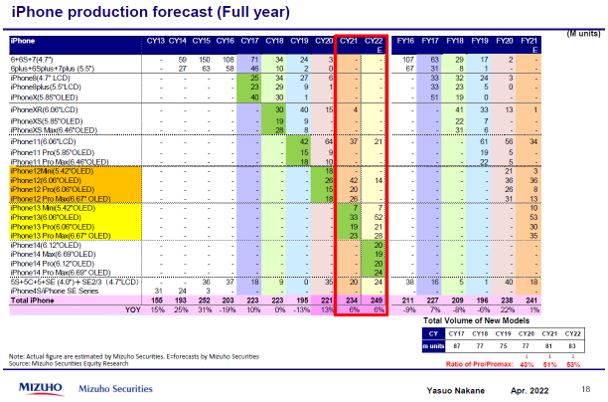
Regarding Apple’s iPhone industry, Senior Vice President Nakane said, “The strength of iPhone continued in 2021. iPhone production in 2021 was 234 million units, which was 3 million less than shipments of 237 million units. Sales were 240 million units which made it so that no inventory was accumulated.” He also announced that “In the first quarter of 2022, 62 million iPhones were produced, a 13% increase compared to the same period last year, and 53 million units are expected to be produced in the second quarter”. He analyzed the outlook of 2022, “Considering the strong first half of 2022 and the impact of new product price hikes in the second half of 2022, annual iPhone production in 2022 is estimated to be 249 million units, a 6% increase from the previous year, of which iPhone 14 is estimated to be 83 million.”

Next, regarding the older iPhone models, he analyzed that “iPhone13 series is expected to continue sales for the time being except for iPhone13 Mini. Among iPhone12 series, only iPhone12 will continue to be sold”. He also announced, “Samsung Display supplies panels for all models of the iPhone series, LG Display supplied LTPO models for the first time, and BOE’s panels will continue to be used in iPhone12.” In addition, he predicted, “Suggestions to apply not only LCD but also OLED to iPhone SE3 would continue and iPhone 11’s camera is expected to be used. Face ID would not be applied.”

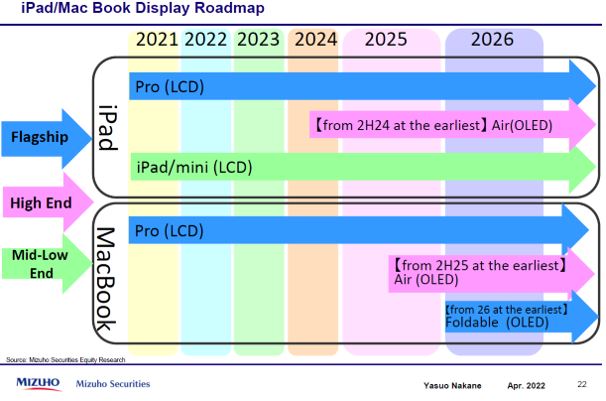
Regarding the timing of OLED application for iPad and MacBook, Nakane said, “It is expected that two models of iPad air with OLED will come out in the second half of 2024 at the earliest and OLED will be applied to MacBook Air in the second half of 2025 at the earliest.” Finally, “the business plan for the foldable model has not been decided, but it seems that they are interested in a PC-size foldable model rather than a smartphone-sized foldable model. The plan is to release them after 2026.” he predicted.

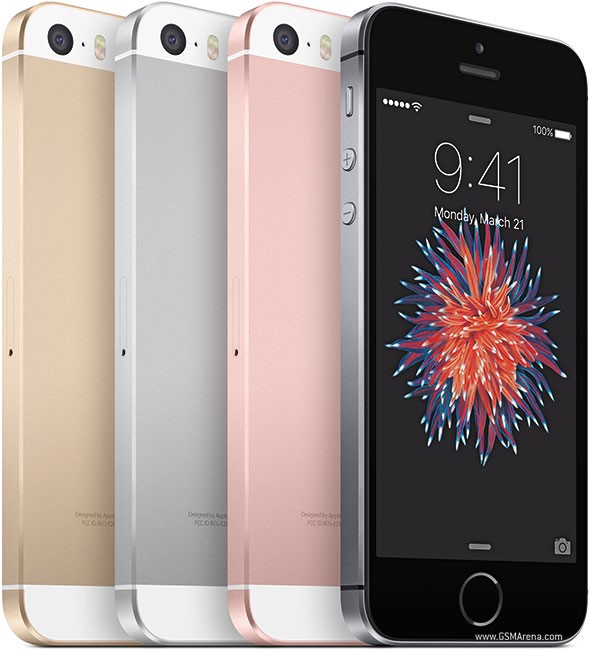
Apple’s last LCD phone, iPhone SE

The iPhone SE, the last product of the LCD smartphone that Apple has opened to the smartphone market, has been released.

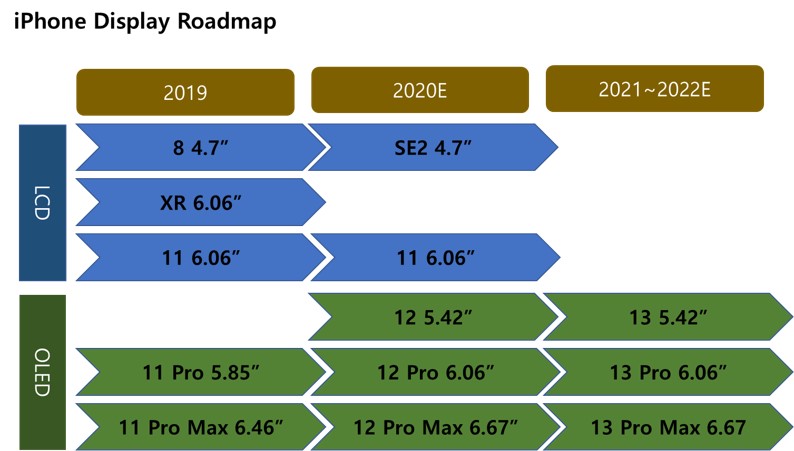
Apple’s 2019 model iPhone 11 had three models, the base model iPhone 11 used a 6.06inch LCD, and the advanced specifications iPhone 11 Pro and Pro Max used 5.85 inch and 6.46inch flexible OLED, respectively.

Samsung Display supplies both 5.85inch and 6.46inch flexible OLEDs, and LG Display has supplied only 6.46inch flexible OLEDs from the fourth quarter of 2019.

This year, Apple releases a four-model iPhone. There are three types of iPhone, SE2 which started selling this month, and 3 iPhone 12 which starts selling in September. Strictly speaking, since there are 2 models of the iPhone 12 Pro, 4 types of iPhones using OLED will be released in the second half of this year.

Apple’s current LCD phones are the iPhone 11 and the newly released SE2. Of the iPhone models released by Apple this year, only the LCD will use the SE2, and the SE2 is expected to be Apple’s last LCD smartphone.

Apple already mentioned that in 2019, all future iPhone displays will be replaced by OLEDs. Therefore, in fact, this is the reason that the SE2 released this time is expected to be the last LCD phone.

Most of the latest smartphones are more than 6 inches, but the iPhone SE2 released this time is a small 4.7-inch model using IPS LCD.

The reason Apple used a small display is believed to be a strategic product to target the mid-priced market of around $ 500. It’s currently $ 549.99 on eBay, but it’s on Amazon for $ 399.

Apple’s expected iPhone strategy is two tracks. First of all, in order to maintain the second largest market share in shipments, it is necessary to match shipments with products with a wide market of $ 500. And the operating profit creation is to fit the expensive iPhone 12 series using flexible OLED.

However, shipments of LCD phones are expected to gradually disappear after 2021, depending on the sales of 5.42 inches, the basic model of iPhone 12, which will be released in the second half of this year.

IPhone shipments may drop sharply in 1Q

The impact of China’s corona virus is expected to reduce iPhone production by 50% year-on-year.

Foxconn’s iPhone plants are located in Zhangzhou and Shenzhen, China, where 90% of the iPhone is manufactured.

Foxconn’s Zhangzhou’s workforce is about 160,000, but only about 10% have returned since the spring holiday, and the Shenzhen plant has not resumed production.

Foxonn plans to increase overall utilization by 80% in March. For the time being, iPhone production is expected to decline.

Foxconn pays 3000 yuan (about $ 400) per person if it returns before March 7th to increase plant utilization.

2017 will be an important year to be able to emphasize the innovation of OLED to consumers

<Lee Woo-keun, a senior researcher at LG Economic Research Institute>

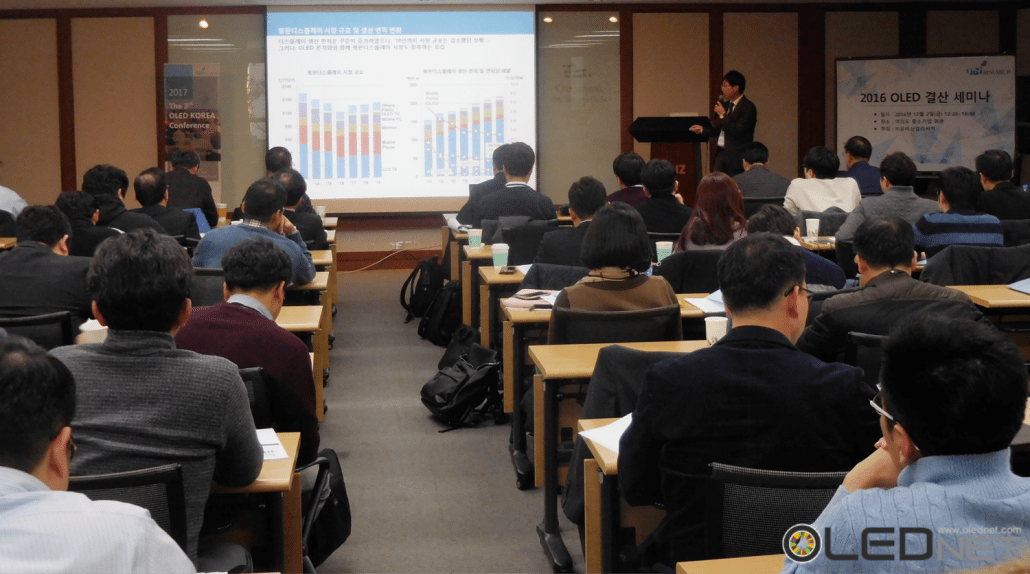
Lee Woo-keun, a senior researcher at LG Economic Research Institute, predicted that the year 2017 will be an important year to be able to emphasize the innovation of OLED to consumers, in the seminar for the 2016 OLED evaluation held at the Yeouido Small & Medium Business Center in Seoul, hosted by UbI Research on last December 2.

He added “LG is leading the OLED TV market in the premium TV market ahead of next year’s CES, but we will have to keep an eye on the impact of Sony’s joining” as one of the notable issues in large-sized OLED panels, and he continued “as there is still a fundamental expectation for Sony’s image quality among existing consumers, we will have to pay attention to what innovative appearance Sony’ OLED TVs will show and how they can appeal to consumers.

Referring to the adoption of OLED panels in Apple’s iPhone8 (tentative name) in the mobile phone market, as a small and medium issue, he said “it is important how to realize OLED display on Apple iphone 8, and how much impact it will have on consumers through this”. He said “if we could not show the innovation distinguishing it from existing LCDs despite adopting OLEDs, consumers’ expectations for OLEDs may be diminished,” emphasizing that it should draw meaningful responses to OLEDs from consumers’ perspective .

It is expected that Apple will launch iPhone applying flexible AMOLED panels in 2017, and Sony is also being confirmed to continuously review its entry into the OLED TV business. In 2017, it is expected that the number of set-makers launching OLED-applied products will increase more. In the situation that consumers are expecting a ‘completely new thing owned only by OLED products’, which is entirely different from existing LCD products, through various media reports and rumors, the year 2017 seems to be an important year to emphasize the innovation of OLED and to promote its merchantability.

AMOLED panel for smart phones, just around the corner of 100million-unit shipment in a quarter

According to UBI Research, the shipment amount of AMOLED panel for smart phones in the 3rd quarter of 2016 was announced to be counted as 96million units.

It is the figure increased for 103% compared with the last quarter, and increased for 148% compared with the same period of last year, and it renewed the quarterly highest shipment amount once again, after the last quarter.

The person in charge of UBI Research mentioned that “The output of flexible AMOLED panels for Galaxy Note 7 was reduced compared to the plan due to the discontinuation of the production of Galaxy Note 7, however, the increase in shipments of AMOLED panels for China and Galaxy s7 series is seemed to play a important role in the increase of shipments in the third quarter.”

Currently, Samsung Display occupies more than 91% of the AMOLED panel market for smart phones, and Chinese panel makers such as BOE, EDO, Tianma, and Visionox are conducting mass production with small quantities.

In addition, Apple is expected to apply the flexible AMOLED panel to some models of the iPhone to be launched in 2017, therefore, future AMOLED panel market for smart phones will be increased continuously.

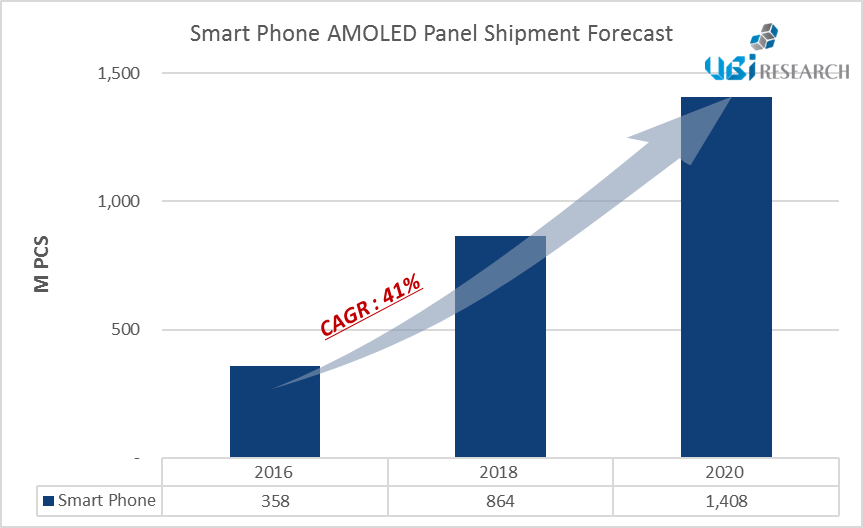
UBI Research expects that the annual shipment amount of AMOLED panel will form the market volume as about 1.4billion units by 2020 with the average annual growth rate of 41%, and flexible AMOLED panel among them will account for about 61%.

Smart Phone AMOLED Panel Shipment Forecast, Source : UBI research

BY HYUNJUN JANG, HANA OH

Apple Opens Development Office in Hyderabad

Source = Apple

Source = Apple

Hyunjoo Kang / jjoo@olednet.com

Apple announced the opening of a new office in Hyderabad that will focus on development of Maps for Apple products. This investment will accelerate Maps development and create up to 4,000 jobs.

“Apple is focused on making the best products and services in the world and we are thrilled to open this new office in Hyderabad which will focus on Maps development,” said Tim Cook. “The talent here in the local area is incredible and we are looking forward to expanding our relationships and introducing more universities and partners to our platforms as we scale our operations.”

This company has been continually updating and adding new features to Maps, including 3D views, the Flyover feature and tools to help customers find convenient places to shop, eat and explore nearby areas. With iOS 9 Apple added Transit, offering a combination of trains, subways, buses and walking, which is already available for more than 300 cities around the world.

The new facility, located on the Waverock campus, will provide a world-class, LEED-certified home for the expanding Maps team.

“We are honored Apple chose Hyderabad as a home for its Maps development office,” said Telangana Chief Minister Kalvakuntla Chandrashekar Rao. “This will create thousands of jobs here and is a testament to our proactive approach, quality infrastructure and the excellent talent base we have in the region.”

“Apple is one of the most innovative companies in the world and we are very proud they chose us to partner with for this important project,” said Anup Jindal, RMSI’s CEO. “We are experts in geospatial data and we will be hiring thousands of people from the local area to support this effort.”

Across India, Apple supports over 640,000 iOS app developer jobs and other positions related to the iOS ecosystem.

“Apple, to Use OLED More than Samsung Elec. from 2021” – UBI

Apple, to Use OLED More than Samsung Elec. from 2021 – UBI

UBI Research’s Yi is Analyzing Market related to Apple’s OLED Selection

Hyunjoo Kang / jjoo@olednet.com

A forecast that Apple will apply more OLED than Samsung Electronics from 2021 has been suggested.

On 13 May, UBI Research hosted OLED Investment Analysis Seminar titled The Effects that Apple will have on Display Industry in Seoul, Korea. At this event, UBI Research’s Choong Hoon Yi estimated future flexible OLED smartphone market share.

According to Yi, Apple is to begin releasing flexible OLED iPhone from 2017, and occupy 8% of the global flexible OLED smartphone market in that year. Following this, Yi analyzed that Apple will continue to increase market share each year to record 32% in 2020, same as Samsung Elec., and exceed Samsung Elec.’s 27% with 37% in 2021.

For 2015 and 2016, with the market share of over 70% of the global flexible OLED smartphone market, Samsung Elec. is dominating the market. However, Apple is expected to release OLED iPhone from next year, and iPhone market share is increasing within the smartphone market. Yi believes that Apple’s OLED usage will exceed that of Samsung Elec.’s.

UBI Research estimates that the smartphone market will grow at CAGR of 6% in 2016-2021, and overall shipment will increase. Of these, Samsung Elec. has been outdistancing Apple and greatly increasing the market share until 2013. However, since 2014, Samsung Elec.’s market share has been gradually decreasing while Apple’s is increasing.

At the seminar, Yi told the attendees that Apple is selling approximately 220 million units of iPhone per year, but the number is expected to increase to 300-million-unit mark and of 30% of that, 1,00-million-unit mark, are estimated to be OLED equipped products. He added that this will grow to 4,00-million-unit mark in 2020, and 80% of that is estimated to be OLED.

With Apple’s section of OLED, the competition for the product supply between global display companies is expected to be fierce. Yi forecast that Samsung Display will supply 60% of the demand, the second supplier 30%, and the rest 10%.

LG Display and Japan Display were likely to be the second and third suppliers. However, Apple’s steadfast partner, Foxconn took over Sharp and became a strong candidate for this position. Hence, 4 companies could end up supplying to Apple. Yi added that one company of JDI and Foxconn could be pushed out.

Panel companies’ mass production establishment investment for product supply for Apple is also being carried out. Samsung Display is expected to execute 45-60K investment in flexible AMOLED line this year. LG Display is carrying out Gen6 7.5K investment in Gumi, with prospect of additional 7.5K order this year.

JDI also announced smartphone AMOLED panel mass production in January 2016 aiming for mass production in 2018. There is a possibility of investment for AMOLED supply for iPhone. Yi also estimated that Apple will conclude OLED emitting materials company selection by this August or September.

Furthermore, Yi explained that a human eye is more sensitive to contrast compared to brightness. He emphasized that OLED, with its contrast ratio of 1,000,000:1 is a more human friendly display than LCD and its 3,000:1.

At the seminar, LG Economic Research Institute’s Senior Consultant Wookeun Lee also analyzed the market with the theme of The Effects that Apple’s OLED Selection will have on Korea and China’s Display Industry.

2016 Apple Watch Shipment to Fall by More than 25%…Watch Market, Below Expectations

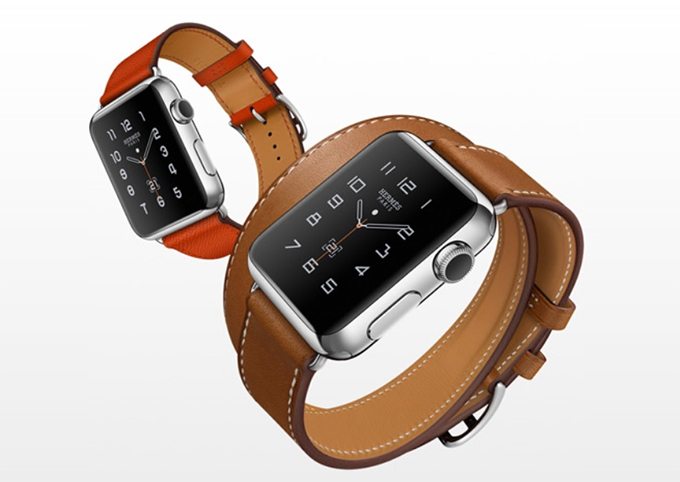
Apple Watch(Source=Apple)

Hyunjoo Kang / Reporter / jjoo@olednet.com

With the trend of smartwatch market’s below expectation growth, some believe that this year’s Apple Watch shipment volume will decrease by 25% or more compared to last year.

On 19 April, international media such as OLED-a reported this citing KGI investment. KGI’s research estimates that 10,600,000 units of Apple Watch were sold in 2015, and forecast that much reduced 7,500,000 units or less will be sold this year. What is worse, last year’s sales volume is the total of 8 months sales, and this year’s forecast volume is for 12 months.

KGI suggested 2 reasons for this decrease.

First, this is because the wearable device market is still an immature one, formed not too long ago.

Second, the product itself still has many flaws. Also, of the wearable applications, there is a lack of killer application that pulls in consumers. Hardware also needs further improvements. Short battery lifetime and iPhone dependent functions are analyzed to be factors preventing the demand increase.

KGI forecasts the mass production of the next Apple Watch will begin in Q3 2016. Some estimates that the next product will be released before that in June this year. However, this product is more of an S model upgrade with few changes to the existing product. KGI estimated that the demand improvement will take place when 2017 product, the new product after this one is released.

Much like the not so optimistic forecast of Apple Watch, the smartwatch market growth is also not meeting the expectations. In 2016 Wearable Smart Device International Forum and Exhibition held in Seoul hosted by Korean Display Industry Association, IDTechEX’s analyst James Hayward explained that smartwatch market is growing at below expectations, and it is estimated that eye wear market, such as AR and VR, will have greater growth rather than watch.

Apple’s WWDC Kicks Off June 13 in San Francisco

WWDC will be held on June 13(Source : Apple)

WWDC will be held on June 13(Source : Apple)


Hyunjoo Kang / Reporter / jjoo@olednet.com
Apple announced that it will hold its 27th annual Worldwide Developers Conference (WWDC), hosting the creative talent behind the world’s most innovative apps, from June 13 through 17 in San Francisco. At WWDC, Apple’s developer community comes together from all corners of the globe to learn about the future of Apple’s four software platforms — iOS, OS X, watchOS and tvOS.

Monday’s kickoff events, including the keynote address, will be held at the Bill Graham Civic Auditorium. The rest of the week’s conference sessions will take place at Moscone West.

“With four innovative operating systems and a new, intuitive programming language powering over 1 billion devices worldwide, there has never been a more exciting time to bring our developer community together,” said Philip Schiller, Apple’s senior vice president of Worldwide Marketing. “WWDC 2016 is going to be a landmark event for developers who are coding in Swift, and building apps and products for iOS, OS X, watchOS and tvOS. We can’t wait for everyone to join us — in San Francisco or through the live stream.”

Developers can apply for tickets via the WWDC website (developer.apple.com/wwdc/register/) now through Friday, April 22 at 10:00 a.m. PDT. Tickets will be issued to attendees through a random selection process, and developers will be notified on the status of their application by Monday, April 25 at 5:00 p.m. PDT. For the second consecutive year, there will be up to 350 WWDC Scholarships available, giving students and STEM organization members from around the world an opportunity to earn a ticket to meet and collaborate with some of the most talented developers of Apple’s ever-growing app ecosystem (developer.apple.com/wwdc/scholarships/). Additionally, this year, we will provide travel assistance to up to 125 scholarship recipients to ensure aspiring developers with financial limitations have an opportunity to participate.

WWDC sessions will be streamed live throughout the week via the website (developer.apple.com/wwdc/live/) and through the WWDC app, giving developers around the world access to the week’s news and events.

Visit the Apple Worldwide Developers Conference 2016 website (developer.apple.com/wwdc/register/) to apply for a ticket, as well as for updates and more information.

Apple revolutionized personal technology with the introduction of the Macintosh in 1984. Today, Apple leads the world in innovation with iPhone, iPad, Mac, Apple Watch and Apple TV. Apple’s four software platforms — iOS, OS X, watchOS and tvOS — provide seamless experiences across all Apple devices and empower people with breakthrough services including the App Store, Apple Music, Apple Pay and iCloud. Apple’s 100,000 employees are dedicated to making the best products on earth, and to leaving the world better than we found it.