
Posts

Progress of BOE’s 8.6-Generation OLED Line (B16) for IT Applications

In March 2024, China’s BOE began construction of B16, an 8.6-generation (2290×2620 mm) OLED production line for IT, in Chengdu, Sichuan Province, with a total investment of RMB 63 billion (approximately KRW 12.4 trillion).

In April 2024, BOE ordered a horizontal evaporator from Sunik Systems, and in May 2025, the B16 line will receive key equipment, including Abaco’s evaporator logistics system and Sunik Systems’ horizontal evaporator.

Unlike Samsung Display’s glass substrate-based hybrid OLED process at its 8.6 generation line, BOE has invested approximately three times the amount of Samsung Display’s investment of approximately KRW 4.1 trillion to introduce a process design that can support both flexible and glass substrates. As a result, it was expected that the B16 line would be able to produce flexible OLED panels for smartphones as well as panels for IT.

However, BOE reviewed the economics of smartphone production on the B16 line and concluded that the 8.6th generation line is less efficient than the existing 6th generation line because it is difficult to secure yields in the high-resolution FMM (Fine Metal Mask) process of 450ppi or higher, and the cost of FMM has also skyrocketed. 

The first mass-produced product of the B16 line is expected to be a panel for a laptop for a brand in China, and development of a 14.8-inch MacBook panel for Apple is also underway. Meanwhile, the 11-inch panel for the iPad is being developed on the B12 (6G) line.

BOE is looking for alternative applications, such as automotive displays, as the B16 line is not efficient enough to produce OLED panels for smartphones.

Chang Ho NOH, UBI Research Analyst(chnoh@ubiresearch.com)

▶ China Trend Report Inquiry

Foldable and slidable OLEDs are replacing LCDs in IT

Foldable OLED technology, which started in the smartphone market, is also sprouting up in the notebook market. Foldable OLED technology has the advantage that the entire front of a smartphone or notebook can be configured as a screen, and since the screen can be folded, it is a product that enhances portability. Therefore, it will become an essential product in the increasingly sophisticated information age.

Notebooks are the optimal application of Foldable OLED because the form factor itself is a foldable product, and since folding phones have existed in the mobile phone market before, foldable phones are also naturally being incorporated into the lives of modern people. Since the foldable book can be expanded to 20 inches, it will evolve into a new product that can overcome the monitor market.

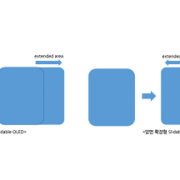
Following on the heels of foldable OLED technology is slidable OLED. Slidable OLED is a way to expand the screen by taking out the OLED inside the device. Like Foldable OLED, Slidable OLED is a technology that can expand the screen, making it more portable. The application of Slidable OLED is a slidable PC that will replace tablet PCs. Instead of a 13-inch tablet PC, a slidable PC that can expand to 17 inches will be a new product that can expand to the notebook market.

Foldable Book and Slidable PC will be a game changer that will break the boundaries of the IT market where LCDs are used.

Originally published in 2024, the report “Foldable & Slidable OLED Technology and Market Outlook” detailed the technologies that are essential for foldable and slidable OLEDs to succeed in the market and provided a forecast of the future market.

▶Foldable & Slidable OLED Technology and Market Outlook Report Sample
OLED shipments for smartphones, China will reverse in 2025

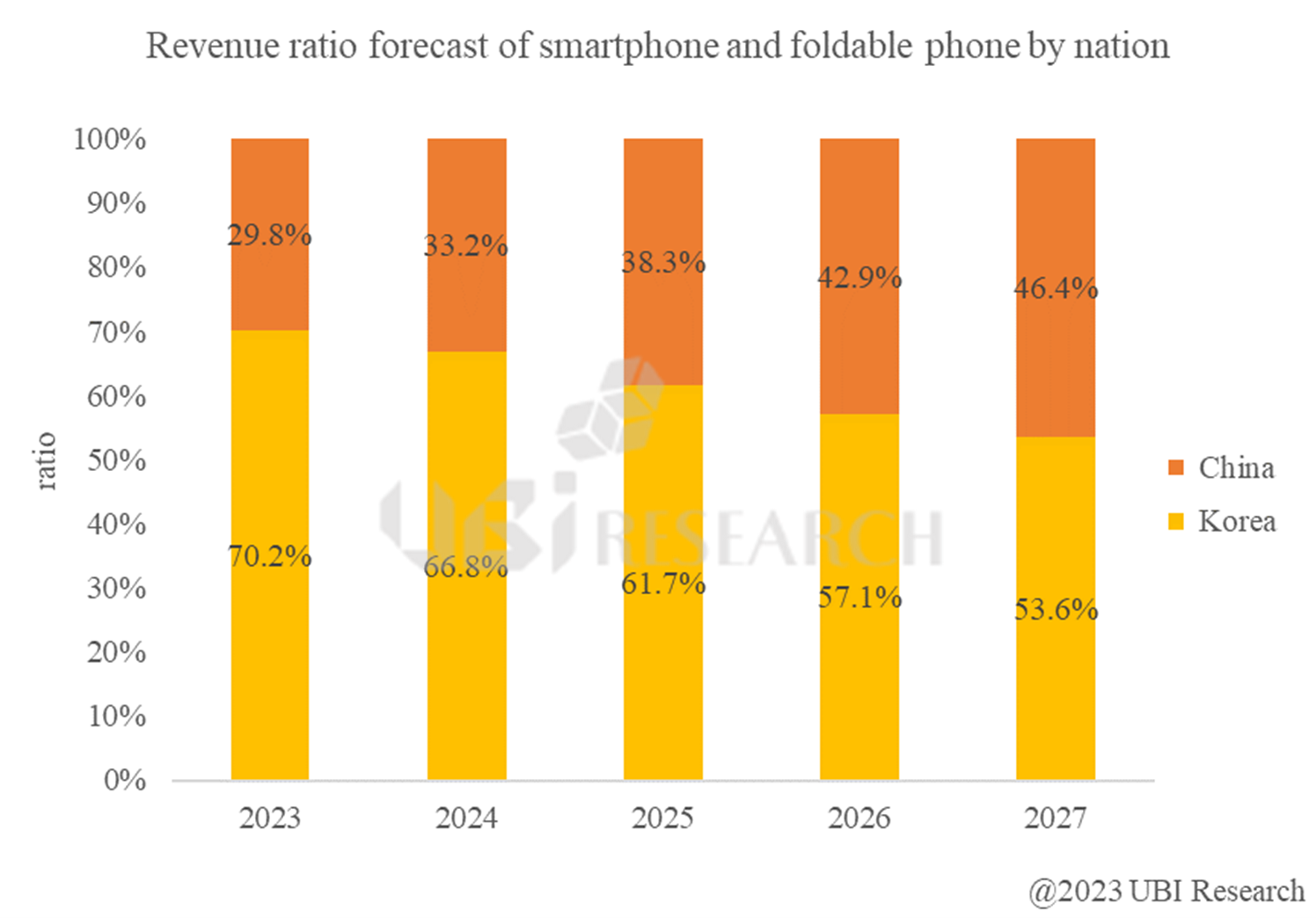
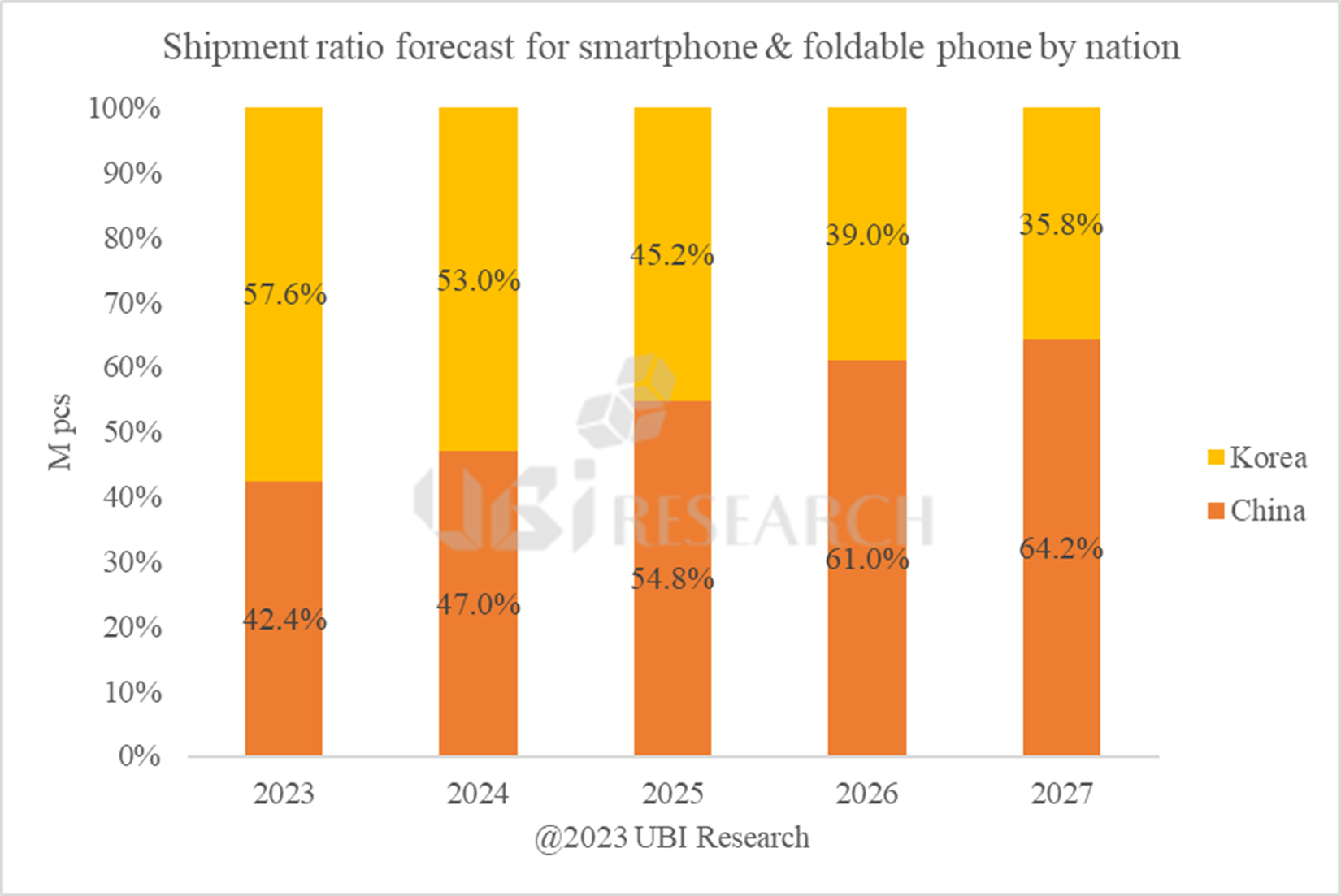
According to the 3rd quarter OLED Market Track published by UBI Research, China’s OLED shipments for smartphones (including foldable phones) are expected to surpass Korea in 2025.

However, since OLEDs made by Chinese companies are cheaper than Korean products, it is expected that Korea will dominate in terms of sales until 2027.

OLEDs produced by Korean display makers are of excellent quality and will maintain their superiority in sales for the time being.

However, Chinese display makers, based on the huge domestic market and government support, are also improving in quality and knocking on the market with cost-effectiveness, so sales are expected to reverse after 2028 as well.

In order for Korea to maintain its display industry, it is necessary to expand the OLED market for IT and TV, which is difficult for Chinese companies to enter the market. In addition, it is time to make a quick transition to the micro display industry for XR, which is emerging as a new market.

Although China’s investment is ahead of the micro display, it is an area where Korean displays can easily establish a foothold because it requires a precision process similar to that of semiconductors.

Display companies were in a situation where they were chasing Korean companies, but now we have to humbly accept that Korean display companies are in a situation where they have to catch up with Chinese companies.

▶Small OLED Display Quarterly Market Track Sample