
Posts

Composite image of Garmin Fenix 8 Pro Micro-LED smartwatch showing front face and side view for outdoor visibility (Source: Garmin)

When will the commercialization competition of Micro-LED smartwatch products become feasible?

The development of Micro-LED-based smartwatches has continued since 2020 through prototype exhibitions, and their high brightness characteristics led to high expectations for commercialization. Previously, companies like KONKA, AUO, Innolux, and Apple had attempted development or commercialization. However, when Apple halted its own development in early 2024, the difficulties of the Micro-LED manufacturing process and high cost issues came to the fore, suggesting that commercialization of Micro-LED smartwatches would require more time.

Assorted Micro-LED smartwatch prototypes from multiple vendors

Assorted Micro-LED smartwatch prototypes from multiple vendors

However, sports smart wearable brand Garmin launched the world’s first Micro-LED smartwatch, the ‘Fenix 8 Pro’, in September this year. It is currently retailing for approximately 13,000 yuan on Chinese online shopping platforms. Garmin’s September launch sent a significant signal to the market, demonstrating that Micro-LED technology has secured commercial viability in the smartwatch sector.  Of course, there are still many areas requiring improvement. Nevertheless, beyond AUO, which is already in mass production, companies like PlayNitride, Innolux, Samsung Display, TCL CSOT, and Tianma are actively entering the market and accelerating efforts to commercialize Micro-LED smartwatches. By late 2023, AUO had already achieved mass production of Micro-LED watch panels. In its subsequent production plans, AUO’s 4.5-generation Micro-LED production line is scheduled to enter mass production this year, with products covering smartwatches and large TVs. At CES 2025, Samsung Display showcased a watch prototype (2.1 inches, 418×540 resolution, 326 ppi) developed over years of Micro-LED technology advancement. Chinese home appliance company KONKA also unveiled its Micro-LED watch, the APHAEA Watch, in 2020. The Chongqing KONKA Optoelectronics Technology Research Institute is enhancing core technologies to reduce manufacturing costs. PlayNitride has positioned smartwatches as a key growth driver this year, exhibiting a 1.39-inch smartwatch panel at Touch Taiwan 2025. This product applies high-efficiency, low-power ‘Tantium’ chip technology to achieve high resolution and 5,000 nits peak brightness, presenting a new solution that simultaneously delivers low power consumption and high image quality for wearable devices. Innolux has also developed 1.1-inch and 1.39-inch Micro-LED displays with integrated touch sensors. Tianma has established a dedicated Micro-LED research institute and is exploring new application areas like smartwatches, in addition to automotive applications.

Garmin Fenix 8 Pro Micro-LED smartwatch (Source: Garmin)

Garmin Fenix 8 Pro Micro-LED smartwatch (Source: Garmin)

Garmin has pioneered Micro-LED in smartwatches, but who will be the next contender for Micro-LED smartwatches? When will commercialization competition become feasible? Significant hurdles remain. Developed watch panels (326~338 PPI) achieve high brightness levels of 4,000~6,000 nits. However, to compete with existing OLED products, Micro-LED chip and manufacturing costs must be reduced, and power consumption characteristics must be improved. Recent announcements from Micro-LED technology companies clearly outline and are actively pursuing solutions to overcome these cost challenges. The mid-to-long-term strategy for Micro-LED smartwatches is to build integrated technological capabilities combining Micro-LED technology with health monitoring sensors. Long-term, as chip miniaturization technology matures and the advantages of sensor integration are fully realized, Micro-LED is expected to break free from its niche market limitations and expand into the broader wearable product market. UBI Research analyzed that the Micro-LED smartwatch market will fully open starting in 2028.

Namdeog Kim, Senior Analyst at UBI Research(ndkim@ubiresearch.com)

▶2025 Micro-LED Display Industry and Technology Trends Report

※ This article is produced by UBIResearchNet.
Unauthorized reproduction or citation without source attribution is prohibited.
When quoting, please clearly indicate the source (UBIResearchNet) and provide a link.
Micro LED technology, when will it play a leading role in next-generation displays?

Over the past few years, we have analyzed trends in micro-LED technology and products. Along with the advancement of mini-LED backlight technology, micro-LED has emerged as the next-generation display technology, and interest is growing in when micro-LED will enter the mainstream market. Major display companies and research institutions in countries such as China, Taiwan, South Korea, the United States, and Europe have been accelerating technology development and product commercialization through years of investment, achieving a significant transition from the laboratory stage to mass production. However, the market share of micro-LED in the overall display market remains low, and the pace of commercialization as a mainstream product is still slow.

Samsung Electronics has been leading the way in next-generation display technology with its giant micro-LED TV, ‘The Wall,’ for several years now. Now, with price competitiveness and production efficiency improvements, the company is at a point where it needs to expand into the consumer market in earnest.

Taiwan’s AUO recently showcased automotive micro-LED displays and mirror displays at CES and Touch Taiwan, focusing on targeting the B2B market. The company aims to begin mass production of its 4.5-generation micro-LED production line this year. PlayNitride is preparing to mass produce panels for smartwatches and AR glasses based on its high-brightness, high-resolution technology.

Chinese companies BOE, TCL CSOT, and Tianma are expanding their demonstrations and investments in micro-LED panels and are leading the way in preparations for mass production. BOE’s subsidiary HC SEMITEK is promoting the construction of a micro-LED Epi wafer manufacturing, chip production, and packaging base in Zhuhai City, and at the end of last year, it announced the start of production of a 6-inch substrate micro-LED mass production line. TCL CSOT is preparing to enter the TV and automotive display markets through a joint research institute established with Sanan in 2020 and a joint venture, Extremely Display, to develop and commercialize products. Tianma completed its TFT-based micro-LED production line in December last year and is ready to begin small-scale shipments in phases starting this year. In addition to leading in mass production speed, the company is also accelerating technological advancements such as improving yield rates for 6-inch wafer Micro LED, enhancing laser transfer efficiency, and refining precise tiling bonding. This has been confirmed through the company’s efforts to showcase technological improvements and strengthened productization at technology exhibitions.

At the international business conference ‘OLED & XR KOREA 2025’ hosted by UBI Research, presentations on Micro-LED technology and market trends were provided for TV/large-screen displays, AR, smartwatches, and automotive displays.

According to UBI Research’s analysis, the Micro-LED consumer market is expected to be driven by TVs and AR glasses by 2027, with smartwatches and automotive displays gaining market share by 2028. It is predicted that Micro-LED will break into the mainstream market around 2028, moving beyond premium product segments.


More detailed information and technical analysis will be provided in a report to be published by UBI Research at a later date.

Nam Deog Kim, UBI Research Analyst(ndkim@ubiresearch.com)

▶Micro-LED Display Technologies for XR Applications Report Sample

Taiwanese company’s Micro-LED Display technology showcased at Touch Taiwan 2025 with various applications and commercialization possibilities

Micro-LED display technology leaders AUO, Innolux, and PlayNitride showcased their latest technologies at Touch Taiwan 2025 on April 16 to demonstrate the wide range of applications and commercialization possibilities of Micro-LEDs. They showcased products for large displays and automotive solutions, as well as a variety of other applications.

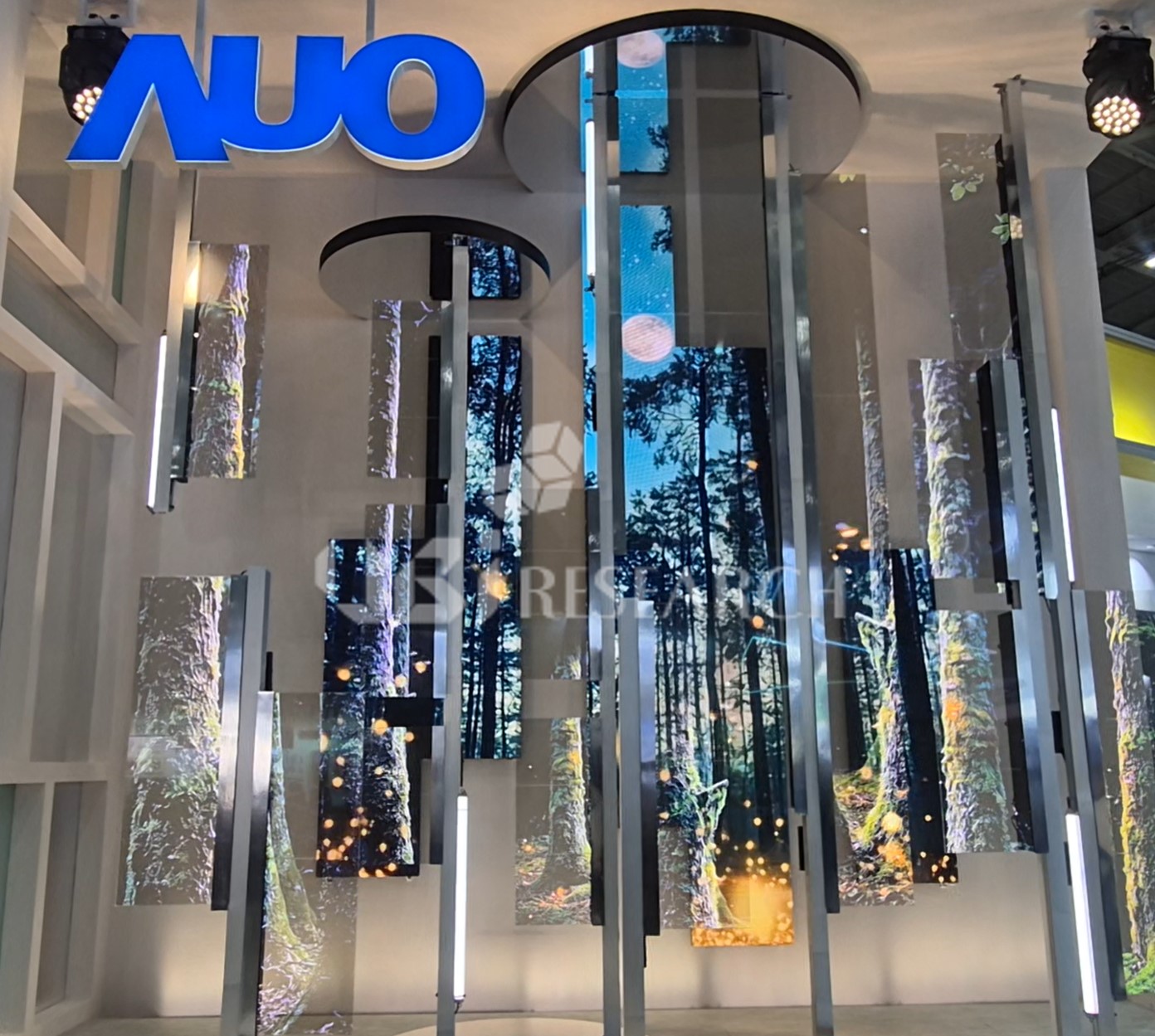
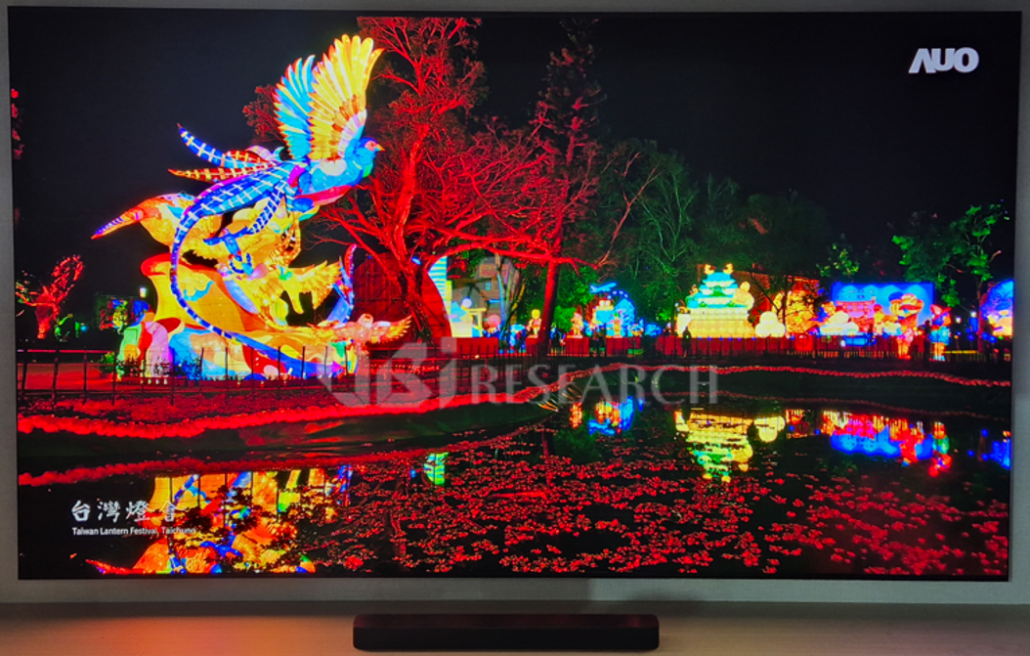
AUO’s Micro LED presented exhibits in two areas, “Display” and “Mobility Solutions”, showcasing AUO’s technological innovations in the field of advanced displays. The company exhibited a 114-inch Micro LED TV developed in collaboration with Samsung Electronics, and also introduced a 127-inch TV tiled with eight 42-inch single modules, the world’s largest in-house development.

127” Micro-LED TV (Resolution: 3840x2160, 1000nit, Pixel Pitch: 0.732mm)

127” Micro-LED TV (Resolution: 3840×2160, 1000nit, Pixel Pitch: 0.732mm)

In addition, the 17.3-inch double-sided transparent Micro-LED display (shown below) is an application that can display different information on both sides, creating interactive services on both sides. Displays like this can also be used in many applications, such as commercial advertising, home decor, and more, where they can convey information while enhancing the style of the display.

 17.3” Dual-side Transparent Micro-LED Display (left), Application case(right): from AUO

17.3” Dual-side Transparent Micro-LED Display (left), Application case(right): from AUO

When it comes to smart mobility solutions, AUO, together with its subsidiary BHTC, demonstrated the vision and possibilities of various automotive display applications, including Virtual Sky Canopy, XR Interactive Window, Morphing Center Control, Foldable Cruise Pilot, and Horizon Image Glass. (Shown below)

Other leading technologies include a 13-inch 3D AR heads-up Micro-LED display and a 14.6-inch flexible Micro-LED touch display with haptic capabilities.

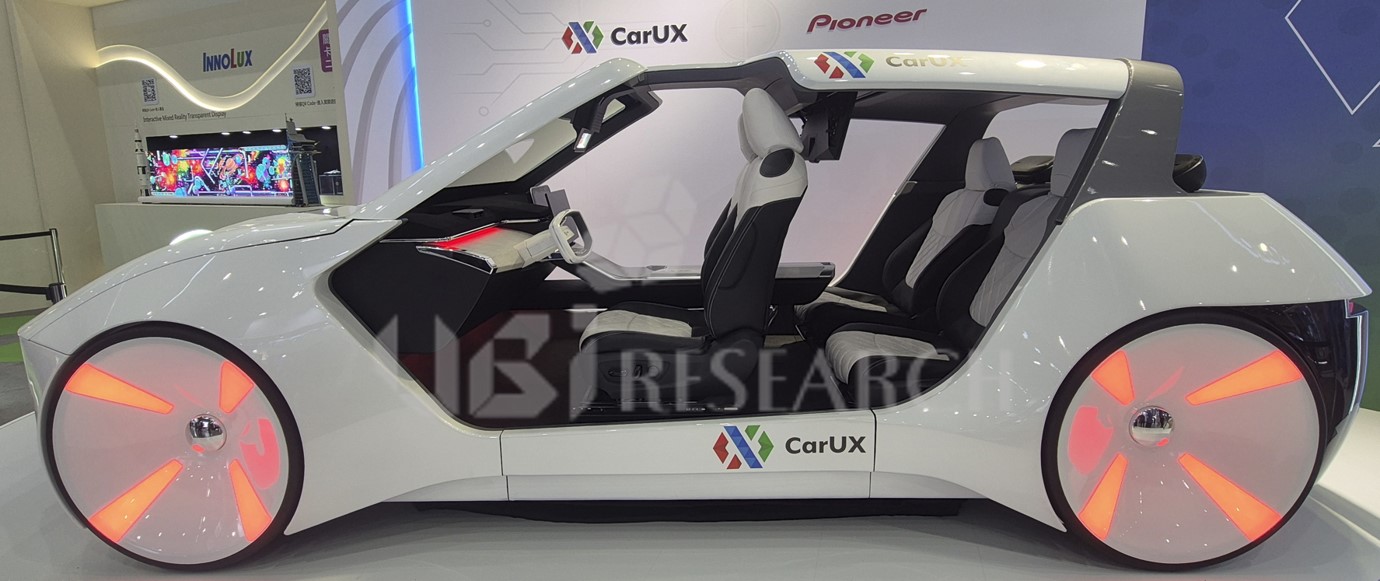
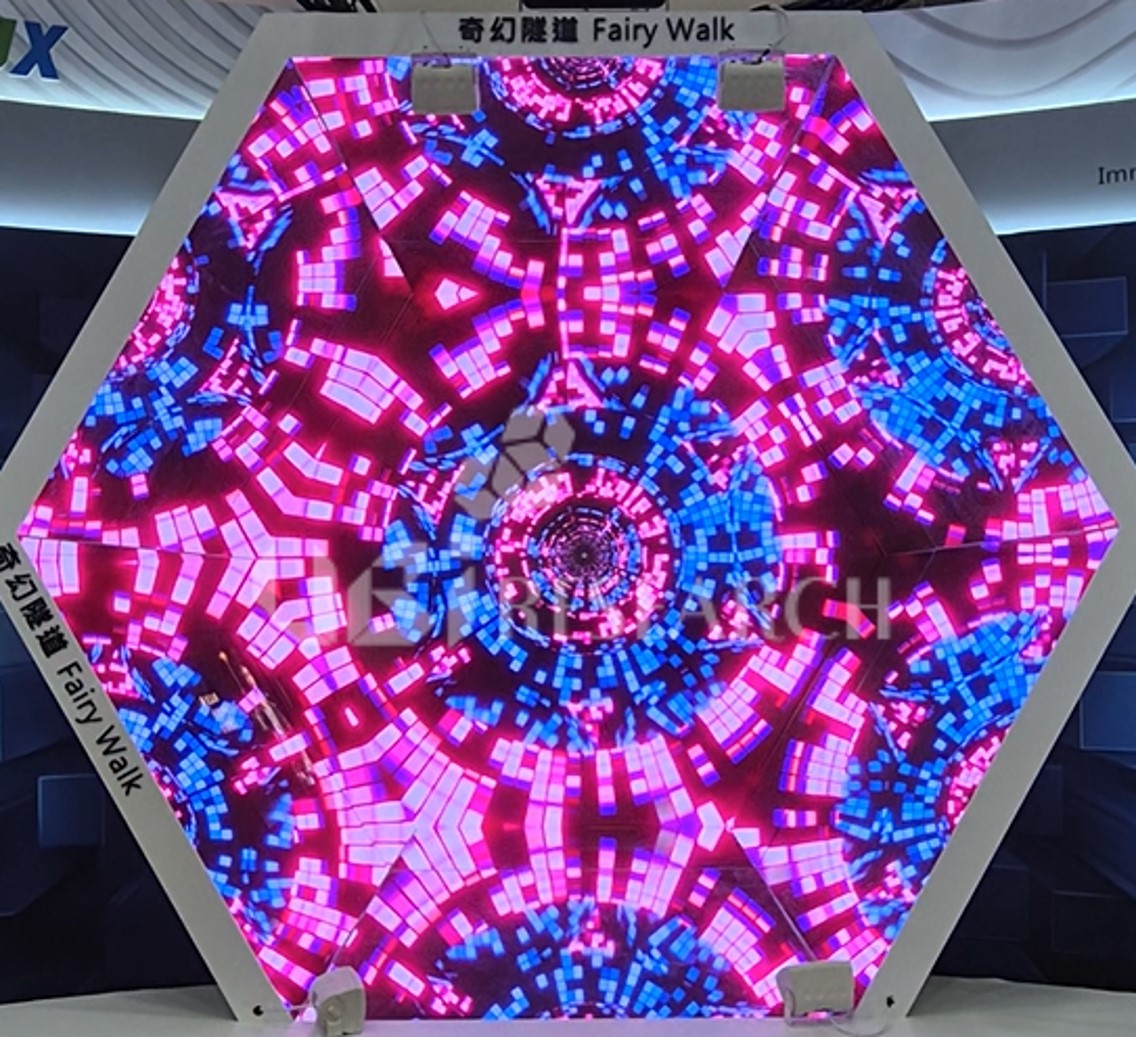
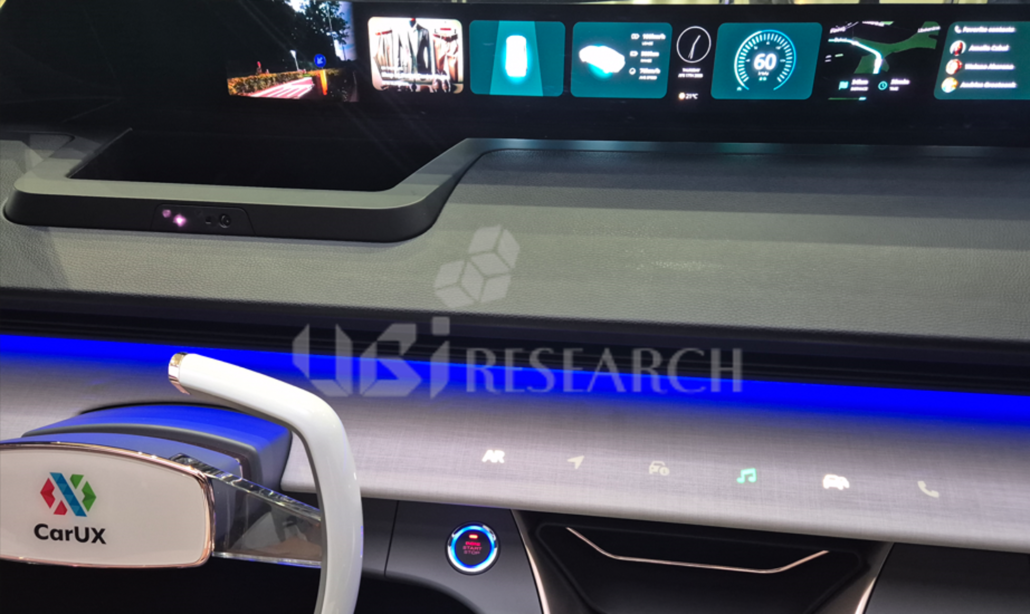
Innolux’s Micro-LEDs were front and center at the booth with a 204-inch 8K Micro-LED display and a 130-inch foldable Mini-LED 4K TV (shown below). Other products included a 1.39-inch touch-embedded wearable Micro-LED display, Micro-LED mirror products, transparent displays, and Micro-LED floating displays. In the automotive application area, Innolux exhibited various automotive displays under the brand of their subsidiary CarUX. Among them, the Light Field Projective display with 9.6-inch Micro-LEDs was introduced.

Innolux, 204” 8K Micro-LED Display

Innolux, 204” 8K Micro-LED Display

130” foldable Mini-LED 4K TV (left: unfolded view, right: folded view)

130” foldable Mini-LED 4K TV (left: unfolded view, right: folded view)

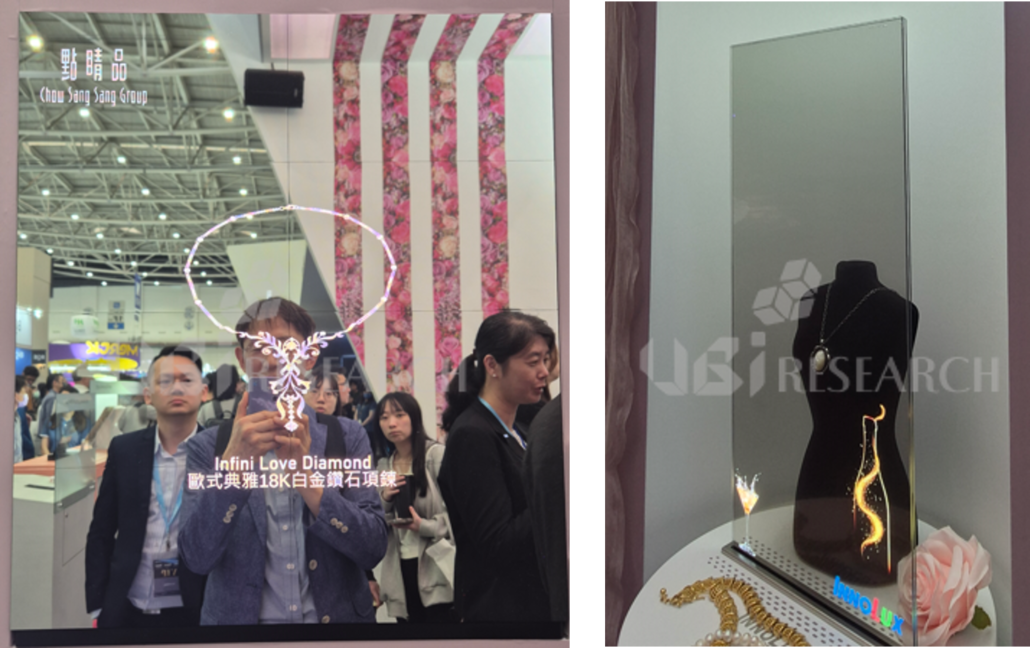
Micro-LED Mirror Product (left) and Transparent Display (right)

Micro-LED Mirror Product (left) and Transparent Display (right)

Innolux, 48” Windshield Reflective Solution

Innolux, 48” Windshield Reflective Solution

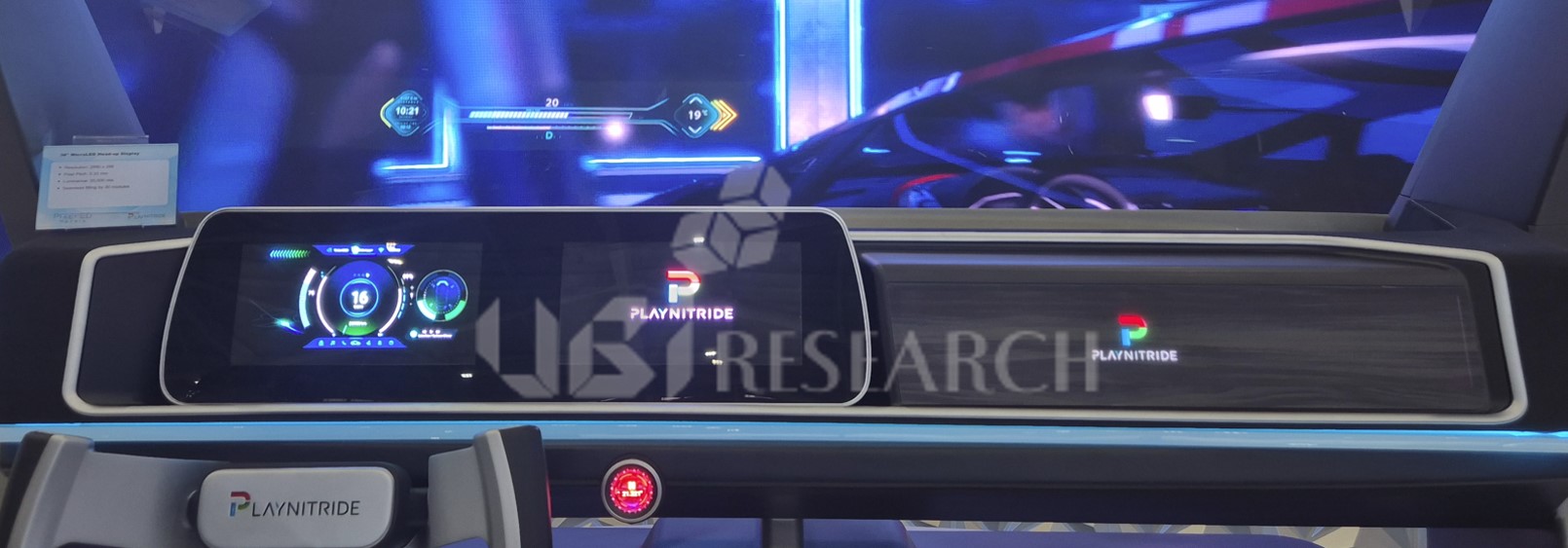
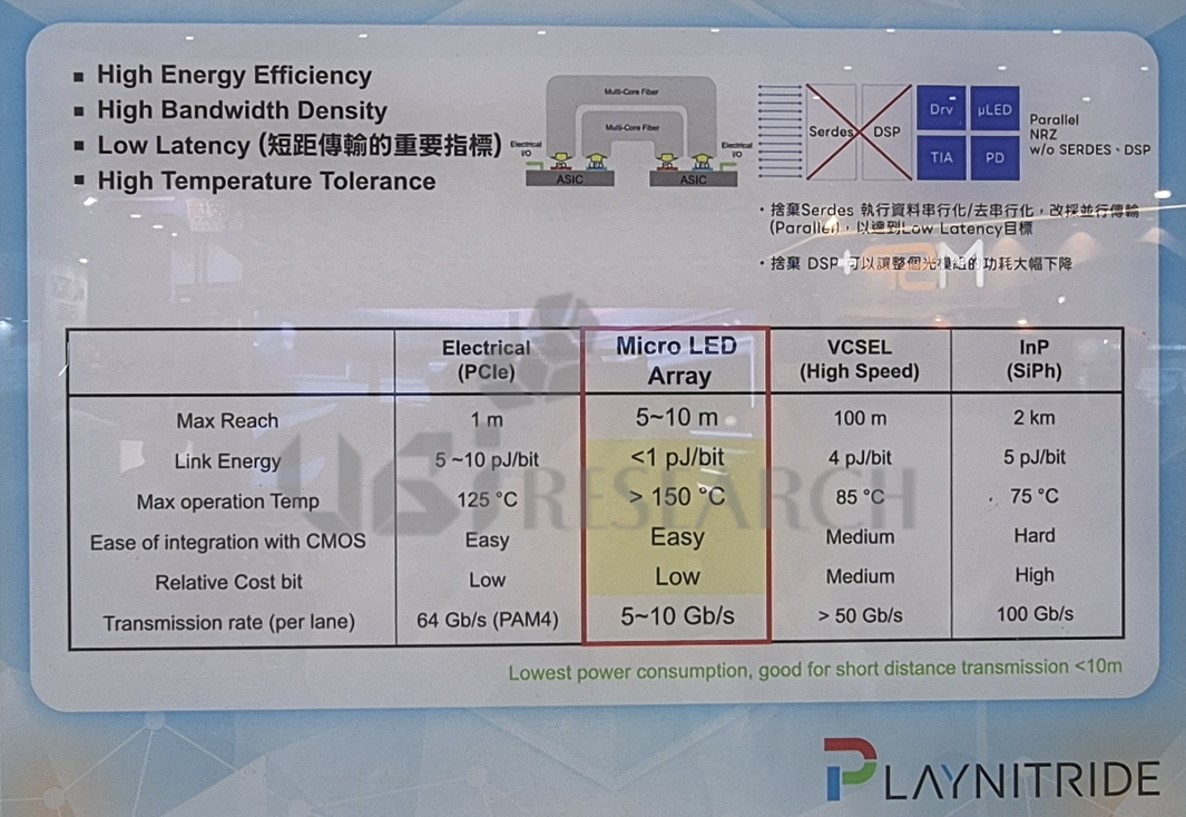
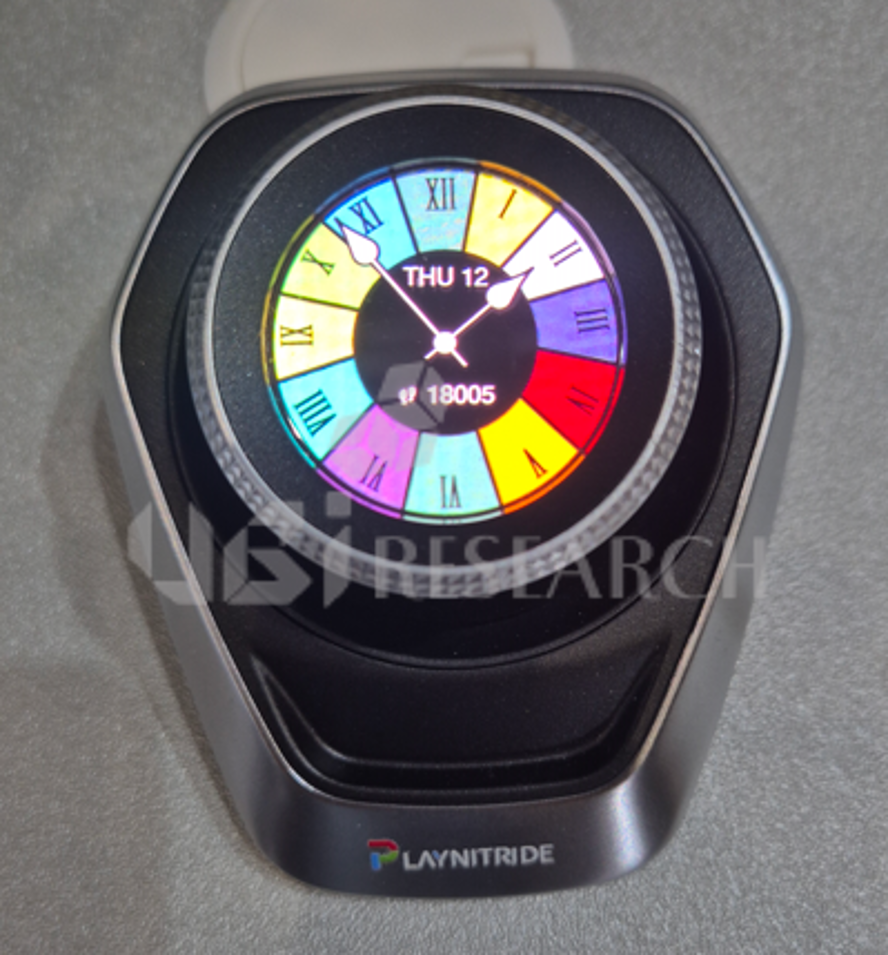
In addition to the 89-inch Micro-LED TV product developed in collaboration with Samsung, PlayNitride has developed a 1.39-inch Tantium Micro-LED display with a high brightness of 5000nits, a high brightness 8.07-inch transparent display, and a 0.18-inch high brightness (>500,000nits), high resolution (5,644 PPI, 720×720) and full color display for AR glasses based on its own technology platform. In addition to technology improvements, they also introduced applications such as a 9.38-inch floating display and a 3D display developed in collaboration with outside companies.

1.39” (326PPI, 5000 nits) Tantium Micro-LED Display Product

1.39” (326PPI, 5000 nits) Tantium Micro-LED Display Product

More details and technical analysis will be presented in a forthcoming Micro-LED report from UBI Research.

Nam Deog Kim, UBI Research Analyst(ndkim@ubiresearch.com)

▶Micro-LED Display Technologies for XR Applications Report Sample

[SID2022] PlayNitride Booth