Posts

Rollable Display Commercializes as Next-Generation Form Factor … Samsung Display Leads Technology with Material Innovation

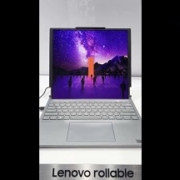
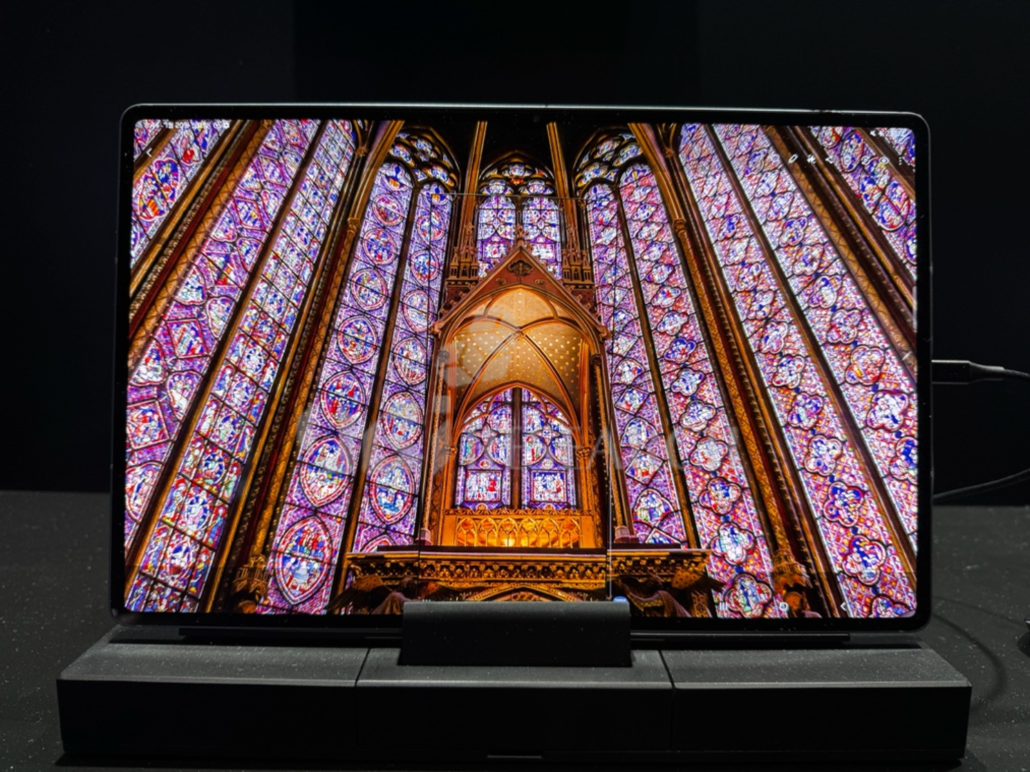
Lenovo's ThinkBook Plus Gen 6 with Samsung Display's 16.7-inch Slidable Flex Solo

Lenovo’s ThinkBook Plus Gen 6 with Samsung Display’s 16.7-inch Slidable Flex Solo

“SID Display Week 2025,” the world’s largest display technology event held in San Jose, USA, in May 2025, was a stage where you can directly see the evolution of next-generation form factor technology. In particular, rollable and slidable displays are no longer concepts, but have become technologies that are about to be commercialized as actual products. At the same time, Samsung Display has significantly improved its technological completeness by announcing material technology innovations to solve the structural problems of rollable displays.

Rollable displays have been gaining attention as next-generation displays that simultaneously provide portability and large-screen experiences, with a structure that expands as if the screen is rolled up. At SID 2025 and CES 2025, major global companies drew attention by implementing these into actual products.

Lenovo’s ThinkBook Plus Gen 6 Slidable AI PC, which was commercialized in the first quarter of 2025, is equipped with Samsung Display’s slidable OLED and extends from 14 inches to a maximum of 16.7 inches and has passed durability tests more than 30,000 times.

 At CES 2025, Samsung Display unveiled a prototype of its vertically expanded “Slidable Flex Vertical” smartphone. It is evaluated as a new method that simultaneously provides portability and a large screen experience by sliding vertically from the basic 5.1-inch screen size to a 6.7-inch large screen. There is also interest in whether Samsung will commercialize a Galaxy Rollable Phone based on its own slidable OLED technology in the future.

 At SID 2025, BOE unveiled a rollable OLED prototype that extends from 12.3 inches to 17.3 inches. The product is characterized by an expansion ratio of 4 mm and 3.2:1 in roll radius and has been introduced to have a flexural durability of more than 100,000 times.

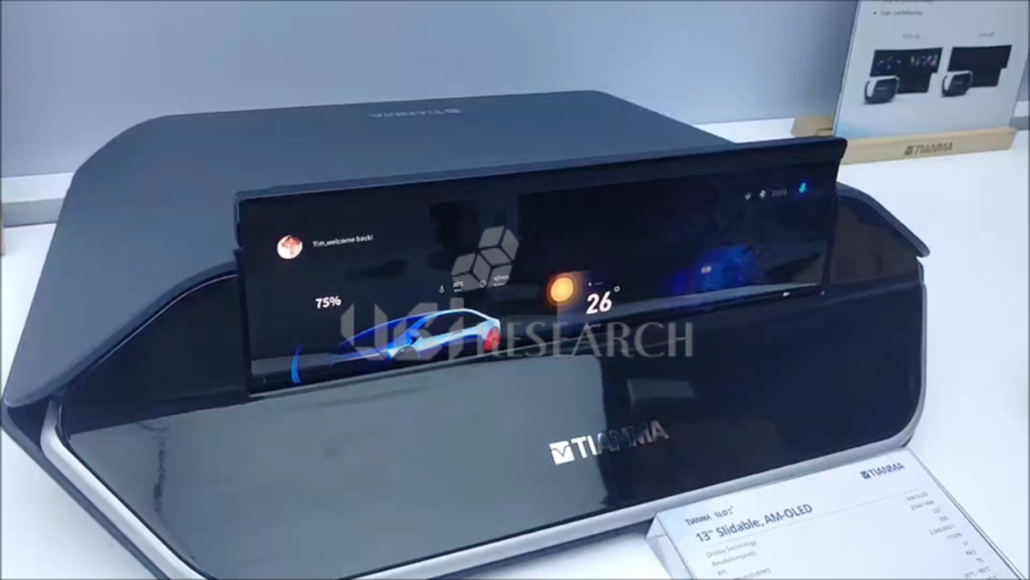
 Tianma entered the advanced form factor competition by introducing a 13-inch sliding AMOLED prototype. It was designed with a radius of curvature (R) of 5 mm, the screen can move 70 mm, and it was reported that there was little change in thickness and flatness before and after the slide.

Rollable and sliderable displays still face technical challenges such as durability, uniform resilience, and reliability of the drive mechanism, but structural design and material innovation are emerging as the key to solving these issues.

Samsung Display emphasized the importance of material development, a core technology of rollable displays, by publishing a paper titled “Highly Reversible and Robust Rollable AMOLED Display with Smart Elastomer Materials” at SID 2025. The paper was chosen as the Distinguished Paper for Display Week 2025.

Samsung Display has greatly increased the durability and resilience of rollable displays with its two-layered smart elastomer structure, which is highly elastic and low elastic. Thanks to the new structure, the deformation of the edge of the panel has been significantly reduced even after the pen drop test and repeated rolling. The elastomer layer significantly reduces deformation compared to conventional polyimide and showed excellent recovery even in repeated rolling. Anti-static treatment was added to effectively suppress panel image damage due to repetitive friction and charging.

Rollable and slidable OLED technologies are now entering various product markets such as smartphones, laptops, and vehicle displays beyond the technology demonstration stage.  At the same time, the mechanical stress, durability, external impact and electrostatic accumulation problems they experience cannot be solved without high-performance material technology. The smart elastomer-based double-layer design proposed by Samsung Display presents an answer to these problems, potentially giving the company a technological edge in the premium mobile device and automotive large-format display markets. The next initiative in the display industry will be completed through integrated technology that synergistically combines materials, structures, and processes for design innovation.

Changho Noh, Analyst at UBI Research  (chnoh@ubiresearch.com)

▶2025 Small OLED Display Annual Report Sample
▶2025 Mid-to-Large OLED Display Annual Report Sample

Automotive OLED Display Trends Seen Through SID 2025

As the development of intelligent and networked automobiles accelerates, the demand for various types of vehicle displays is rapidly increasing. In terms of display technology, the adoption rate of LTPS TFT LCD and OLED is increasing, and interest in Micro-LED is also growing.

In 2024, the shipment volume of OLED panels for vehicles is expected to increase by 126% year-on-year to approximately 2.48 million units. It is expected to increase to approximately 3 million units in 2025. This is because OLED is expanding its adoption, contributing to luxurious interiors and efficient space utilization, especially in premium vehicles.

LG Display, BOE, Visionox, Tianma, etc. recently presented various OLED vehicle display solutions at the SID 2025 and Shanghai Auto Show. As major automakers such as Mercedes-Benz, Audi, GAC, and Ideal are also installing OLED in their latest models, the market penetration is further expanding.

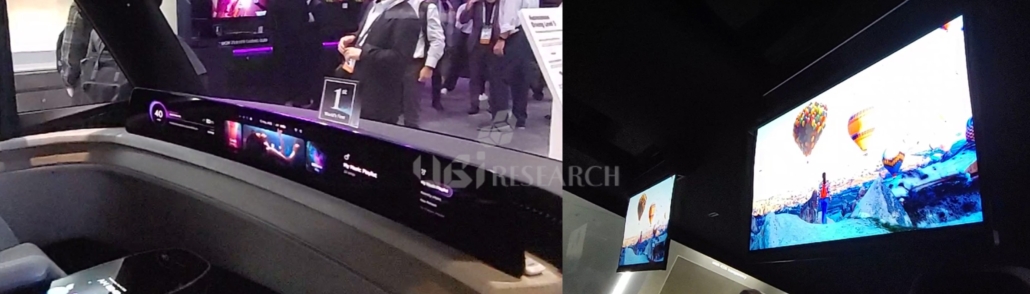
LG Display has organized an exhibition space dedicated to automobiles under the theme of ‘Driving the Future.’ The concept car on display featured a 57-inch pillar-to-pillar OLED that covers the entire dashboard and an 18-inch sliding OLED for the rear seats.

57-inch pillar to pillar OLED & 18-inch sliding OLED

LG-Display-57-inch-pillar-to-pillar-OLED-18-inch-sliding-OLED

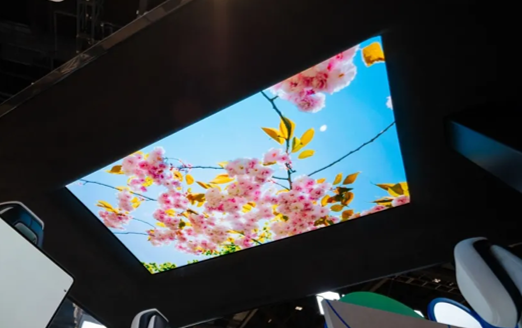
BOE showcased a smart cockpit consisting of a total of eight OLED displays, including a 55-inch transparent OLED sunroof. Key specifications include a 12.3-inch instrument panel and CID (resolution 720×1920), a switchable privacy display with a relative brightness of less than 0.5% at a viewing angle of 48 degrees or more, a 1.5-inch circular OLED with a resolution of 466×466 and 310 PPI, and two CMS OLEDs.

55-inch OLED transparent sunroof

55-inch OLED transparent sunroof

BOE OLED smart cockpit

OLED smart cockpit

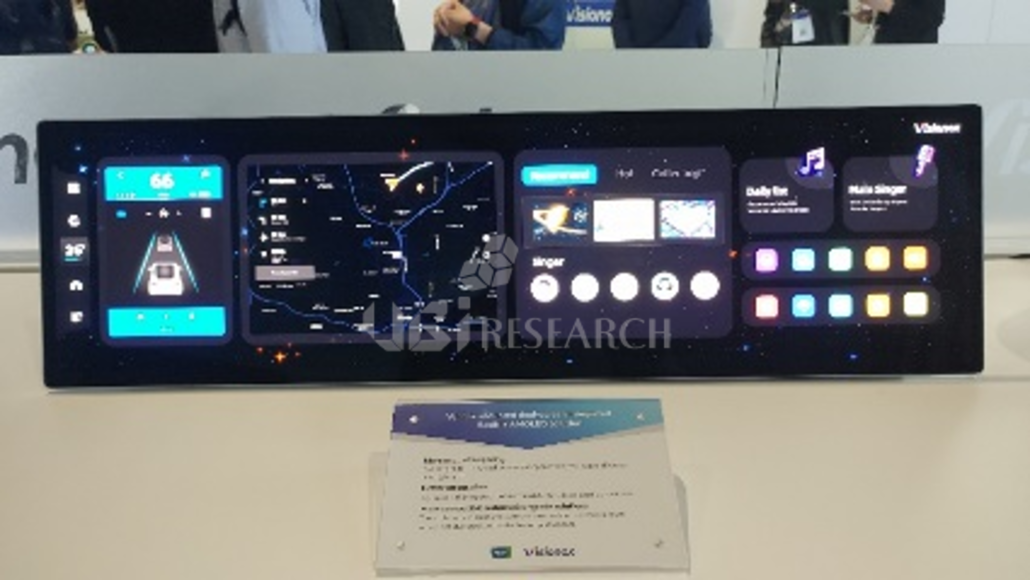
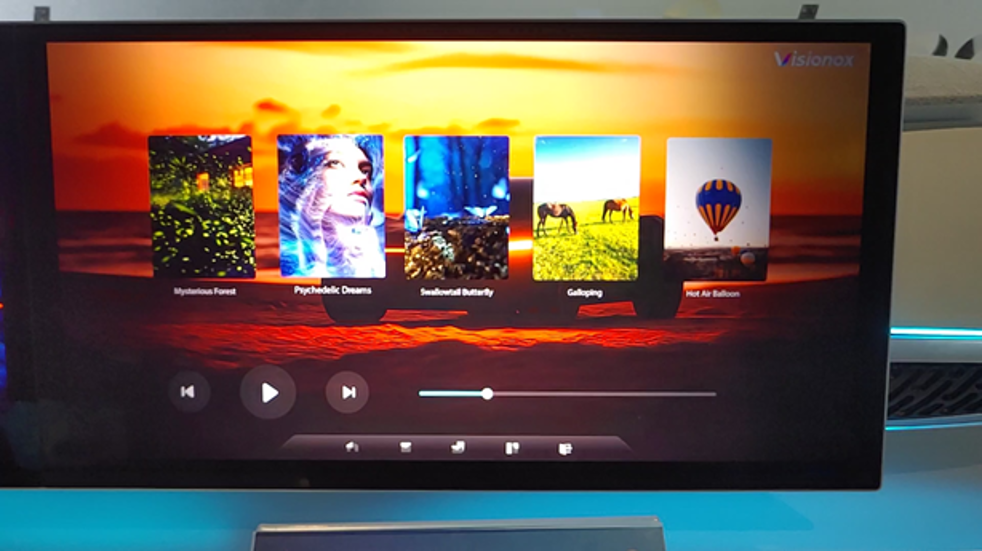
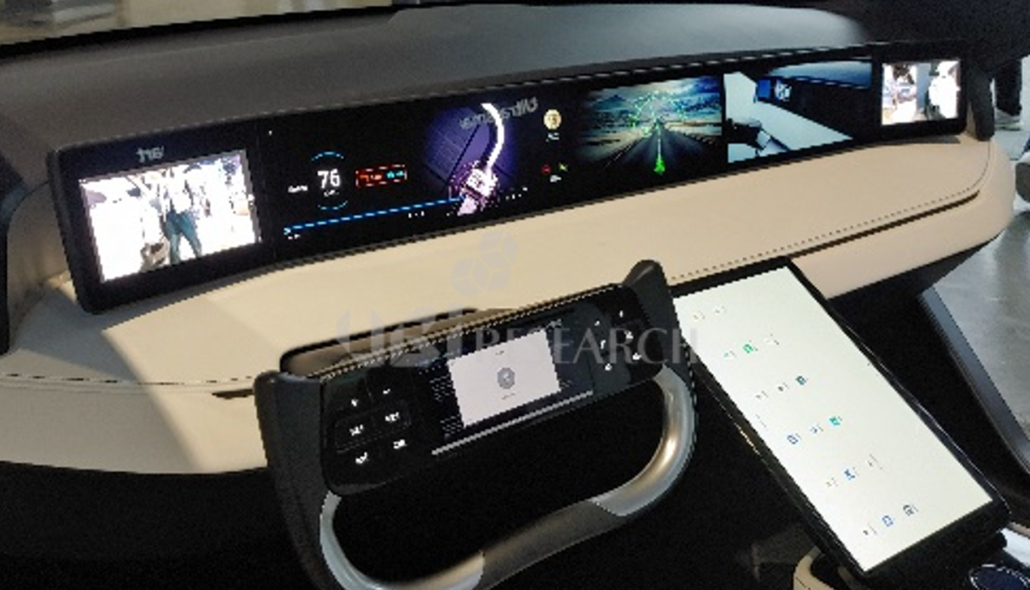
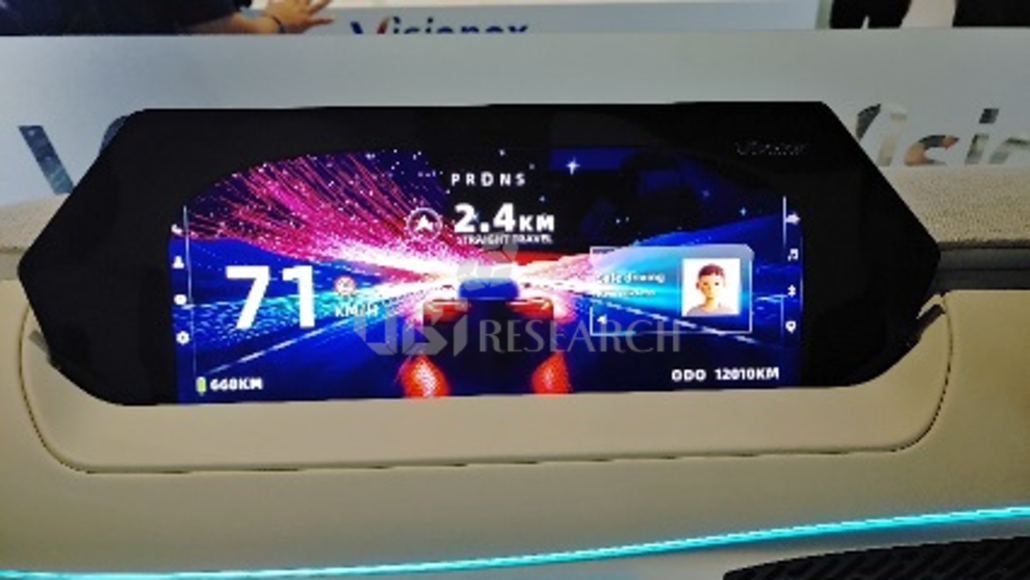
Visionox unveiled a smart C-type armrest flexible OLED, a dual-screen integrated flexible OLED, a UDIR flexible OLED for vehicles, and a switchable privacy display at SID 2025.

Visionox UDIR OLED

UDIR OLED

Visionox Dual screen

Dual screen

Visionox Privacy OLED

Privacy OLED

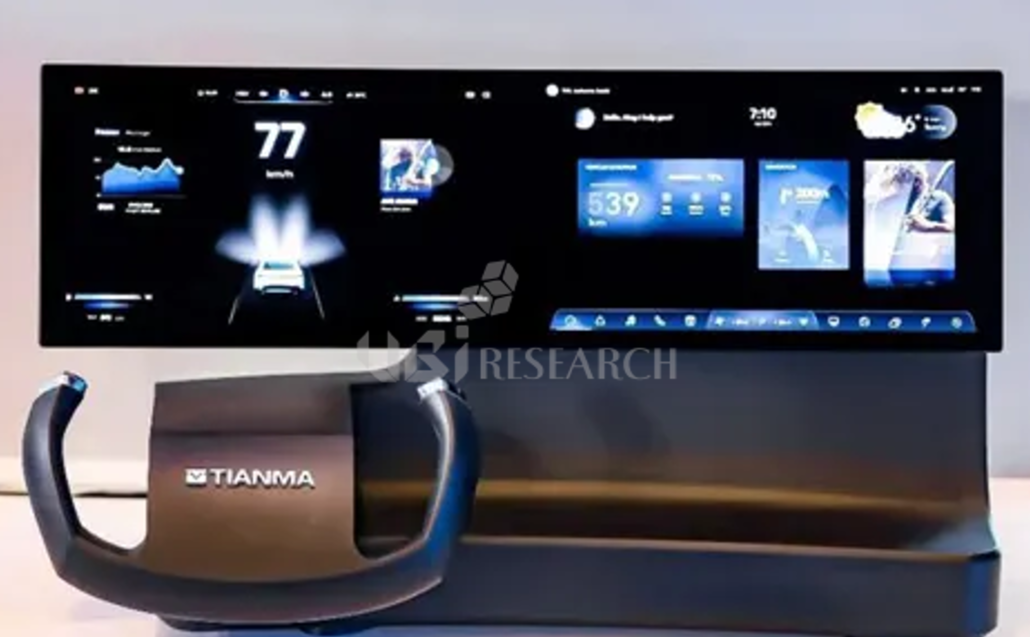
Tianma exhibited a 13-inch slider OLED and a dual 13-inch multi-curvature integrated black OLED display with a curvature range of R800~2000mm.

Tianma 13-inch slidable OLED

13-inch slidable OLED

Tianma 13-inch multi curvature OLED

13-inch multi curvature OLED

Changwook HAN, Executive Vice President/Analyst at UBI Research (cwhan@ubiresearch.com)

▶2025 Automotive Display Technology and Industry Trends Analysis Report

With SID2025, Aledia promises innovation in MICRO-LED displays.

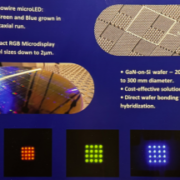
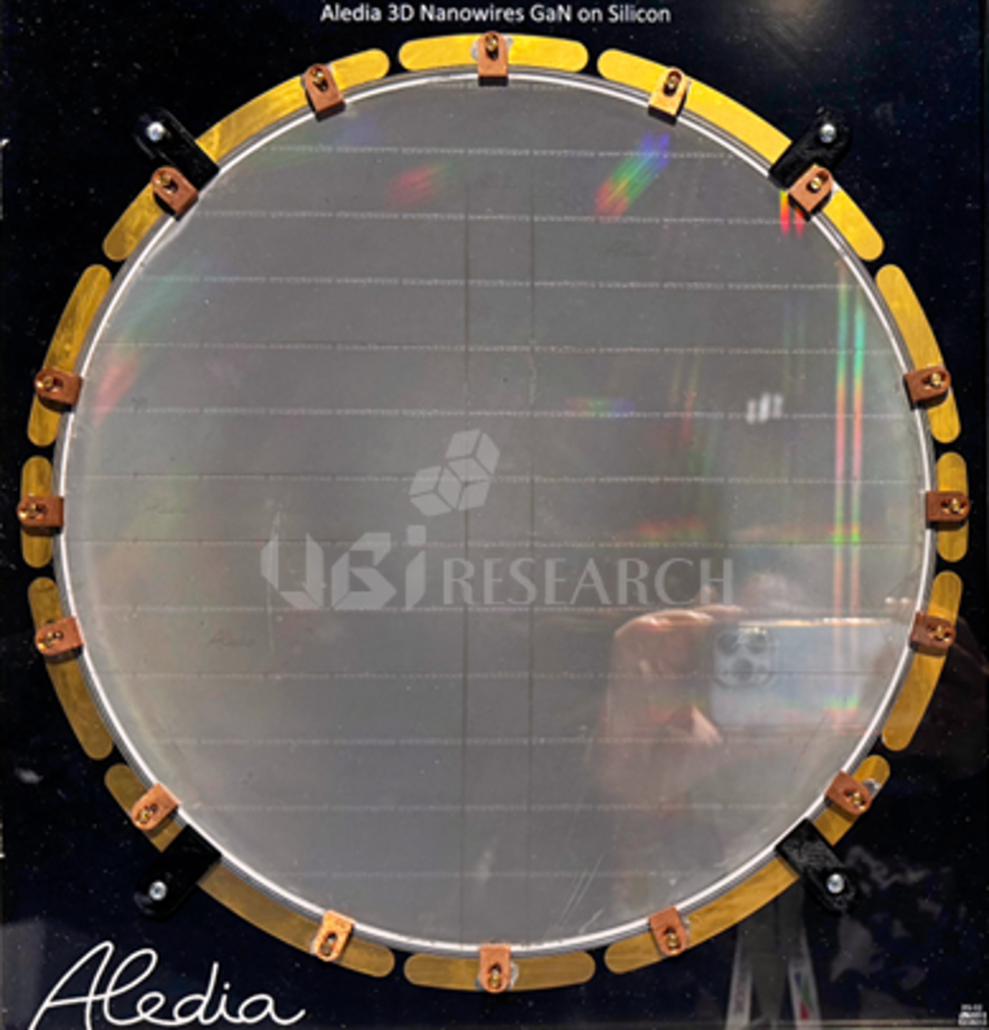
Aledia is a micro-LED R&D startup headquartered in Grenoble, France, which was spun out from the French National Scientific Institute CEA-Leti in 2011. LEDs and plans to supply them for all display applications that require them. The company claims that the properties of nanowires make them energy efficient and suitable for high resolution, but if the pixels are configured in the form of m x n arrays, they will also be the best choice for large-area, high-brightness product lines.

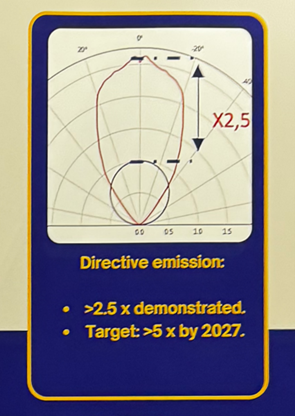
Aledia’s core technology is a method of growing GaN nanowires in a three-dimensional structure on a silicon substrate. This technology is suitable for high-performance display solutions such as augmented reality (AR) because the direction of light emission can be precisely controlled.

Aledia-Micro-LED Aledia-Micro-LED

Aledia holds approximately 300 patents and has completed the development of the world’s highest efficiency of 32% EQE in micro-LEDs with a size of 1.5 µm or smaller, its manufacturing technology, and circuit bonding technology.

Aledia is investing US$200 million in Champagnier, France, to build a microLED production line that is expected to be completed in the first half of 2025. The facility will be capable of mass producing microLEDs on 8″ and 12″ silicon wafers with a capacity of 20K wafers per month; Aledia is expected to produce micro-LEDs for AR in earnest.

Aledia-Micro-LED

Aledia researchers let us know that they are ready to work together to solve the challenges of the micro-LED industry at SID 2025.

Joohan Kim, Analyst at UBI Research (joohanus@ubiresearch.com)

▶Micro-LED Display Technologies for XR Applications Report Sample

University of Michigan team boosts blue phosphorescent OLED lifetime. A breakthrough toward solving the “blue problem” in displays

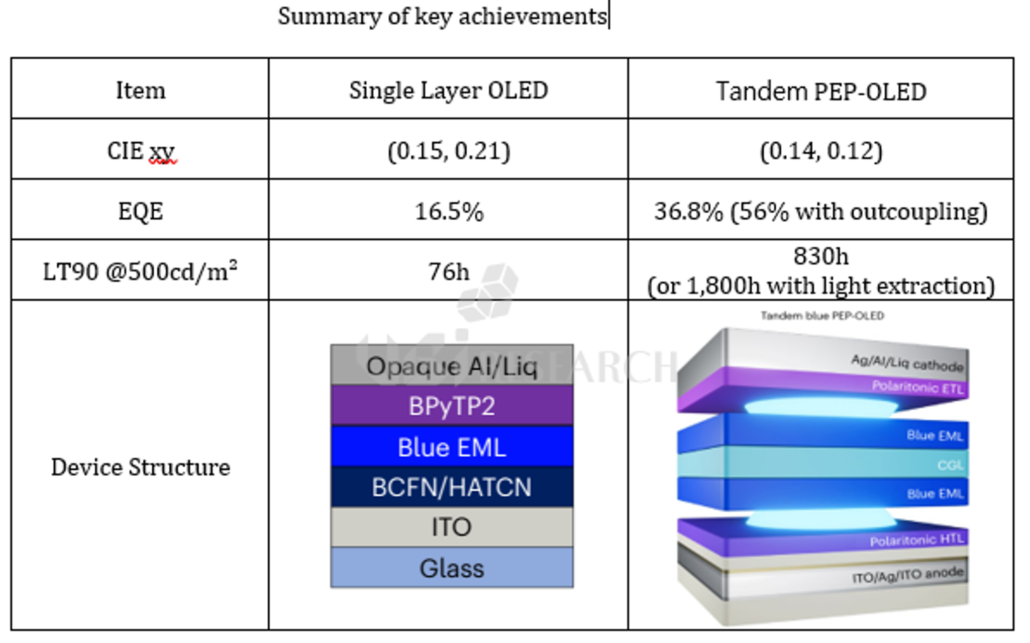
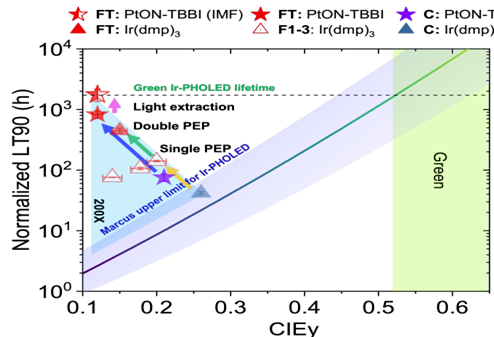
May 2025 — A research team led by Professor Stephen R. Forrest at the University of Michigan has developed a deep blue phosphorescent OLED (PhOLED) that simultaneously achieves up to more than 10 times longer lifetime and high color purity, addressing the long-standing challenge of blue OLEDs. The results are published in the latest issue of Nature Photonics, and a related paper was presented at SID2025.

While OLEDs are widely used in smartphones and premium TVs, blue OLEDs have relied on inefficient fluorescence, leading to high power consumption and short operational lifetimes. This is because blue light has the highest energy level, causing molecules in the emitting layer to degrade quickly. To overcome this, the team developed a tandem PEP (polariton-enhanced Purcell effect) OLED with multilayer architecture and double-sided electrode design.

Previous work by the Forrest team demonstrated that surface plasmons near metal electrodes could help excitons in light-emitting molecules release energy faster. Building on this, the new device incorporates an organic semiconductor on both electrodes, enabling the formation of plasmon–exciton–polaritons. This structure acts like a high-speed lane, allowing excitons to convert to photons more efficiently and reducing destructive interactions.

Moreover, the tandem architecture divides the light-emission workload between two layers, cutting degradation in half. An optical cavity (Fabry–Pérot cavity) further boosts efficiency and color purity.

First author Dr. Haonan Zhao stated, “Instead of letting excitons collide and decay, we gave them an expressway to escape — a physical design solution to a two-decade-old problem.” Professor Forrest added, “This may not be the final solution, but we’ve finally shown the way forward that has eluded researchers for 20 years.”

The results of this study are expected to play a key role in advancing the performance of various display products, such as next-generation smartphones, TVs, and wearable devices. It also has the potential to bring about innovative changes in the lighting field, where energy efficiency is important. This study was supported by the US Department of Energy and Universal Display Corporation.

Paper Information
– Title: Stable, deep blue tandem phosphorescent organic light-emitting diode enabled by the double-sided polariton-enhanced Purcell effect
– Authors: Haonan Zhao, Claire E. Arneson, Stephen R. Forrest
– Journal: Nature Photonics (2025)
– Journal: SID 2025 Digest148 (13-4)

Chang Ho NOH, Analyst at UBI Research  (chnoh@ubiresearch.com)

▶2025 OLED Emitting Materials Report Sample

SID 2025, TCL exhibits inkjet OLEDs from 6.5 inches to 65 inches… Will mass production shake up the display market?

At the SID 2025 Display Week, TCL showcased various sizes of inkjet OLED products. The inkjet method is considered to be a technology that is advantageous in reducing material costs compared to the vacuum deposition method due to its high utilization efficiency of luminescent materials. TCL officially announced the mass production of a 21.6-inch 4K inkjet OLED professional display in November 2024, and is currently considering investment for mass production.

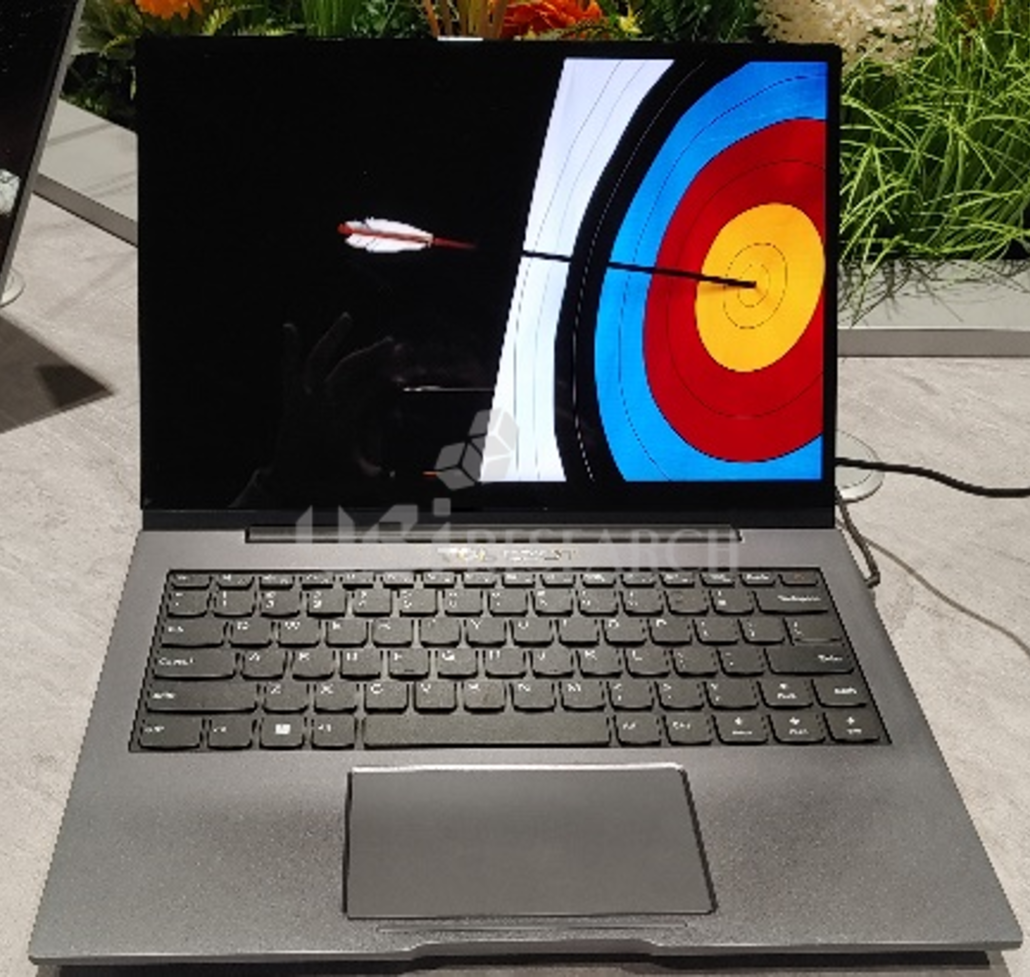
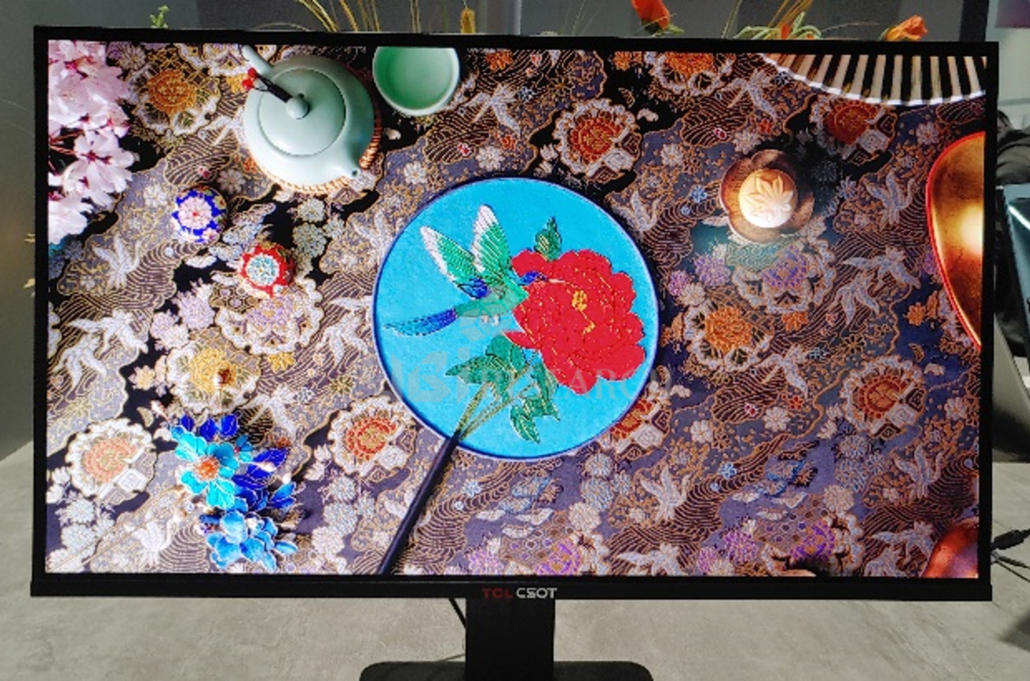
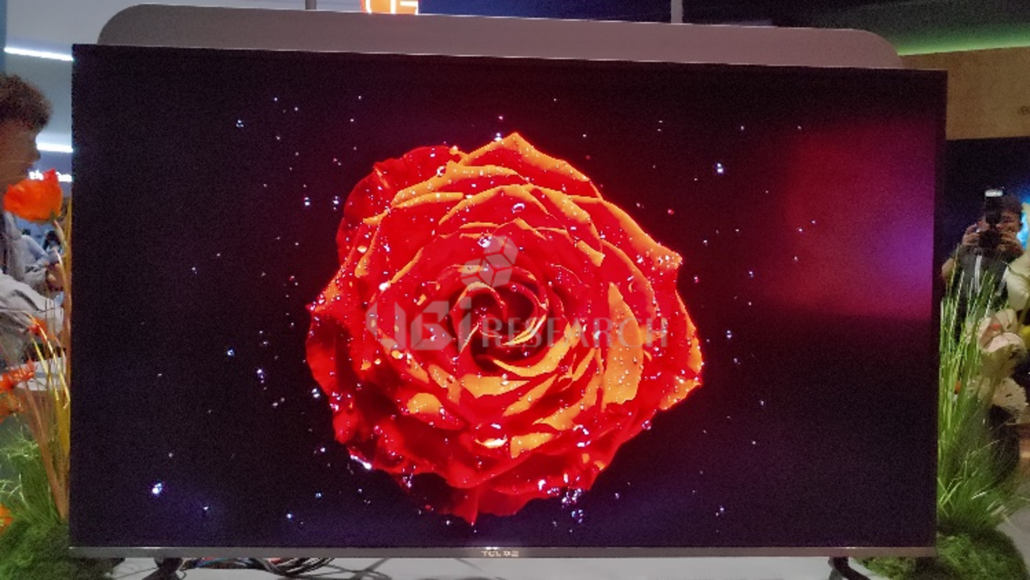
At this exhibition, TCL showcased a 6.5-inch inkjet OLED display for smartphones, which provides a high resolution of 360ppi based on real stripe, which is equivalent to approximately 460ppi based on pentile. In addition, a variety of product lines were exhibited, including a 14-inch oxide TFT-based OLED notebook panel with a 2.8K resolution (243ppi), a 27-inch OLED monitor with 4K 120Hz specifications, and a 65-inch OLED TV display with 33 million pixels and 8K 120Hz.

TCL, 6.5” Smartphone

TCL, 6.5” Smartphone

TCL, 14” Notebook PC

TCL, 14” Notebook PC

TCL, 27” Monitor

TCL, 27” Monitor

The 65-inch product maintains 99% of the DCI-P3 color gamut even in low-gradation, and has applied technology that doubles the utilization of light-emitting materials and reduces blue light by 50%. This is evaluated as a significant technological breakthrough in the large-scale and commercialization of inkjet OLED.

TCL 65” 8K TV

TCL 65” 8K TV

With a full lineup from 6.5 inches to 65 inches, TCL has shown confidence that inkjet OLED technology can be applied to all product lines from mobile to TV. Up to now, Chinese OLED panel manufacturers have focused on production based on technologies first verified by advanced companies, but inkjet OLED is the first technology that China has led in mass production. The success of this technology can be an opportunity for Chinese panel manufacturers to leap forward in both technology and production.

However, OLED using vacuum deposition method is continuously improving brightness and lifespan through tandem IT OLED structure or multi-stack TV OLED structure, and inkjet OLED still has the task of not only securing productivity but also reducing this performance gap.

Chang Wook HAN, Executive Vice President/Analyst at UBI Research (cwhan@ubiresearch.com)

▶2025 Small OLED Display Annual Report Sample
▶2025 Mid-to-Large OLED Display Annual Report Sample

Visionox Implements 4th-Generation OLED Technology Using pTSF Mechanism

Visionox announced at SID 2025 International Display Week that it has successfully demonstrated the commercialization potential of pTSF (Phosphor-assisted Thermally Activated Delayed Fluorescence Sensitized Fluorescence), a fourth-generation OLED technology. This technology is part of hyperfluorescence OLED technology, the fourth generation of OLED technology, and has been attracting attention as a key technology for the next-generation OLED display industry, as it simultaneously satisfies high color reproduction, high efficiency, and long life.

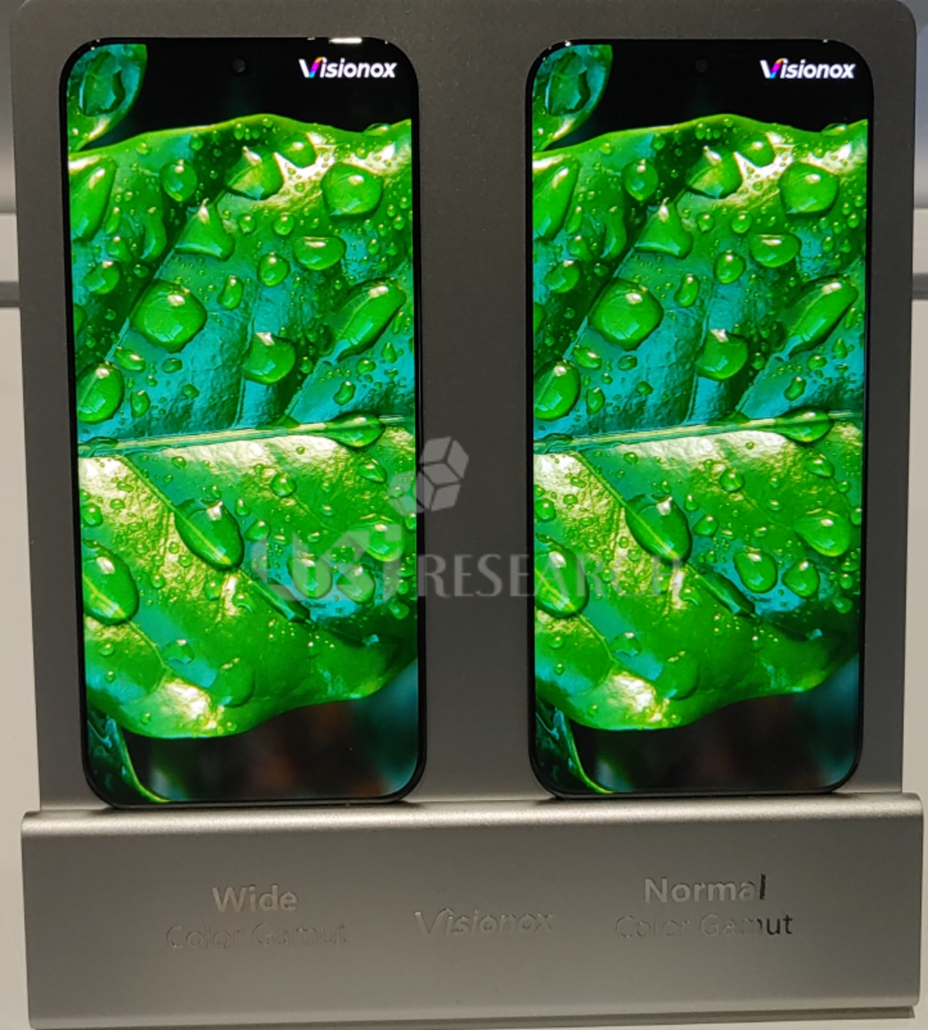
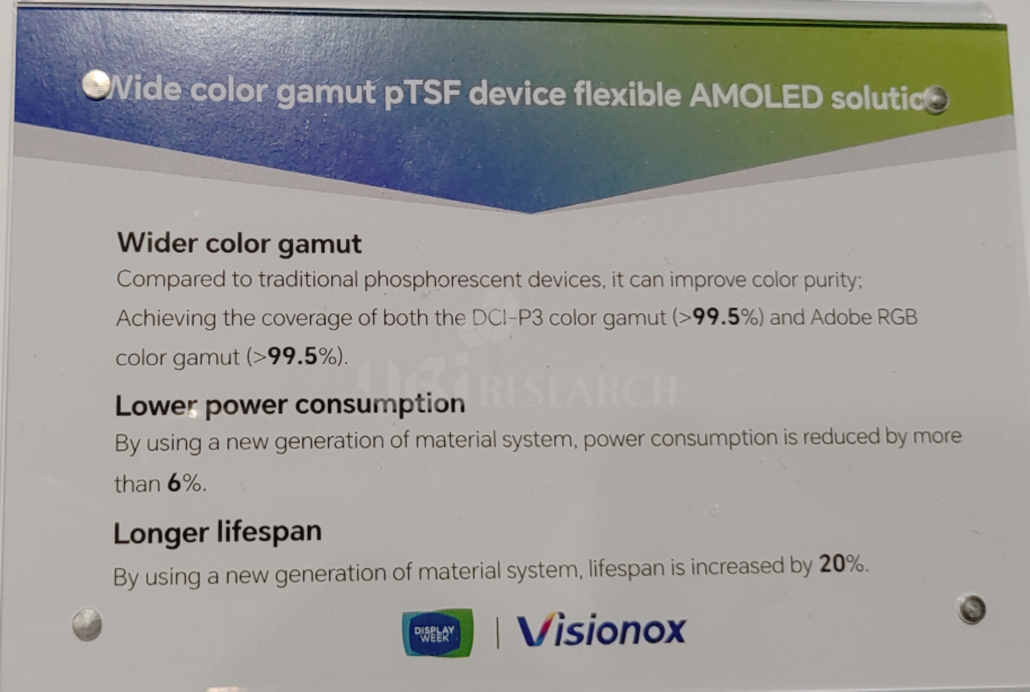
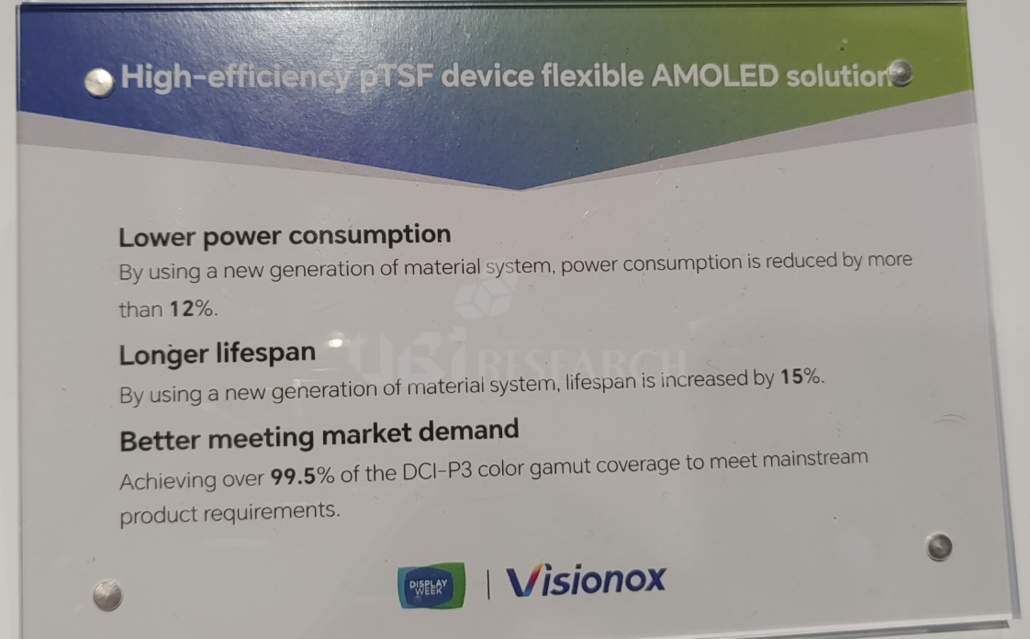
The research team developed green OLED devices with an ultra-wide color gamut that not only exceeds the DCI-P3 standard but also meets the requirements of AdobeRGB and BT.2020. In particular, the newly developed pTSF-based hyperfluorescence OLED device achieved high color purity with CIEx < 0.21 and FWHM (wavelength width) of 21-27 nm and reported up to 12% efficiency improvement and 20% lifetime improvement compared to existing commercial phosphorescence OLEDs.

The pTSF mechanism combines the excellent color purity of fluorescent emitters, the 100% exciton utilization of TADF hosts, and efficient energy transfer from phosphorescent assistant dopants, resulting in a more precise and stable emission system compared to traditional OLED structures. In addition, by optimizing the material deposition process for the G6 mass production line, material usage was reduced by over 10% without compromising quality.

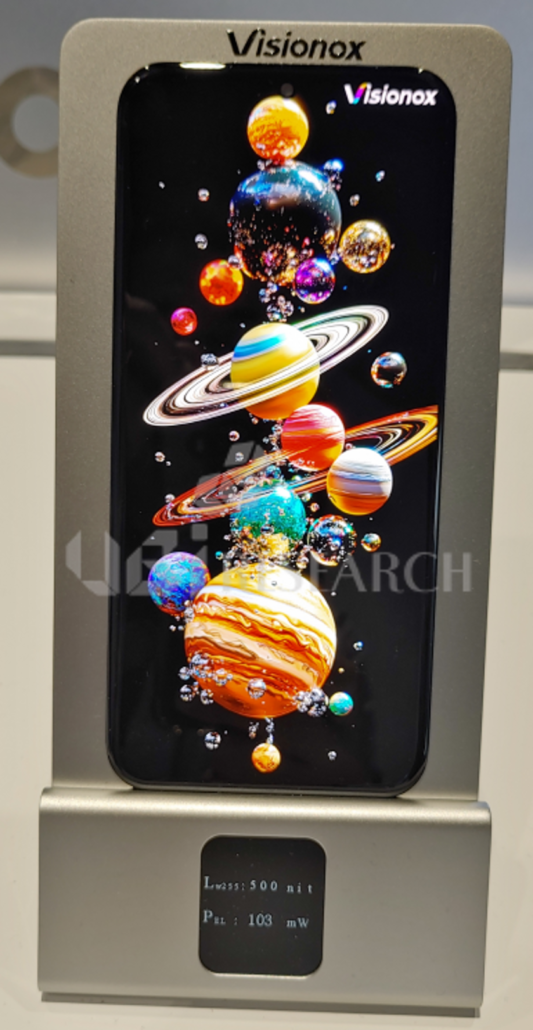
Two prototype products—Product A and Product B—utilizing the pTSF technology were also developed. Compared to existing Visionox OLED products, Product A and B showed 12% and 6% lower power consumption, respectively, while achieving over 99.5% coverage of both DCI-P3 and AdobeRGB color gamuts. Furthermore, both maintained comparable reliability in high temperature and high humidity endurance tests.

A Visionox representative stated, “This milestone marks a pivotal step toward the commercialization of hyperfluorescence OLEDs. Starting with green, we aim to expand pTSF architecture to red and blue devices as well, ultimately achieving full BT.2020 color gamut coverage in next-generation OLED displays.”

The research was presented with sample demonstrations at SID 2025, and was conducted in collaboration with the Department of Chemistry at Tsinghua University, supported by China’s National Key R&D Program.

Wide color gamut Wide color gamut pTSF device flexible AMOLED solution pTSF High-efficiency pTSF device flexible AMOLED solution

Chang Ho NOH, UBI Research Analyst(chnoh@ubiresearch.com)

▶ China Trend Report Inquiry

[SID 2025] Samsung Display, QD-OLED 27-inch QHD 500Hz Monitor

[SID 2025] Lenovo, Rollable Laptop

[SID 2025] LG Display 13-inch Ph-Blue Hybrid Tandem OLED

With SID 2025, Samsung Display proved to be a pioneer in OLEDs.

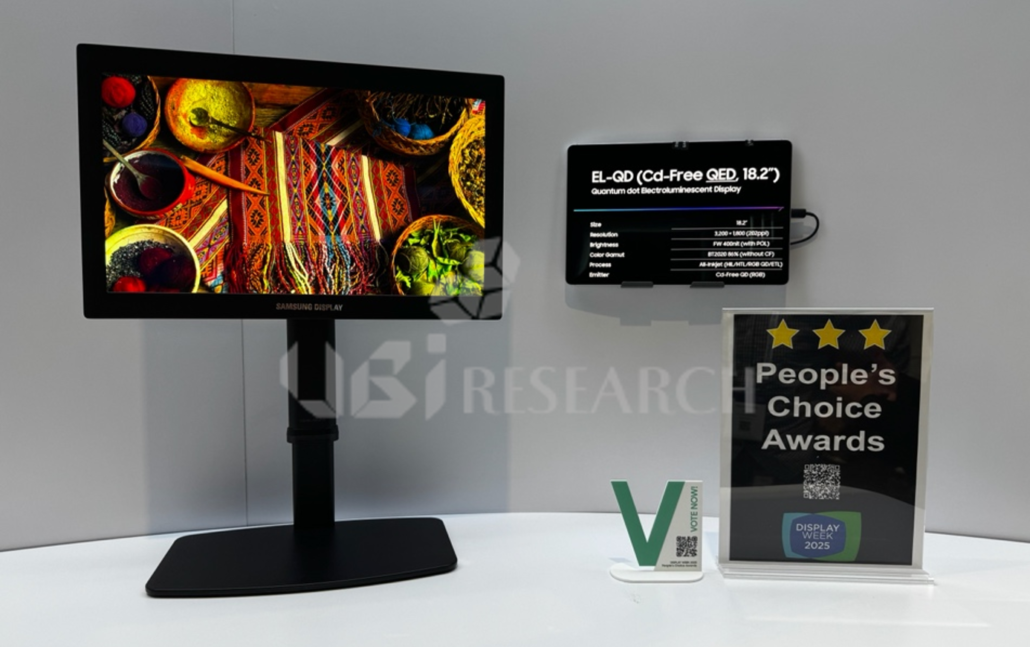
Samsung Display proved itself as an OLED pioneer at SID 2025. Samsung Display presented the world’s best technology in three themes: the best technology possessed by OLED pioneer companies, and a three-dimensional exhibit that allowed visitors to experience in advance what tomorrow’s OLEDs will look like.

The ‘OLED Frontier’.

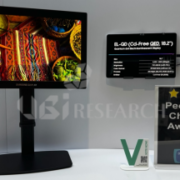
The world’s first QED 18.2-inch display applying environmentally friendly Cd-free field emission quantum dot (EL-QD) technology, EL-QD is a new technology that applies an electric field directly to quantum dots to emit inorganic light, realizing accurate color representation and accurate color representation of QD. It achieves BT2020 86% color reproduction and 400 nits performance without color filters. Samsung Display will further improve the performance and aims to launch the product within two years. The 27-inch QD-OLED monitor presented together will experience the world’s largest resolution of 220ppi with 5,120 x 2,880 pixels. With organic light diode bilo sensors built into every pixel in the display area, the Sensor OLED display can measure physical indicators such as heart rate, blood pressure, stress, and atrial fibrillation with a finger.The Sensor OLED display, which was named SID Outstanding Paper of the Year, was also featured in ” Nature Communications” and was also featured in the Nature Communications.

‘From Pixel to Perfection’.

With the introduction of new EL materials with improved blue organic materials, the 65″ UHD TV in 2025 achieves 4,000 nits of brightness, a 33% improvement over the previous model and the world’s highest brightness. The company also introduced the world’s first 27″ OLED gaming monitor with 500Hz drive technology. 6.8″ Bezel-less smartphone display with up to 0.6mm thin bezel creates an unrealistic illusion. 6.8″ OLED on top of a 14.6″ OLED panel The panels were displayed in such a way that they appeared to be a single panel, as their boundaries were not visible. LEAD technology, introduced for the first time in the world, is an OLED panel technology that has the same reflectivity and bright room contrast as before, even when the polarizer on the OLED surface is removed. LEAD technology is originally characterized by low power consumption, thinness and lightness.

‘Designing Tomorrow’

Future next-generation displays were also unveiled through Samsung Display, introducing unique form factors such as rollable and foldable displays. Stretchable displays with increased displacement from last year were also exhibited. RGB OLEDoS with up to 5,000ppi were shown as a solution for ‘new realities’.

Mr. Lee Chang-hee, Director (Vice President) of the Display Research Institute, expressed his pride in being able to showcase Samsung Display’s unparalleled technological capabilities and emphasized the company’s commitment to further pioneering the development of new technologies.

Joohan Kim, UBI Research Analyst(joohanus@ubiresearch.com)

▶2025 Small OLED Display Annual Report Sample
▶2025 Mid-to-Large OLED Display Annual Report Sample

[SID 2025] Visionox, Rollable AMOLED (R3)

[SID 2025] Tianma, 12.3-inch Smart Interior InvisVue

[SID 2025] Tianma, 13-inch Slidable AMOLED (R4.5, 70mm distance)

LG Display showcased next-generation OLED under the theme of ‘Display technology that creates the future’ at ‘SID 2025’

LG Display divided the SID 2025 exhibition hall into three zones to introduce the evolution of large OLED technology, vehicle display solutions targeting future mobility, and next-generation display technology for a sustainable future.

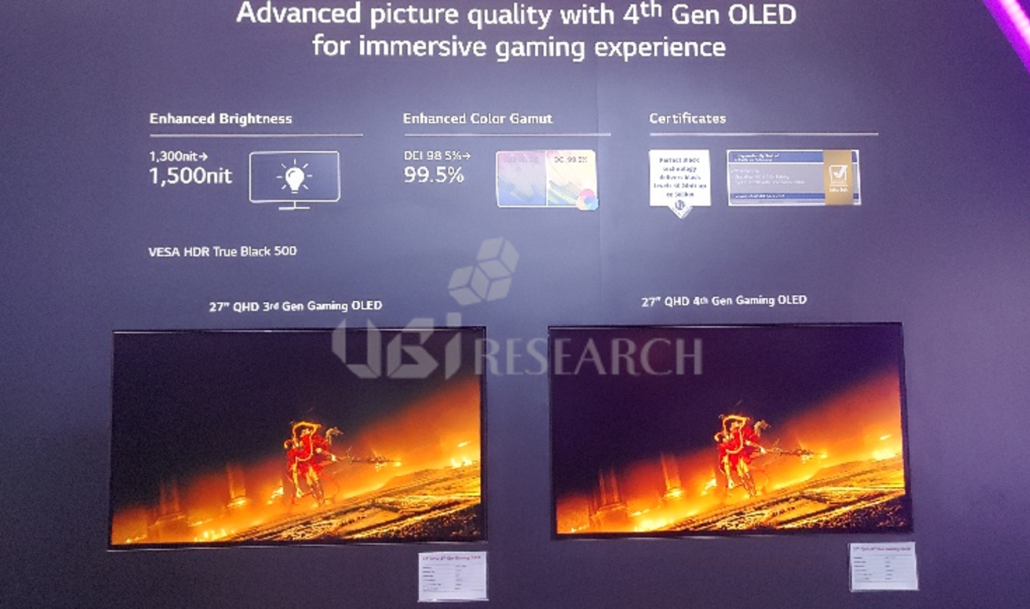
In the large OLED zone, the excellence of the 4th generation OLED panel and TV and gaming panels that applied it were showcased under the theme of ‘Another evolution for mainstream adoption.’ It achieved a maximum brightness of 4,000 nits by applying the ‘Primary RGB Tandem’ structure, a proprietary technology that independently stacks RGB devices to emit light. The ‘27-inch gaming OLED’ was exhibited to allow visitors to experience LG Display’s evolved gaming OLED, such as improved brightness and color reproducibility, by comparing products that applied the existing 3rd generation OLED with new products that applied the 4th generation OLED.

27-inch Gaming OLED: 3rd Gen vs 4th Gen OLED

27-inch Gaming OLED: 3rd Gen vs 4th Gen OLED

The ‘45-inch 5K2K gaming OLED’ that provides the best gaming experience with the world’s highest resolution (5120×2160) was also unveiled. Approximately 11 million pixels are densely arranged on the 45-inch large screen to realize excellent picture quality, and it features a 21:9 ratio similar to a movie theater screen to provide a next-level sense of immersion. LG Display’s proprietary technology ‘DFR (Dynamic Frequency & Resolution)’ that can optimize various contents from gaming to watching movies with a single monitor also garnered attention. Depending on the content, you can freely choose between high refresh rate mode and high resolution mode.

45-inch DFR gaming monitor

45-inch DFR gaming monitor

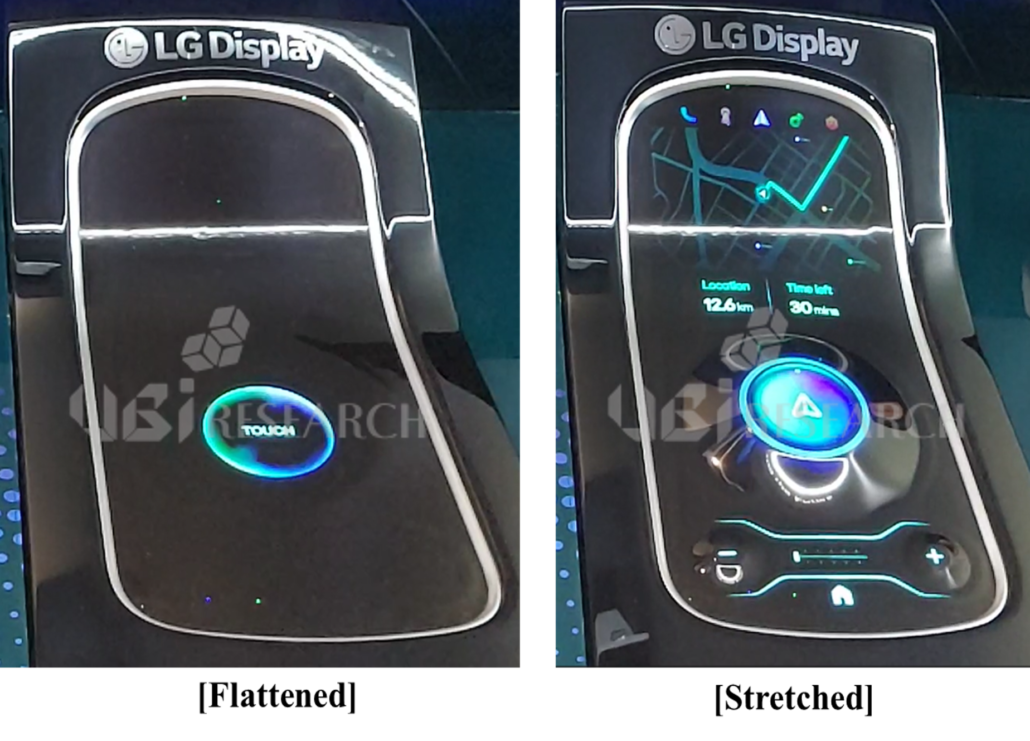
The ‘stretchable display for vehicles’ offers the possibility of innovation in future mobility design by applying a stretchable display whose screen can be freely stretched to the vehicle’s center fascia area where existing physical buttons were located.

A concept car that applied a vehicle display optimized for SDV was introduced. The front seat dashboard of the concept car was equipped with an ultra-large 57-inch pillar-to-pillar that LG Display commercialized for the first time in the industry, and an ‘18-inch sliderable OLED’ was installed for rear seat entertainment. It secured reliability and durability that can operate normally even in extreme environments from -40 degrees Celsius to 85 degrees Celsius, making it suitable for use in vehicles.

In addition, under the theme of ‘Display for a Sustainable Future,’ a next-generation display that applied low-power technology and eco-friendly components was unveiled. The ‘16-inch Neo:LED panel for laptops’ implemented the best color reproducibility suitable for professionals from photography to video production, while developing and applying new LED technology to reduce power consumption. This significantly improved the battery efficiency of IT devices. In addition, a ‘14-inch laptop panel’ was unveiled that made 41% of the product weight out of eco-friendly materials to preserve the future environment. LG Display plans to increase the use of eco-friendly materials in this product to 50% by 2030. In addition, it introduced tiling technology using micro -LED through a demonstration of operating two 22-inch micro-LED panels as independent screens and seamlessly connecting the two panels to operate them as a single screen.

Chang Wook HAN, VP/Analyst, UBI Research(cwhan@ubiresearch.com)

▶2025 Small OLED Display Annual Report Sample
▶2025 Mid-to-Large OLED Display Annual Report Sample