Posts

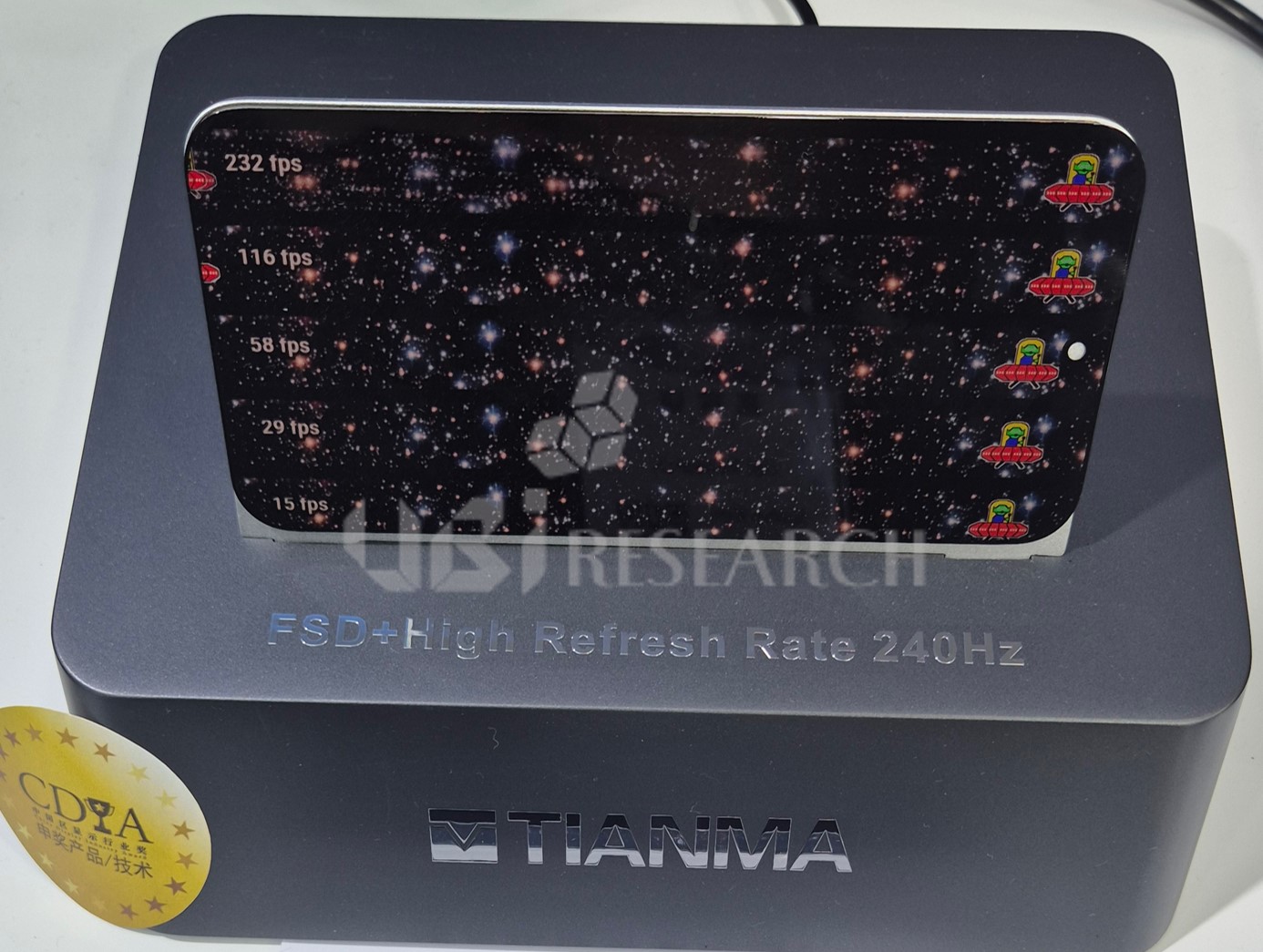
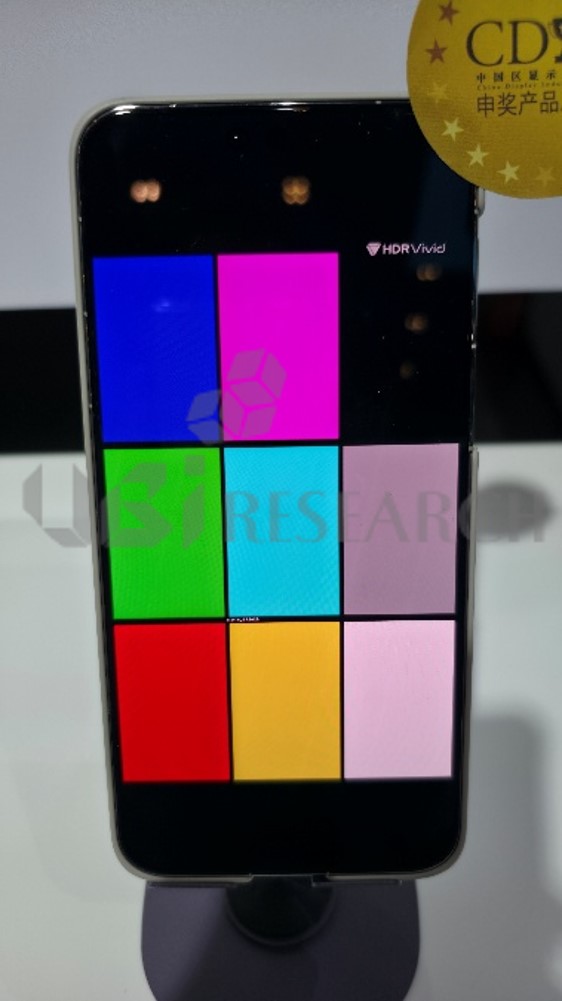
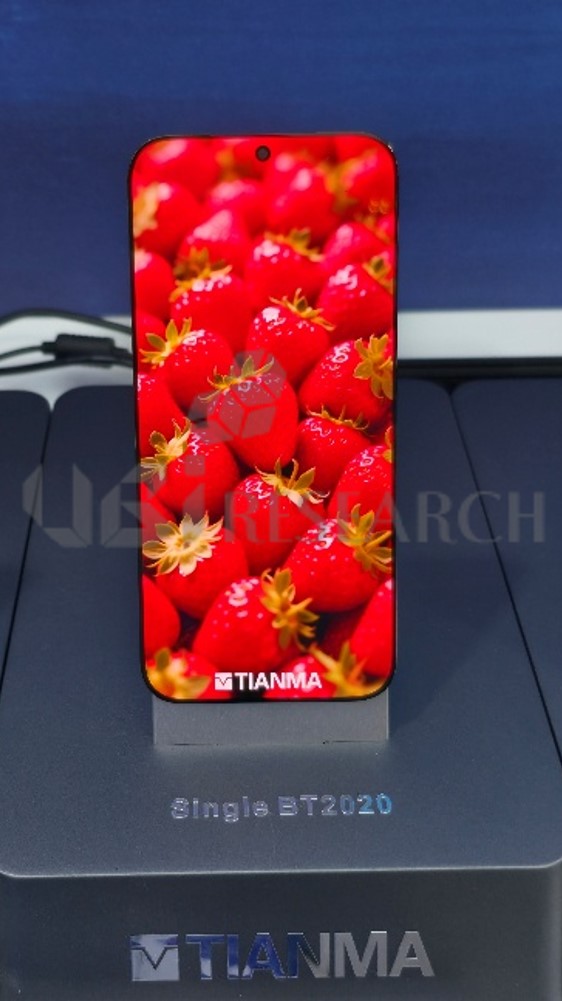
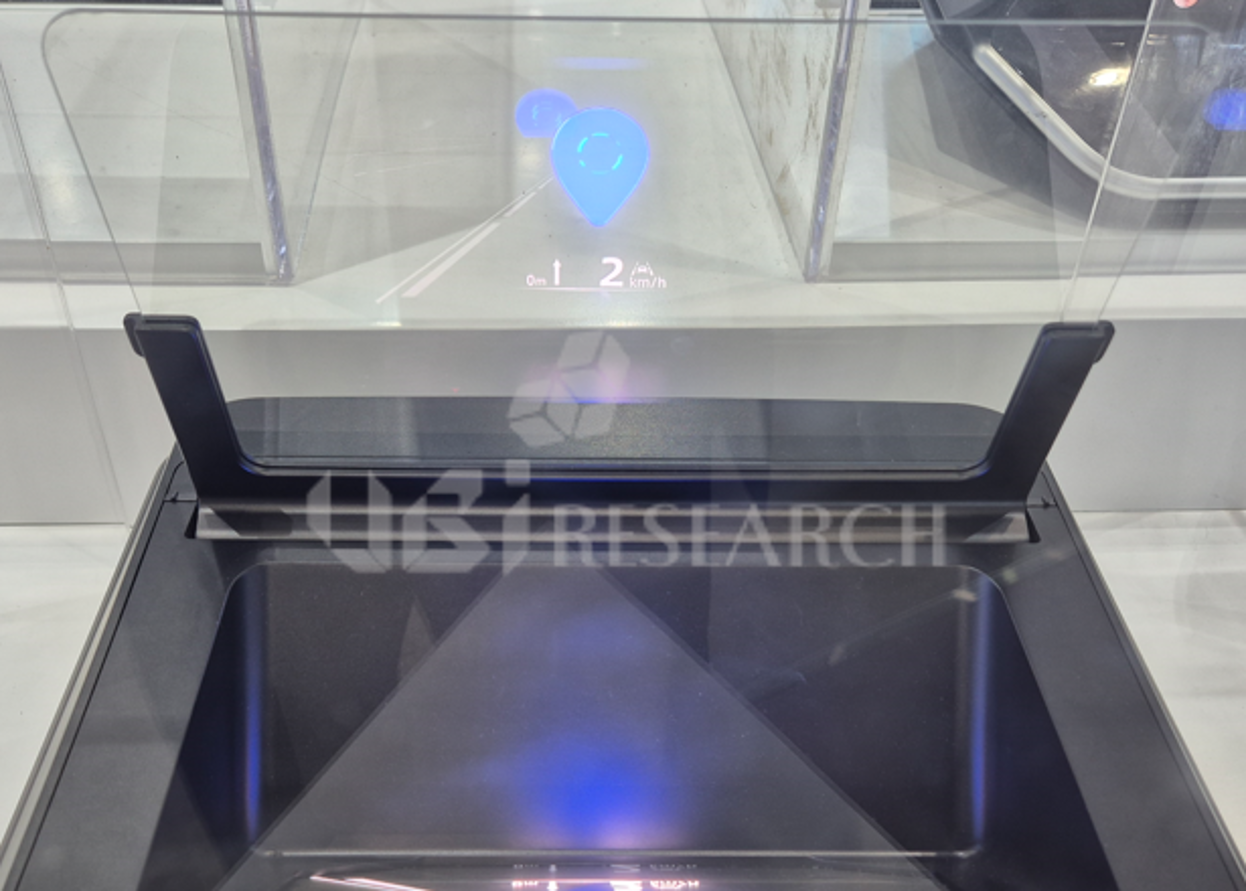
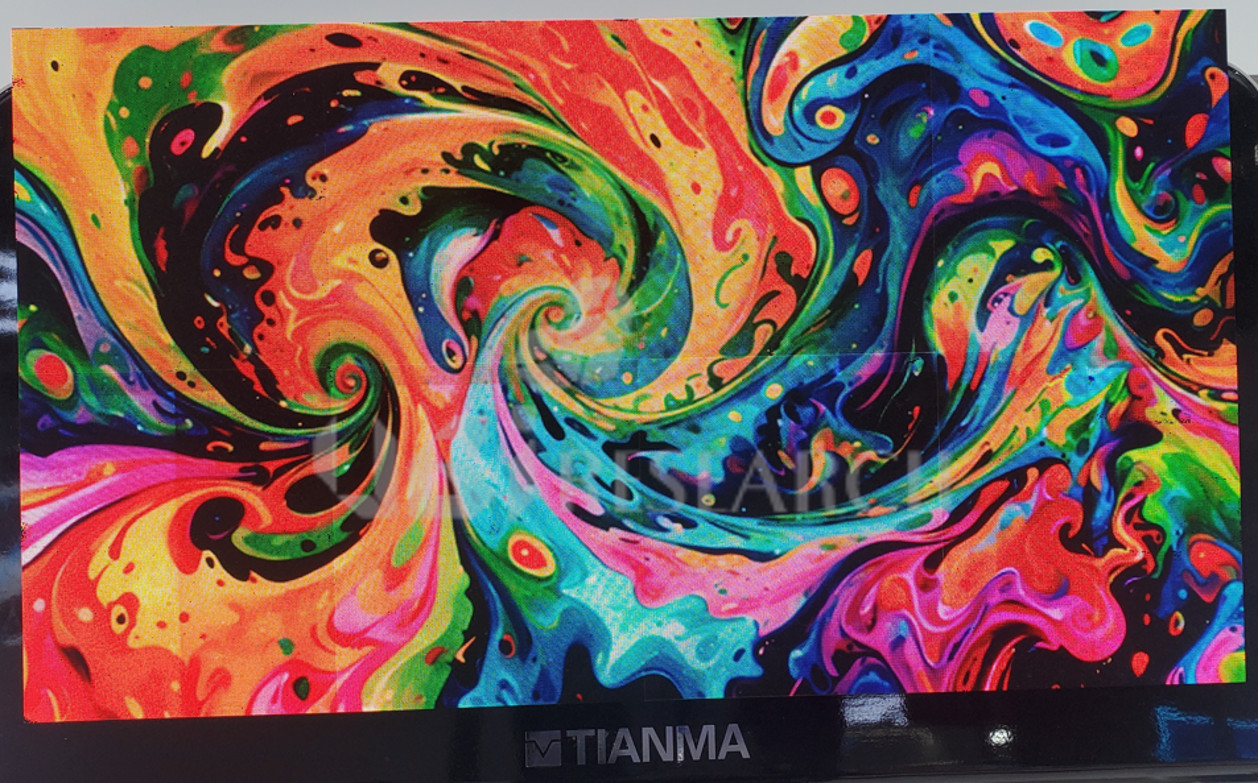
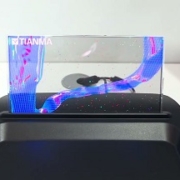
Tianma SLOD device showing 96% BT.2020 coverage at CES 2026.

Chinese panel companies increasingly adopting tandem structure/PSF-based OLED technology for smartphones

The focus of smartphone OLED technology development is shifting from resolution and driving technology to attempts to simultaneously apply new light-emitting materials and tandem stack (layered) architectures. Recently, Chinese panel companies like Tianma, BOE, and Visionox have successively unveiled next-generation OLED technologies combining PSF (Phosphor-Sensitized Fluorescence) series emitting materials—a fourth-generation OLED technology—with tandem structures at major exhibition stages such as CES 2026 and Display Week 2025. These technologies collectively aim to achieve ultra-wide color gamut, high brightness, and improved power efficiency.

At CES 2026, Tianma demonstrated its NFT (New Fluorescence Technology) and SLOD (Stacked Layer OLED Device) concepts applying PSF principles. NFT enhances energy transfer efficiency while maintaining the color purity of fluorescence-based emitting materials. Combined with the SLOD structure, it emphasizes optimizing low-voltage CGL (Charge Generation Layer) and emitting unit designs. According to Tianma’s explanation, SLOD technology is closer to a direction of boosting efficiency by co-designing the light-emitting material–CGL–stack structure, rather than simply expanding the stacking of layers in a Tandem structure.

Tianma's SLOD and 96% BT.2020 Coverage Device displayed at CES 2026

Tianma showcases its SLOD (Stacked Layer OLED Device) achieving 96% BT.2020 color coverage at CES 2026. (Source: Tianma)

BOE exhibited a smartphone OLED solution at Display Week 2025 that combines a Tandem (2-stack) structure with COE (Color filter on Encapsulation) on PSF-based light-emitting materials. BOE demonstrated a direction to achieve a color gamut approaching BT.2020 through spectrum width reduction (FWHM reduction) and peak coordinate shift, while simultaneously improving efficiency and lifespan by lowering current density at the same luminance through the Tandem structure. This is evaluated as an example proposing the light-emitting material, structure, and optical elements as a single integrated package. Meanwhile, Huawei officially announced the Mate 80 RS, featuring BOE’s PSF-based light-emitting material combined with a Tandem (2-stack) structure, in late November 2025, with sequential launches beginning in late November. The industry notes that this timing marks the beginning of ‘Tandem OLED + BT.2020’ specifications being applied to actual flagship products. This is interpreted as a case where the commercialization of technology combining high-color-purity new light-emitting materials (PSF/TADF/pTSF series) with Tandem architecture is spreading in earnest.

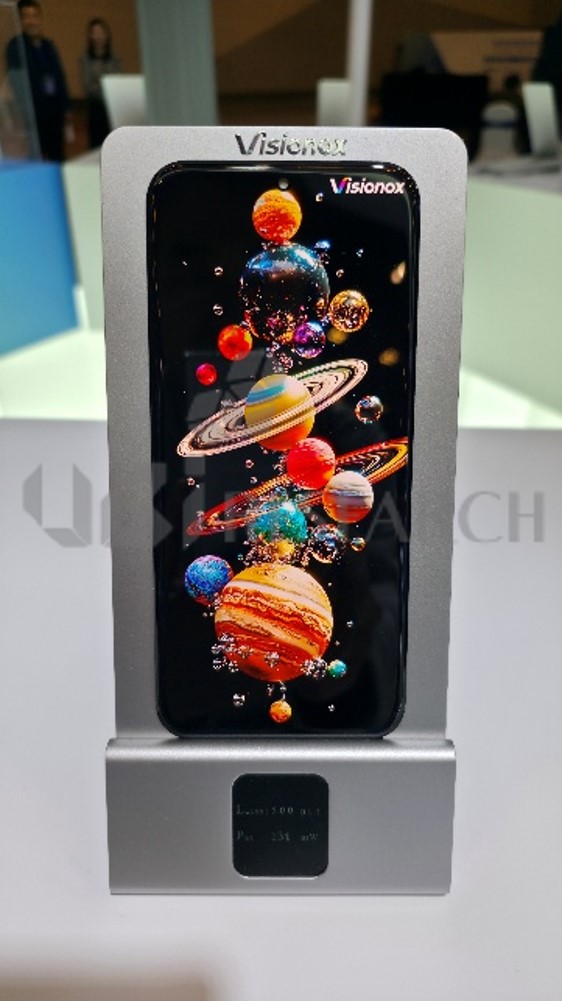
Visionox also officially declared the mass production success of pTSF (Phosphor-assisted Thermally Activated Delayed Fluorescence Sensitized Fluorescence), its fourth-generation OLED light-emitting technology, at a technology forum jointly held with Tsinghua University in December 2025.

According to UBI Research’s analysis, applying next-generation high-color-purity emitting materials and tandem structures in smartphones is evaluated as a powerful means to mitigate OLED’s physical limitations. However, expanding layered structures and introducing new materials may lead to increased costs, yield management challenges, and greater difficulty in driving and calibration. There is also the possibility that ultra-wide color gamut and ultra-high brightness could become excessive specifications relative to the average user’s perceived experience. The industry views the recent trend not as a complete shift, but rather as a phase where certain technologies are entering mass production and being selectively adopted.

Changho Noh,  Senior Analyst at UBI Research (chnoh@ubiresearch.com)

▶2025-2026 Beyond Mobile: IT OLED Technology and Industry Analysis Report

※ This article is produced by UBIResearchNet.
Unauthorized reproduction or citation without source attribution is prohibited.
When quoting, please clearly indicate the source (UBIResearchNet) and provide a link.

LG Display's Dual View technology allowing different content for driver and passenger, symbolizing the shift to cockpit platforms.

CES 2026: The Evolution of Automotive Displays, Beyond Screens to Platforms

On January 6, CES 2026 officially opened in Las Vegas, the United States. At this year’s exhibition, automotive displays clearly demonstrated their evolution beyond simple information panels into core interfaces that integrate and intelligently orchestrate the in-vehicle experience. Alongside advances in OLED, Micro LED, and Mini LED technologies, innovations in form factors, transparency, and AI-driven interaction converged to define the future direction of the smart cockpit.

Korean companies highlighted their technological competitiveness by focusing on ultra-large displays, form flexibility, and differentiated user experiences. LG Display redefined the vehicle interior as a continuous digital space by showcasing its pillar-to-pillar (P2P) OLED display extending from the driver’s side to the passenger side. The single-panel P2P OLED, reaching up to 51 inches, delivers high resolution and excellent touch sensitivity while addressing concerns over image quality degradation in large-format displays. LG Display also unveiled a sliding OLED concept that can retract into the dashboard, presenting a cockpit vision in which screen size and function adapt dynamically to driving conditions. In addition, automotive OLEDs incorporating under-display camera (UDC) technology and Dual View functionality emphasized a direction in which a single screen can provide different information simultaneously to the driver and the passenger.

LG Display's 12-inch UDC IR OLED Cluster and Dual View Display showing different content to driver and co-driver

LG Display’s Dual View technology providing different information to driver and co-driver, featured with UDC cluster. (Source: LGD)

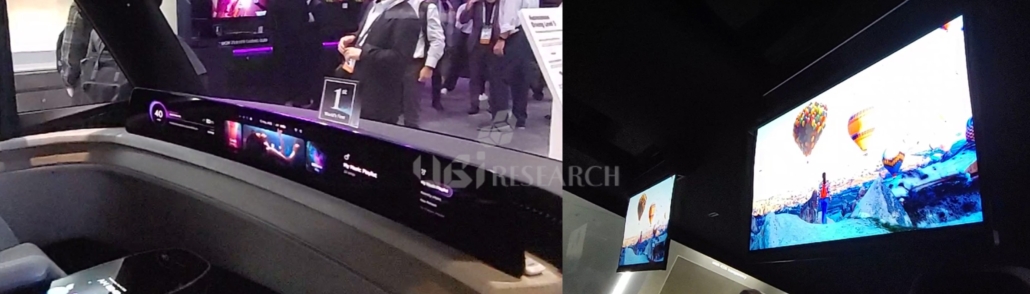
LG Electronics showcased applications of transparent OLED based on LG Display’s panel technology, presenting the potential of “invisible interfaces” in automotive displays. Transparent OLED technology enables both open visibility and information display, demonstrating its potential expansion into future applications such as HUDs, panoramic displays, and in-vehicle and vehicle-to-outside communication.

LG Electronics' Transparent OLED Windscreen and Side-Window display concept for vehicles

LG Electronics’ Transparent OLED Windscreen and Side-Window solutions displaying info while maintaining openness. (Source: LGE)

Samsung Display also emphasized spatial efficiency and installation flexibility through layout-adaptive automotive OLED solutions. Its 18.1-inch “Flexible L” center information display can be bent into an L-shape to conform to dashboard structures, while the 13.8-inch passenger information display (PID) can be hidden beneath the dashboard when the seat is unoccupied, enhancing space utilization. Samsung Display further highlighted the integration of a robust OLED panel with a 500R curvature on a glass substrate, achieving both visual sophistication and ease of installation.

Chinese companies placed strong emphasis on ultra-large integrated displays and advanced HUD technologies, showcasing their system-level integration capabilities alongside aggressive performance specifications. BOE introduced its HERO 2.0 smart cockpit, emphasizing scenario-based in-vehicle experiences centered on displays. The Micro LED PHUD panoramic head-up display, delivering up to 50,000 nits of brightness, ensures high visibility even under strong ambient light and integrates AI-based voice and gesture recognition to further enhance cockpit intelligence. HERO 2.0, which also includes a 15.6-inch UB Cell central display, an AI audio system, and an integrated digital broadcasting function, clearly illustrates BOE’s strategy of transforming vehicles from transportation tools into living spaces. At the same time, BOE highlighted low-power IGZO oxide displays and carbon-reduction achievements, reinforcing its commitment to environmentally sustainable manufacturing.

Demo of BOE's HERO 2.0 Smart Cockpit featuring Micro LED Panoramic HUD

BOE demonstrating the HERO 2.0 Smart Cockpit with a 50,000-nit Micro LED Panoramic HUD. (Source: BOE)

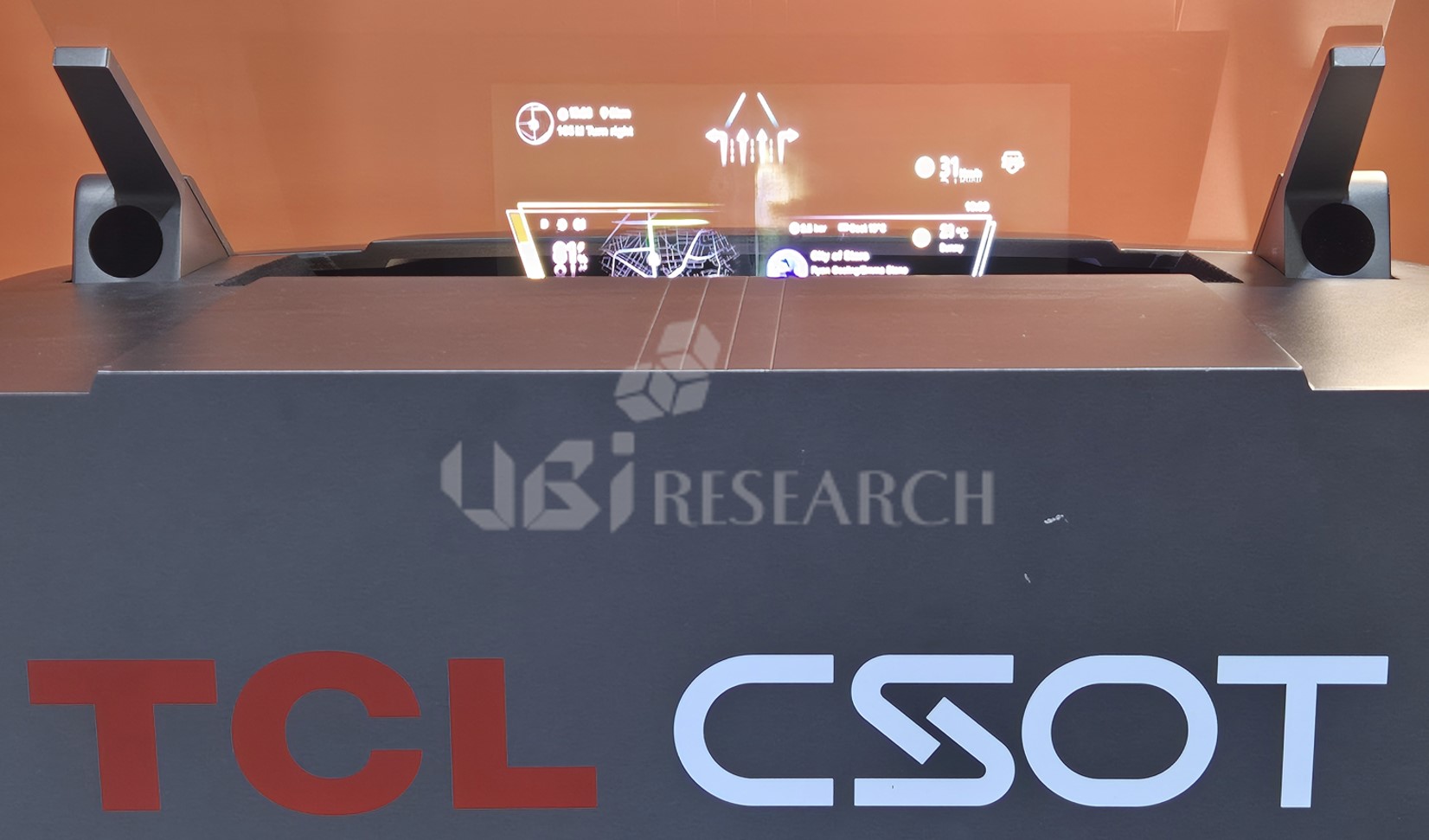
TCL CSOT made a strong impression with its 28-inch inkjet-printed OLED applied to a sliding center console and curved armrest, demonstrating notable innovation in form factor design. At its booth, TCL CSOT also conducted live demonstrations of a projection-based HUD (P-HUD). The HVA Ultra P-HUD projects information onto the vehicle’s front windshield using a multi-LCD projection structure, positioning itself as either a replacement for or a complement to conventional dashboard displays. This demonstrated TCL’s strategy of pursuing cockpit integration not only through large OLED panels but also through HUD solutions.

HVA Ultra P-HUD (Panoramic HUD) projection demo displayed at TCL CSOT booth

TCL CSOT’s Panoramic HUD solution projecting info on the windshield to replace dashboards. (Source: TCL CSOT)

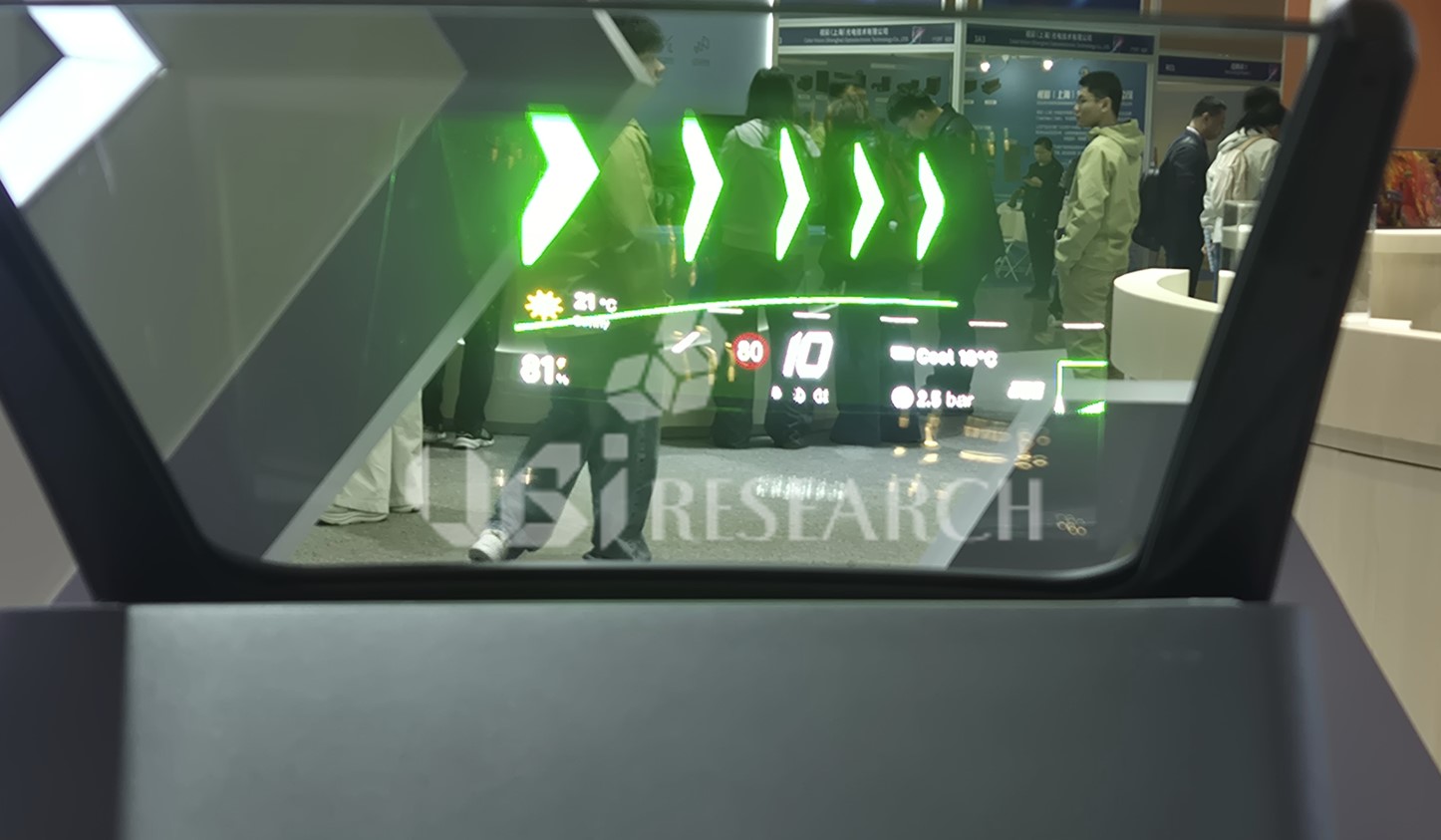
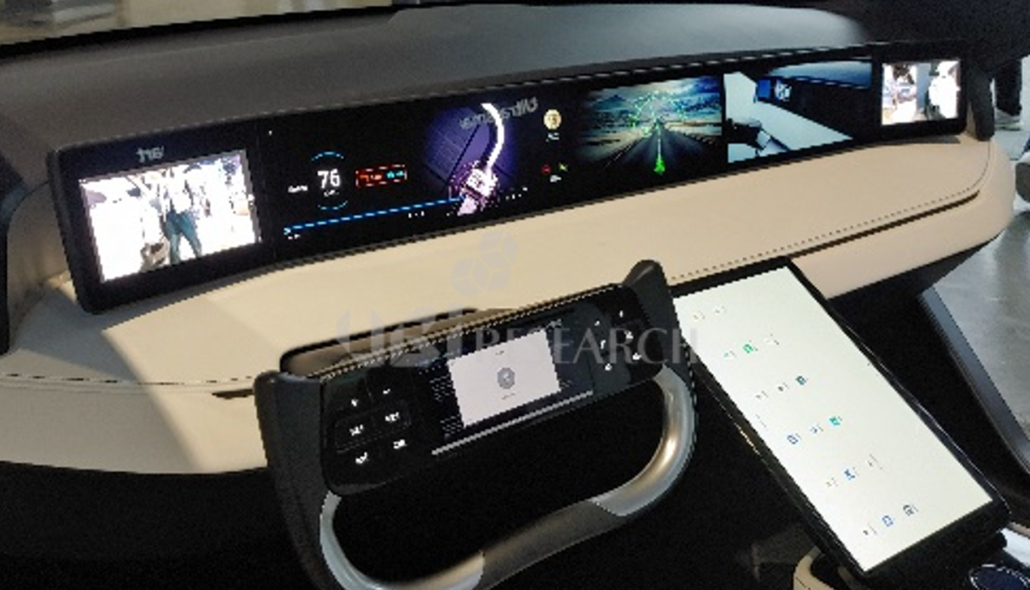
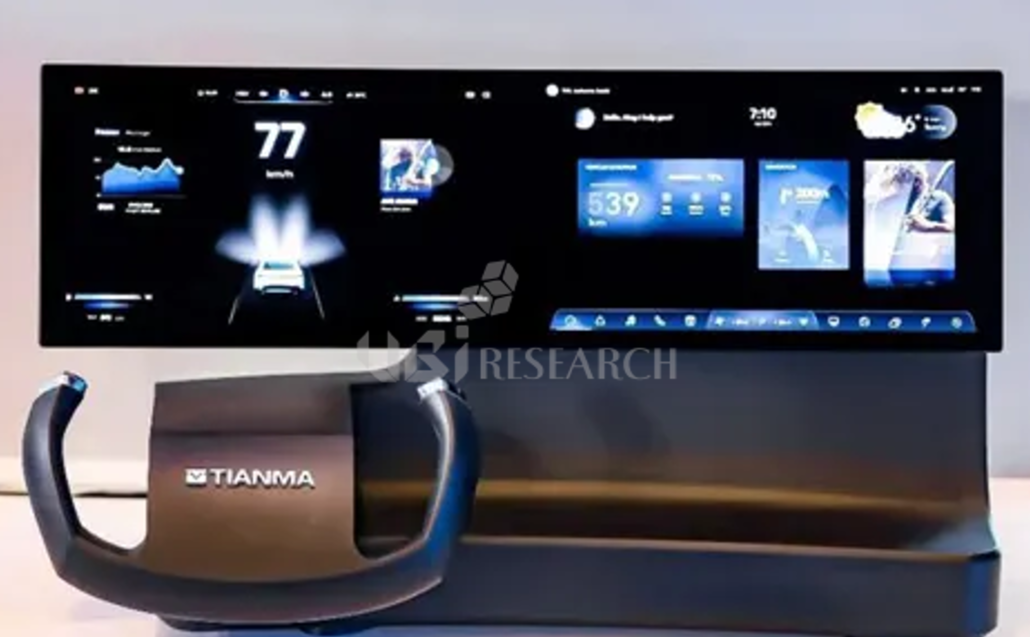
Tianma presented a next-generation cockpit centered on a 49.6-inch C-shaped panoramic display positioned as an information hub, integrating the instrument cluster, center display, passenger display, and side-mirror areas into a single visual architecture. By leveraging more than 210,000 independent dimming units to achieve a 100,000:1 contrast ratio and suppressing reflectance to below 0.55 percent, Tianma emphasized both readability and safety in ultra-large displays. The company’s multi-screen ecosystem, including a 43.7-inch IRIS PHUD panoramic display, a flexible pull-out display, and a small OLED integrated into the steering wheel, highlighted its strengthening capabilities in system-level cockpit design. Visionox also showcased a dynamic bending display using dual flexible AMOLED panels, presenting an approach that simultaneously improves the stowability and visibility of large screens.

Tianma's 43.7-inch IRIS Panoramic HUD and integrated cockpit display revealed at CES 2026

Tianma’s next-gen cockpit and Panoramic HUD system integrating instrument cluster and center display. (Source: Tianma)

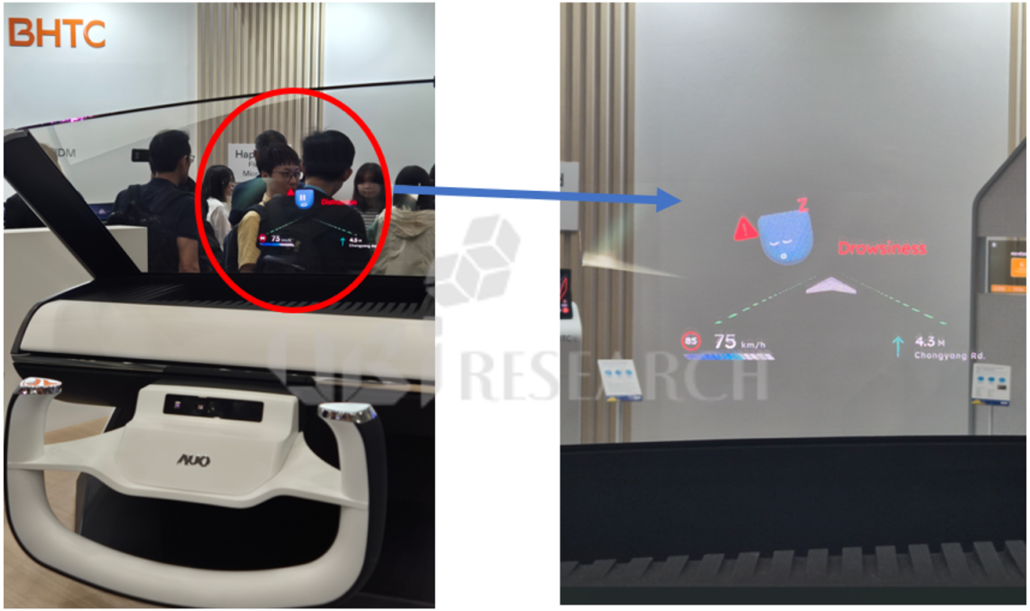
Taiwanese companies pursued differentiation through transparent displays and system integration. AUO, through its subsidiary AUO Mobility Solutions, showcased transparent Micro LED displays, INVISY stealth displays, and an AI-based cockpit domain control platform, defining displays as core nodes connected to vehicle computing systems. The integration with a glass-substrate satellite antenna suggested a future in which automotive displays are directly linked to external networks. Innolux emphasized integrated cockpit solutions combining visual and audio technologies through collaboration with CARUX and Pioneer, and unveiled an ultra-high-brightness Micro LED HUD delivering 50,000 nits of direct brightness and 10,000 nits in reflected image brightness, highlighting stable HUD performance even under extreme conditions.

AUO's automotive Transparent Micro LED display showcased at CES 2026

AUO’s Transparent Micro LED display presented as a key node connecting vehicles with external networks. (Source: AUO)

From the automaker perspective, the direction of change was equally clear. BMW presented a panoramic HUD concept for its next-generation iX3, proposing a future HUD architecture that utilizes the entire windshield as an information interface and emphasizing tighter integration between display technology and vehicle design.

BMW iDrive Surround View System and Panoramic HUD concept demonstrated at the booth

BMW’s futuristic Panoramic HUD and iDrive system utilizing the entire windshield as an information interface. (Source: BMW)

Commenting on the automotive display trends observed at CES 2026, Changwook Han, Executive Vice President at UBI Research, stated, “Automotive displays have entered a phase of cockpit platform competition, where form factors, systems, AI, and content converge, rather than remaining a field of individual component competition.” He added, “The advancement toward ultra-large displays, transparency, and sophisticated HUDs will ultimately serve as key indicators of how deeply display makers can engage in shaping the user experience of automakers.”

Changwook Han, Executive Vice President/Analyst at UBI Research (cwhan@ubiresearch.com)

▶2025 Automotive Display Technology and Industry Trends Analysis Report

※ This article is produced by UBIResearchNet.
Unauthorized reproduction or citation without source attribution is prohibited.
When quoting, please clearly indicate the source (UBIResearchNet) and provide a link.
Bar chart showing the quarterly growth of OLED smartphone panel shipments in 2025, highlighting Q4 peak.

OLED Smartphone Panel Shipments to Reach 900 Million Units in 2025…Q4 Production Drives Annual Growth

Quarterly OLED Shipments Forecast for Smartphones by Manufacturer in 2025 (Source: UBI Research)

UBI Research forecast trend for quarterly OLED smartphone panel shipments and manufacturer share in 2025 (Source: UBI Research)

According to UBI Research’s quarterly publication, the OLED Display Market Tracker, OLED panel shipments for smartphones and foldable phones are expected to reach approximately 900 million units in 2025. By shipment share, Chinese panel makers are projected to account for about 48.8% of the annual total, nearly matching the level of Korean manufacturers. While shipment volumes between the two countries are similar, Korean companies maintain a revenue advantage due to their higher proportion of premium-tier orders for flagship models such as Apple’s iPhone and Samsung’s Galaxy.

In particular, Korean panel makers saw a significant surge in smartphone and foldable panel shipments in the fourth quarter, marking their strongest performance of the year. Panel supply expanded sharply from the third quarter with the launch of new Apple products, and shipments peaked as Samsung Electronics began full-scale production of Galaxy S26 series panels.

Samsung Display continued its solid growth into the fourth quarter, driven by increasing demand for panels for the iPhone 17 series and Samsung’s Galaxy S25 FE. With mass production for both the iPhone lineup and Galaxy S26 series in full swing, Samsung Display is expected to post its highest annual shipment volume to date. LG Display also achieved a strong rebound in the third quarter with shipments of roughly 20 million units, representing a sharp quarter-over-quarter increase, and its Q4 shipments are forecast to rise by an additional 20%.

Chinese panel makers showed quarterly fluctuations depending on demand conditions but maintained stable supply across major smartphone brands. BOE expanded its customer base by diversifying its supply portfolio from entry-level to upper-mid-range smartphone models. TCL CSOT and Visionox continued to grow shipments to both the domestic Chinese market and global brands, while Tianma focused on enhancing technological competitiveness by increasing the share of high value-added products such as LTPO.

In terms of set makers, Apple secured the largest volume of OLED panels, followed by Samsung Electronics, Xiaomi, Vivo, and Huawei. Executive Vice President Changwook Han of UBI Research commented, “As the industry enters the second-half peak season, Korean display manufacturers are showing clear improvements in both shipments and revenue. In particular, Samsung Display is expected to ship around 150 million panels in the fourth quarter driven by increased demand for iPhone panels.” He added, “Chinese panel makers are also maintaining stable momentum by adjusting their supply strategies in line with shifting market demand.”

Changwook Han, Executive Vice President/Analyst at UBI Research (cwhan@ubiresearch.com)

▶ Quarterly Small OLED Display Market Tracker Sample

▶Quarterly Medium & Large OLED Display Market Tracker Sample

※ This article is produced by UBIResearchNet.
Unauthorized reproduction or citation without source attribution is prohibited.
When quoting, please clearly indicate the source (UBIResearchNet) and provide a link.
Featured graphic of 2024–2025 OLED shipment share by application highlighting smartphone dominance and China’s rising supply share (Source: UBI Research)

Dual Axes of the 2025 OLED Market: Korea’s Premium Focus and China’s Expansion in Shipments

The OLED market in 2024 and 2025 witnessed marked changes in both the demand structure by application and the supply structure by panel manufacturer. The smartphone-centric demand base became more robust, while major Korean and Chinese panel manufacturers, leveraging their distinct strengths, expanded their market contributions, leading to continued diversification in the OLED industry.

By application, smartphones dominated the OLED market in 2024, accounting for 82% of total shipments, reaching 833.8 million units. Watches accounted for 119.7 million units (12%), while other product groups, including tablets, laptops, monitors, and TVs, remained small markets. This structure continued in 2025, with smartphone shipments increasing to 920.7 million units, representing 84% of the total. Watches remained relatively stable at 113.4 million units, and the share of other product groups remained largely unchanged.

Pie charts of OLED shipments by application for 2024 and 2025 showing larger smartphone share (Source: UBI Research)

OLED shipment share by application, 2024 (left) and 2025 (right) (Source: UBI Research)

In 2024, the roles of Korea and China in OLED panel supply were clearly divided. Samsung Display maintained its position as the largest supplier with 410 million units (41%), while LG Display recorded 100 million units (11%). In the same year, Chinese panel makers continued their quantitative expansion, accounting for 48% of the total, with a combined shipment of 490 million units: BOE with 138 million units, Visionox with 114 million units, Tianma with 102 million units, CSOT with 83 million units, and EverDisplay with 43 million units.

This structure was further strengthened in 2025. Chinese panel makers, including BOE, Tianma, Visionox, CSOT, and EverDisplay, combined to ship 555 million units annually, accounting for over 51% of the global supply, emerging as a key player in the global supply chain. In the same year, Samsung Display maintained its technology-focused responsiveness, with shipments reaching 411 million units (37%), while LG Display reached 128 million units (12%).

The differences in sales strategies between the two countries were also clear. In 2024, Samsung Display solidified its premium-focused structure with $25.6 billion (57%), while LG Display also achieved $7 billion. Conversely, Chinese companies such as BOE, Visionox, and Tianma demonstrated a trend of expanding sales based on mass production. In 2025, LG Display grew significantly to $11.6 billion, and BOE’s shipments also expanded to $7.1 billion, further separating the two countries’ technology and production strategies.

In summary, the OLED market in 2025 saw a strengthened smartphone-centric demand structure, while Chinese companies accounted for over half of panel shipments, demonstrating a clear shift in regional composition. Korean companies maintained a sales structure centered on high-value-added products, while Chinese companies continued to expand their market presence based on increased shipments. UBI Research Executive Vice President Changwook Han said, “The 2025 OLED market is a period in which the supply structure by region and company is expanding simultaneously, with each company broadening its market response based on its product portfolio and technological capabilities.”

Changwook Han, Executive Vice President/Analyst at UBI Research (cwhan@ubiresearch.com)

▶ Quarterly Small OLED Display Market Tracker Sample

▶Quarterly Medium & Large OLED Display Market Tracker Sample

※ This article is produced by UBIResearchNet.
Unauthorized reproduction or citation without source attribution is prohibited.
When quoting, please clearly indicate the source (UBIResearchNet) and provide a link.
Composite image of Garmin Fenix 8 Pro Micro-LED smartwatch showing front face and side view for outdoor visibility (Source: Garmin)

When will the commercialization competition of Micro-LED smartwatch products become feasible?

The development of Micro-LED-based smartwatches has continued since 2020 through prototype exhibitions, and their high brightness characteristics led to high expectations for commercialization. Previously, companies like KONKA, AUO, Innolux, and Apple had attempted development or commercialization. However, when Apple halted its own development in early 2024, the difficulties of the Micro-LED manufacturing process and high cost issues came to the fore, suggesting that commercialization of Micro-LED smartwatches would require more time.

Assorted Micro-LED smartwatch prototypes from multiple vendors

Assorted Micro-LED smartwatch prototypes from multiple vendors

However, sports smart wearable brand Garmin launched the world’s first Micro-LED smartwatch, the ‘Fenix 8 Pro’, in September this year. It is currently retailing for approximately 13,000 yuan on Chinese online shopping platforms. Garmin’s September launch sent a significant signal to the market, demonstrating that Micro-LED technology has secured commercial viability in the smartwatch sector.  Of course, there are still many areas requiring improvement. Nevertheless, beyond AUO, which is already in mass production, companies like PlayNitride, Innolux, Samsung Display, TCL CSOT, and Tianma are actively entering the market and accelerating efforts to commercialize Micro-LED smartwatches. By late 2023, AUO had already achieved mass production of Micro-LED watch panels. In its subsequent production plans, AUO’s 4.5-generation Micro-LED production line is scheduled to enter mass production this year, with products covering smartwatches and large TVs. At CES 2025, Samsung Display showcased a watch prototype (2.1 inches, 418×540 resolution, 326 ppi) developed over years of Micro-LED technology advancement. Chinese home appliance company KONKA also unveiled its Micro-LED watch, the APHAEA Watch, in 2020. The Chongqing KONKA Optoelectronics Technology Research Institute is enhancing core technologies to reduce manufacturing costs. PlayNitride has positioned smartwatches as a key growth driver this year, exhibiting a 1.39-inch smartwatch panel at Touch Taiwan 2025. This product applies high-efficiency, low-power ‘Tantium’ chip technology to achieve high resolution and 5,000 nits peak brightness, presenting a new solution that simultaneously delivers low power consumption and high image quality for wearable devices. Innolux has also developed 1.1-inch and 1.39-inch Micro-LED displays with integrated touch sensors. Tianma has established a dedicated Micro-LED research institute and is exploring new application areas like smartwatches, in addition to automotive applications.

Garmin Fenix 8 Pro Micro-LED smartwatch (Source: Garmin)

Garmin Fenix 8 Pro Micro-LED smartwatch (Source: Garmin)

Garmin has pioneered Micro-LED in smartwatches, but who will be the next contender for Micro-LED smartwatches? When will commercialization competition become feasible? Significant hurdles remain. Developed watch panels (326~338 PPI) achieve high brightness levels of 4,000~6,000 nits. However, to compete with existing OLED products, Micro-LED chip and manufacturing costs must be reduced, and power consumption characteristics must be improved. Recent announcements from Micro-LED technology companies clearly outline and are actively pursuing solutions to overcome these cost challenges. The mid-to-long-term strategy for Micro-LED smartwatches is to build integrated technological capabilities combining Micro-LED technology with health monitoring sensors. Long-term, as chip miniaturization technology matures and the advantages of sensor integration are fully realized, Micro-LED is expected to break free from its niche market limitations and expand into the broader wearable product market. UBI Research analyzed that the Micro-LED smartwatch market will fully open starting in 2028.

Namdeog Kim, Senior Analyst at UBI Research(ndkim@ubiresearch.com)

▶2025 Micro-LED Display Industry and Technology Trends Report

※ This article is produced by UBIResearchNet.
Unauthorized reproduction or citation without source attribution is prohibited.
When quoting, please clearly indicate the source (UBIResearchNet) and provide a link.
Tianma Unveils Future Display Roadmap at TIC 2025

On November 18th, the 2025 Tianma Microelectronics Global Innovation Conference (TIC 2025) was held in Wuhan, under the theme of “Innovation, New Horizons.” UBI Research summarized the key findings and technological trends presented at the event. This year’s TIC was attended by approximately 1,000 participants, including government and academic officials, global industry chain partners, investment institutions, and the media, who discussed the future direction of next-generation display technology. The conference served as a meaningful platform to showcase Tianma’s technological innovation achievements and simultaneously announce its ecological cooperation, technological standards, and sustainable development strategies.

The event featured specialized sessions on five key technology areas strategically strengthened by Tianma: the intelligent cockpit ecosystem, OLED technology, IT display technology, Micro LED, and intelligent sensing. A panoramic exhibition space encompassing smartphones, vehicles, IT, wearables, and professional displays was also unveiled. The “Tiangong Screen” experience zone showcased premium OLED technology, featuring eye protection, high resolution, and high refresh rates. The “Tianxuan Screen” exhibition area showcased advanced vehicle display experiences, showcased in real vehicles, including the Yangwang U9 and U7, ZEEKR 009 Glory Edition and 9X, NIO ES6, and Xpeng X9.

OLED technology for smartphones garnered significant attention at the presentation. Tianma unveiled the world’s first “Full Ambient Light Sensing Display,” which integrates fingerprint recognition, ambient light detection, and panel life monitoring into a single panel. This significantly enhances the user experience by reducing sensor thickness by 99% and improving light detection performance by 40x. Furthermore, the company unveiled “Super Narrow Bezel” technology, which utilizes circuit optimization based on LTPO 3.0 Pro to reduce the bezel by 20% for enhanced immersion, and the “Premium Health Display” solution, which improves blue and green light emission efficiency to reduce power consumption. In the automotive display sector, a number of technologies that best portray the future of cockpits have emerged. The 49.6-inch ultra-wide-angle panoramic screen integrates the instrument panel, side mirrors, rearview mirror, and center console into a single large screen. Its ACRUS-based pixel-level dimming technology delivers a contrast ratio of 100,000:1 and low reflectivity. Furthermore, the “IRIS HUD Panoramic Screen,” with its 12,000nit brightness, projects driving information clearly onto the windshield, garnering attention as a HUD solution that simultaneously addresses power and thickness issues. Adding to this a 13-inch central display with an L-shaped curved panel and a dynamic roll-up screen that can expand or hide a 17-inch screen in just six seconds, the possibilities for in-vehicle UX have been significantly expanded.

Tianma IRIS HUD Panoramic Automotive Display System (Source: Tianma)

Tianma IRIS HUD Panoramic Automotive Display System (Source: Tianma)

Tianma 49.6-inch Curved ACRUS Panoramic Screen for Automotive (Source: Tianma)

Tianma 49.6-inch Curved ACRUS Panoramic Screen for Automotive (Source: Tianma)

IT display technology targets next-generation PCs and esports demand. “LEAF 2.0” technology, which significantly reduces logic power consumption even at 1Hz through oxide-based ultra-low frequency operation, addresses the power efficiency demands of the AIPC era. The world’s first esports panel with a 610Hz refresh rate aims to optimize the screen for professional gaming environments with ultra-fast response and minimal afterimages.

Finally, in the Micro LED field, Tianma unveiled its flagship products, symbolizing the company’s technological prowess. The first exhibit to catch the eye was the 19-inch IRIS HUD Micro-LED, a HUD solution that delivers over 2,000 nits of brightness to the driver’s field of vision through precision tiling and a high-brightness design. Featuring a compact structure and non-reflective design, it suggests the potential for lighter and smaller HUDs for luxury vehicles.

Furthermore, the 19-inch transparent Micro-LED tiling panel demonstrates next-generation HMI technology, combining 60% transparency with 5,000nits of brightness to display information while maintaining a clear view from inside the vehicle. The 7.05-inch ultra-slim bezel transparent Micro-LED, displayed alongside the display, boasts a bezel of less than 0.1mm, emphasizing the design perfection of the transparent display.

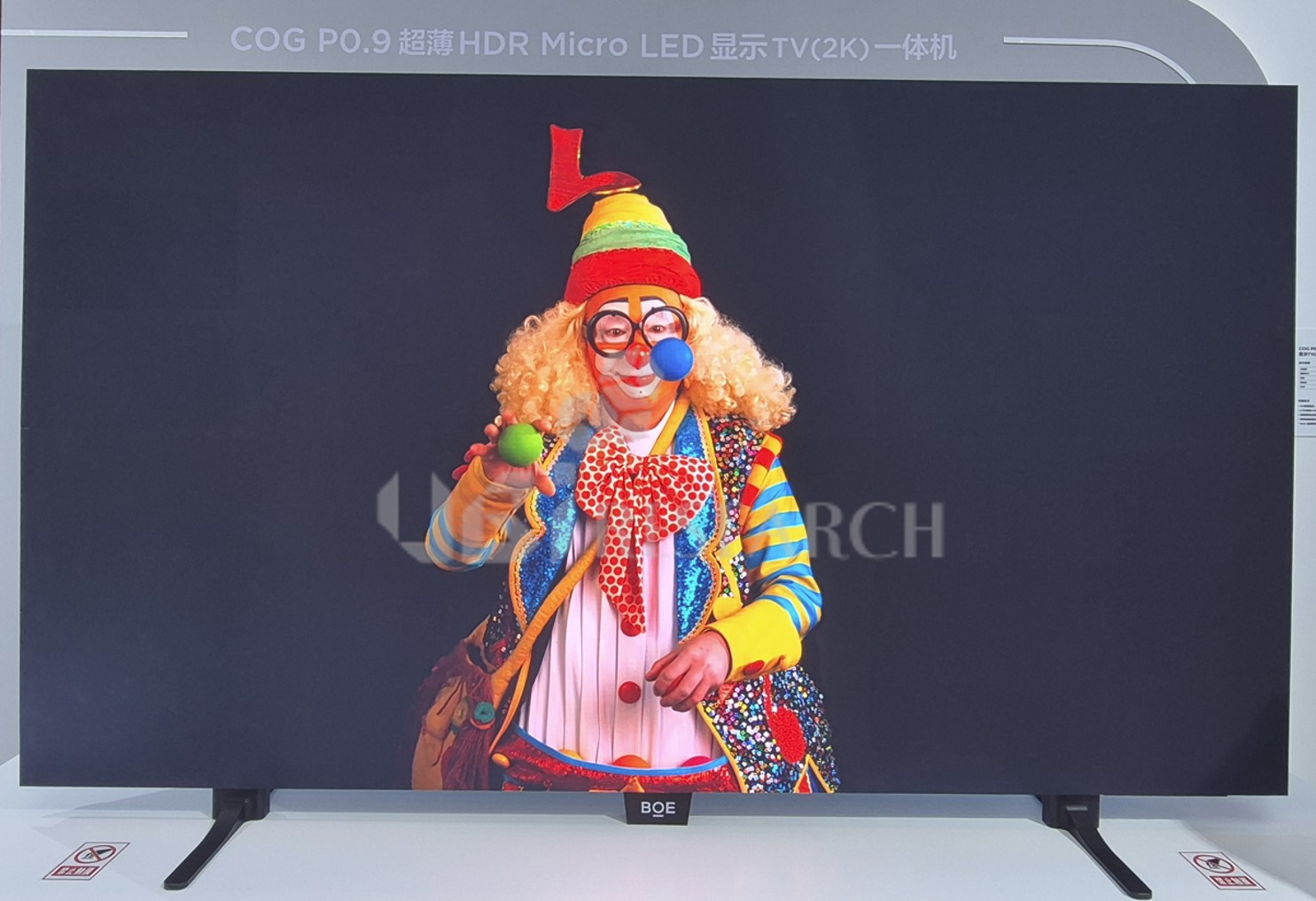
At the center of the exhibition was a 108-inch 4K Seamless Tiling Micro-LED. This all-laser transmission-based display features 1,500nits peak brightness, a 0mm bezel, and a sophisticated LTPS-based structure. The seamless implementation ensured that the module boundaries were virtually invisible during actual playback.

This exhibition demonstrated the rapid expansion of Micro-LED technology and its potential for implementation in diverse applications, including automotive, IT, and large commercial screens. Tianma showcased its extensive portfolio, encompassing HUDs, transparent panels, and large tiling screens, clearly demonstrating its Micro-LED R&D strategy and signaling its potential to shape a new competitive landscape in the premium display market.

Changwook Han, Executive Vice President/Analyst at UBI Research (cwhan@ubiresearch.com)

▶2025 Automotive Display Technology and Industry Trends Analysis Report

▶2025 Micro-LED Display Industry and Technology Trends Report

TIC 2025: Tianma Unveils Dual Micro LED Roadmap Targeting AR, Automotive, and IT

At the 2025 Tianma Microelectronics Global Innovation Conference (TIC 2025) held on November 18, Tianma garnered attention from the industry by unveiling its Micro LED technology roadmap and future strategy. The presentation began by emphasizing that Micro LED has passed the technology verification stage and entered a full-fledged growth phase. Tianma explained that Micro LED’s unique values ​​of high resolution, high brightness, and low power consumption are precisely aligned with the demands of major application fields such as AR and MR, automotive, IT, and TV, and are emerging as a key axis driving industrial change. In particular, Tianma clearly presented the future product development direction by presenting a two-track roadmap: completing a mass production platform based on high-speed laser transfer by 2025, and then simultaneously expanding ultra-high PPI AR Micro LED and mid- to large-sized IT and automotive panels.

Tianma Micro-LED Industrialization Layout and Prospects Roadmap (Source: Tianma)

Tianma’s Micro-LED Industrialization Layout and Prospects (Source: Tianma)

Tianma highlighted its rapid internalization of the entire value chain, encompassing chip, transfer, panel, and calibration technologies, as a key strength. According to the announcement, Micro LED chip sizes have been reduced from 20μm to less than 5μm, and efficiency has improved to 65-90%. At the module level, Demura-based ultra-high uniformity correction technology has secured screen uniformity of over 99%. A high-speed, large-area transfer platform has been established, laying the technological foundation for precise placement of millions of chips. Furthermore, chip-on-glass-based pixel repair technology supports its yield maximization strategy.

In terms of manufacturing structure, Tianma announced a hybrid roadmap that utilizes three manufacturing strategies: RGB precision transfer, bump structures, and QD color conversion, tailored to each application. RGB is optimized for large-scale, high-resolution panels for IT applications, while the blue single-chip-based QD color conversion method, with its high yield and simplified process, is emerging as a key solution for ultra-high PPI displays for AR and MR. Tianma predicts that ultra-high-resolution Micro LEDs focused on AR and MR, and mid- to large-sized panels focused on automotive and IT, will become the two pillars of the future Micro LED market, and announced that it will continue to strengthen its “dual strategy” to secure competitiveness in both markets.

The Micro LED products on display at TIC 2025 were a symbolic demonstration of Tianma’s technological maturity. The 108-inch 4K “Borderless Giant Screen” in particular attracted great attention. This screen, realized through a combination of Full Laser Mass Transfer (FLM) and Seamless Splicing technologies, has virtually invisible seams of less than 20μm. With a maximum brightness of 1,500 nits, a reflectivity of less than 2%, and a contrast ratio of 1,000,000:1, it demonstrated that Micro LED technology can achieve OLED-level picture quality while also offering higher brightness and durability than LCD. It is evaluated as a representative example that shows the potential of Micro LED in various fields such as large commercial spaces, high-end home cinema, and professional video environments.

Tianma 108-inch 4K Micro-LED Borderless Giant Screen (Source: Tianma)

Tianma’s 108-inch 4K Micro-LED Borderless Giant Screen displayed at TIC 2025 (Source: Tianma)

UBI Research Vice President Changwook Han evaluated this conference, saying, “What is particularly impressive is that Tianma is rapidly internalizing the entire Micro LED process technology.” He analyzed that in the Micro LED market, which is being reorganized into two axes of ultra-high-resolution AR/MR and medium- to large-sized IT/vehicle displays, Tianma is establishing a technological foundation that can compete in both areas. He also said, “The 108-inch borderless screen on display this time is a symbolic result that shows that Tianma has moved beyond the R&D stage and entered the actual product implementation stage,” and predicted that the completion of the entire process, yield, and large-area technology to secure future mass production competitiveness will be a significant inflection point in the global Micro LED market.

Changwook Han, Executive Vice President/Analyst at UBI Research (cwhan@ubiresearch.com)

▶2025 Micro-LED Display Industry and Technology Trends Report

Tianma’s 8.07-inch HUD, 8.07-inch low-reflection transparent, 9.38-inch adjustable-transparency, and 7.05-inch narrow-bezel transparent Micro-LED displays showcased at CIIE 2025 (Source: Tianma)

Tianma Unveils ‘Next-Generation Transparent Micro-LED’ at CIIE… Technology to Watch in the Premium Mobility Market

At the 2025 China International Import Expo (CIIE), Tianma Microelectronics Co. (Tianma) garnered attention from the industry by unveiling its latest Micro LED transparent display technology. CIIE is a national-level import expo led by the Chinese government, where global companies showcase their latest technologies and products to the Chinese market. This year’s event showcased a wide range of digital industry solutions, particularly next-generation display solutions. Tianma’s Micro LED technology received high praise for its diverse applications in automotive, commercial spaces, and smart homes.

Tianma has long been a competitive player in flexible OLED and mobile/automotive displays, and has been actively developing Micro LED technology since 2017. In particular, its glass-based Micro-LED transparent display technology has seen tangible results in recent years, overcoming technical challenges. The company has achieved high mass production by establishing the industry’s first G3.5 generation fully automated mass transfer production line, and its self-developed transfer equipment reportedly achieves a production efficiency of up to 40 million units per hour. This foundation has enhanced the industrial potential of transparent displays and contributed to meeting the key characteristics of transparent displays, including high brightness, high transparency, and low reflectivity.

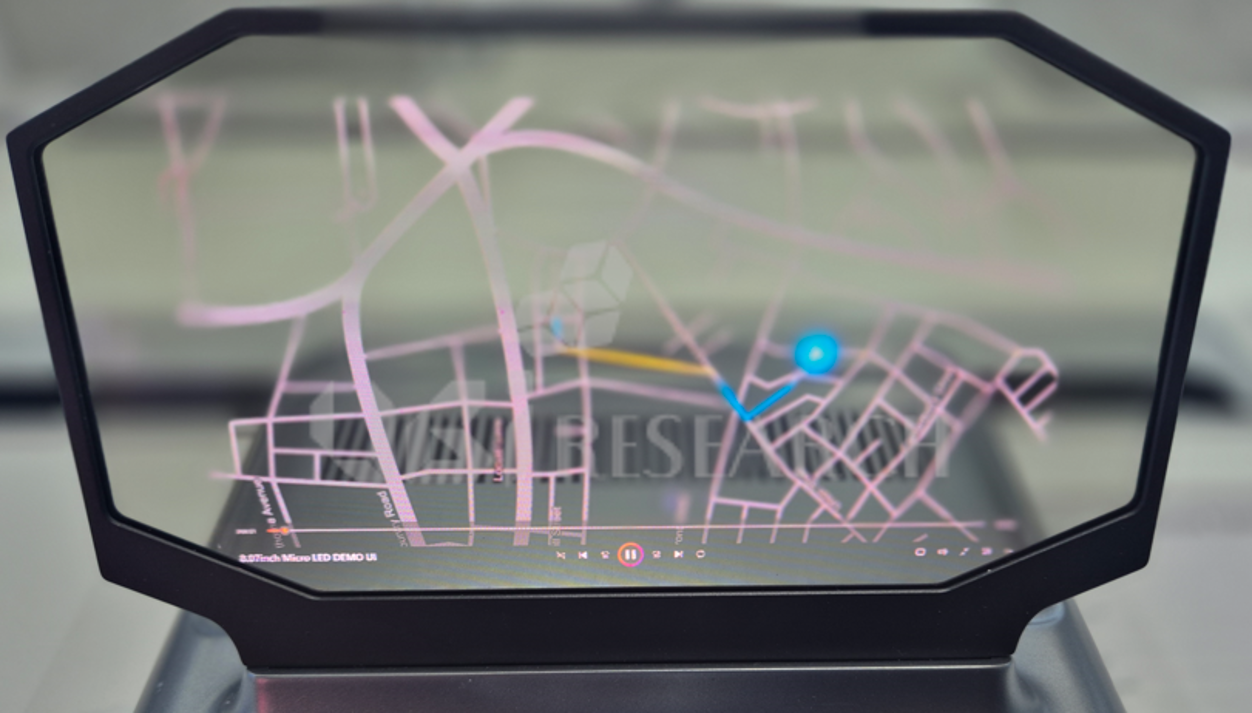
At this year’s CIIE, Tianma demonstrated technological advancements centered on four key Micro-LED transparent displays. First, the 8.07-inch HUD was introduced, featuring high brightness of 10,000nits, a thin structure, wide color reproducibility, and a fast response speed, making it optimized for vehicle windshield HUD applications.

Tianma 8.07-inch HUD Micro-LED display (Source: Tianma)

Tianma 8.07-inch HUD Micro-LED (Source: Tianma)

The 8.07-inch transparent, low-reflection display has the industry’s highest resolution of 167 PPI, a transmittance of over 50%, and a low reflectance of less than 3%, demonstrating its potential for use in automotive windows and instrument displays.

Tianma 8.07-inch transparent low-reflection Micro-LED display (Source: Tianma)

Tianma 8.07-inch transparent low-reflection Micro-LED (Source: Tianma)

The 9.38-inch transparency-adjustable display can automatically adapt to the surrounding light environment by changing the transparency from 0.1% to 24%, ensuring high visibility even in complex lighting conditions.

Tianma 9.38-inch transparency-adjustable Micro-LED display (Source: Tianma)

Tianma 9.38-inch adjustable-transparency Micro-LED (Source: Tianma)

Lastly, the 7.05-inch narrow bezel transparent display has an ultra-thin bezel of less than 0.1mm and transparency of over 60%, suggesting expandability in various environments such as large commercial displays, smart homes, and vehicle interfaces.

Tianma 7.05-inch narrow-bezel transparent Micro-LED display (Source: Tianma)

Tianma 7.05-inch narrow-bezel transparent Micro-LED (Source: Tianma)

Automaker Xpeng also participated in the event, discussing how Micro LED technology will transform future vehicle display configurations. An expert from Xpeng stated that displays are evolving beyond simple information displays into interactive spaces, and transparent displays will be key to this transformation. He emphasized that Tianma’s technology holds the potential to deliver new user experiences in advanced vehicles, but noted that cost and energy consumption remain major obstacles to commercialization. He noted that the current technology is likely to be initially applied to luxury vehicles priced at 500,000 yuan (approximately $70,000) or more, and that further cost reductions and process optimization are needed to expand to mass-market vehicles.

Changwook Han, Executive Vice President of UBI Research, commented, “This collaboration demonstrates the expanding role of display technology in the future intelligent mobility market.” He added, “Transparent Micro-LED is a key technology that will transform vehicle interiors into platforms that combine information and interaction, and will be a crucial element in strengthening the differentiation of luxury vehicles in particular.” He also analyzed, “While there are still challenges to address in terms of cost and process efficiency, the technological achievements confirmed at this CIIE demonstrate the potential for new application markets to open up in various fields, including vehicle displays and smart spaces.”

Changwook Han, Executive Vice President/Analyst at UBI Research (cwhan@ubiresearch.com)

▶2025 Automotive Display Technology and Industry Trends Analysis Report

▶2025 Micro-LED Display Industry and Technology Trends Report

Tianma official blue logo representing the company’s expansion of its Xiamen 8.6G LCD TM19 line for Apple IT display supply

Tianma to Significantly Expand Capacity of Xiamen 8.6-Generation LCD TM19 Line to Prepare for Apple IT Display Supply

Tianma official logo image (Source: Tianma)

Tianma is rapidly strengthening its competitiveness in the IT and industrial display markets by significantly expanding the capacity of its 8.6-generation LCD production line, TM19, located in Xiamen.

Currently operating at a capacity of 40K sheets per month, the TM19 line is set to expand to 70K per month by early 2026 and further to 160K per month by early 2027. The current production allocation consists of approximately 15K sheets per month for mobile applications, 20K for IT applications, and 5K for 50-inch industrial panels.

Notably, Tianma has completed technical evaluations aimed at supplying panels for Apple’s iPad and MacBook and is planning to invest in three module lines capable of supporting products ranging from 7 to 16 inches. Among them, one line investment is being prioritized and is reportedly awaiting Apple’s final approval. Industry sources anticipate that part of LG Display’s supply volume may be transferred to Tianma.

In addition to the LCD capacity expansion, the company is also reviewing potential investments in 8.6-generation OLED production. While the specific technology direction and timeline have not yet been finalized, the Xiamen plant is likely to serve as the main base if the OLED investment proceeds.

Junho Kim, Analyst at UBI Research (alertriot@ubiresearch.com)

▶ China Trends Report Inquiry
OLED emitting material market share by nation, Korea leading overall while China rises in smartphones

OLED Emitting Material Market Landscape Shifts… Korea Maintains Overall Lead While China Advances in Smartphones

OLED emitting material market share by nation, comparison of Korea and China (Source: UBI Research)

OLED emitting material market share trends by nation (Source: UBI Research)

According to the Q3 Emitting Material Market Tracker recently published by UBI Research, Korean panel makers maintained their lead over Chinese competitors in total OLED emitting material purchases in the first half of 2025. Korean panel makers purchased approximately 36.7 tons, accounting for 59.9% of the total, while Chinese panel makers purchased 24.6 tons, representing 40.1%. By quarter, Korea recorded 18.6 tons versus China’s 12.8 tons in Q1 2025, and 18.1 tons versus 11.8 tons in Q2, continuing a stable lead.

While Korea continues to dominate the overall OLED emitting material market, the smartphone segment shows a different trend. Since 2025, Chinese panel makers have consistently exceeded 50% market share on a quarterly basis, surpassing Korea in the first-half total as well. This indicates that although Korea remains ahead in the overall OLED emitting material market, China’s share is steadily expanding in smartphones, a core application segment. Backed by its strong domestic demand, China has rapidly increased shipments, suggesting that the balance between the two countries is gradually shifting in the medium to long term.

By company, Samsung Display accounted for about 40% of the total OLED emitting material purchases, maintaining the largest share, followed by LG Display, BOE, and Tianma. In contrast, in the smartphone OLED emitting material market, BOE closely followed Samsung Display, with Tianma, TCL CSOT, and LG Display trailing behind. Thus, while Korean panel makers still demonstrate clear strength in the overall market, Chinese panel makers are making notable strides in the smartphone sector.

UBI Research analyst Noh Chang-ho stated, “Although Korea has been overtaken by China in the smartphone OLED emitting material market, Samsung Display and LG Display remain ahead in the overall OLED market, supplying IT panels, QD-OLED, and WOLED,” adding, “However, as Chinese panel makers expand shipments of smartphones and foldables, along with increasing IT OLED production, the gap between Korea and China in the emitting material market is narrowing rapidly.”

Changho Noh,  Senior Analyst at UBI Research  (chnoh@ubiresearch.com)

▶OLED Emitting Material Market Tracker Sample

Tianma Unveils Automotive Micro-LED Technology and Industrialization Strategy at DIC Forum 2025

Tianma Micro-LED development achievements roadmap (2017–2026), automotive display applications and industrialization strategy

Tianma’s roadmap of Micro-LED development achievements (2017–2026), including automotive display applications and industrialization strategy. Source: Tianma

At DIC Forum 2025, Tianma presented its Micro-LED technology development achievements under the theme of “Micro-LED Display – A New Opportunity for In-Vehicle Displays,” including a roadmap from 2017 to 2026 and the status of development and production establishment.

The Research phase, spanning from 2017 to 2019, involved basic research and technology verification. This phase focused on the basic design and testing of Micro-LED-based display technology, rather than specific commercial products.

The Technology Launch phase, spanning from 2019 to 2020, showcased a 7.56-inch 60% transparent screen, a 7.56-inch R50 curved flexible screen, a 5-inch Micro-LED + E-paper dual display, and a 5.04-inch dual-module display. This phase represented the initial commercial prototype stage, which included prototypes of various small displays, including transparent, curved, and E-paper combinations.

The Performance Improvement phase, spanning from 2021 to 2022, saw the development of an 11.6-inch 228ppi CID, a 9.38-inch 70% transparent screen, a 7.56-inch foldable screen, and a 5.06-inch small display. Performance improvements for practical use, such as resolution enhancements, transparency enhancements, and foldable display applications, were focused on.

The Application Expansion phase, spanning 2023-2024, showcased an 8.07-inch automotive free-form display, a 9.38-inch display with adjustable transparency of 0.1~24%, a 1.63-inch 403ppi ultra-high-resolution small display, and a 5.84-inch standard screen. This expanded the technology to diverse applications, including automotive, home appliance, and special-purpose applications, and commercialized ultra-high-resolution small panels with adjustable transparency.

The Industrialization phase, spanning 2024-2026, aims to establish a large-scale mass production system and expand the supply of commercial products. This phase will focus on increasing technological maturity and standardizing and mass-producing products for use across a wide range of industries.

Tianma Establishes Micro-LED Production Line

In 2022, Tianma established “Tianma New Display Technology Research Institute (Xiamen) Co., Ltd.” in Xiamen with a local partner. Leveraging its LTPS TFT backplane technology, Tianma is building a full-process Micro-LED production line, from mass transfer to display modules, located in Xiamen. Upon completion, Tianma will possess full-process capabilities for Micro-LED display modules.

Tianma’s Micro-LED production line utilizes its own core processes and, in a global market lacking mature technologies, provides customized, fully automated 3.5th generation mass transfer and bonding equipment. During the production line construction process, Tianma and upstream and downstream supply chain companies jointly developed over 30 types of mass production equipment and materials for the first time.

Leveraging its LTPS technology advantages and long-term R&D investment, and based on its full-process 3.5th generation Micro-LED production line, Tianma has developed cutting-edge display technologies with broad applications in automotive, video wall, and transparent display applications.

Tianma Micro-LED Industry Cooperation

Tianma held the Micro-LED Ecosystem Alliance Conference in Xiamen in December 2021 and announced the establishment of a Micro-LED industry chain. In 2022, it established a Micro-LED research institute and production line, integrated the Hubei Changxian experimental line, and established a Micro-LED multi-project development platform, fostering a virtuous cycle of internal innovation and development.

Tianma also continues to play a leading role in the industry chain, jointly releasing two group standards from 2023 to 2024 and spearheading the compilation of the FTS Mini/Micro LED Annual Technical Report. Currently, the production line is operating normally, and Tianma is expanding its technological competitiveness and market influence in the Micro-LED field.

Changwook Han, Executive Vice President/Analyst at UBI Research (cwhan@ubiresearch.com)

▶2025 Micro-LED Display Industry and Technology Trends Report

Tianma Company Showcases Micro-LED HUD and Vehicle Instrument Panel Displays at DIC EXPO 2025

From August 7 to 9, the 2025 International Display Technology and Application Innovation Exhibition (“DIC EXPO 2025”) was held at the New International Expo Center.  At this exhibition, Tianma showcased advanced display technology products across its entire product range. Leveraging its innovative capabilities and superior product quality, the company won four gold awards and six silver awards at the concurrently held DIC AWARD 2025 International Display Innovation Awards ceremony, drawing significant attention.

Tianma is focusing on cutting-edge technologies such as Micro-LED and OLED, which are gaining attention in the industry. Among these, the company showcased an 8-inch Micro-LED IRIS (Integrated Reflective Image System) HUD, symbolizing the future direction of the display industry. This display achieves ultra-high brightness of over 10,000 nits, significantly reducing afterimage effects compared to traditional LCD solutions, and its simplified optical system structure allows for a smaller overall size. With its high brightness and contrast ratio, it can display images and text more clearly and distinctly even in high-luminance environments.

Tianma’s 8-inch IRIS Micro-LED HUD at DIC EXPO 2025

8-inch IRIS Micro-LED HUD Application Product Source: TIANMA

Additionally, Tianma showcased a 12.3-inch 2D/3D switchable Light Field vehicle instrument cluster display. This product was recognized for its excellence at the DIC AWARD Display Application Innovation Award. It is a vehicle instrument cluster display that implements 2D/3D switching functionality using liquid crystal prism technology, and it is also the first vehicle instrument cluster display in the industry to adopt 500ppi. It offers real-time 3D depth adjustment (viewing distance ≥ 0.6m, viewing angle 25°) and seamless 2D/3D switching with a single button press. It employs proprietary Light Field rendering technology and lossless conversion algorithms to ensure smooth visual transitions. In 3D mode, it displays stereoscopic instrument panel information without the need for glasses, with data such as vehicle speed and rotation speed appearing in a three-dimensional effect.

12.3-inch 3D/2D switchable automotive cluster display with 500ppi resolution

12.3-inch 3D/2D switchable automotive cluster display with 500ppi resolution Source: TIANMA

This company successfully demonstrated a 7-inch Micro-LED automotive display sample device based on its own G3.5 generation production line in July this year. In terms of product industrialization, the company is focusing on three core areas: automotive displays, public information displays, and transparent displays, while also preparing for expansion into wearable and AR fields.

Namdeog Kim, Senior Analyst at UBI Research(ndkim@ubiresearch.com)

▶2025 Micro-LED Display Industry and Technology Trends Report

Automotive OLED Display Trends Seen Through SID 2025

As the development of intelligent and networked automobiles accelerates, the demand for various types of vehicle displays is rapidly increasing. In terms of display technology, the adoption rate of LTPS TFT LCD and OLED is increasing, and interest in Micro-LED is also growing.

In 2024, the shipment volume of OLED panels for vehicles is expected to increase by 126% year-on-year to approximately 2.48 million units. It is expected to increase to approximately 3 million units in 2025. This is because OLED is expanding its adoption, contributing to luxurious interiors and efficient space utilization, especially in premium vehicles.

LG Display, BOE, Visionox, Tianma, etc. recently presented various OLED vehicle display solutions at the SID 2025 and Shanghai Auto Show. As major automakers such as Mercedes-Benz, Audi, GAC, and Ideal are also installing OLED in their latest models, the market penetration is further expanding.

LG Display has organized an exhibition space dedicated to automobiles under the theme of ‘Driving the Future.’ The concept car on display featured a 57-inch pillar-to-pillar OLED that covers the entire dashboard and an 18-inch sliding OLED for the rear seats.

57-inch pillar to pillar OLED & 18-inch sliding OLED

LG-Display-57-inch-pillar-to-pillar-OLED-18-inch-sliding-OLED

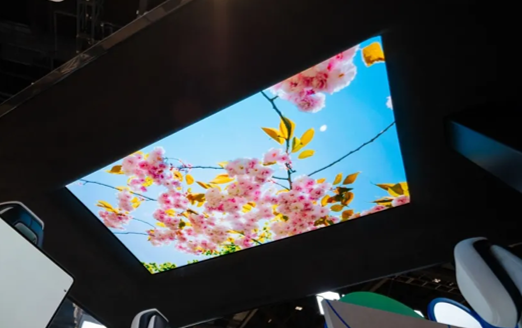
BOE showcased a smart cockpit consisting of a total of eight OLED displays, including a 55-inch transparent OLED sunroof. Key specifications include a 12.3-inch instrument panel and CID (resolution 720×1920), a switchable privacy display with a relative brightness of less than 0.5% at a viewing angle of 48 degrees or more, a 1.5-inch circular OLED with a resolution of 466×466 and 310 PPI, and two CMS OLEDs.

55-inch OLED transparent sunroof

55-inch OLED transparent sunroof

BOE OLED smart cockpit

OLED smart cockpit

Visionox unveiled a smart C-type armrest flexible OLED, a dual-screen integrated flexible OLED, a UDIR flexible OLED for vehicles, and a switchable privacy display at SID 2025.

Visionox UDIR OLED

UDIR OLED

Visionox Dual screen

Dual screen

Visionox Privacy OLED

Privacy OLED

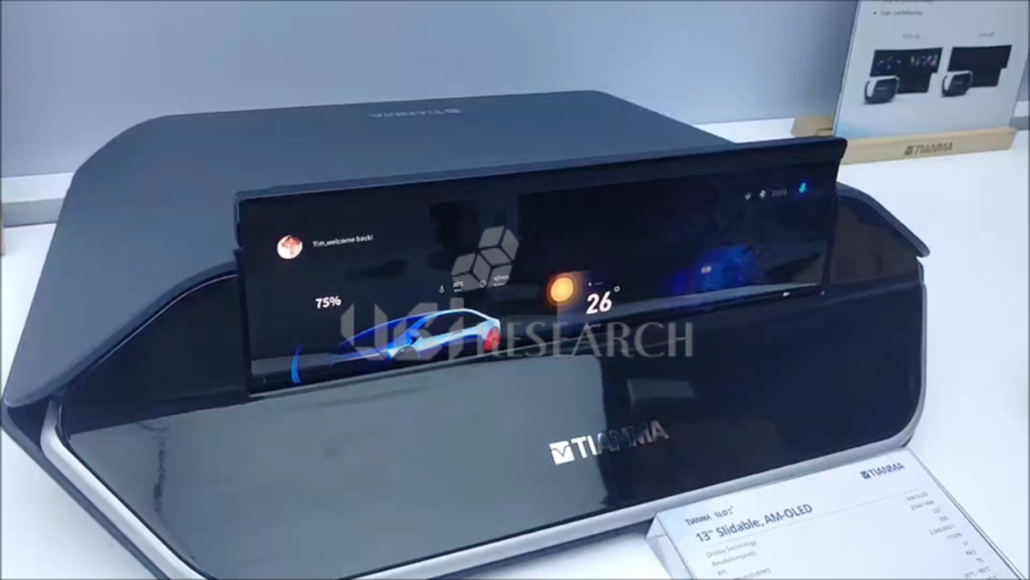
Tianma exhibited a 13-inch slider OLED and a dual 13-inch multi-curvature integrated black OLED display with a curvature range of R800~2000mm.

Tianma 13-inch slidable OLED

13-inch slidable OLED

Tianma 13-inch multi curvature OLED

13-inch multi curvature OLED

Changwook HAN, Executive Vice President/Analyst at UBI Research (cwhan@ubiresearch.com)

▶2025 Automotive Display Technology and Industry Trends Analysis Report

Accelerating competition in the development of next-generation HUD display products with Micro-LED technology

This year, companies are engaged in intense competition to develop Micro-LED HUD products for automotive use at display exhibitions such as CES, Touch Taiwan, and SID. Major panel manufacturers such as AUO and Innolux in Taiwan, and BOE, TCL CSOT, and Tianma in China have unveiled a host of new products. These companies are the main suppliers of LCD HUD products.

AUO exhibited a 13-inch micro LED AR HUD, while Innolux’s CarUX implemented a HUD on the windshield using a 9.6-inch Micro-LED reflective display solution with 9.6-inch Micro- LED.

AUO-13”-AR-HUD

AUO 13” AR HUD

BOE showcased two HUD display solutions at SID. One is a 6.2-inch (624×360) RGB Micro-LED HUD, and the other is a monochrome Micro-LED HUD achieving up to 300,000 nits. TCL CSOT unveiled a 14.3-inch (1700 x 650) Micro-LED PHUD, while Tianma showcased an 8-inch (1204×608) HUD.

BOE-6.2”-HUD

BOE 6.2” HUD

TCL-14.3”-HUD

TCL 14.3” HUD

Tianma-8”-HUD

Tianma 8” HUD

These products achieve high resolution and high contrast ratios based on the advantages of Micro-LEDs, offering differentiation and the potential to replace existing LCOS products. As a result, panel manufacturers are engaging in intense competition to secure a technological lead in the market.

According to UBI Research’s “2025 Automotive Display Technology and Industry Trend Analysis Report,” this year’s vehicle display shipments are expected to exceed 240 million units, with Mini-LED and OLED panels gradually increasing. As competing technologies, companies are actively developing differentiated technologies applied to Micro-LED HUD products.

In summary, automotive displays are one of the key areas of the future display market. As the importance of displays has grown as a key differentiating factor in smart cars, the automotive display market will become an essential competitive arena for panel manufacturers. In other words, with the smart evolution of vehicles, HUDs will become mainstream, and companies will need to respond and compete accordingly.

Namdeog Kim, Senior Analyst at UBI Research(ndkim@ubiresearch.com)

▶2025 Automotive Display Technology and Industry Trends Analysis Report

[SID 2025] Automotive Micro LED Displays (LG Display, AUO, BOE, TCL CSOT, TIANMA)

[SID 2025] Tianma, 12.3-inch Smart Interior InvisVue

[SID 2025] Tianma, 13-inch Slidable AMOLED (R4.5, 70mm distance)

Micro LED technology, when will it play a leading role in next-generation displays?

Over the past few years, we have analyzed trends in micro-LED technology and products. Along with the advancement of mini-LED backlight technology, micro-LED has emerged as the next-generation display technology, and interest is growing in when micro-LED will enter the mainstream market. Major display companies and research institutions in countries such as China, Taiwan, South Korea, the United States, and Europe have been accelerating technology development and product commercialization through years of investment, achieving a significant transition from the laboratory stage to mass production. However, the market share of micro-LED in the overall display market remains low, and the pace of commercialization as a mainstream product is still slow.

Samsung Electronics has been leading the way in next-generation display technology with its giant micro-LED TV, ‘The Wall,’ for several years now. Now, with price competitiveness and production efficiency improvements, the company is at a point where it needs to expand into the consumer market in earnest.

Taiwan’s AUO recently showcased automotive micro-LED displays and mirror displays at CES and Touch Taiwan, focusing on targeting the B2B market. The company aims to begin mass production of its 4.5-generation micro-LED production line this year. PlayNitride is preparing to mass produce panels for smartwatches and AR glasses based on its high-brightness, high-resolution technology.

Chinese companies BOE, TCL CSOT, and Tianma are expanding their demonstrations and investments in micro-LED panels and are leading the way in preparations for mass production. BOE’s subsidiary HC SEMITEK is promoting the construction of a micro-LED Epi wafer manufacturing, chip production, and packaging base in Zhuhai City, and at the end of last year, it announced the start of production of a 6-inch substrate micro-LED mass production line. TCL CSOT is preparing to enter the TV and automotive display markets through a joint research institute established with Sanan in 2020 and a joint venture, Extremely Display, to develop and commercialize products. Tianma completed its TFT-based micro-LED production line in December last year and is ready to begin small-scale shipments in phases starting this year. In addition to leading in mass production speed, the company is also accelerating technological advancements such as improving yield rates for 6-inch wafer Micro LED, enhancing laser transfer efficiency, and refining precise tiling bonding. This has been confirmed through the company’s efforts to showcase technological improvements and strengthened productization at technology exhibitions.

At the international business conference ‘OLED & XR KOREA 2025’ hosted by UBI Research, presentations on Micro-LED technology and market trends were provided for TV/large-screen displays, AR, smartwatches, and automotive displays.

According to UBI Research’s analysis, the Micro-LED consumer market is expected to be driven by TVs and AR glasses by 2027, with smartwatches and automotive displays gaining market share by 2028. It is predicted that Micro-LED will break into the mainstream market around 2028, moving beyond premium product segments.


More detailed information and technical analysis will be provided in a report to be published by UBI Research at a later date.

Nam Deog Kim, UBI Research Analyst(ndkim@ubiresearch.com)

▶Micro-LED Display Technologies for XR Applications Report Sample

Chinese Tianma company accelerates development of Micro-LED display technology and products

The ICDT2025 conference was held from March 23rd to 25th in Xiamen, China. Among the exhibitors, Tianma company exhibited more Micro-LED products than other companies, showing that Tianma is the most active in product development among Chinese companies. Of course, in addition to Micro-LED, Tianma also exhibited automotive display products using LCD technology and OLED technology at the ICDT 2025 conference to showcase its technology.

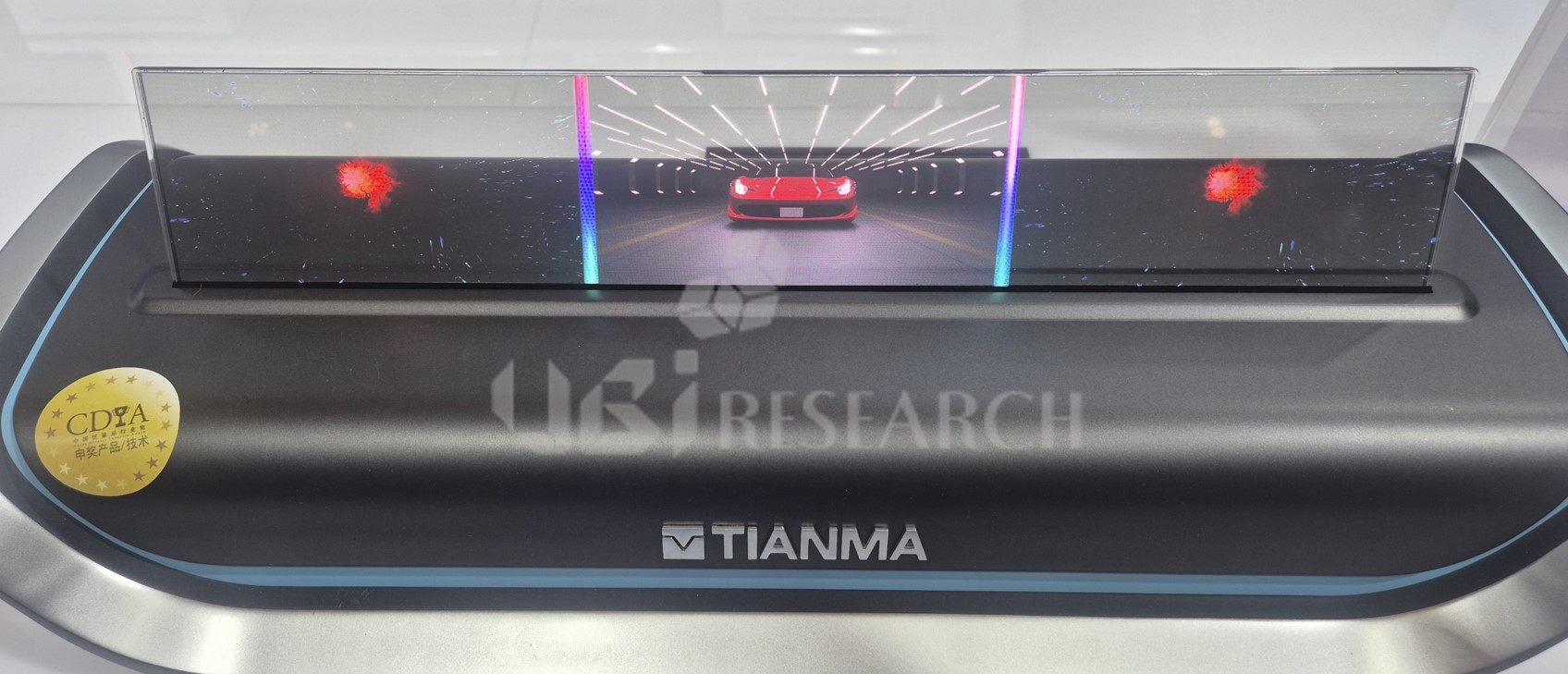
The main Micro-LED products exhibited by Tianma are as follows. First of all, in terms of Micro-LED products, in addition to normal transparent displays, transparent Micro-LEDs with low-reflection technology and 27” Micro-LEDs for TVs and large screens (Tiling method) were exhibited. In addition, an 8” HUD screen for automobiles was exhibited using a Micro-LED panel with a brightness of 10000 nits.

 8.07” Low-reflective Transparent Micro-LED Display

8.07” Low-reflective Transparent Micro-LED Display

8.0” HUD Application Display (10,000 nits luminance)

8.0” HUD Application Display (10,000 nits luminance)

27” Splicing Micro-LED Display

27” Splicing Micro-LED Display

The 27“ Micro-LED panel is made by stitching together a 7.5” screen with P0.4 mm, and the number of stitches can be increased to create video wall and commercial display applications. At the conference, we also presented Micro-LED efficiency enhancement technology and mass-transfer technology, showing that we are very active in technology development. These will be detailed in UBI Research’s Micro-LED technology report this year.

Through the project to build a micro-LED production line in Xiamen City, China, Tianma invested in equipment in March 2022 and is now equipped with a 3.5-generation micro-LED automation line. Based on Tienma’s LTPS technology, the company is accelerating technology development across the entire Micro-LED process and commercialization of automotive, tiling, and transparent display modules.

Nam Deog Kim, UBI Research Analyst(ndkim@ubiresearch.com)

▶Micro-LED Display Technologies for XR Applications Report Sample

Small OLED display shipments in 2024 are expected to increase by 200 million units compared to 2023 and exceed 1 billion units in 2025

‘1Q25 Small OLED Display Market Track’

‘1Q25 Small OLED Display Market Track’

According to UBI Research’s ‘1Q25 Small OLED Display Market Track’, which includes application performance and outlook for smartphones, foldable phones, smartwatches, etc., small OLED shipments in 2024 are expected to reach 980 million units, an increase of approximately 200 million units from 773 million units in 2023. The small OLED market is expected to exceed 1 billion units in 2025.

Looking at the 2024 performance, most panel manufacturers in Korea and China saw an increase in shipments of 40 to 50 million units, and in particular, Chinese panel manufacturers TCL CSOT, Tianma, Visionox, and Everdisplay saw shipments increase by more than 50% compared to 2023. BOE, China’s largest panel manufacturer, saw its panel shipments increase by only about 8% due to temporary production suspensions caused by disruptions in iPhone supplies throughout the year.

Not only Chinese panel makers, but also Korean panel makers have seen a significant increase in shipments. As rigid OLED panels began to be applied to Samsung Electronics’ Galaxy A series, Samsung Display’s shipments are expected to surge from 320 million units in 2023 to 380 million units in 2024. LG Display’s smartphone OLED shipments also increased from 52 million units in 2023 to 68 million units in 2024 as its supply of panels for iPhones expanded.

With Chinese panel makers’ shipments steadily increasing, and Samsung Display’s rigid OLED shipments and LG Display’s iPhone panel shipments also increasing, small OLED shipments in 2025 are expected to easily exceed 1 billion units.

“OLEDs are being widely applied to lower-end models of Samsung Electronics’ Galaxy A series and low-cost models from Chinese set manufacturers, and BOE and Visionox’s new 8.6G lines are also designed to produce panels for smartphones, so small-sized OLED shipments are expected to continue to rise for the time being,” said Han Chang-wook, Vice President of UBI Research.

Chang Wook HAN, VP/Analyst, UBI Research(cwhan@ubiresearch.com)

▶Small OLED Display Quarterly Market Track Sample

[SID 2023 Keynote] Tianma leaps forward to become one of the top 3 global display makers with the ‘2+1+N’ strategy

SID2023 Tianma Keynote

SID2023 Tianma Keynote

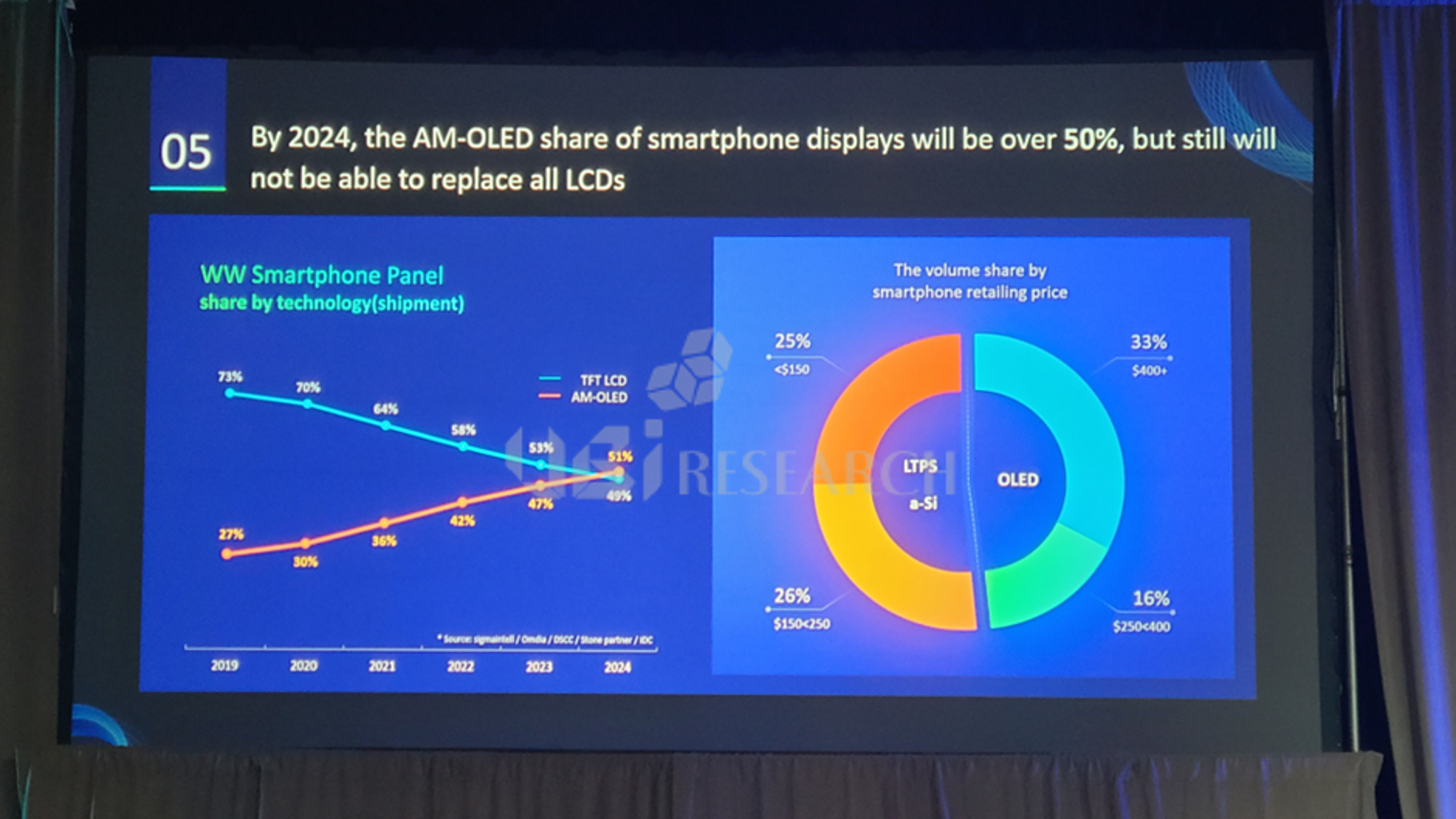
At SID 2023 held in Los Angeles, USA, Charles Peng, chairman of Tianma, delivered a keynote speech under the theme of ‘New Trends and Strategies for the Display Industry’. Chairman Charles Peng predicted that the proportion of LCD applied to smartphone displays will continue to decrease, while the proportion of AMOLED will increase and exceed 50% by 2024.

Chairman Peng said “By 2025, smartphone shipments with LTPO backplanes will reach 50%. Currently, Tianma is sequentially supplying AMOLED with LTPO backplane to flagship and foldable models and LTPS backplane to high-end and mid-range models.”

Chairman Peng continued, “In the current display market, the shipments of products with 150 ppi or more account for only 13%, but account for 60% of the total display market revenue, and products with 150 ppi or less account for 87% of shipments, but the market revenue is 40%. “It is important to capture the outstanding profitability of displays with high added value and high resolution.” Chairman Peng said, “In line with this trend, Tianma is pursuing a ‘2+1+N’ strategy that expands two core businesses such as smartphones and displays for automobiles, one core growth business for IT displays, and value-added businesses such as industries and applications. We will leap forward to become one of the world’s top three display companies.”

▶ 2023 Small OLED Display Annual Report Sample Download

Tianma’s OLED shipments for smartphones were second only to BOE among Chinese makers

TIANMA

TIANMA

It was found that Tianma, a Chinese OLED panel supplier, supplied the second most OLED panels for smartphones after BOE in the first quarter of 2023. In the meantime, among Chinese companies, Visionox has always been in second place after BOE in OLED shipments for smartphones, but it gave way to Tianma for the first time in this first quarter.

Tianma’s major customers include Xiaomi, Vivo, Oppo, Honor, and Lenovo. It is analyzed that one of the reasons for Tianma’s increase in OLED shipments is that it brought some of TCL CSOT’s shipments to Xiaomi.

Thanks to orders from Xiaomi, Tianma’s panel shipments have soared since the fourth quarter of last year. Tianma’s OLED panel shipments for smartphones in the fourth quarter of 2022 increased by about 3 times compared to the previous quarter, and in the first quarter of 2023, OLED panel shipments for smartphones reached 8.5 million units, an increase of 430% compared to the same quarter of the previous year.

If this atmosphere continues, it is analyzed that there is a possibility that Tianma will overtake Visionox and produce the second largest number of OLED panels for smartphones after BOE in China for the first time this year.

▶ China Trend Report Inquiry

[UBI Research China Trend Report] Chinese Panel Makers’ Total Shipments of OLED Panels for Smartphones in the Fourth Quarter of 2021 Increased by 26% Compared to the Third Quarter

26% Increase in Total Shipments of Chinese OLED Panels for Smartphones in the Fourth Quarter compared to the Third Quarter


According to UBI Research’s ‘February 1st China Trend Report’, total shipments of OLED panels for smartphones by Chinese panel makers in the fourth quarter of 2021 were 44.8 million units, a 26% increase from 35.57 million units in the previous quarter. By company, BOE shipped 20.9 million units and occupied a 46.7% share, followed by Visionox with 9.7 million units, EverDisplay Optronics with 5.5 million units, CSOT with 5.5 million units, and Tianma with 3.1 million units.
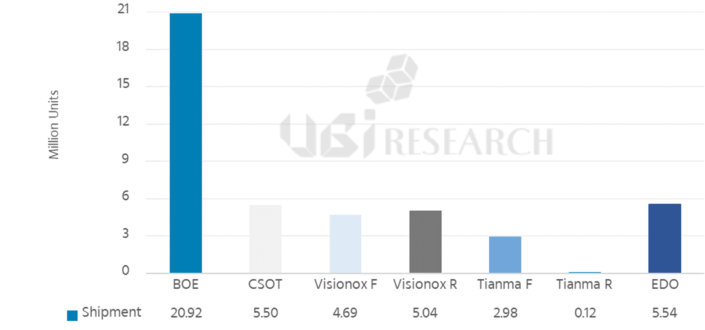
 

By substrate, flexible OLED panel shipments were the highest for BOE with 20.9 million units, followed by CSOT with 5.5 million units, Visionox with 4.7 million units, and Tianma with 3 million units. BOE’s panel shipments increased the most compared to the previous quarter with an increase of 5.3 million units, followed by Visionox by 1.9 million units and Tianma by 1 million units. CSOT’s panel shipments decreased by 300,000 units from the previous quarter.

In the field of rigid OLED panel shipments, EverDisplay Optronics shipped 5.54 million units, a decrease of 80,000 units compared to the third quarter, but maintained the No. 1 position in rigid OLED panel shipments with a market share of 52%. Visionox, in second place, shipped 5.04 million units, up 43% QoQ, chasing EverDisplay Optronics. Tianma’s rigid OLED panel shipments were 120,000 units, accounting for only 1%.

The details can be found in the UBI Research China Trend Report, and inquiries can be made on the UBI Research website.

[UBI Research China Trend Report] BOE Dominates OLED Shipments for Smartphones in October

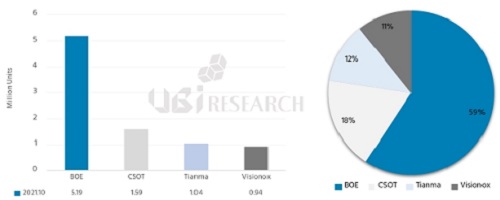
According to the ‘China Trend Report for the 1st week of December’ published by UBI Research recently, Among Chinese companies, BOE maintained the No. 1 position with an overwhelming share in OLED panel shipments for smartphones in October.

According to the report, in the flexible OLED shipments by Chinese companies in October, BOE had the most with 5.2 million units, followed by CSOT with 1.6 million units, Tianma with 1 million units, and Visionox with 940,000 units. In terms of market share, BOE was 59%, followed by CSOT, Tianma, and Visionox with 18%, 12%, and 11%, respectively.

As for Rigid OLED shipments, EverDisplay Optronics had the most with 1.7 million units and Visionox mass-produced 950,000 units. In terms of market share, EverDisplay Optronics accounted for 65% and Visionox 35%. Tianma, which previously mass-produced a small amount of rigid OLED, did not mass-produce rigid OLED panels in October.

Merck’s Blue Ink Material Lifetime Announced 65% Improvement Year-over-Year.

At ‘Display Insight 2021’ held online on November 4th, ‘Joachim Kaiser’, global application manager of Merck, presented ‘Our OLED solutions – livilux®’. When presenting the ink portion of livilux’s OLED materials, Kaiser noted that “Inkjet printing is the only technology that combines RGB parallel pixel layout with scalability for large display sizes”.

Kaiser announced “Maximizing the performance of IJP devices requires a thorough understanding and optimization of state-of-the-art OLED materials, ink formulations optimized for each application, and the entire device stack” and “Merck can get a lot of benefits from IJP performance improvement from its experience in developing materials for deposition”.

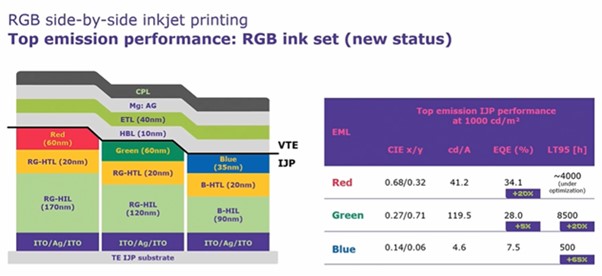
Comparing the performance announced by Merck last year and this year, the luminous efficiency (cd/A) of red increased by 46% compared to the previous year, green by 10%, and blue did not change. External quantum efficiency (EQE) was 34.1%, increased by 20% for red, and 28%, increased by 5% for green, and there was no change in blue like the luminous efficiency. In terms of lifespan, 20% for green and 65% for blue were greatly improved. The lifespan of the red is 4,000 hours based on LT95 (last year’s red’s lifespan was 8,300 hours based on LT95), and it is being optimized to increase the lifetime reduced by improving efficiency.

Kaiser emphasized, “At Merck, we are constantly working to provide solutions to the problems of OLED panel design, such as improving the efficiency of Blue OLED, a new kind of emitter, and RGB side-by-side printing technology.”

Wuhan Tianma 6G OLED line installation delay

The Tianma T4 plant in Wuhan has continued to produce even during the corona period, and the core equipment of the ph2 6G OLED line has already been brought in, but the equipment set-up is delayed due to the inability of overseas equipment companies to enter Wuhan.

In recent, as the number of corona virus spreaders in China, including Wuhan, has declined, equipment set-up is expected to resume from the second quarter, and mass production is expected to start after the third quarter.

The ph2 of Tianma T4 was signed on June 1, 2018, and a total of RMB 14.5 billion was invested. When the Ph2 setup is complete, the Tianma T4 plant will have a total of 35K Capa in 6G.

Following OLED, notch design to LCD becomes a marketing trend in 2018?

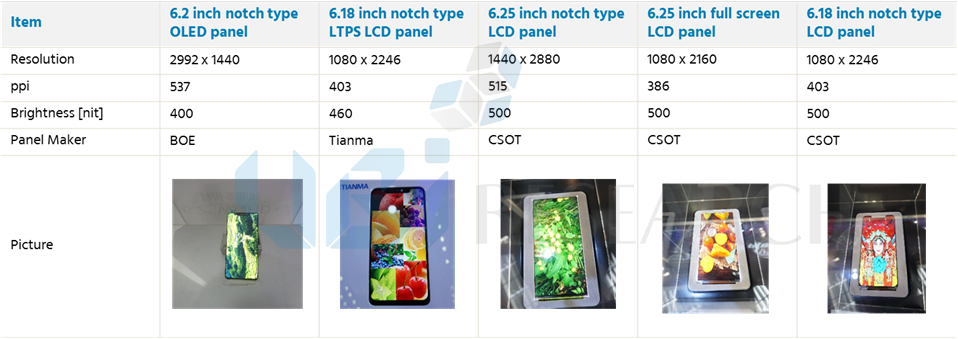
At the 6th China Information Technology Expo (CITE 2018) held in Shenzhen, Guangdong Province, China from April 8 to 11, 2018, a number of panel makers and set makers exhibited notch-designed display panels and smart phones.

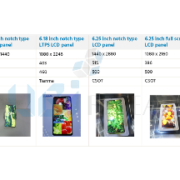
In CITE 2018, five panel manufacturers exhibited in CITE 2018; BOE, EDO, GVO, Tianma and CSOT. Among them, BOE, Tianma and CSOT exhibited notch-designed display panels.

First, BOE introduced 6.2-inch OLED panels applied with notched design. The OLED panel exhibited by BOE has a resolution of 2992 x 1440 with 537 ppi and 400 nit brightness.

LCD panels also began to adopt Notch Design. Tianma presented a 6.18-inch LCD panel with a notch design. CSOT also exhibited two 6.25-inch LCD panels and a 6.18-inch LCD panel applied with notched design.

<’Notch design’ display panels exhibited in CITE 2018>

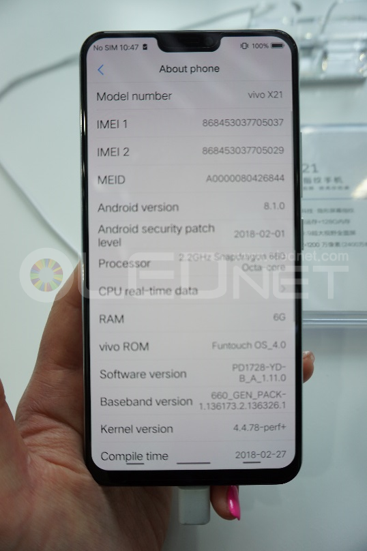
Vivo, a Smartphone maker, also exhibited the X21 with a notch design. The X21, released in March, has a resolution of 1080 x 2280 with 6.28 inch screen.

<Vivo X21, OLED Smartphone with notch design>

Since Apple first unveiled its OLED smart phone with the notch design on iPhone X, a number of smart phone makers such as Vivo, Oppo, and Huawei have begun to release OLED smart phones. In this exhibition, many panel makers presented a large number of LCD panels to which Notch Design is applied. Attention is growing whether Notch Design can become a trend in the small and medium sized display market in 2018.

At the 10th CAR-ELE JAPAN, Many Companies Unveiled Automotive OLED Display and Lighting

By Hana Oh (hanaoh@ubiresearch.com)

OLED display and lighting are expected to become increasingly applied to the interior and exterior of automobiles.

At CES 2018, Samsung Electronics introduced the OLED-applied dashboard. LG Electronics unveiled the center fascia with 14-inch OLED, and OLED set makers continue to exhibit their OLED applications for automobiles.

At the 10th CAR-ELE JAPAN held in TOKYO BIG SIGHT(Tokyo International Exhibition Center) on 17th, several companies including Tianma and Truly exhibited automotive OLED displays and lighting.

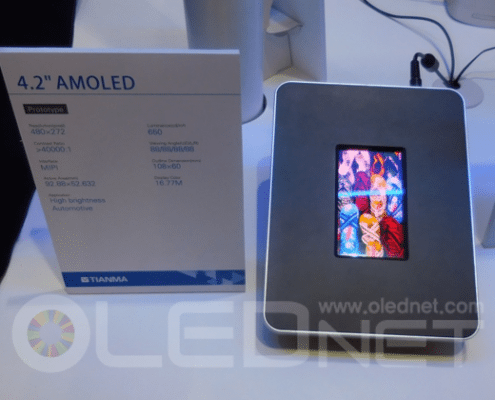
Tianma exhibited 4.2-inch, 5.46-inch and 5.99-inch OLED panels. The 5.99-inch OLED was a full-screen OLED, and the company official said “The full screen will be applied not only to mobile devices but also to automobiles such as CIDs and navigation systems due to the nature of automotive displays sensitive to visual impacts.” It is said they produced the OLED Panel with high luminance, including 5.46-inch and 4.2-inch OLED with luminance of 650 cd/m2, ensuring good high visibility under sunlight. In addition, they announced that they will manufacture unbreakable flexible type of OLED even though the exhibited OLEDs were all rigid type.

<Tianma’s Automotive OLED Panel>

Truly exhibited 5.5-inch OLED panel. The company’s official mentioned that although they can not disclose detailed specifications, it should be further developed in terms of reliability for the application to the current automotive displays. In addition, they announced that automotive potentials such as autonomous vehicles are so huge that the importance of displays that can provide visual information will become even more important, and therefore they will invest in it.

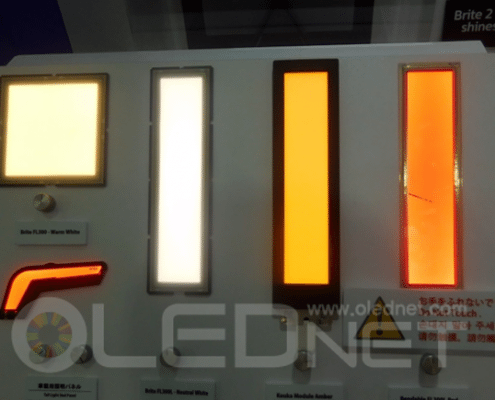
Lastly, Nippon Electric Glass introduced OLED lighting which was created in collaboration with OLEDWorks. “This was created as interior lights and taillights for vehicles.” and “The OLED lighting substrate uses IEL(internal extraction layer) to improve more efficiency when applied to indoor lights, and better visibility when applied to taillights,” explained the company’s official.”

<OLED Lighting exhibited by Nippon Electric Glass>

Meanwhile, in relation to OLED lighting, OLED light source companies such as LG Display and Osram supplied the OLED lights for tail lights to finished car makers such as Mercedes-Benz and BMW. In particular, it is expected to start the OLED lighting market in earnest, for example LG Display’s announcement of full-scale operation of the Gen5 OLED light source production line in December.

Chinese panel makers BOE and Tianma started small and medium sized AMOLED production, acceleratedly chasing Samsung.

It is the first time for China to produce Gen6 flexible AMOLED; it is expected that BOE’s mass production not significantly affected by yield due to the tremendous support from the Chinese government will cause such impact on the small and medium-sized AMOLED market where Samsung has monopolized so far.

B7 line, which was built in May 2015 with the investment of approx. 465 yuan, is expectedly used in high-end mobile display in China, with 48K- large monthly capacity based on Gen6. In Dec last year, 45K investment was confirmed in Mianyang’s Gen6 flexible AMOLED production line B11 and mass production is expected to operate in 2019.

<5.5 inch FHDfoldable AMOLED launched at CIDC 2016>

In addition, Tianma successfully lighted up the rigid AMOLED panel manufactured in Gen6 LTPS AMOLED production line in Wuhan for the first time in China on April 20th. Tianma has first built the Gen 4.5 AMOLED pilot line in China as well as Gen 5.5 AMOLED production line in Shanghai for mass producing small-medium AMOLED display.

Also CSOT aims to mass-produce in the fourth quarter of 2018 as the investment in Gen6 rigid and flexible AMOLED production lines at Wuhan’s T4 plant has been proceeding. Visionox plans to additionally expand Kunshan’s Gen5.5 line (V1, presently 4K) phase1 11K and Phase2 15K investment is being proceeded. ROYOLE also invested in the Gen 5.5 flexible AMOLED mass production line, and LOI of the SFA deposition equipment was announced last January. The expected capacity is 15K.

In the Korea-dominated AMOLED market, Chinese panel makers are taking up the market share rapidly through the Chinese government support and their huge domestic market. Lee Choong-hoon (chief analyst) at UBI Research specialized in AMOLED market predicts that by 2021, Chinese AMOLED panel makers will record their second largest shipment volume with approx. 16% of the entire market share via full-fledged shipment from 2018, followed by Korea by 2021 “.

<forecast of AMOLED panel shipment by country>

OLED Display Embellished CITE 2017

CITE 2017(China Information Technology Expo) was held in Shenzhen, China from April 9 to 11. As the Asia’s largest electronic and information exhibition hosted by the ministry of industry and information technology of the people’s republic of China and the local government of Shenzhen, the 5th CITE 2017 is the international IT event in which 1,600 companies participate annually, with 160,000 visitors.

At this expo, LG Display, BOE, CSOT, and Tianma exhibited OLED panel on one hand, and Changhong, Hisense, Konka, and Skyworth unveiled OLED-applied products on the other hand. Besides, many companies including Jilin OLED operated a shared exhibition hall under the name of China OLED Industry Alliance(COIA).

<Different Companies’ OLED Products at CITE 2017>

LG Display, the only large-area OLED panel manufacture unveiled its flagship 65-inch UHD Wall Paper OLED with an ultrathin and ultralight design of 3mm thickness and 7Kg weight, and Crystal Sound OLED displaying itself as a speaker. LG has received CES 2017 Innovation Award for its technology of Wallpaper TV OLED panel.

<LG Display’s Wall paper OLED(Left) & Crystal Sound OLED(Right)>

Besides, LG Display showcased various products applying OLED including OLED Pillar with six 77-inch UHD OLED panels and Dual-view flat with two 77-inich UHD OLED panels, while unveiling a 12.3-inch curved OLED for automobiles, two kinds of smartphones, and two kinds of plastic OLEDs for watches.

<LG Display’s OLED Pillar>

A Chinese OLED panel company, BOE boasted of its technology, demonstrating a 7.9-inch foldable OLED, a 5.5-inch edge bended OLED, and a 1.39-inch rounded OLED.

<BOE’s Foldable OLED(Left), Edge Bended OLED(Middle), Round OLED(Right)>

The other OLED TV set companies are all Chinese companies such as Changhong, Hisense, and Skyworth. They exhibited its flagship 65-inch OLED TV, a key size of premium TVs. Hisense exhibited the smartphone with OLED panel and e-ink panel on its both sides as well as OLED TV.

<Changhong(Left), Hisense(Middle), Skyworth’s OLED TV(Right)>

AMOLED panel for smart phones, just around the corner of 100million-unit shipment in a quarter

According to UBI Research, the shipment amount of AMOLED panel for smart phones in the 3rd quarter of 2016 was announced to be counted as 96million units.

It is the figure increased for 103% compared with the last quarter, and increased for 148% compared with the same period of last year, and it renewed the quarterly highest shipment amount once again, after the last quarter.

The person in charge of UBI Research mentioned that “The output of flexible AMOLED panels for Galaxy Note 7 was reduced compared to the plan due to the discontinuation of the production of Galaxy Note 7, however, the increase in shipments of AMOLED panels for China and Galaxy s7 series is seemed to play a important role in the increase of shipments in the third quarter.”

Currently, Samsung Display occupies more than 91% of the AMOLED panel market for smart phones, and Chinese panel makers such as BOE, EDO, Tianma, and Visionox are conducting mass production with small quantities.

In addition, Apple is expected to apply the flexible AMOLED panel to some models of the iPhone to be launched in 2017, therefore, future AMOLED panel market for smart phones will be increased continuously.

UBI Research expects that the annual shipment amount of AMOLED panel will form the market volume as about 1.4billion units by 2020 with the average annual growth rate of 41%, and flexible AMOLED panel among them will account for about 61%.

Smart Phone AMOLED Panel Shipment Forecast, Source : UBI research

BY HYUNJUN JANG, HANA OH

Not Only Samsung and LG, but BOE and JDI Also Shows OLED Surge in SID

a Flexible OLED Display at BOE Booth (San Francisco = OLEDNET)

During the SID 2016, not only Samsung Display and LG Display, but other companies including BOE, Japan Display (JDI), and Tianma also presented OLED. The extent of OLED by Korea, China, and Japan drew much attention.

In SID 2016 (22-27 May), these companies exhibited many new OLED panels for diverse devices such as smartphone, VR, and TV.

Samsung Display revealed rollable panel, diverse 5 inch level OLED panel products such as VR panel with 806 ppi, the highest value within the industry, and Bio Blue, a VR panel which minimized harmful blue light.

LG Display showed 77 inch UHD OLED panel for TV, 55 inch dual side panel for signage, 65 inch concave OLED, and demonstrated their strength as the leader in large size OLED panel.

a Flexible OLED Display at JDI Booth (San Francisco = OLEDNET)

At this exhibition, BOE revealed flexible OLED display for mobile device. Particularly, the 4.35 inch foldable panel is BOE’s first. The product’s bending radius of 5 mm and has the brightness of 350 nits.  

Tianma displayed 55 inch on-cell touch equipped TFT-HD AMOLED panel. The flexible display has 270 ppi and bending radius of 20 mm.

JDI exhibited flexible plastic OLED (POLED). The 5.2 inch product has 423 ppi with the resolution of 1080 x 1920.

an OLED Display for Mobile at Tianma Booth (San Francisco = OLEDNET)

Quantum dot sector also presented a strong front against OLED in SID 2016. Nanosys and QD Vision exhibited OLED TV and quantum dot TV next to each other and presented merits of quantum dot.

According to QD Vision, quantum dot could consume 50% less power compared to OLED. Nanosys explained that while white OLED panel TV shows brightness of only up to 500 nits, their own quantum dot TV can actualize 1,200 nits of brightness.

[MWC 2016] Tianma Reveals Their First Flexible AMOLED Panel

In MWC 2016 (Feb 27 – Mar 2), Tianma, a Chinese AMOLED panel company, revealed 5.46 inch flexible AMOLED panel for the first time. This panel has HD resolution (720 x 1280) with the curvature radius of 20 mm. Additionally, Tinama also exhibited 5.5 inch and 5 inch FHD AMOLED panel, and 5 inch HD AMOLED panel.


Tianma added that the 5 inch HD AMOLED panel is expected to be actively mass produced in the first half of this year and it is being produced in smaller quantity and that additional investment will soon be carried out for Gen5.5.


Tianma is currently carrying out small volume of mass production using Ulvac Gen4.5 manufacturing equipment. Although Tianma continued presenting their products in display related exhibitions, it is their first time in a set exhibition such as MWC. This activity is analyzed to be a part of Tianma’s effort to further their client base before active AMOLED panel mass production.


Tianma’s5.46 inch Flexible AMOLED Panel

Looking Ahead to 2016 OLED Industry through Keywords

  1. Flexible AMOLED Investment

In 2016, flexible AMOLED mass production line investment is expected to be actively carried out by Samsung Display, LG Display, BOE, and Japan Display. For Samsung Display to apply flexible AMOLED panel to the new Galaxy model, the mass production line investment is necessary. If they supply flexible AMOLED panel to Apple, volume of the flexible AMOLED mass production to be invested in 2016 is estimated to be grow significantly. LG Display also is expected to actively carry out flexible AMOLED line manufacturing equipment order for Gumi’s P6 line, as well as additional flexible AMOLED mass production line investment following Apple’s demand. BOE is estimated to seriously begin orders for Chengdu’s Gen6 45K flexible AMOLED mass production line.


  1. P10

With the announcement of new factory establishment and 1.84 billion KRW investment for part of facilities in Q4 2015, as the first step of the investment, LG Display began site construction for P10 line factory that can produce large area panel. However, the investment direction has not yet been decided. P10 could be directed to only producing large area LCD panel, large area OLED panel, small-to-medium size OLED panel, or large area and small-to-medium size OLED panel simultaneously. China’s Gen8 LCD facilities investment is quite advanced and BOE’s Gen10.5 LCD line investment has also been confirmed. As such how much LG Display’s large area LCD can bring profit has to be carefully considered. Additionally, with the increase of OLED TV consumption and the supply of OLED panel to Apple practically confirmed, OLED investment is essential. P10, Gen11 line, is the world’s largest factory site, and depending on the investment direction in 2016, it is estimated to affect OLED market’s opening time.


  1. Chinese OLED

Everdisplay is supplying AMOLED panel to some several Chinese set companies, and Visionox is also expected to actively supply AMOLED panel from 2016. As such, most of Chinese OLED panel companies’ OLED mass production preparation is anticipated to conclude in 2016. Accordingly, second investment by companies including Everdisplay, Visionox, and Tianma is analyzed to be possible and serious movement by China’s OLED industry could occur.


  1. Evaporation Equipment

Flexible AMOLED mass production line investment by Samsung Display, LG Display, Japan Display, and BOE, and other Chinese OLED panel companies’ additional installation are expected to be actively carried out from 2016. Amidst this, order of evaporation equipment, OLED production’s essential component, is expected to be an issue.


Evaporation equipment currently being used in mass production is mostly Japanese Canon Tokki’s. As this evaporation equipment has been verified in mass production, it is estimated that most companies, including Samsung Display, LG Display, BOE, and JDI, will want to order Canon Tokki’s evaporation equipment. However, as the production capa. of Canon Tokki’s evaporation equipment is limited, the issue is expected to be which panel company will be able to order early. At the same time, this could be a new opportunity for Korean evaporation equipment companies.


  1. Samsung OLED TV

At present, the TV industry trend is moving to OLED from LCD. Accordingly, Samsung Display is continuing research to resume their large area OLED for TV panel business. It is analyzed that Samsung Display possesses RGB OLED technology that uses SMS evaporation method, white OLED, and solution process OLED technology. However, as each technology has its drawbacks, they are carefully considering future directions. First, RGB OLED technology is estimated to lack Gen8 mother glass substrate evaporation equipment at present. Solution process OLED method has low material performance. For white OLED, as the key patents are owned by LG Display, technology that avoids these has to be first developed. Therefore, much attention is focused on which technology Samsung Display will use and invest in production line to enter the TV market.

[SID 2014] Latecomers catching up aggressively

AMOLED latecomers; BOE, AUO and Tianma are rapidly catching up the AMOLED development of Samsung Display (SDC) and LG Display (LGD) at SID 2014.

BOE expressed possibility of investing in TV following mobiles by displaying 55” FHD AMOLED panel. In terms of technology readiness level, it is incompatibly lower than panels of LGD and SDC though, it is considerably fast that it was developed in six months and produced in a pilot line in Hefei.

AUO showed that its AMOLED technology had reached at certain level by unveiling 5.7” WQHD (513ppi) ultra-high resolution AMOLED panel. More attention drew towards AUO’s panel because its production method is RGB+FMM as SDC uses and the high resolution is realized with real RGB strip type rather pentile. AUO also expressed its will on AMOLED business by showing 5” HD flexible AMOLED panel and 1.6” AMOLED panel for a smart watch.

Tianma also unveiled 5.5” HD AMOLED panel. Its performance lags behind the current AMOLED panel, but it ai    ms to supply middle-end and low-end panel targeting mass-production of 5.5” FHD AMOLED through continuous R&D.

Challenges of Chinese and Taiwanese makers become serious in the AMOLED market, where Korean makers, SDC and LGD, are dominant, and the latecomers are about to invest in the sector. Thus, it is expected that the AMOLED industry will constantly grow.

<BOE’s55ich FHD OLED panel>

 <AUO’s 5.7inch FHD AMOLED panel>

<AUO’s 5inch HD flexible AMOLED panel>

<Tianma’s 5.5inch HD AMOLED panel>