Posts

OMNIVISION's new LCoS panel OP03021, highlighting its compact size and high resolution.

Next Generation AR and AI Glass Display Innovation: OMNIVISION LCoS Panel and JBD MicroLED New Products

OMNIVISION, which supplies LCoS to Meta’s smart glasses ‘Ray-Ban Display’, unveiled a high-resolution LCoS panel ‘OP03021’ for next-generation AR (augmented reality) glasses on December 16, 2025, and predicted mass production of the panel in the first half of 2026.

OMNIVISION's next-gen LCoS panel OP03021 for AR glasses

OMNIVISION’s 0.26-inch LCoS panel ‘OP03021’ with 2.5x higher resolution than previous models. (Source: Omnivision OP03021)

The newly released panel supports 1632 x 1536 resolution in a 0.26-inch optical format. This is an increase of about 2.5 times in resolution and nearly 6 times in total number of pixels compared to the existing 0.14-inch model (648p). When this panel is applied, it can secure a wide viewing angle of 30 to 40 degrees beyond the existing narrow viewing angle (20 degrees) limit, or dramatically increase the number of pixels per angle (PPD) to read web pages or e-mail text clearly. The volume of the optical engine equipped with the corresponding panel by integrating the driver IC is estimated to be about 1.5cc and the weight is about 4g.

Specification comparison table between the existing model and the new OP03021 model

The new OP03021 model features approx. 2.5x higher resolution and 1.85x larger panel size. (Source: UBI Research)

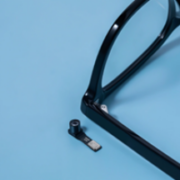
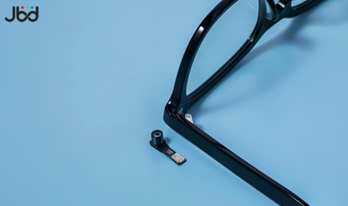
Meanwhile, JBD also officially announced that Hummingbird II, a next-generation microLED projector scheduled to be released in the first half of 2026, won the CES 2026 Innovation Award. It supports 500 × 380 resolution and 480Hz scan rate, and is an ultra-small and ultra-light product of 0.2cc and 0.5g that halves the volume and weight compared to previous generations. It emphasized that it is a full-color display solution optimized for AI and AR smart glasses for consumers by operating at low power of 95mW while implementing high luminance of up to 4,000 nits.

JBD Hummingbird II MicroLED projector on a fingertip

JBD’s ultra-compact MicroLED projector ‘Hummingbird II’, winner of the CES 2026 Innovation Award. (Source: JBD Hummingbird II)

The next-generation wearable display market is expected to clearly distinguish application fields according to technology characteristics.

  • MicroLED: Ultra-small size of 0.2cc is the strength, suitable for ‘everyday AI glasses’ that display simple data while maintaining the original design of glasses
  • LCoS: Responsible for the ‘universal AR glass’ market, which is suitable for web surfing or augmented reality information delivery, with high resolution and favorable characteristics for securing viewing angles.
  • OLEDoS: Based on high contrast ratio and color reproduction, market in the ‘MR headset and media glass’ area where video content consumption and immersion are important.

The industry is paying attention to the possibility of dualizing the smart glass lineup into ‘light AI glasses’ and ‘display-oriented AR glasses’ in the future. Expectations are growing for the possibility that new technologies such as OMNIVISION’s LCoS panel and JBD’s microLED will be applied to next-generation AR glasses of various global companies such as Meta, Apple, Google/Samsung.

Changho Noh,  Senior Analyst at UBI Research (chnoh@ubiresearch.com)

▶XR Industry Trends and OLEDoS Display Technology & Industry Analysis Report

▶2025 Micro-LED Display Industry and Technology Trends Report

※ This article is produced by UBIResearchNet.
Unauthorized reproduction or citation without source attribution is prohibited.
When quoting, please clearly indicate the source (UBIResearchNet) and provide a link.

AR Glass Market Evolves in Two Directions: China’s Content-Immersive Approach vs. Global Big Tech’s AI-Integrated Wearable Platforms

TCL’s AR brand RayNeo launched its latest AR glasses, the Air 4 Pro, in October 2025. It is pursuing a differentiated strategy in the global AR market by leveraging high-frequency PWM (Pulse Width Modulation) dimming technology and AI-based image optimization.

The RayNeo Air 4 Pro minimizes eye fatigue through 3840Hz high-frequency OptiCare™ dimming. It supports HDR10 and incorporates the Vision 4000 image quality chip, delivering an experience optimized for immersive content viewing. Notably, the Seeya 5.5-generation Micro OLED panel, featuring a tandem OLED light-emitting structure, achieves a maximum brightness of 6000 nits. It maximizes image quality with a wide color gamut (145% sRGB, 98% DCI-P3) and a 200,000:1 contrast ratio.

While competitors like XREAL and Viture focus on external light blocking via electrochromic dimming lenses, RayNeo adheres to a video quality-centric strategy using digital brightness control and an AI video engine. This allows RayNeo to maintain lightweight design (76g) without increasing lens weight, delivering products optimized for indoor-focused immersive content consumption.

This technological strategy is yielding market results. As of Q1 2025, RayNeo holds approximately 50% market share in China’s AR/AI smart glasses market, ranking first. Notably, the Air 3s Pro achieved the top sales position among XR products during the 618-shopping festival, solidifying the brand’s standing in China. Another Chinese AR specialist, XREAL, holds a lower market share than RayNeo domestically but differentiates itself with OST-based products like the XREAL One Pro. It focuses more on expanding into global markets like North America and Europe than on the Chinese domestic market.

Meta is concentrating on smartphone-complementary smart glasses that combine LCOS displays with cameras and AI assistants for functions like checking messages, taking photos, and voice commands. Apple has postponed the successor to Vision Pro, shifting its strategy to developing lightweight AI/AR glasses and accelerating the commercialization of smartphone-linked AR glasses. Google is realigning its strategy around AI-based real-time translation and search, preparing AR glasses integrated with an AI assistant. All three companies share a common direction: cultivating AR glasses as a core platform, positioning them as the next-generation interface beyond smartphones.

Comparison chart between RayNeo Air 4 Pro and Meta Ray-Ban Display — display type, optical structure, key functions, and market positioning (Source: UBI Research)

The AR glasses market is undergoing a restructuring driven by two key trends: AI-integrated wearable platforms and content-centric immersive experiences. In the medium to long term, AR glasses are expected to evolve into devices with the potential to replace smartphones as AI-integrated wearable platforms.  

llustration of a user wearing AR glasses operating an AI-powered immersive interface — symbolizing next-generation wearable platforms (Source: Created by Gemini)

Created by Gemini

Changho Noh,  Senior Analyst at UBI Research  (chnoh@ubiresearch.com)

▶UBI Research’s Micro Display Report

Comparison of Google Android XR, Apple Vision OS, and Meta smart glasses — Image created via sora

Big tech companies enter the race to lead the next generation of wearable platforms

XR platform comparison showing Google Android XR, Apple Vision OS, and Meta smart glasses (Image created via sora)

XR platform competition among Google, Apple, and Meta (Image created via sora)

Global big tech companies are forming a full-scale competitive landscape in the next-generation wearable device market. Samsung Electronics plans to unveil its “Project Moohan” Galaxy XR headset this month. Samsung’s Galaxy XR is a high-performance headset based on Google’s Android XR platform, bringing a 4K micro OLED display (4,032 PPI, 29 million pixels) and a Qualcomm Snapdragon XR2+ Gen 2 processor. It has a lightweight design of 545 grams and a multimodal interface that integrates hand tracking, eye tracking, and voice recognition.

It will target the premium market with a higher resolution than Apple Vision Pro (23 million pixels) and better display quality than Meta Quest 3. Battery life is expected to be in line with competitors at 2 hours of normal use and 2.5 hours of video playback, and the price is expected to be around $1,800 (about $2.5 million).

Samsung has partnered with Google to build the One UI XR interface and secure major app ecosystems such as Chrome, YouTube, and Netflix. The initial production will be 100,000 units to test the market response before entering a full-scale mass production system.

Apple has temporarily halted development of its low-cost N100 (Vision Air) headset and reallocated resources to the AI smart glasses project, a strategic decision in response to the success of Meta’s Rayban and the rapid growth of the AI-powered smart glasses market.

Apple is developing two models of smart glasses. The first generation, codenamed N50, will be a display-less, iPhone-connected, audio-centric AI wearable that is expected to launch in 2027. The second-generation model will bring a display and compete directly with Meta Rayban, and development is being accelerated from the original 2028 plan.

Apple’s smart glasses are based on Vision OS, with a camera, microphone, health tracking, and a voice command interface with next-generation Siri AI at its core. It will also offer a wide range of frame options and colors, reinforcing its positioning as a fashion accessory.

Currently, the smart glasses market is dominated by Meta. The Meta-Rayban series has sold more than 3.5 million units cumulatively, with an 80% share of AI smart glasses. The recently unveiled Rayban Display model brings a full-color, high-resolution display that can display messages, photos, and other information.

In response, Google is strengthening its cooperation with Samsung with its Android XR platform and Gemini AI. Samsung will also release Project Coastal smart glasses in collaboration with Google and Gentlemonster early next year, making it a two-track headset and smart glasses strategy.

The future XR/smart glasses market is expected to be a three-way battle between the Android XR platform, Apple’s Vision OS XR platform, and Meta’s first-mover advantage. Each company’s ability to build ecosystems and differentiate user experience will be the key factors in determining market leadership.

Changho Noh,  Senior Analyst at UBI Research  (chnoh@ubiresearch.com)

▶UBI Research’s Micro Display Report

AI AR smart glasses Meta Ray-Ban Display showing growth of the global AR wearable market

The Competition in AI/AR Smart Glasses and the Advancement of Chinese companies in the Supply Chain Ecosystem

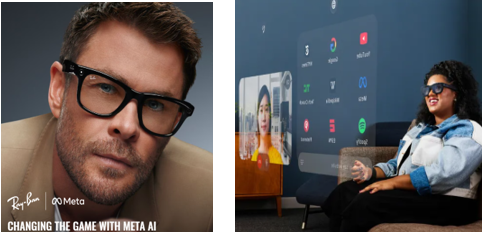
Meta officially announced its new products at the Meta Connect 2025 event on the 18th of last month (the 17th in US time), and began launching the Meta Ray-Ban Display smart glasses—its first consumer glasses to bring a display—in the US at the end of September. Meta continues its strategy to dominate the AI/AR glasses market. According to a post by Meta CTO Andrew Bosworth on Threads on October 2nd, the Meta Ray-Ban Display smart glasses have nearly sold out in physical stores, and November reservations are also almost fully booked. He stated that the market response to the product has been stronger than expected, and the company is working hard to keep up.

Meta Ray-Ban Display AI AR smart glasses (Source: Meta)

Meta Ray-Ban Display Smart Glasses (Source: Meta)

Meanwhile, over a year after its launch, the Vision Pro has gradually faded into the background. According to external reports, last year’s total sales of the Vision Pro fell below one million units, significantly underperforming market expectations. Additionally, rumors have intensified that Apple has halted development of a low-cost Vision Pro model and is shifting its strategic focus entirely to smart glasses. The goal is to launch a product capable of directly competing with Meta’s Ray-Ban smart glasses, with the initial smart glasses launch target date reportedly moved up to 2026. This pivot signifies Apple’s recognition that ‘AI+AR’ devices hold promise as the next generation of mobile terminals.

Samsung is also collaborating with Google to develop the Project Moohan XR headset, and its smart glasses Haean may also be unveiled this year. China’s Alibaba company has also announced ‘Quark AI Glasses,’ reported to launch by the end of 2025. Companies like Xiaomi and Baidu are also entering the market one after another, continuously fueling market excitement. Furthermore, the rise and expanding market share of domestic Chinese AR glasses brands like XREAL, RayNeo, Rokid, and INMO are evident.

From the supply chain perspective of smart glasses, the mutual penetration of AI and AR technologies has created an industrial ecosystem. The role of Chinese companies within this ecosystem is also evolving. While gaps persist in advanced core areas, they are emerging as ecosystem participants beyond their traditional supply chain roles through vertical integration within companies and external technology collaborations. In essence, they are becoming key drivers in this new industry. For instance, in Meta’s Ray-Ban Display glasses, Chinese company Goertek handles manufacturing, and numerous Chinese component suppliers are involved in internal parts like LCoS displays, batteries, and camera modules. Indeed, at the recent CIOE 2025 optoelectronics exhibition held in Shenzhen, China, the strong showing of Chinese companies like JBD, Goeroptics, and Sunny Optical was evident in LEDoS panels and optical waveguide components applied to next-generation AR glasses products.

In summary, major tech companies like Meta, Apple, and Samsung have recently shown active movements in the AI/AR glasses sector, further strengthening the influence of AI+AR glasses as a field receiving high attention. Therefore, as the industry ecosystem enters a critical transition phase and growth period, companies across the industrial supply chain are expected to intensify competition while actively pursuing technological breakthroughs and collaborative ecosystem development. Amidst this, Chinese companies are making notable strides. Benefiting from the Chinese government’s support for strategic industries and the policy trend positioning AR/XR as a core element of the digital economy, domestic optical module, display, and component companies are actively participating in the AR/XR glasses ecosystem.

Namdeog Kim, Senior Analyst at UBI Research(ndkim@ubiresearch.com)

▶2025 Micro-LED Display Industry and Technology Trends Report

Meta unveils Ray-Ban Display LCoS smart glasses and presents PIC-based LCoS research at SID 2025

Meta unveils ‘Ray-Ban Display’ smart glasses with LCoS, following up with a photonic integrated circuit (PIC)-based LCoS at SID 2025

At Meta Connect 2025 on Sept. 18 (local 17), Meta announced its first display-bringing consumer smart glasses, the Meta Ray-Ban Display. The product is an intermediate step between the existing Ray-Ban AI glasses and the Orion AR glasses unveiled last year and will be available in the U.S. market later this month.

The new glasses feature a monocular display at the bottom of the right lens, which the company says was designed with practical factors such as price and battery life in mind. The display features OmniVision’s single-panel full-color LCoS, with a 600×600 resolution, 42 PPD, 20° monocular field of view, and up to 5,000 nits of brightness. Combined with Lumus’ Waveguide, it delivers a crisp visual experience even outdoors. These specifications fulfill the requirements of an informational AR device (20-35° FoV, high brightness, low power) and provide excellent visibility, especially in outdoor environments. Meta’s choice of LCoS over green LEDoS was a strategic decision based on technology maturity, power efficiency, and the ability to implement full color.

At SID 2025, Meta Reality Labs also announced its work on a photonic integrated circuit (PIC)-based ultra-compact laser microdisplay. The technology offered the possibility of shrinking AR light engines to less than 1㎤, demonstrating a 50-degree viewing angle and high color uniformity. Despite the advantages of mature technology and competitive pricing, LCoS has been limited by the need for bulky optical modules. PICs replace traditional polarizing beamsplitters (PBSs), focusing lenses, and dichroic mirrors by implementing core optical functions such as light gathering, color separation, and polarization control on a chip. PIC-based laser lighting has great potential to scale as a platform for next-generation display technologies. It remains to be seen if the Meta Ray-Ban Display utilizes PICs.

LEDoS is not expected to be fully competitive until 2028 or later, and until then, full-color LCoS is likely to be the key solution for the AR glasses market. OmniVision, as well as Himax Display, Avegant, and Raontec, are working on the next generation of high-brightness, high-contrast LCoS engines, which will make them even more competitive in the near term.

The significance of this announcement is that Meta simultaneously unveiled OmniVision LCoS in commercial products and PIC-based ultra-compact laser microdisplays in research achievements. This demonstrates that the next generation of AR displays is rapidly evolving around the three pillars of miniaturization, efficiency, and quality, and is expected to accelerate the growth of the AR industry ecosystem.

Comparison of conventional LCoS projector and PIC-based LCoS presented at SID 2025 (Source: SID 2025 Digest)

Comparison of conventional LCoS and PIC-based LCoS structure (Source: SID 2025 Digest)

Changho Noh,  Senior Analyst at UBI Research  (chnoh@ubiresearch.com)

▶UBI Research’s Micro Display Report

Meta Ray-Ban Display AI/AR Glasses at Connect 2025

Meta Announced New Products: Meta Ray-Ban Display AI/AR Glasses, Evolving Beyond the Original Ray-Ban AI Glasses

Meta held its Meta Connect 2025 event on the 18th (U.S. time: 17th) and officially announced several new products. Meta signaled a smart glasses boom, confirming its first consumer smart glasses with a display will launch in the U.S. later this month. Named ‘Meta Ray-Ban Display’, the glasses represent a midpoint product between the existing Ray-Ban AI glasses and Meta’s Orion AR glasses unveiled at last year’s Connect conference. They feature a ‘monocular panel’ positioned at the lower right corner of the right lens. The choice of a single monocular display appears driven by issues like cost and wearing time, and it requires pairing with a smartphone app.

Meta Ray-Ban Display AI/AR smart glasses unveiled at Connect 2025 (Source: Meta)

Meta Ray-Ban Display AI/AR smart glasses (Source: Meta)

These glasses feature a camera, multiple microphones, and speakers, enabling users to command the Meta AI voice assistant to take photos, record videos, play music, and more. The compact display provides functions such as notifications, turn-by-turn navigation, and real-time translation. The core display component utilizes an LCoS single-chip full-color microdisplay. Regarding the optical waveguide, it is known to utilize Arrayed Waveguide Grating (AWG) technology licensed from Lumus. The wristband, based on surface electromyography (sEMG) technology, is the industry’s first product targeting the consumer market. The sEMG technology collects bioelectric signals from the wrist area via multiple electrodes embedded in the bracelet. It then uses algorithms to recognize these signals and convert them into corresponding gesture commands. “It’s the first smart glasses integrating a high-resolution display and Meta’s sEMG wristband while maintaining Ray-Ban’s signature design,” the company emphasized. Meta does not sell this wristband separately; it is sold as a set with the Ray-Ban Meta Display. The price for the AR glasses and sEMG wristband set unveiled by Meta is $799.

Meta officially unveiled five key new hardware products at this event. These include Meta’s first pair of AR glasses, three pairs of AI glasses without displays, and one electromyography (EMG) wristband based on sEMG technology.

Meta Connect 2025 lineup featuring Ray-Ban Display, AI glasses, AR glasses, and sEMG wristband (Source: Meta)

New product lineup unveiled at Meta Connect 2025 (Source: Meta)

Meta remains optimistic about the AI glasses market and continues its strategy to dominate the market. The social media company continues to promote AI-based wearable devices as the next-generation core technology following smartphones, and competition among companies is expected to intensify further.

Namdeog Kim, Senior Analyst at UBI Research(ndkim@ubiresearch.com)

▶2025 Micro-LED Display Industry and Technology Trends Report

“AI/AR Glasses Growth, Significant Expectations for the Development of Micro-LED Displays”

AI technology is making a soft landing and the AI era is opening up. Recently, the competition among big tech companies to become the winner of the AI war has become more intense. It is expected that the multimodal technology of AI will renew the market’s perception of AI functions through interactions such as voice, video, and photos. AI/AR glasses are expected to be more popular as they have a viewing function and are equipped with various sensors such as cameras, microphones, and speakers to access data, voice, or displays in real time to complete interactions. Accordingly, AI/AR glasses have received a lot of attention in the past year.

Ray-Ban META AI Glasses (left) and META Orion AR Glasses Prototype (right) (source: META)

Ray-Ban META AI Glasses (left) and META Orion AR Glasses Prototype (right) (source: META)

The Ray-Ban smart glasses can be seen as Meta’s present, and the Orion project as its future. In September 2024, Meta unveiled the Orion glasses prototype, showcasing the new possibilities of AR glasses with innovative display technology. Micro LED was adopted as the display solution for the Orion AR glasses. AR glasses require ultra-high brightness (5,000 nits or more, ideally 10,000 nits or more) to be visible in outdoor environments. In addition, micro-LEDs are essential for lightweight, compact display engines that are required for AR glasses to be very slim and stylish when they are worn.

JBD “Hummingbird Mini II” mono-color engine (0.15cc, 0.3 grams) and daily-use glasses (source: JBD)

JBD “Hummingbird Mini II” mono-color engine (0.15cc, 0.3 grams) and daily-use glasses (source: JBD)

“AI” was the highlight of CES 2025, and AI smart glasses were one of the main attractions. Companies such as Vuzix, Rokid, Goertek, and RayNeo introduced new AI glasses products that use micro-LEDs.

Among the manufacturers of micro-LED displays, China’s Jade Bird Display (JBD), a company specializing in micro-LED microdisplays, has begun mass production at its facility in Hefei with a manufacturing capacity of more than 100 million 0.13-inch micro-LED panels per year. In addition to US and European companies, Chinese and Taiwanese companies such as Sitan and Raysolve are moving quickly to develop and prepare for the production of LEDoS displays. At UBI Research’s seminar held on on February 14, a presentation was given on micro-LED technologies for XR and trends in the industry. AI glasses began to blossom in 2024 with the development of AI and AR technology, and more large manufacturers are expected to enter the market in 2025. AI/AR smart glasses are expected to promote the accelerated development of the AI/AR industry, and there are high expectations for the development of micro-LED technology.

UBI Research published a report on micro-LED technology for XR in January. This report summarizes the technology related to the production of LEDoS panels required for XR glasses. It will help to improve the understanding of LEDoS’s micro-LED technology and will be an important reference for companies developing micro-LED display technologies to plan the future direction of technological development.

UBI Research Nam Deog Kim Analyst(ndkim@ubiresearch.com)

▶Micro-LED Display Technologies for XR Applications Report Sample