Posts

View of the topped-out factory structure of Anhui Hongxi (Metaways) for OLEDoS production.

Sunic System to Supply Mass-Production Deposition Equipment for China’s Accelerating 12-Inch OLEDoS Investment, Signing Supply Agreement with Anhui Hongxi Weixian Technology

Metaways' Wholly-Owned Subsidiary (12-inch OLEDoS) Officially Topped Out" ceremony, where Sunic System's equipment will be installed

Metaways’ Wholly-Owned Subsidiary (12-inch OLEDoS) Officially Topped Out! Sunic System’s equipment is set to be installed here. (Source: Metaways)

Sunic System, a Korean OLED deposition equipment company, has signed a contract to supply deposition equipment for mass production of Micro OLED (OLED on Si, OLEDoS) displays with Chinese microdisplay manufacturer Anhui Hongxi Weixian Technology Co., Ltd. (安徽宏禧微显科技有限公司). This is interpreted as evidence that the ultra-high resolution microdisplay market for XR/AR is moving beyond technology validation into the stage of building commercial mass production infrastructure.

According to Sunic Systems’ disclosure, the contract was signed on February 4, 2026, with a contract value of KRW 20.5758 billion (USD 14.2M). The contract period runs from February 4, 2026, to September 15, 2026, with delivery dates subject to mutual agreement between the parties. Payment terms stipulate 50% within 30 days after contract signing, 40% prior to shipment, and 10% via T/T after installation and inspection completion.

OLEDoS is a technology that deposits organic materials onto a silicon wafer-based backplane to achieve ultra-high resolution, high brightness, and low power consumption. It is gaining attention as a core display for next-generation devices such as XR/AR headsets and smart glasses. Particularly in OLEDoS manufacturing, the deposition process determines critical quality indicators (CTQs) like yield, uniformity, and stack stability. Therefore, the order for ‘mass-production deposition equipment’ is seen as a signal reflecting the customer’s commitment to transitioning their production system.

The background to this contract includes the investment by Anhui Hongxi, a subsidiary of the Metaways (Zhejiang Hongxi Technology) Group, and the local Chinese government in establishing a 12-inch OLEDoS production base. Metaways, as the group’s parent company, has been advancing OLEDoS technology and business, while Anhui Hongxi Micro-Display/Weixian is interpreted as the structure materializing through agreements with the local government in Anhui Province and project promotion entities. According to the publicly announced Chinese announcement, the company signed a 12-inch OLEDoS project investment agreement with the Chuzhou City government in Anhui Province, China, in August 2024. The first-phase investment amount was stated as 2 billion yuan. The agreement’s target goals include an annual production capacity of 72,000 12-inch wafers (72K) and an annual production value of 3 billion yuan, clearly indicating this is a CAPEX investment for mass production, not merely a pilot project. Chuzhou is a city in Anhui Province, and the project is reportedly being pursued within a local high-tech industrial park.

According to UBI Research’s analysis, the flow of actual equipment orders following the establishment of this ‘government-agreement-based CAPEX framework’ demonstrates that the Chinese OLEDoS ecosystem is rapidly transitioning and expanding to 12-inch-based OLEDoS, alongside the swift introduction of core process (deposition) equipment.

From Sunic System’ perspective, this contract secures an additional reference for mass-production equipment for OLEDoS used in XR/AR. OLEDoS is an area with high panel manufacturing difficulty, where process stability, yield, and material/stack optimization act as entry barriers. Consequently, securing mass-production equipment orders not only contributes to short-term sales but can also serve as leverage for future additional CAPEX (line expansion/process scaling) and securing new customers.

This case is seen as a signal that China’s OLEDoS ecosystem is materializing through large-scale line construction based on government agreements and the introduction of core process equipment. Simultaneously, it demonstrates that Korean equipment suppliers are securing meaningful supply references within this trend.

Changho Noh,  Senior Analyst at UBI Research (chnoh@ubiresearch.com)

▶Pre-register for Display Korea 2026

▶XR Industry Trends and OLEDoS Display Technology & Industry Analysis Report

※ This article is produced by UBIResearchNet.
Unauthorized reproduction or citation without source attribution is prohibited.
When quoting, please clearly indicate the source (UBIResearchNet) and provide a link.

Timeline chart showing the release schedule of AI and AR glasses from major tech companies.

AI/AR Glasses Trends and Future Outlook

Meta’s Ray-Ban Display smart glasses, launched in 2025, recorded significantly higher-than-expected demand in the US market, marking a crucial turning point for AI glasses with display functionality entering the mainstream market. CES 2026 further highlighted the industry’s accelerating growth. Over 50 companies showcased AI/AR hardware products and related technology solutions. The smart glasses exhibition was vibrant, featuring not only eyewear product companies like RayNeo, Lenovo, Rokid, INMO, and XREAL, but also component suppliers like Himax, Cellid, JBD, Goertek.

Since the latter half of last year, Ubi Research has been analyzing trends and company technology developments related to AI/AR glasses and microdisplays. Alongside CES 2026, we aim to examine where the recent trends and technological direction of AI/AR glasses are heading. First, the global smart (AI/AR) glasses market landscape, led by Meta, is expected to see intensified competition starting in the latter half of this year with the participation of more big tech players. According to announcements and media reports in 2025, Snap, Google, and Apple have signaled roadmap-like developments for their AI/AR glasses. Snap’s Specs and the ‘Aura’ project glasses from Google and Xreal are scheduled for release this year, 2026. Samsung launched the Galaxy XR headset in October 2025 and is developing an AI/AR-based smart glasses project. Alibaba also announced its ‘Quark AI Glasses’ and began sales in the Chinese market in November 2025. The global smart glasses market has seen a full-scale entry. Apple, recognizing limitations in the weight and price of its existing Vision Pro, is reportedly shifting strategy toward developing lightweight AI/AR glasses suitable for everyday consumer wear. There is even mention of a possible introduction as early as 2026. Behind the AI/AR glasses push, big tech companies are pursuing strategies to secure platform dominance for their respective independent AI technologies.

Estimated roadmap for AI and AR glasses releases by Big Tech companies like Meta, Apple, Google, and Samsung from 2025 to 2028

Global AI/AR glasses development roadmap showing intensifying competition from 2026 with entries from Big Tech firms like Meta, Google, and Apple. (Source: UBI Research)

The smart glasses industry has reached a turning point in its technological evolution. The era of competing on performance specifications in the lab has passed, and the focus has shifted to market and industry fundamentals: mass production that is commercially viable for consumers. Regarding trends in AI/AR glasses performance, first, we are seeing an increase in products that reflect consumer-desired features at achievable technological stages, rather than focusing solely on display elements or the ultimate AR implementation. For example, products are getting closer to consumer needs through features like hands-free texting, hands-free calling, and simple operation via smart rings and wristband sensors. Furthermore, products like the RayNeo X3 Pro introduced at CES 2026 integrate an eSIM communication module and 4G protocol support. This enables functions such as making and receiving calls, multi-mode AI, real-time AI translation, and streaming music playback without requiring a phone connection. AI/AR glasses are progressively establishing themselves as devices fulfilling the role of a Super Intelligent Assistant in daily life. Another trend is the ‘form factor differentiation and product diversification’ strategy for smart glasses. For example, manufacturers are addressing the consumer market with two distinct product series: models without displays and models with displays. These can be broadly categorized into glasses focused on outdoor visibility and ultra-lightweight design with built-in AI functionality, and glasses designed for high-definition large-screen replacement and movie viewing. The former primarily uses LCoS and Micro-LED displays, while the latter mainly employs Micro-OLED displays. Notably, nearly all companies entering the AI glasses market operate both product lines simultaneously. This is because there are significant differences in the user needs they fulfill, usage environments, core values, and aspects like glasses weight and price positioning. Ray-Ban Meta is a typical AI glasses product emphasizing high-definition filming, AI multi-mode understanding, and audio capabilities, priced at $299. Conversely, Ray-Ban Display is a display-centric AR glasses product emphasizing information display, interaction, and immersive sensory experiences, priced at $799. Rokid also addresses consumers with three product families.

Rokid's three glasses product lines segmented by consumer needs: AI-only, lightweight AR (Micro-LED), and immersive AR (Micro-OLED)

Rokid’s AI/AR glasses lineup demonstrating a ‘form factor differentiation’ strategy based on usage scenarios and display integration. (Source: Rokid/UBI Research)

In the market perspective, AI glasses have established themselves as a flagship product due to their relatively low price, ease of mass production, and user-friendly habits. However, their lack of visual information provision may make them less appealing compared to AR/VR solutions, potentially putting them at a competitive disadvantage against other wearable devices. AR glasses with displays are expected to initially target niche markets, gradually increasing their market share as costs decrease and technological advancements occur. Augmented Social: Increased utilization is anticipated across diverse fields including social interaction, education, industry, and commerce. Furthermore, the advancement of AR glasses necessitates the concurrent development of optical systems that are highly light-efficient, low-loss, and lightweight. At CES 2026, next-generation optical technologies capable of bringing significant change to the AR glasses industry were unveiled. For all-day wear glasses, products utilizing low-power, lightweight, and compact LEDoS technology are expected to increase, and they are anticipated to gradually evolve into products featuring wide fields of view (FOV) through high-resolution panels. According to Ubi Research’s analysis, the future of AR glasses lies in the convergence of micro-displays and optical technologies, supported by the stabilization of the material and component supply chain and continuous technological advancement.

Namdeog Kim, Senior Analyst at UBI Research (ndkim@ubiresearch.com)

▶Pre-register for Display Korea 2026

▶Industry Trends and Technology of Micro-LED Displays for XR Report

▶XR Industry Trends and OLEDoS Display Technology & Industry Analysis Report

※ This article is produced by UBIResearchNet.
Unauthorized reproduction or citation without source attribution is prohibited.
When quoting, please clearly indicate the source (UBIResearchNet) and provide a link.

Graphical summary of BOE’s conversion of its B1 line to Micro OLED (OLEDoS) production and its strategic move into micro-display market (Source: UBI Research)

BOE Establishes Micro OLED Production System on B1 Line… Strengthens ‘Micro Display’ Competitiveness with In-House Silicon Backplane Development

BOE IPC displayed 0.49-inch 4496 ppi Micro OLED (OLEDoS) AR glasses (Source: BOE)

BOE 0.49″ Micro OLED (OLEDoS) AR glasses (Source: BOE)

BOE will convert its Beijing B1 (LCD) line to complete an early-stage 12-inch silicon-based Micro OLED (OLEDoS) production cleanroom and establish a mass production system based on 5K resolution. Sunic system ‘s 12-inch deposition equipment is scheduled for delivery in November. Investment funds will be supported by the Beijing B20 line, maximizing utilization of the existing B1 line infrastructure. Additionally, the company has replaced its previously outsourced silicon (Si) backplane design with an in-house development approach, achieving shorter design cycles and rapid feedback loops. Future investment plans extend beyond Micro OLED modules to include optical modules such as optical waveguides.

The primary investment objective is to respond to Meta-oriented products, which are currently competing with Seeya. Phase 1 line capacity is 5K units per month based on 12-inch wafers. Depending on market conditions, plans include expanding Phase 2 with an additional 5K capacity line.

The B20 line is currently constructing Phase 1 for R&D and manufacturing of high-resolution, high-speed LCD displays. Layout plans and mass production schedules for a Micro LED pilot line are also being finalized.

BOE is reorganizing its portfolio centered on OLEDoS and LEDoS. It is strengthening its market responsiveness with a diversified lineup: high-resolution OLEDoS products for the premium AR/VR market and high-speed LCDs for the mid-to-entry-level XR market. Concurrently, it is actively developing LEDoS as a next-generation product.

BOE is developing and mass-producing micro-displays at multiple bases including Qingdao (BIOT), Ordos (B6), Chongqing (B12), and Kunming (BMOT). The Chongqing base operates R&D and production lines for VR AMOLED, while Kunming operates OLEDoS production lines. Notably, it is strategically repurposing existing LCD infrastructure to concurrently produce high-resolution LCDs exceeding 2,000 ppi. Ordos (B6) manufactures high-speed LCD panels, while Qingdao (BIOT) assembles and produces high-speed LCD modules. BOE is intensifying its competition for XR panel orders through rapid facility expansion compared to rivals like Sony and Seeya.

The global micro-OLED display market is expected to see intense competition for orders of next-generation products destined for XR devices within the next few years. Following Sony and Seeya, companies like BOE and SIDTEK are making large-scale investments to establish annual production capacities ranging from several million to tens of millions of units. This will enable global brands like Meta, Apple, and Samsung to utilize multiple supply chains. BOE’s in-house silicon-based design and mass production system are expected to enhance the group’s overall standing in terms of product specifications and cost competitiveness.

BOE’s recent strategic shift aims to strengthen technological independence within China’s industry while securing a core supplier position in the global XR display ecosystem. Initiatives like developing its own silicon backplane and establishing a 12-inch OLEDoS line are expected to improve performance, reduce mass production costs, and shorten product launch lead times.

Detailed information on China’s Micro OLED industry status can be found in UBI Research’s report.

Changho Noh,  Senior Analyst at UBI Research  (chnoh@ubiresearch.com)

▶ China Trends Report Inquiry

RayNeo Air 4 AR glasses featuring HDR10, Micro-OLED display by SEEYA, and collaboration with B&O for audio

Chinese company RayNeo released its new product, the RayNeo Air 4 glasses.

RayNeo Air 4 and Air 4 Pro AR glasses product image and pricing details (Source: RayNeo)

RayNeo Air 4 Product Image (Source: RayNeo)

On October 23, consumer AR brand RayNeo held an autumn new product launch event and officially released its fourth-generation AR glasses, the ‘RayNeo Air 4 series’. The standard edition is priced at 1,599 yuan (approximately 320,000 KRW), while the Pro edition is priced at 1,699 yuan. Sales have already commenced on e-commerce platforms.

According to the introduction, it is the world’s first AR glasses for movie viewing supporting HDR10 displays, featuring AI dynamic HDR display with a peak brightness of up to 1200 nits. Equipped with the dedicated Vision4000 image quality chip, it enables conversion from SDR to HDR and supports 10-bit color display. Combined with a Micro-OLED display (SEEYA panel), they provide a viewing experience with a 120Hz refresh rate and a virtual 135-inch ultra-large screen. They were developed in collaboration with the high-end audio brand Bang & Olufsen (B&O) for the first time. The RayNeo Air 4 is expected to significantly elevate the overall audio-visual experience and solidify its position in the consumer AR glasses market.

This product was developed through close collaboration not only with Chinese OLEDoS display manufacturers (SEEYA) but also with overseas companies (B&O, Pixelworks) in terms of the supply chain. Chinese companies are injecting new vitality into the AR industry through continuous new product launches. With the proliferation of 5G technology and the rise of metaverse technology, the potential of the AR glasses market is enormous, so competition among companies is expected to intensify further.

Namdeog Kim, Senior Analyst at UBI Research(ndkim@ubiresearch.com)

▶UBI Research’s Micro Display Report

SIDTEK to build Micro-OLED production site in Nanchong with mass production set for 2027

SIDTEK to Establish Micro-OLED Production Base in Nanchong, Mass Production Set for 2027

SIDTEK’s Micro-OLED investment roadmap presented at K-Display Business Forum 2025 (Source: UBI Research)

SIDTEK presenting its Micro-OLED investment roadmap at K-Display Business Forum 2025 (Source: UBI Research)

Chinese Micro-OLED specialist SIDTEK is moving forward with a new production base investment in Nanchong, Sichuan Province. The company aims to complete the main production building by the end of 2025, initiate pilot production by late 2026, and enter full-scale mass production in 2027.

The project is being supported by a 150 million RMB investment from the Sichuan provincial government. SIDTEK already operates 8-inch and 12-inch Micro-OLED production lines in Wuhu, Anhui Province. With the addition of the Nanchong facility, the company is diversifying its manufacturing footprint and establishing a stronger foundation to meet the growing global demand.

SIDTEK has made high-resolution OLEDoS (OLED on Silicon) displays for AR, VR, and next-generation XR devices its core business. Earlier this year, the company presented its OLEDoS mass production roadmap and vertical integration manufacturing strategy at the K-Display Business Forum, underscoring its technological competitiveness.

The Nanchong plant will become SIDTEK’s third major production base, and once fully operational, it is expected to strengthen China’s position in the global Micro-OLED supply chain.

Junho Kim, Analyst at UBI Research (alertriot@ubiresearch.com)

▶ China Market Trend Report Inquiry

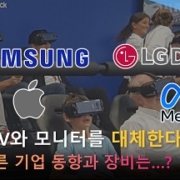
Can VR replace TVs and monitors? Industry Movement!?

(Sub) Can VR replace TVs and monitors? Industry Movement!?

Have you ever used a VR device?

In VR, immersion and sense of presence are very important.

For clear picture quality, Micro-OLED is essential in VR equipment.

Can VR replace monitors and TVs in the near future?

I expect that Korean companies can play an important role in the micro display market as well.

Thank you for watching today.

※ This video was produced based on UBI Research’s special report ‘2022 Micro-Display Technology Report’.
▶Download the 2022 Micro-Display Technology Report Sample
https://ubiresearch.com/en/product/2022-micro-display-technology-report/

▶ UBI Research official website
https://ubiresearch.com/en/

▶Business, display report inquiry
marketing@ubiresearch.com
+82-2-577-4391