Posts

Next-generation XR ecosystem driven by AI integration and device convergence

As AI technology advances, the XR market is heating up again, evolving from a simple wearable device to a personalized digital assistant. Global big tech companies such as Google, Meta, Apple, and others are taking the lead in the market with their respective ecosystems, and Samsung Electronics is also joining the trend with aggressive investments and product strategies.

Recent XR devices have gone beyond basic functions such as music listening, camera shooting, and voice control to include advanced AI functions such as real-time translation, object recognition, and personalized information at their core. This is greatly increasing their utility in everyday life and evolving the way they interact with users.

For example, Meta has sold over 1 million units of AI smart glasses in collaboration with Ray-Ban and is leading the democratization of AI glasses with real-time content generation and Q&A capabilities. Google is building a smart glasses ecosystem that combines its Gemini AI with the Android XR SDK, and a joint development project with Samsung is well underway.

Apple is expected to launch a Vision Pro M5 version in Q3 2025, followed by the lighter Vision Air in 2027 and a display-less Ray-Ban-style smart glasses in 2028. In the second half of 2028, the second generation of Vision Pro with an all-new design and XR glasses with a color display are planned for mass production. Vision Air and Vision Pro Gen 2 are expected to be lighter and more affordable with a new design. Apple’s Vision Pro launched in 2024, was priced at $3,499, which was considered too high for consumer expectations and a product that was technologically advanced but disconnected from the market and consumer reality. The Apple Vision Pro’s 1.42-inch, 3391 PPI high-resolution display was a major contributor to its high cost. Apple’s development plan shows Apple’s long-term vision to enter the mass smart glasses market and build an ecosystem while maintaining the premium XR headset market.

Samsung Electronics will officially launch its next premium XR device, Moohan, in the second half of this year. The product will provide new XR experience through the convergence of AI and display technology and will signal Samsung’s entry into the XR ecosystem. The device will feature a 1.3-inch, 2000 PPI OLED-on-Silicon (OLEDoS) display developed by Samsung Display, which is expected to offer light weight, excellent battery efficiency, and a price below $2,000. Samsung initially looked at Sony’s 1.3-inch, 3800 PPI OLEDoS. It remains to be seen whether Samsung will split the product into premium and entry-level variants for price competitiveness or release it as a single product.

Starting with Project Moohan, Samsung plans to launch an integrated strategy that encompasses XR hardware, software, content, and platforms. To this end, Samsung is strengthening its collaboration with big global tech companies such as Google and Qualcomm and is simultaneously promoting ‘Project Hyean’ to maximize connectivity with the entire Galaxy ecosystem, including smartphones, watches, and rings.

Changho Noh, Analyst at UBI Research  (chnoh@ubiresearch.com)

▶UBI Research’s Micro Display Report

Samsung Display Develops High-Resolution OLEDoS Microdisplay for Next-Generation XR

Samsung Display researchers revealed it in a recent paper published in J. Soc. Info. Display, the official journal of the Society for Information Display (SID), that they have developed a next-generation OLED-on-Silicon (OLEDoS) microdisplay with 4032 PPI (pixels per inch). This technology is optimized for the next generation of XR devices, including virtual reality (VR), mixed reality (MR), and augmented reality (AR), with panels that dramatically reduce system power consumption and crosstalk while maintaining high resolution and image quality.

This 1.3-inch panel has an ultra-high resolution of 4032PPI, delivering images so precise that pixels are indistinguishable to the naked eye. This minimizes the screen door effect in VR and AR glasses, enabling an immersive content experience. The display of the Apple Vision Pro, released in 2024, features a high-resolution display with a size of 1.42 inches and 3,391 PPI.

In this paper, a pixel compensation circuit structure with 7T1C (7 transistors and 1 capacitor) structure was introduced for high-resolution implementation, which complemented the shortcomings of the previous generation, 6T2C structure, and realized a design that was strong against voltage deviation.

Existing 6T2C pixel structures have caused problems with threshold voltage (Vth) deviations and image distortion between small transistors when implemented in high resolution. Accordingly, Samsung Display’s newly devised 7T1C structure provides the following major advantages.

  • Improved Vth compensation accuracy: Suppresses luminance imbalance caused by threshold voltage deviation to ±2.75% (previously ±10.6%)
  • Reduced horizontal crosstalk: 1.3% (previously 2.0%)
  • Area efficiency optimized with a single capacitor
  • Improved SRU (short range uniformity): 97.3% (previously 90.4%)

In addition, improvements have been made in the way data is driven. The existing 6T2C circuit consumes a lot of power because it has to charge and discharge a data line every frame, but the 7T1C greatly reduced power consumption by a single charging method. For example, in the same full gray pattern, the power consumption of the source IC decreased from 120 mW to 0.1 mW.

In addition, while lowering the operating voltage through the 8V CMOS-based design, it secured more than 50% of the power efficiency compared to the previous one.

Samsung Display officially announced its dual-track strategy to develop RGB OLEDoS and white-based OLEDoS simultaneously last year, and this 4032PPI panel is considered the result of that technological achievement. Although the mass production date for this newly developed product has not been announced, this technology is expected to serve as an important step in accelerating the development of the next-generation XR device market.


About the paper: J Soc Inf Display, 1–9(2025). 

                               SID 2025 Digest 1424 (P-8)

4032-PPI 1.3-inch OLEDoS Reference Image

4032-PPI 1.3-inch OLEDoS Reference Image

4032-PPI 1.3-inch OLEDoS Reference Image and Specifications

4032-PPI 1.3-inch OLEDoS Reference Image and Specifications

Changho Noh, Analyst at UBI Research  (chnoh@ubiresearch.com)

▶UBI Research’s Micro Display Report

Why XR Devices Are Key to the 6G Era

Google Headset and Smart Glasses Examples

Google Headset and Smart Glasses Examples

The introduction of 4G was a decisive factor in the popularization of smartphones. 3G technically enabled ‘data communication’, but it was difficult for consumers to experience it. On the other hand, 4G brought about visible changes such as high-resolution video streaming, real-time games, and SNS activation, and the development of smartphone displays was at the center of this experience. As screens became larger, clearer, and faster, the advancement of network speeds became an everyday experience.

The communications industry is now preparing for the commercialization of 6G, targeting around 2030. 6G supports speeds up to 100 times faster than 4G (up to 1 Tbps), delay times of less than 1 ms, and broadband hyperconnectivity. However, this level of speed is difficult to experience simply by downloading content or watching videos. The only interface that allows you to ‘experience’ the speed and low-latency characteristics of 6G is XR (eXtended Reality), or extended reality devices.

XR includes AR, VR, and MR, and is considered a core service of 6G. However, XR devices that will implement this still face various technical challenges, such as high-resolution displays, weight reduction, heat control, and optical system configuration. In particular, the display is the center of the XR experience quality. Based on a single eye, a resolution of 2000×2000 or higher, a pixel density of 100PPD or higher, and high brightness of 5,000 to 10,000 nits or higher are required, which far exceeds the level of general smartphones.

Currently, major XR companies and display companies are moving as follows.

  • Google is unveiling the Android XR platform through I/O in 2024 and is developing XR headsets and smart glasses. In particular, it is known that OLEDoS-based displays supplied by XREAL are used in smart glasses. Google’s XR strategy is focused on building a platform-hardware-content integration ecosystem targeting Apple Vision Pro.
  • Apple has taken the lead in the premium XR market with Vision Pro using OLEDoS, and is maintaining the same direction in subsequent models.
  • Samsung is developing ultra-high-resolution displays for XR centered on OLEDoS and LEDoS technologies, and they are scheduled to be installed in Samsung Electronics’ XR headsets and smart glasses.
  • LG Display is accelerating its OLEDoS core technology based on its OLED technology competitiveness.
  • BOE is mass-producing OLEDoS with support from the Chinese government, and is supplying it to local XR startups and global partners.
  • JBD is applying ultra-high-brightness displays based on LEDoS to small AR devices, and is attracting attention for implementing brightness of over 100,000 nits.

In this way, displays for XR devices are divided into two axes: OLEDoS and LEDoS. OLEDoS has strengths in resolution and color expression, while LEDoS has strengths in brightness and lifespan, and they are selected according to the purpose of each device.

Ultimately, 6G means not only the evolution of network speeds, but also the redefinition of the human-machine interface. If displays were at the center when moving from 3G to 4G, then XR devices and display technology will take that place in 6G. In order for consumers to ‘feel’ 6G, technology must now be implemented through a new window called XR.

Changwook HAN, Executive Vice President/Analyst at UBI Research (cwhan@ubiresearch.com)

▶UBI Research’s Micro Display Report

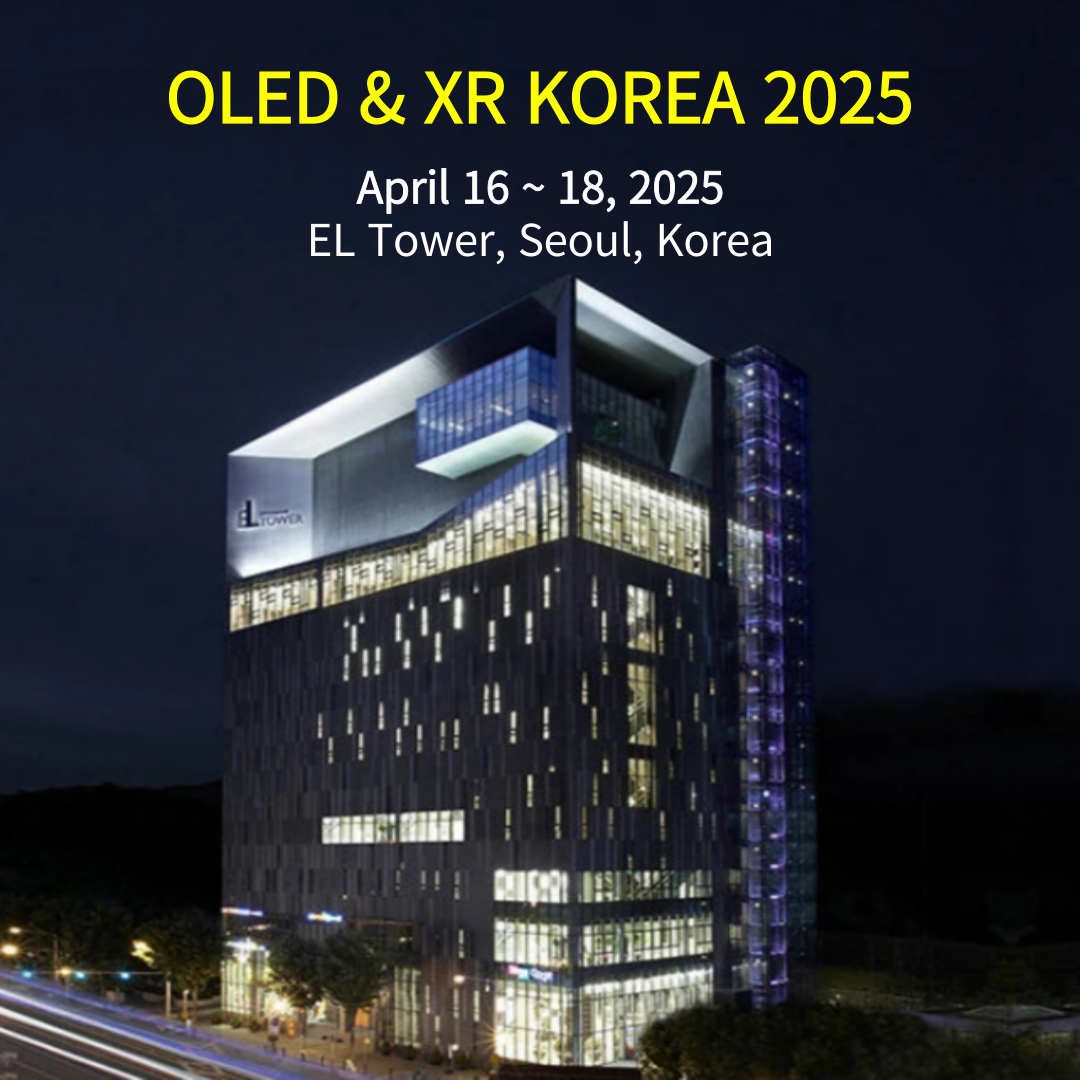
OLED & XR KOREA 2025: The Premier Conference on the Latest Innovations in Display Technology

The OLED & XR KOREA 2025 conference, a global event showcasing the latest technologies and innovations in the display industry, will take place from April 16 to 18, 2025, at Yangjae EL Tower in Seoul, South Korea. This event will bring together leading companies and experts from the global OLED and XR industries to discuss next-generation display technologies and market trends in depth. Key topics will include form factor innovations, software-defined vehicles (SDV), XR optical technology, quantum dot (QD) applications, and trends in China’s OLEDoS industry.

UBI Research, the host of the event, emphasized the significance of holding this conference in South Korea, where industry leaders such as Samsung Display and LG Display are driving technological advancements in the display industry. The conference aims to facilitate global technological exchange and collaboration while creating new business opportunities for display and XR companies, component suppliers, panel manufacturers, research institutions, and investors.

The event will feature discussions on stretchable displays, SDV displays, XR displays, Micro LED displays, QD technology, and the Chinese OLEDoS industry. The session on stretchable displays will highlight their flexibility and design freedom, while SDV displays will focus on technologies suited for the era of electric and autonomous vehicles. Additionally, the event will explore the latest trends in Micro LED and XR display technologies, the role of QD technology in automotive displays, and an analysis of the current status and challenges of China’s OLEDoS industry. Other specialized programs will also be included in the conference agenda.

 Pre Registration for OLED & XR KOREA 2025 is open until April 11, 2025. For more details, visit the official OLED & XR KOREA website at https://olednxrkorea.com/.

▶Register Now for OLED & XR KOREA 2025

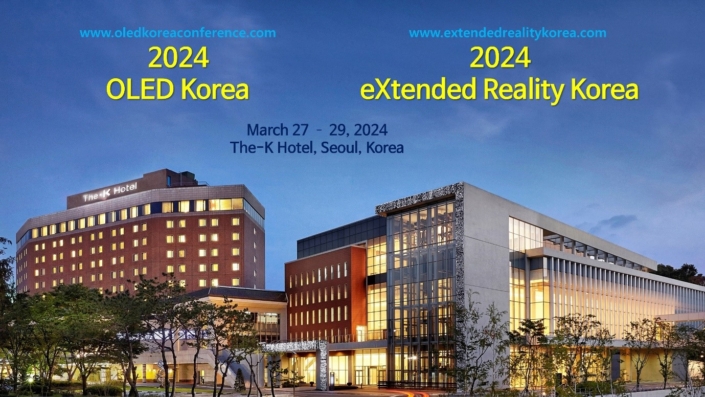
International Business Conference: 2024 OLED Korea & 2024 eXtended Reality Korea will be held in parallel!

UBI Research, a display specialist research company, will hold the international business conferences OLED Korea and eXtended Reality Korea in parallel at The-K Hotel in Yangjae, Seoul from March 27 to 29, 2024. This event is expected to be an opportunity for people from companies, academia, and research institutes related to the display industry around the world to attend, exchange the best information, and form a global network.

eXtended Reality Korea is the first XR industry-related business conference held by UBI Research and will cover trends and outlook on micro display, XR Hardware/Software, materials, equipment, etc.

This event aims to provide attendees with the opportunity to deeply explore the display and XR areas through a comprehensive program including tutorials, keynote presentations, and panel discussions.

The tutorial on March 27th will feature presentations on the future of XR, micro LED display technology, and key technologies to realize the next generation OLED display.

In addition, keynote presentations by ▲UBI Research, ▲Samsung Display, ▲LG Display, ▲Hyundai Mobis, and ▲Fortell Games are scheduled for the conference to be held on March 28th and 29th. Choong-Hoon Yi, CEO of UBI Research, will give a presentation on “OLED and XR industry outlook.” We will present the overall OLED industry, including OLED for IT, and the micro OLED industry that will be applied to MR equipment.

Samsung Display plans to introduce SDC’s roadmap for expanding the AR/VR market based on SDC’s plan to overcome technical obstacles in ultra-high-resolution displays under the title “AR/VR Development Strategy for Future Display.”

Under the theme of “Life with OLED,” LG Display will examine the field of OLED displays applied in daily life and present the continuous evolution and benefits of OLED technology.

Under the theme of “Automotive Display / HUD Trend and Future Display,” Hyundai Mobis presents trends and requirements for automotive displays, from Pillar To Pillar displays to Rollable displays, predicts future automotive displays, and announces development strategies.

Lastly, Fortell Games will discuss the topic of “Next-Gen Mixed Reality: New Horizons for Spatial Computing”, analyzing the latest developments in mixed reality technology and their impact on the future of the gaming industry.

In addition, it will be run by a total of 34 domestic and foreign speakers and programs, including AR/VR development and technology, automotive displays, OLED industry, backplane technology, and MicroLED display development.

Because it is a parallel event, attendees can attend both events even if they register for one event, and registration is possible at a special discount price during the early bird period until February 29th.

Detailed information can be found on the website (https://oledkoreaconference.com/, https://extendedrealitykorea.com/).

Aren’t you curious about the future of OLED and micro displays? OLED Korea and eXtended Reality Korea will provide the answer!

Korea maintains a leading position in the IT product and display markets. OLED Korea is an International Business Conference created to serve as a bridge between the global OLED industry so that OLED can replace LCD. This conference, with the participation of approximately 150 to 200 industry experts, has established itself as a key location to gauge the direction of the global OLED industry along with Korea’s OLED.

eXtended Reality Korea is an International Business Conference held for the first time. OLED is becoming a key display for XR displays, and Korea’s micro display development direction will be the key to determining the future of the XR industry.

OLED Korea and eXtended Reality Korea will be held as parallel events at The K Hotel in Yangjae, Seoul from March 27 to 29, 2024. This event consists of presentations and panel discussions by top experts in related industries around the world, focusing on Samsung and LG. Since it is a parallel event, you can attend both events even if you register at one location.

OLED Korea and eXtended Reality Korea will be business exchanges that provide answers and the best global network for companies to succeed in Korea’s OLED industry and XR industry.

OLED Korea : https://oledkoreaconference.com/

eXtended Reality Korea : https://extendedrealitykorea.com/

OLED shipments for smartphones, China will reverse in 2025

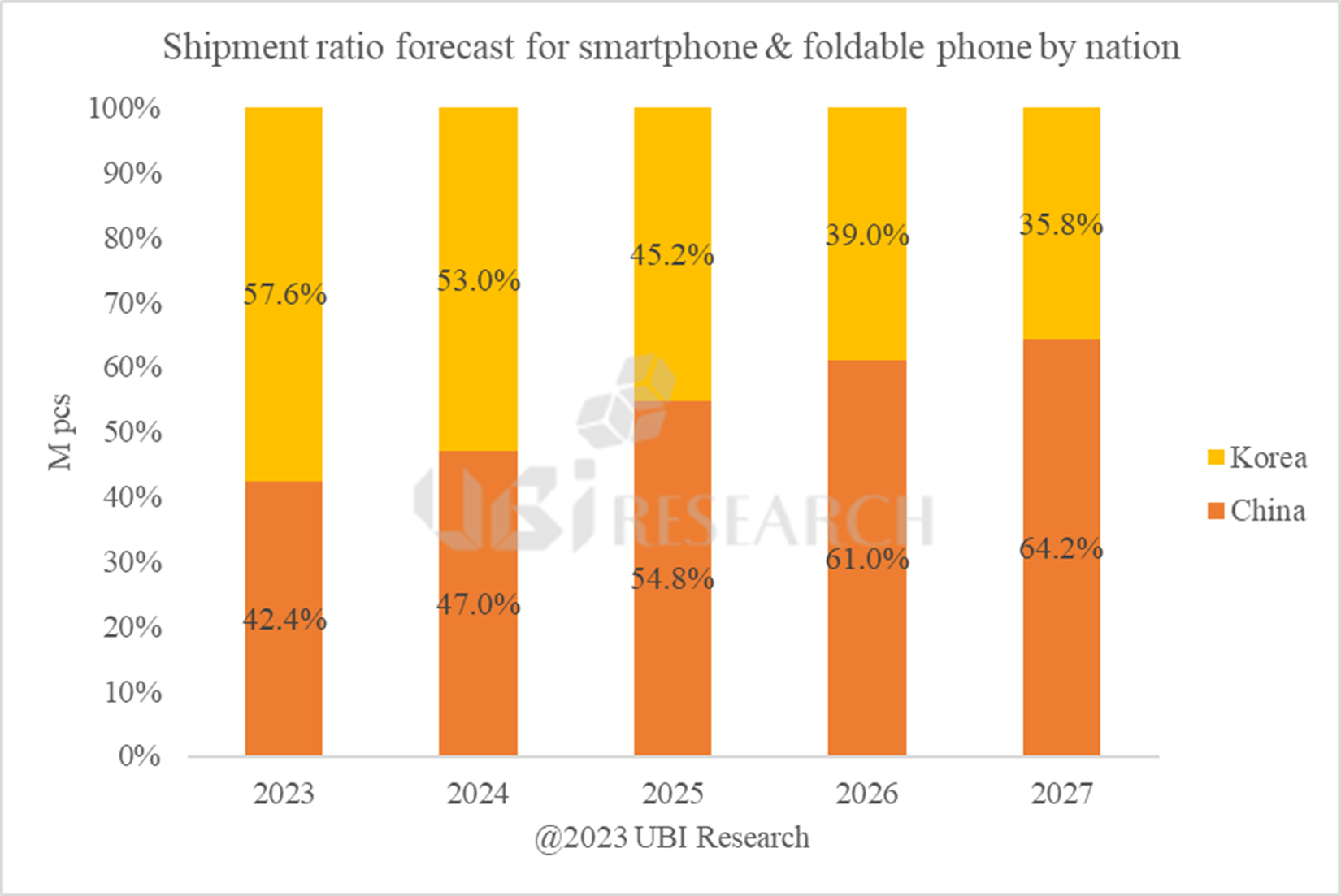
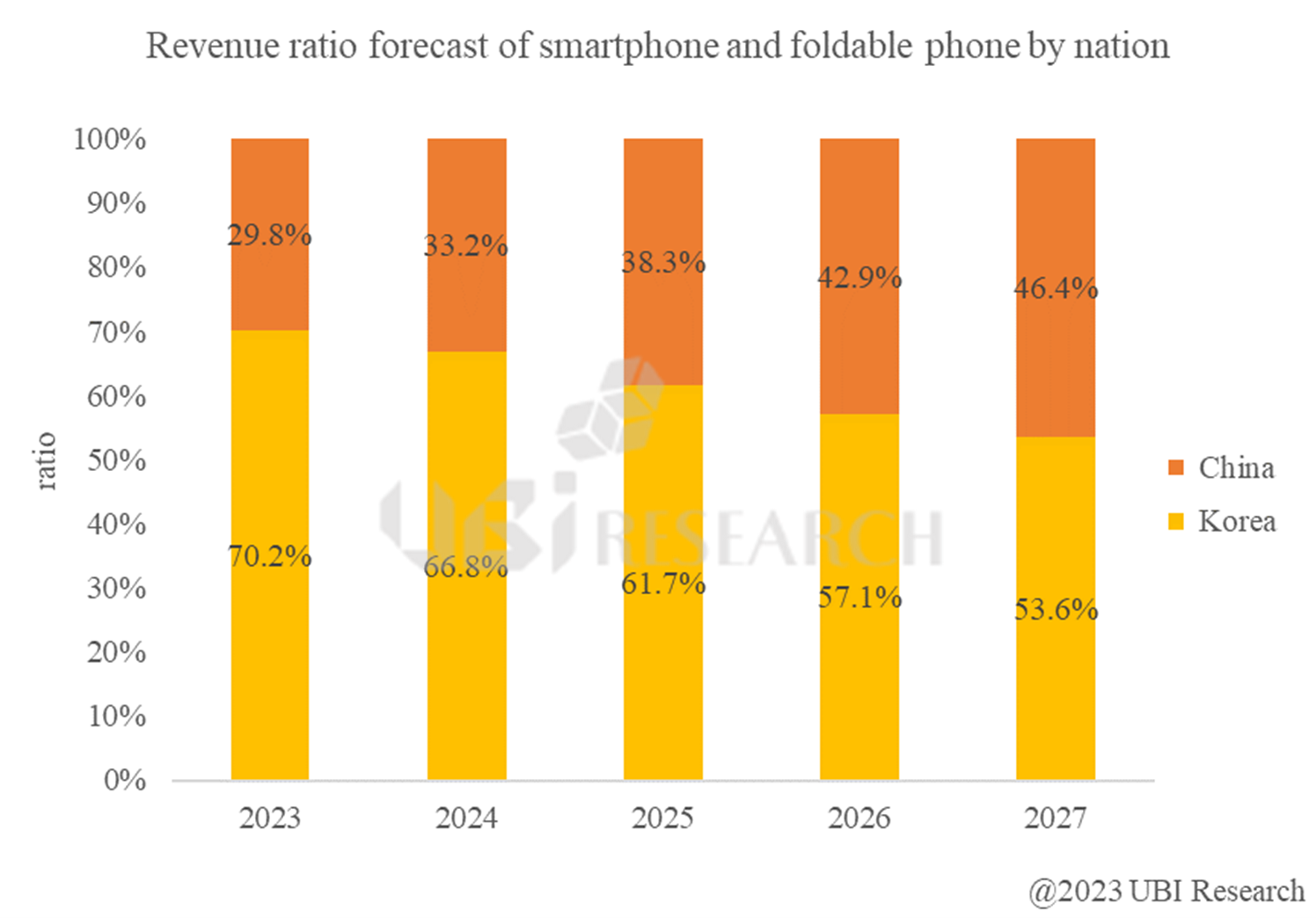
According to the 3rd quarter OLED Market Track published by UBI Research, China’s OLED shipments for smartphones (including foldable phones) are expected to surpass Korea in 2025.

However, since OLEDs made by Chinese companies are cheaper than Korean products, it is expected that Korea will dominate in terms of sales until 2027.

OLEDs produced by Korean display makers are of excellent quality and will maintain their superiority in sales for the time being.

However, Chinese display makers, based on the huge domestic market and government support, are also improving in quality and knocking on the market with cost-effectiveness, so sales are expected to reverse after 2028 as well.

In order for Korea to maintain its display industry, it is necessary to expand the OLED market for IT and TV, which is difficult for Chinese companies to enter the market. In addition, it is time to make a quick transition to the micro display industry for XR, which is emerging as a new market.

Although China’s investment is ahead of the micro display, it is an area where Korean displays can easily establish a foothold because it requires a precision process similar to that of semiconductors.

Display companies were in a situation where they were chasing Korean companies, but now we have to humbly accept that Korean display companies are in a situation where they have to catch up with Chinese companies.

▶Small OLED Display Quarterly Market Track Sample

XR Industry Megatrends

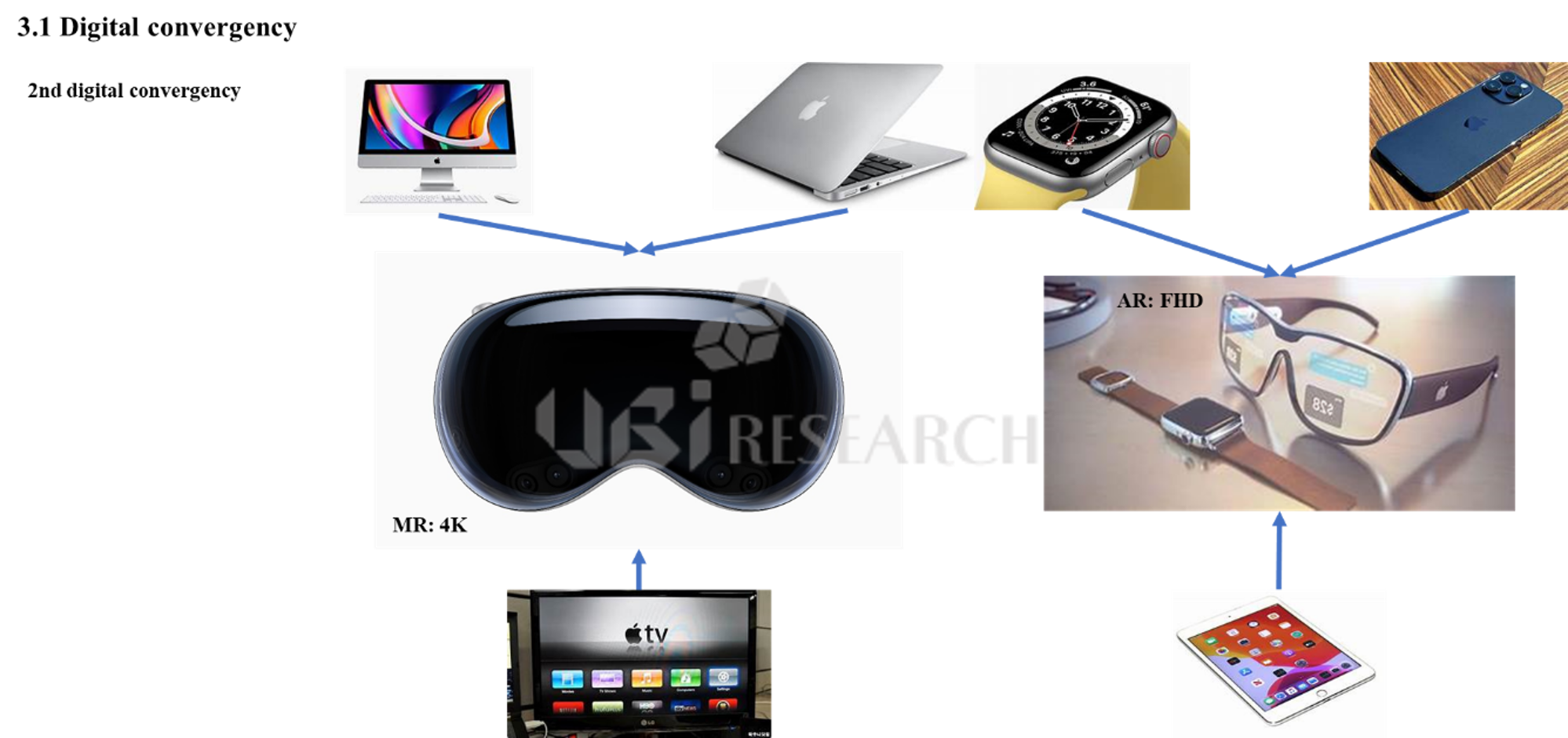
Extended reality (XR) devices, which overlay an extended reality on top of the real world, are emerging as disruptive devices that will drive a second wave of digital convergence, renewing the digital convergence brought about by smartphones. MR (mixed reality) devices will converge TVs, monitors, and laptops, while AR (augmented reality) devices will integrate smartphones, smartwatches, and tablet PCs.


UBI Research has released a new report, “XR Industry Mega Trends Analysis,” which provides a detailed analysis of the past and present of the XR industry that set manufacturers, display companies, and component/material/equipment companies need to know in order to prepare for the upcoming second wave of digital convergence.

Analyzing all the models of XR devices on the market from VR devices that started to be released in 1989 to the first half of 2023, we found that XR devices have a very complex industry structure that is different from wearables, mobile devices, and IT devices that have existed before.

MR devices are characterized by being able to work while moving, unlike conventional IT products that are used while sitting in a chair, and AR devices are products that free up both hands while actively adjusting the display to provide information in all directions of head movement.

Therefore, it was analyzed that in order to succeed in the XR device industry, which is the next generation of innovative products, all related companies, including set companies, display companies, and equipment/components/materials, must first understand the composition, operation principle, and content of XR devices and prepare business directions.

The core components of XR devices are optics, displays, and sensors for tracking, and the content used is different depending on the characteristics of these three components. While the existing IT industry has determined the content to be used based on the performance and specifications of the hardware, XR devices are expected to develop in the opposite direction, with the content determining the specifications of the XR devices.

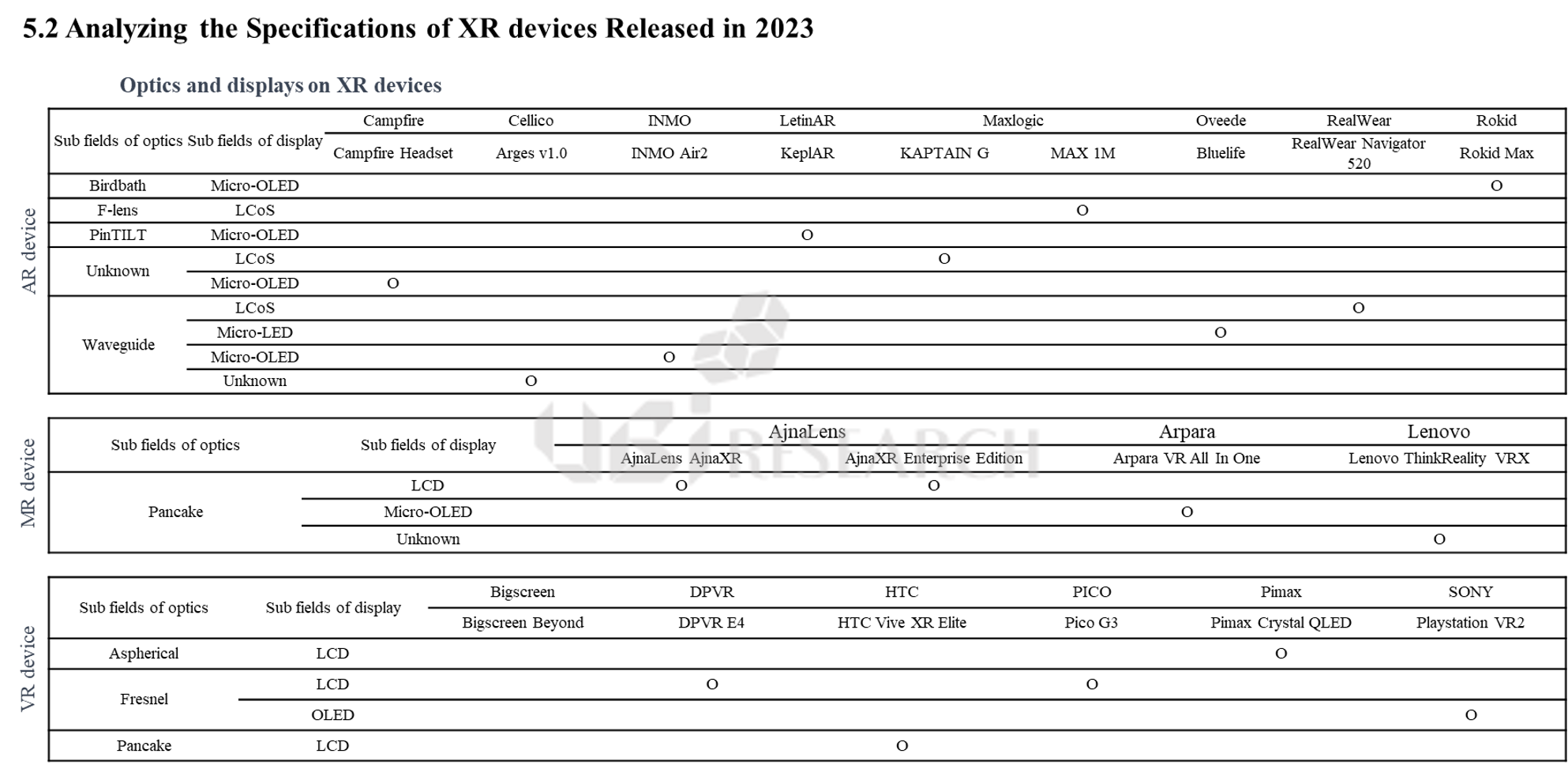
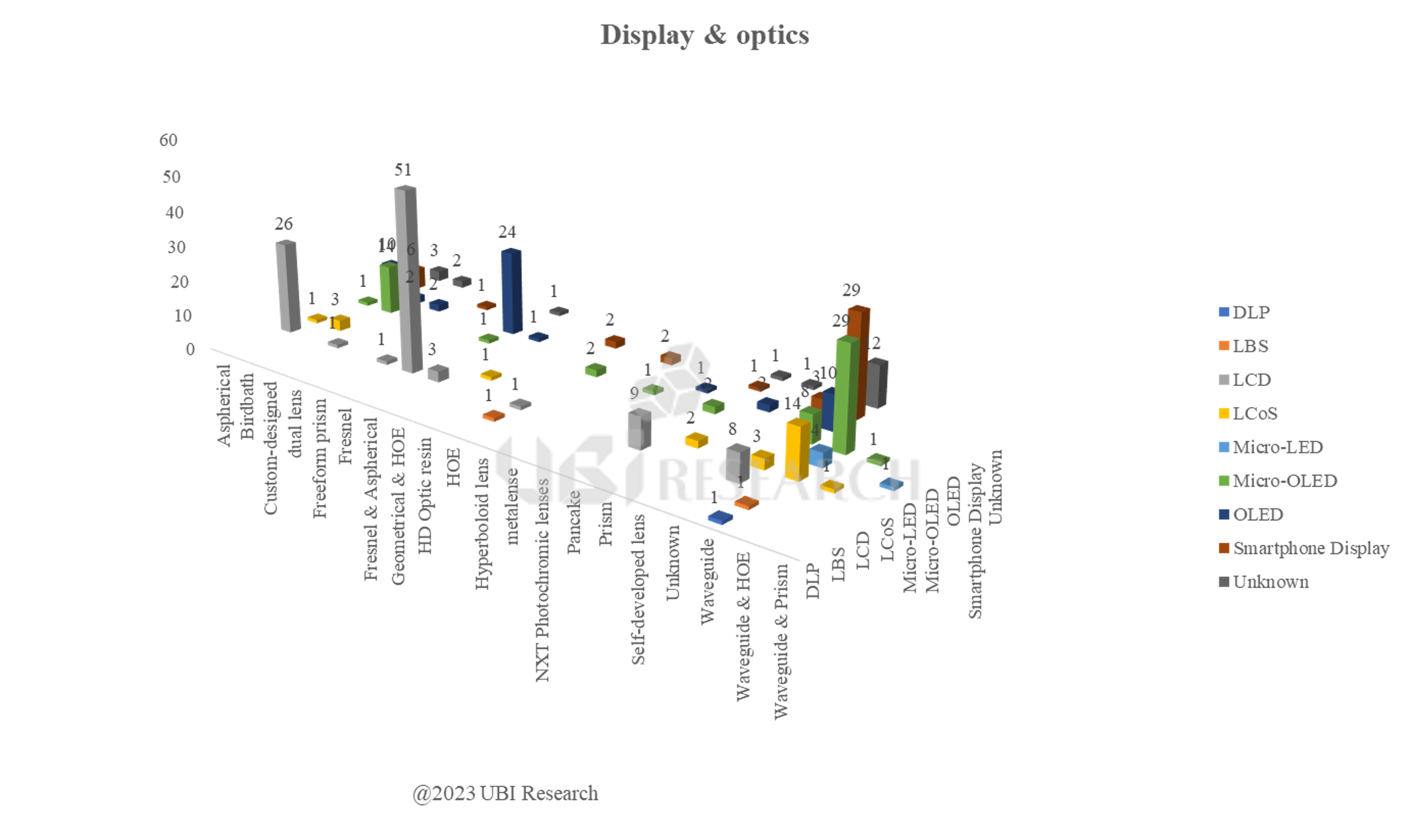
We have summarized the optics and displays of XR devices released in the first half of this year. Understanding the relationship between optics and display is an essential element of the XR device industry, as the type of content determines the specifications of the device.

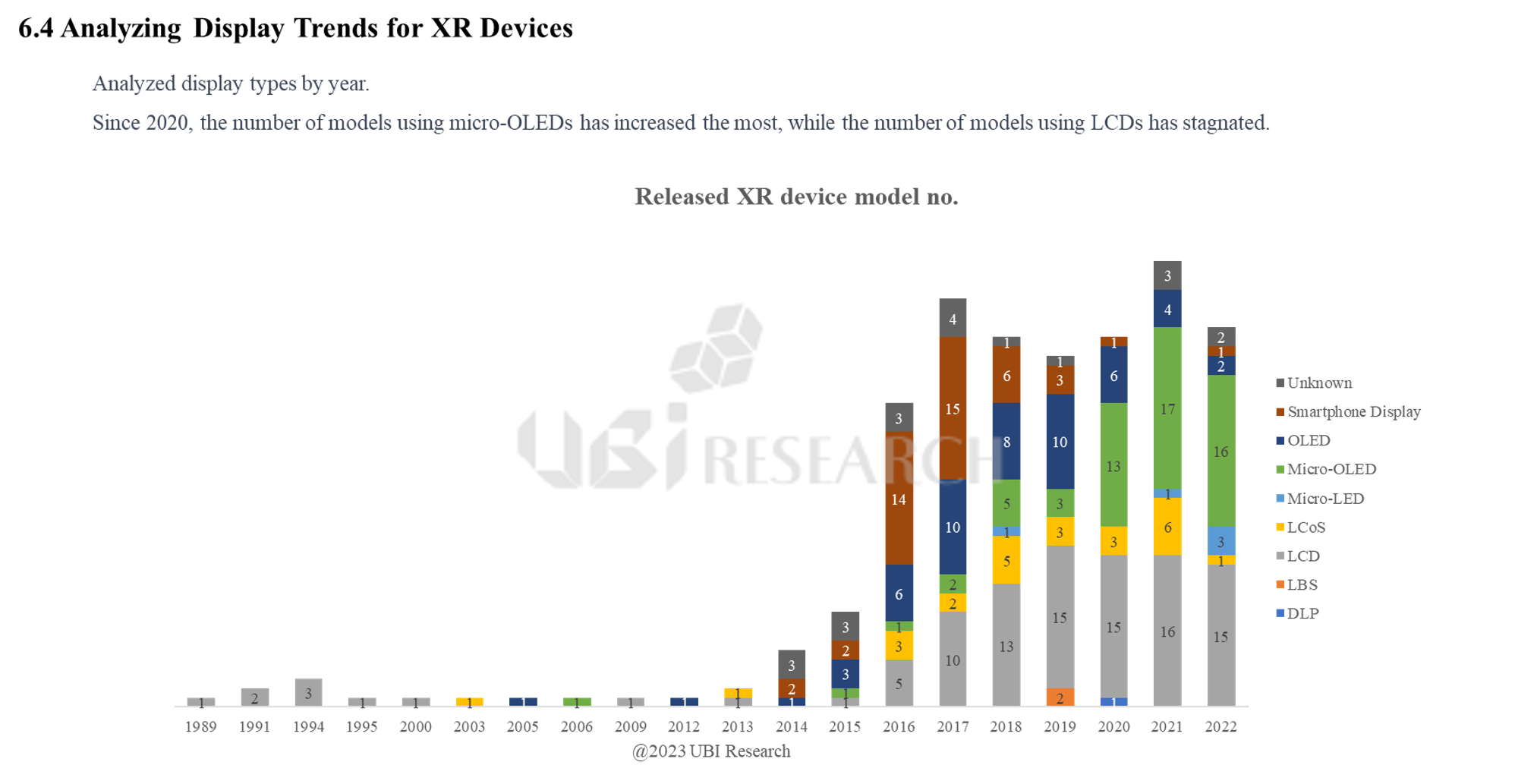
We analyzed the optics, displays, and tracking methods of all XR devices released since 1989.

Display trends show that the number of models using LCDs is slowly decreasing, while the percentage of XR devices using micro-OLEDs is increasing.

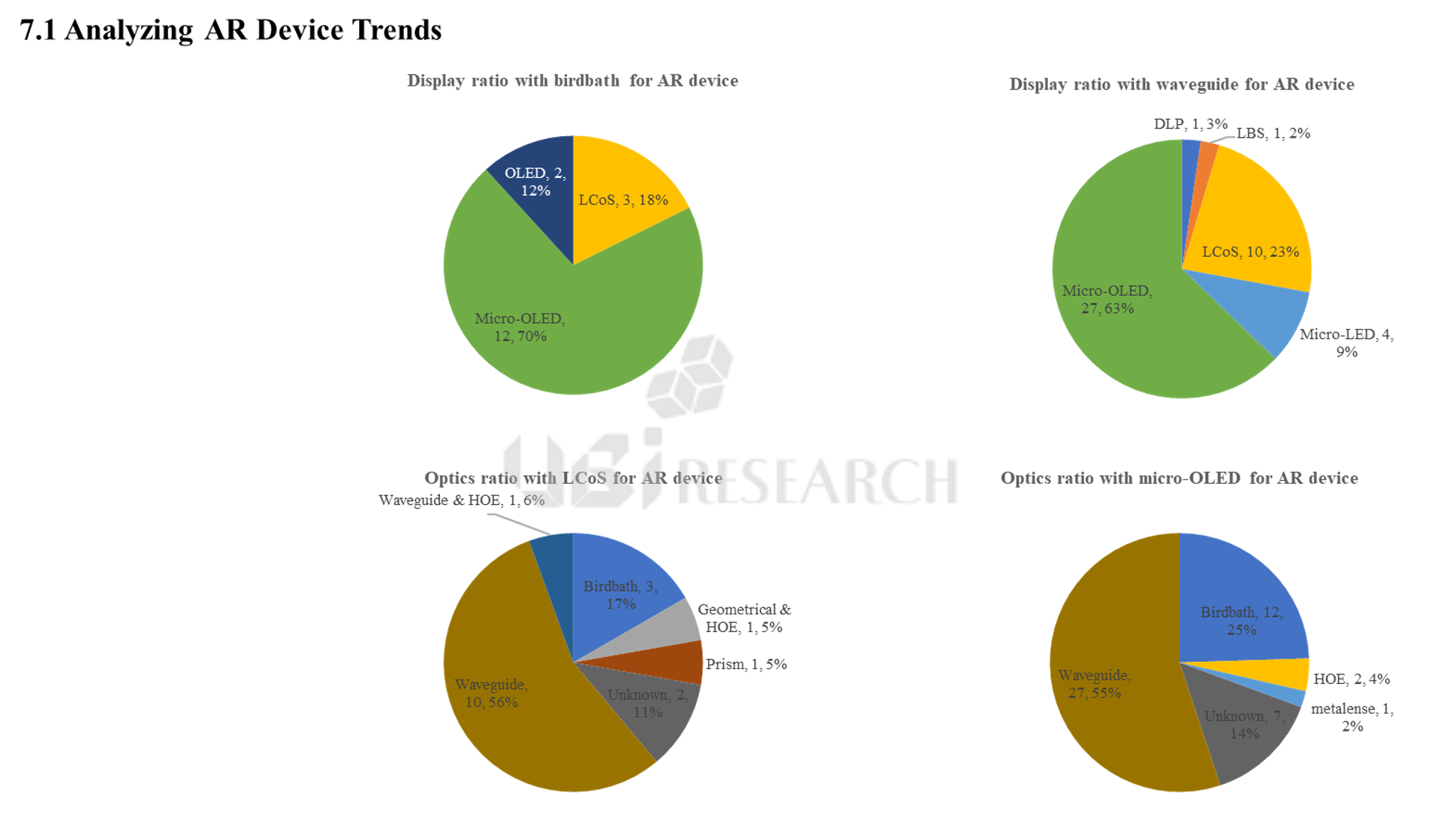
In optical see-through (OST) AR with transparent windows, micro-OLEDs are most commonly used, with waveguides and birdbaths being used as optics.

Display companies need to work together to understand which combination of optics is appropriate for the display they are developing or producing.  This is because XR devices are often used for specific purposes rather than general purpose. The field of view (FoV) of the optics can determine the display of choice.

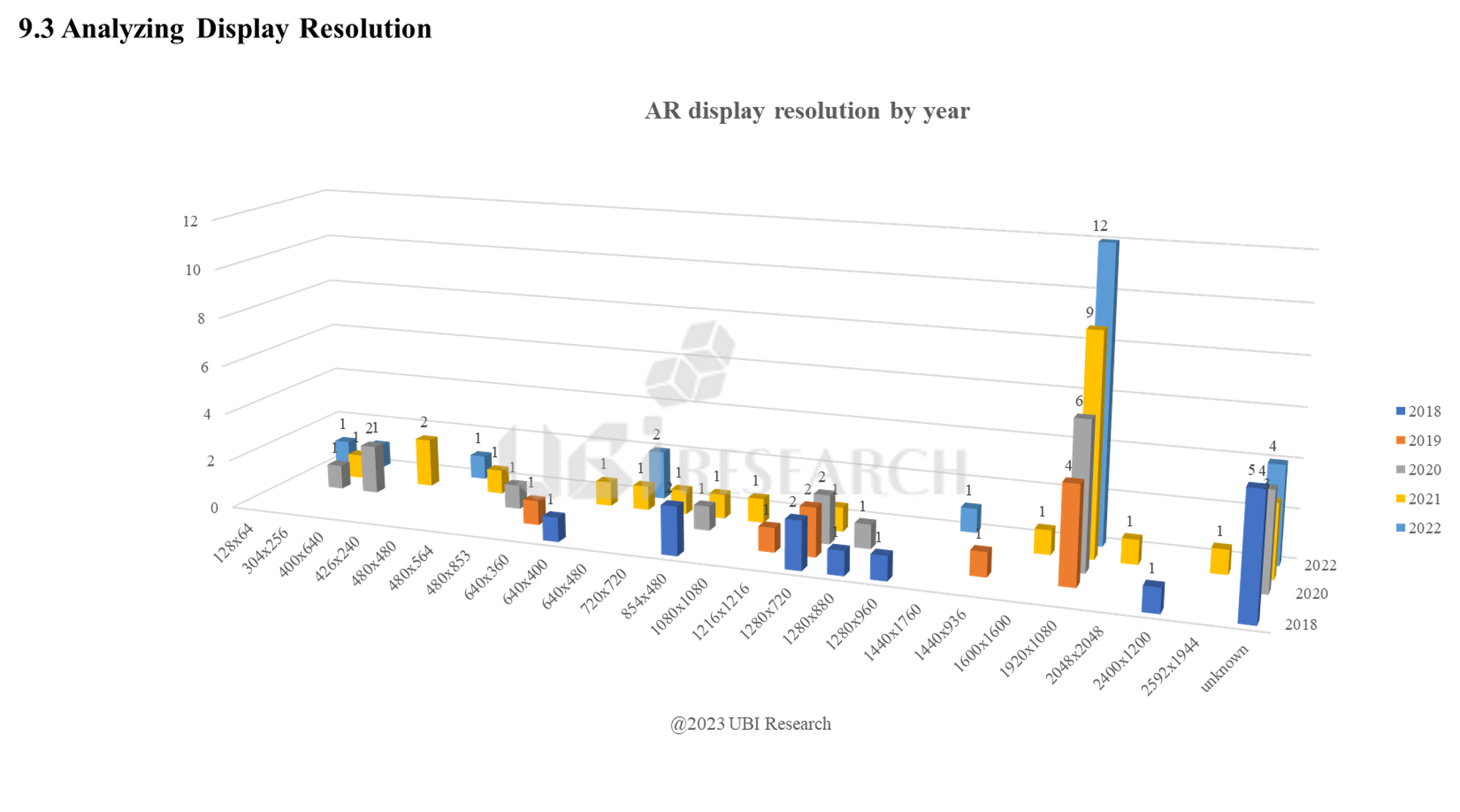
We analyzed the resolution trends in AR devices. FHD (1920×1080) resolution is becoming the main specification for AR devices. Micro-OLED is mostly used.

Micro-LEDs are attracting attention as the main display for AR devices due to their high brightness, but it will take at least five years before FHD products with a panel size of about 0.25 inches are available because panel and LED manufacturing technologies are not yet established.

As the features and specifications of XR devices vary depending on the purpose of use, it is necessary to closely examine the software, so we analyzed 472 products from 178 companies that have released software for XR since 2010.

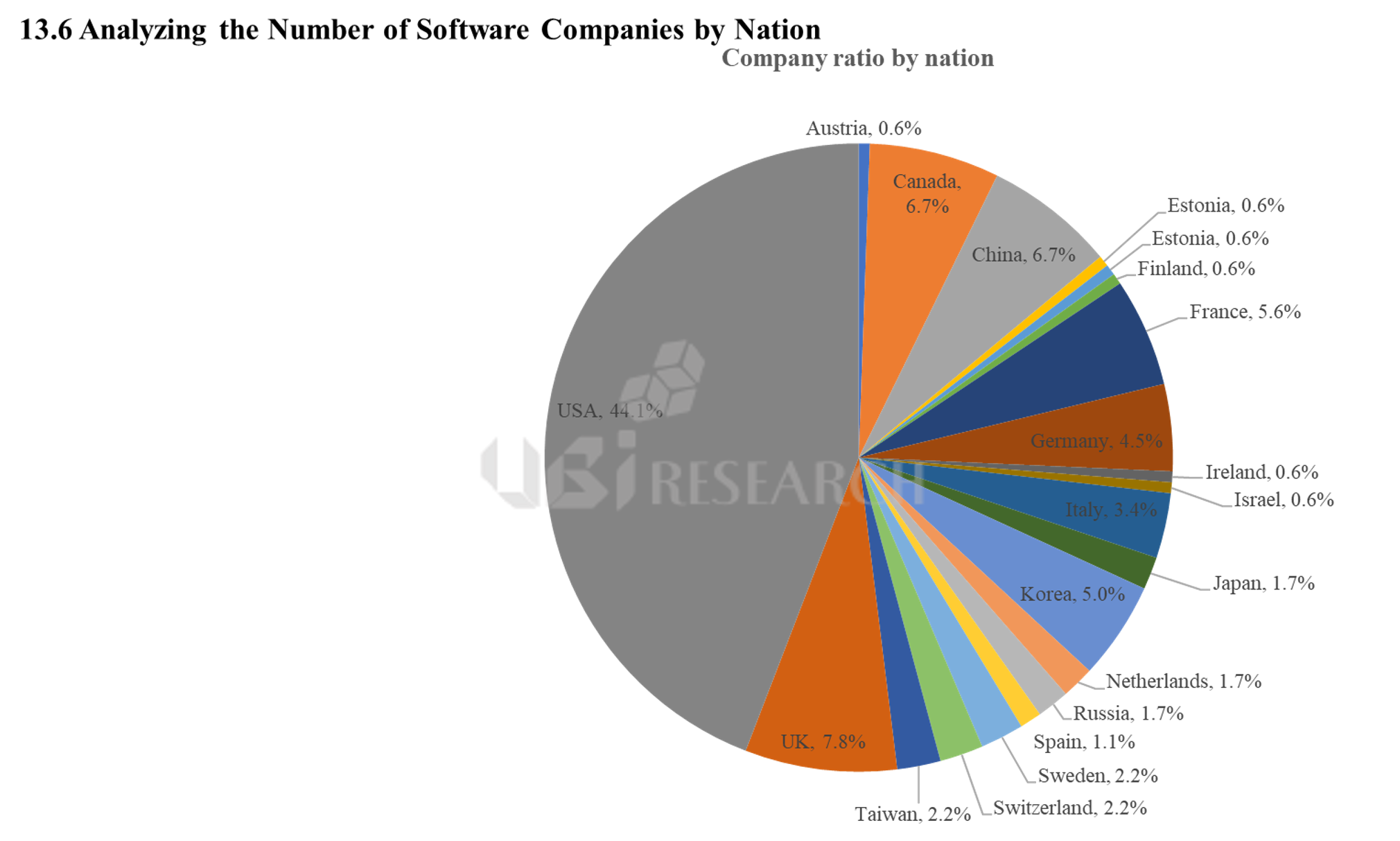
We examined the number of software companies by country, and found that the United States has 79 companies, accounting for 44.1%. It is clear that the software industry for XR is dominated by the United States.

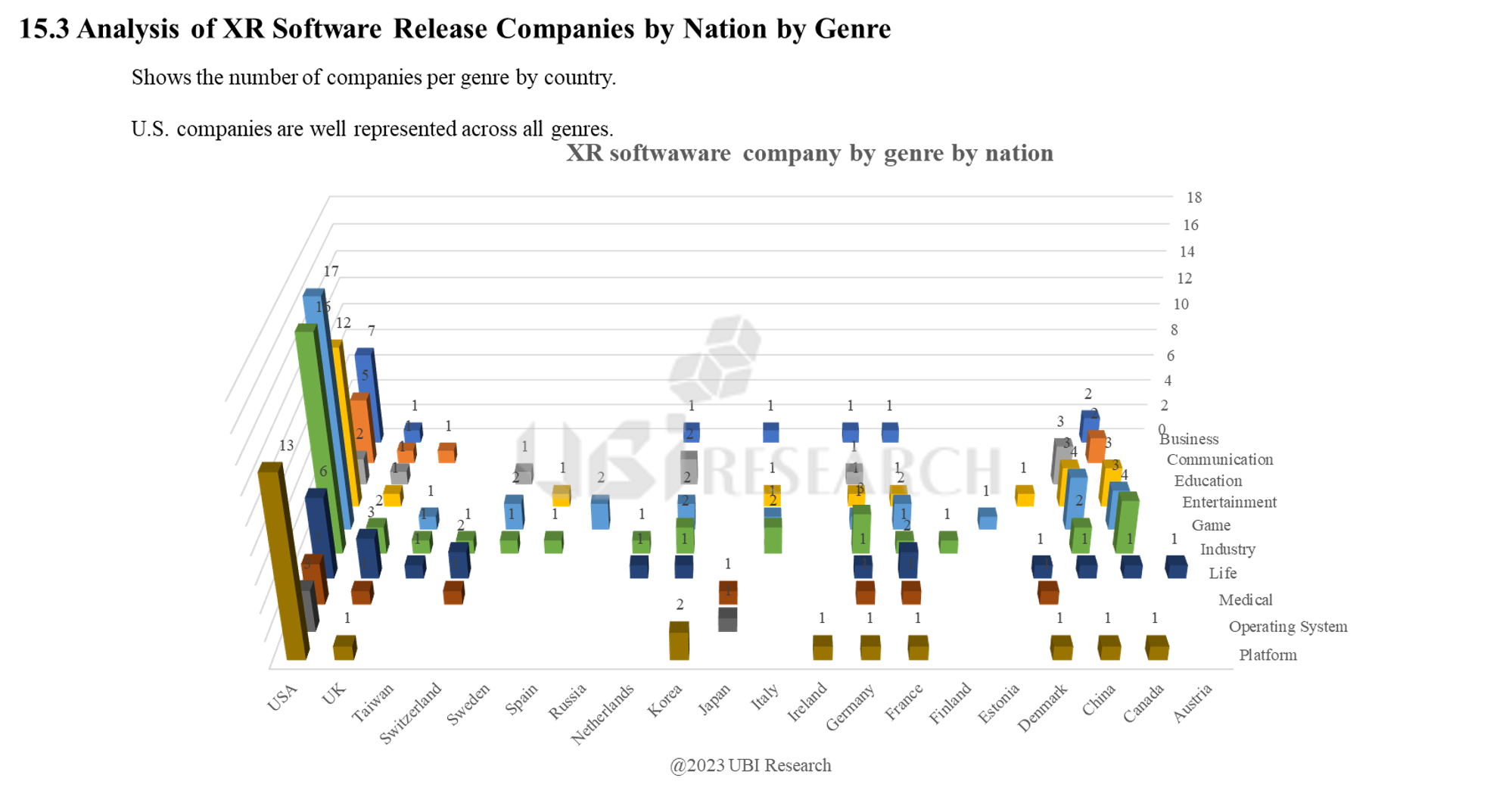
To analyze the activity of software companies, we examined the number of companies by genre that released products between 2018 and 2022. We analyzed the number of companies by genre in each country and found that the U.S. has an even distribution of companies in all genres.

This report will serve as a cornerstone for all supply chain players in the XR industry and those who wish to enter the XR industry in the future to understand the characteristics of the XR industry and find a successful business path.

▶ Megatrend Analysis of the XR industry Report Sample Download

Megatrend Analysis of the XR industry : Detailed analysis of XR devices and software industry

In order to shed light on the footsteps of the XR device industry, which is gradually increasing in scale with the goal of replacing wearable devices and IT devices, and to forecast the future market, XR device models and specifications released from 2018 to the first half of 2023 were analyzed. During this period, there were 327 models of XR devices and 127 companies that were investigated.

XR devices are classified into VR, MR, and AR. As for AR devices, only optical see-through (OST) products were classified as AR, and video see-through (VST), which allows viewing of the real world through a camera, were classified as MR. Since the labeling methods for MR and VR devices were mixed by the company, the fixing method was also closely investigated and referred to the device classification.

In order to analyze the trend of XR devices, it was analyzed by dividing into three types by period.
1) Latest trends of products released only in the first half of 2023
2) Overall XR device flow through analysis of products released from 1989 to 2022
3) 5-year trend between 2018 and 2022 for an accurate analysis of the current status, taking into account the company’s mergers and acquisitions, closure, etc.

Analyzing the number of models released between 1989 and 2022 by device, the XR device industry appears to have started to bloom in 2016. Most of the device models were for VR, but after the number of models released peaked in 2017, the number of new VR device models has been slowly declining. Especially since 2020 when Covid-19 started, the number of AR device models has outpaced the number of VR device models. One of the reasons for the decrease in the number of newly released VR device models is the increase in the number of MR device models. From this analysis, it seems that the XR device industry is shifting from VR to AR and MR industries from 2021.

The competitiveness of each country in the XR device industry was also analyzed. Recently, the device industry has been affected by the entire supply chain depending on the ecosystem of each country, so we looked at the countries and application fields that are leading the XR set industry. Between 2018 and 2022, the country with the highest number of vendors launching XR devices was China, with 25 vendors. The United States comes next with 20 companies, and Korea has the third largest number with 9 companies. As a result of investigating the number of companies by application field, Chinese companies have the largest number of companies that have released VR and MR products, but the number of AR companies is the number one in the United States. South Korea ranked third in AR and VR products respectively.

When analyzing the number of XR device product models, China ranked first, the US ranked second, and Taiwan ranked third.

We analyzed software companies for XR between 2010 and 2022, as well as their released products and applications. The number of software released during this period was 472, and the number of companies was 178. The increase in the number of software releases for XR started from 2016, and when 472 software were analyzed by XR type, the ratio was 66% with 311 cases for VR, and 81 cases and 80 cases for AR and VR, respectively. VR software still seems to dominate the XR software industry.

When XR type software was analyzed by country, China released the most products for VR with 177 cases. This result shows that China is leading the VR software industry. As a result of analysis by genre, game use accounted for 49% with 233 cases, industrial use with 62 cases with 13%, and entertainment with 41 cases with 9%.

When the number of software companies is analyzed by country, US companies have an overwhelming number of companies with 79. On the other hand, China, which has the most VR software releases, had only 12 companies.

▶ Megatrend Analysis of the XR industry Report Sample Download