Samsung Display’s Q1 Line to Maximize Profitability by Expanding QD-OLED Monitor Production
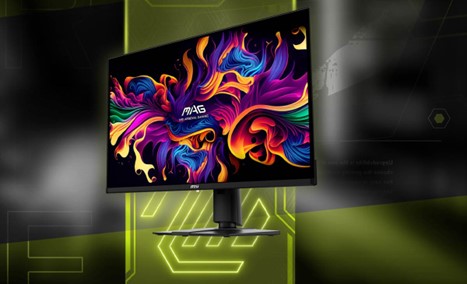
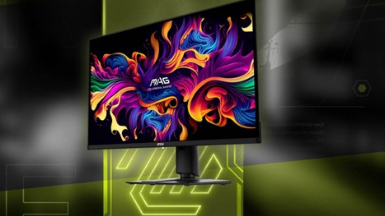
MSI MAG Gaming Monitor featuring Samsung Display’s QD-OLED panel. In response to the growing demand for high-end IT devices, Samsung Display is significantly expanding its monitor panel production to 4 million units by 2026. (Source: MSI)
Samsung Display is preparing to increase the share of monitor panels in its QD-OLED business. The Q1 line for QD-OLED production has stabilized, with both yield and utilization rates exceeding 90%, and line depreciation is expected to end in the second half of 2026. As the end of depreciation coincides with an increase in monitor shipments, the profitability improvement effect of the QD-OLED business is expected to become even more pronounced.
Samsung Display plans to expand QD-OLED monitor shipments from around 2.8 million units last year to 4 million units in 2026. With yield and utilization already stable, the company is expected to adjust the production mix between TV and monitor panels within its existing capacity rather than invest in new line expansion. It will also expand module line capacity in line with the increase in monitor panel shipments.
The expansion of QD-OLED monitor production is significant from a profitability perspective. QD-OLED for TVs holds strong symbolic value in the premium large-size display market, but it competes with Mini-LED LCD and WOLED. By contrast, QD-OLED for monitors is growing rapidly, driven by gaming and high-end IT demand, and offers advantages such as high refresh rates, fast response times, wide color gamut, and high contrast ratio. Within the limited capacity of the Q1 line, increasing the share of higher-ASP monitor panels is more favorable for profitability, even if TV panel volume is reduced.
As OLED panels for Apple’s iMac are expected to enter mass production from 2028, the large-size IT OLED market is also emerging as an additional growth driver. Samsung Display, which has accumulated experience in large-size OLED mass production and secured stable QD-OLED production, is considered a strong candidate for supplying OLED panels for the iMac.
The iMac has a larger screen than notebooks or tablets and requires a higher level of image quality in terms of color gamut, contrast ratio, and viewing angle. QD-OLED, based on a QD color conversion structure, can deliver a wide color gamut and excellent viewing angles, making it well suited for premium desktop displays. Samsung Display’s move to expand QD-OLED monitor shipments and increase module line capacity is a short-term response to gaming monitor demand, but in the mid- to long term, it can also be seen as a strategic step toward the expansion of the large-size IT OLED market, including Apple’s iMac.
Samsung Display’s QD-OLED business strategy is shifting from the initial stage of TV-led market formation to a phase of profitability expansion centered on monitors and IT applications. With the end of Q1 line depreciation, yield and utilization rates exceeding 90%, monitor shipment growth, and module line capacity expansion all converging, the profit contribution of the QD-OLED business is expected to increase further from 2026 onward.
Junho Kim, Analyst at UBI Research (alertriot@ubiresearch.com)
 2026 Medium & Large Size OLED Display Annual Report
※ This article is produced by UBIResearchNet.
Unauthorized reproduction or citation without source attribution is prohibited.
When quoting, please clearly indicate the source (UBIResearchNet) and provide a link.