Posts

Diagram of different phases of ViP™ OLED devices showing the independent optimization of subpixel common layers to enhance display efficiency.

High-efficiency pTSF-OLED made possible only by ViP™ technology

Visionox and the research team of Professor Lian Duan at Tsinghua University jointly presented research results demonstrating OLED efficiency improvements through ViP™ (Visionox intelligent Pixelization) technology at ICDT 2026 (International Conference on Display Technology). This presentation is particularly noteworthy as it marks the first co-authored paper between Visionox, which has led the ViP™ process innovations, and Prof. Lian Duan’s group, which developed the pTSF (phosphor-assisted TADF-sensitized fluorescence) mechanism and contributed to its mass production adoption.

OLED panels fabricated using the fine metal mask (FMM) process have a pixel aperture ratio (APR) of only 20–30%. This narrow emitting area forces high current densities through the device, fundamentally accelerating efficiency roll-off and material degradation. On large-area substrates of Gen 8 and above, mask sagging makes precise alignment increasingly difficult, creating serious yield challenges for producing high-resolution OLED panels at 400 ppi and beyond.

The ViP™ technology, disclosed by Visionox in May 2023, patterns pixels via photolithography, enabling an APR exceeding 50%. Furthermore, unlike FMM, it allows the common layers of each R, G, and B sub-pixel — including HIL, HTL, EBL, ETL, and others — to be designed and optimized in complete independence.

The research team systematically investigated the efficiency-improvement effects of ViP™ technology along three axes: materials, layer thickness, and emission mechanism. In the FMM process, the hole transport material (HTM) has traditionally been selected based on the performance requirements of the blue device. With ViP™, however, the common layers for each sub-pixel can be chosen independently to match their respective emission characteristics.
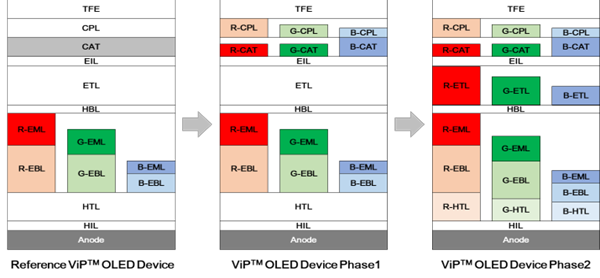
Diagram showing the structural changes of ViP™ OLED devices from Reference to Phase 1 and Phase 2, illustrating the independent optimization of common layers (CAT, CPL, ETL, EBL, etc.) for each RGB subpixel

Structural optimization phases of ViP™ OLED devices revealed by Visionox and the Tsinghua University research team. It overcomes the limitations of FMM by independently designing the common layers of each subpixel to prove efficiency improvements. (Source: Visionox & Tsinghua University)

A comparison of three HTM materials sharing the same HOMO level (−5.2 eV) but differing in hole mobility revealed that a red device based on an HTM with significantly lower mobility degradation under high electric field conditions achieves an efficiency roll-off (G16/G255) of 101% — effectively zero — at high luminance, while extending LT95 lifetime by 48% relative to the reference device.

Two-stage optimization effects were quantitatively verified through SETFOS optical simulation. In Stage 1, individually tuning the cathode (CAT) and capping layer (CPL) thicknesses for the R and B devices alone improved white efficiency by 5%. In Stage 2, further optimizing the HTL, EBL, and ETL thicknesses for each of R, G, and B added an additional 9% (green), 3% (red), and 2% (blue) improvement. The combined white efficiency gain from both stages exceeds 7%, a magnitude comparable to a full year’s efficiency progress achievable through materials innovation (typically 5–10%).

ViP™ enables device structure optimization tailored to each emission color. A blue device based on the pTSF mechanism achieves theoretical efficiency 1.6–2.5× higher than that of a TTA (triplet-triplet annihilation) fluorescent device. Applying the pTSF mechanism across a white panel can boost overall efficiency by up to 55%. However, in FMM-based mass production lines, the HOMO/LUMO energy levels of the HTM and EBM required for pTSF green and pTSF blue pixels are mutually incompatible, making it practically impossible to raise efficiency within a single panel. ViP™ resolves this structural barrier and opens the path to integrating both a pTSF green device and a pTSF blue device within a single panel.

This study suggests that as ecosystem collaboration deepens between material suppliers and equipment manufacturers, the efficiency gains enabled by ViP™ technology will accelerate further. For next-generation applications demanding high resolution and low power consumption — large-format IT panels (monitors, laptops), AR/VR headsets, and automotive displays — the ViP™–pTSF technology combination is poised to emerge as a core source of differentiated competitive advantage that FMM-based mass production lines cannot replicate.

Changho Noh, Senior Analyst at UBI Research (chnoh@ubiresearch.com)

▶2026 Medium & Large Size OLED Display Annual Report

▶2025 OLED Emitting Materials Report Sample

※ This article is produced by UBIResearchNet.

Unauthorized reproduction or citation without source attribution is prohibited.

When quoting, please clearly indicate the source (UBIResearchNet) and provide a link.
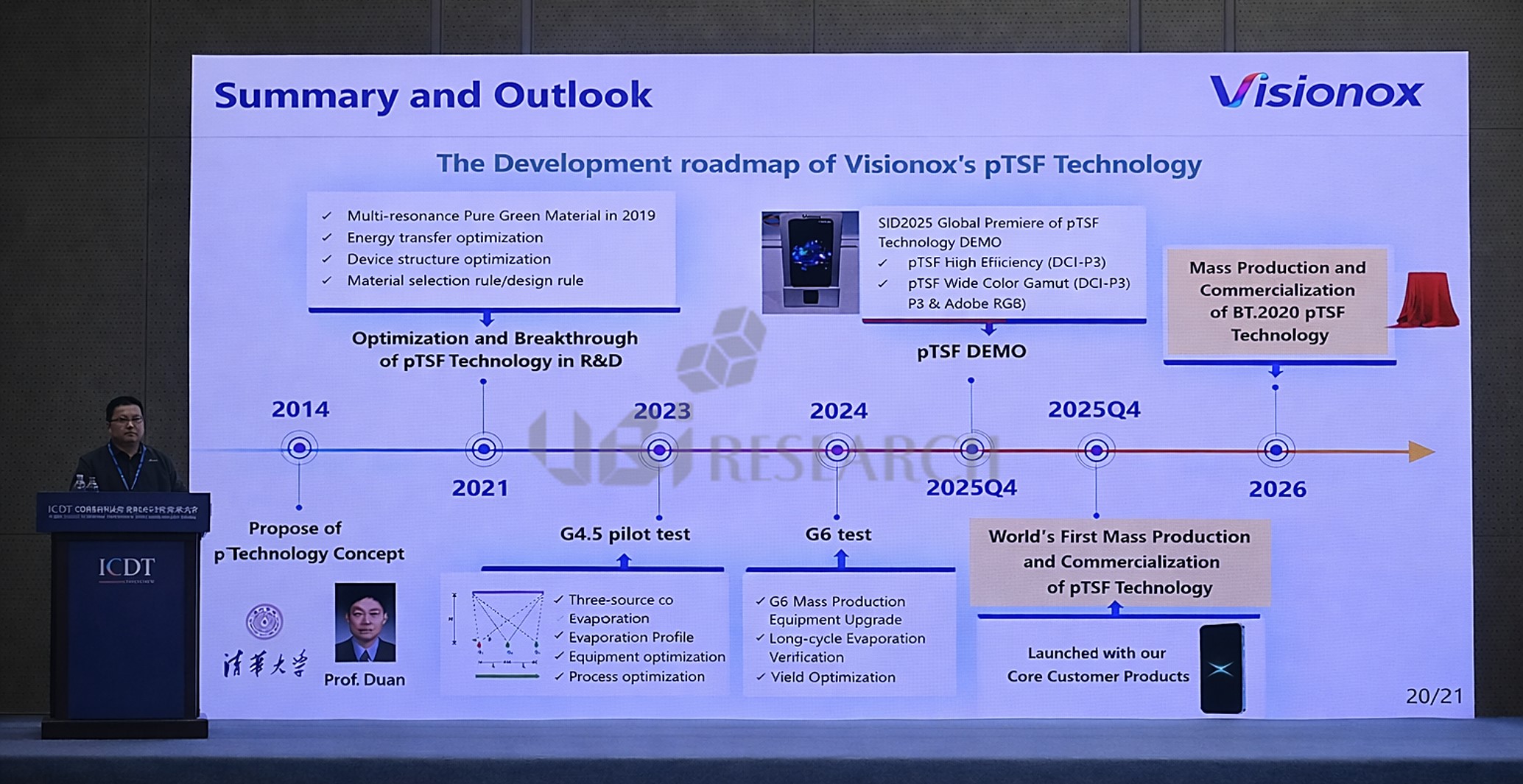
Presentation slide outlining Visionox's pTSF technology roadmap from concept to 2026 mass production at ICDT 2026.

Visionox Achieves 95% of BT.2020 with pTSF Technology Advancement

At ICDT 2026, Dr. Guomeng Li of Visionox presented the mass production roadmap for panels applying pTSF (Phosphor-assisted TADF-sensitized fluorescence) technology. He emphasized that by addressing key limitations of conventional phosphorescent OLEDs—such as broad emission spectra and shoulder peak issues—the technology marks a turning point in OLED color reproduction.

At SID 2025, Visionox had already demonstrated the feasibility of this approach by showcasing a pTSF-based green OLED achieving color gamut at the level of DCI-P3 and Adobe RGB.

Visionox's pTSF technology development and 2026 mass production roadmap presented by Dr. Guomeng Li at ICDT 2026

Visionox’s pTSF development roadmap presented by Dr. Guomeng Li at ICDT 2026. The goal is the full-scale mass production and commercialization of BT.2020 pTSF technology by 2026. (Source: UBI Research)

pTSF, a next-generation OLED emission technology, uses a phosphorescent material as a sensitizer to transfer energy to a narrow-spectrum fluorescent emitter, enabling 100% exciton utilization while improving color purity.

Visionox first presented pTSF performance at SID 2025 with a CIEx of less than 0.21. Less than a year later, at ICDT 2026, the company reported achieving a CIEx of 0.17 and approximately 95% of the BT.2020 color gamut. In addition, Visionox stated that, compared with its mass-produced phosphorescent OLEDs, the new structure delivered more than 30% higher efficiency and over 50% longer lifetime.

According to Visionox, these improvements were achieved by optimizing the combination of host materials, phosphor sensitizers, and narrow-spectrum fluorescent dopants, while also controlling the exciton recombination zone to reduce factors that degrade device performance. In particular, the company explained that expanding the recombination zone helped mitigate TTA and TPA, making it possible to improve both efficiency and lifetime at the same time. Visionox also added that stable characteristics were confirmed in evaluations including temperature-dependent IVL behavior, high-temperature driving stability, and capacitance variation.

Visionox also presented the development history and mass production plan for its pTSF technology. According to the presentation, the concept of pTSF was first proposed in 2014 by Professor Duan’s research team at Tsinghua University. By 2019, the company had established the technical foundation through the development of high-purity green materials based on multi-resonance structures, along with optimization of energy transfer and device architecture. It then proceeded with process and equipment validation as well as yield improvement through G4.5 pilot testing in 2021 and G6 testing in 2024, before unveiling a pTSF technology demonstrator at SID 2025. Visionox stated that in the second half of the same year, the technology entered the early stage of mass production and commercialization through customer products.

Visionox presented 2026 as the point at which BT.2020-level pTSF technology would be applied to mass production, and stated that it plans to further expand commercialization of the technology.

Changwook Han, Executive Vice President of UBI Research, commented, “The significance of pTSF lies not only in extending the color gamut, but in its ability to achieve BT.2020-level ultra-wide color reproduction while simultaneously securing both efficiency and lifetime. Competition in the premium OLED market is likely to become increasingly centered on color performance, and high-color-purity emission structures such as pTSF have strong potential to emerge as core technologies in the future.”

Changwook Han, Executive Vice President/Analyst at UBI Research (cwhan@ubiresearch.com)

▶2026 Small OLED Display Annual Report

▶2026 Medium & Large Size OLED Display Annual Report

※ This article is produced by UBIResearchNet.

Unauthorized reproduction or citation without source attribution is prohibited.

When quoting, please clearly indicate the source (UBIResearchNet) and provide a link.
[ICDT 2026] Visionox, Automotive Dynamic Foldable AMOLED

[ICDT 2026] Visionox, Automotive Dynamic Bending AMOLED

[ICDT 2026] Tianma, 7.05-inch Transparent Micro-LED (60%T)

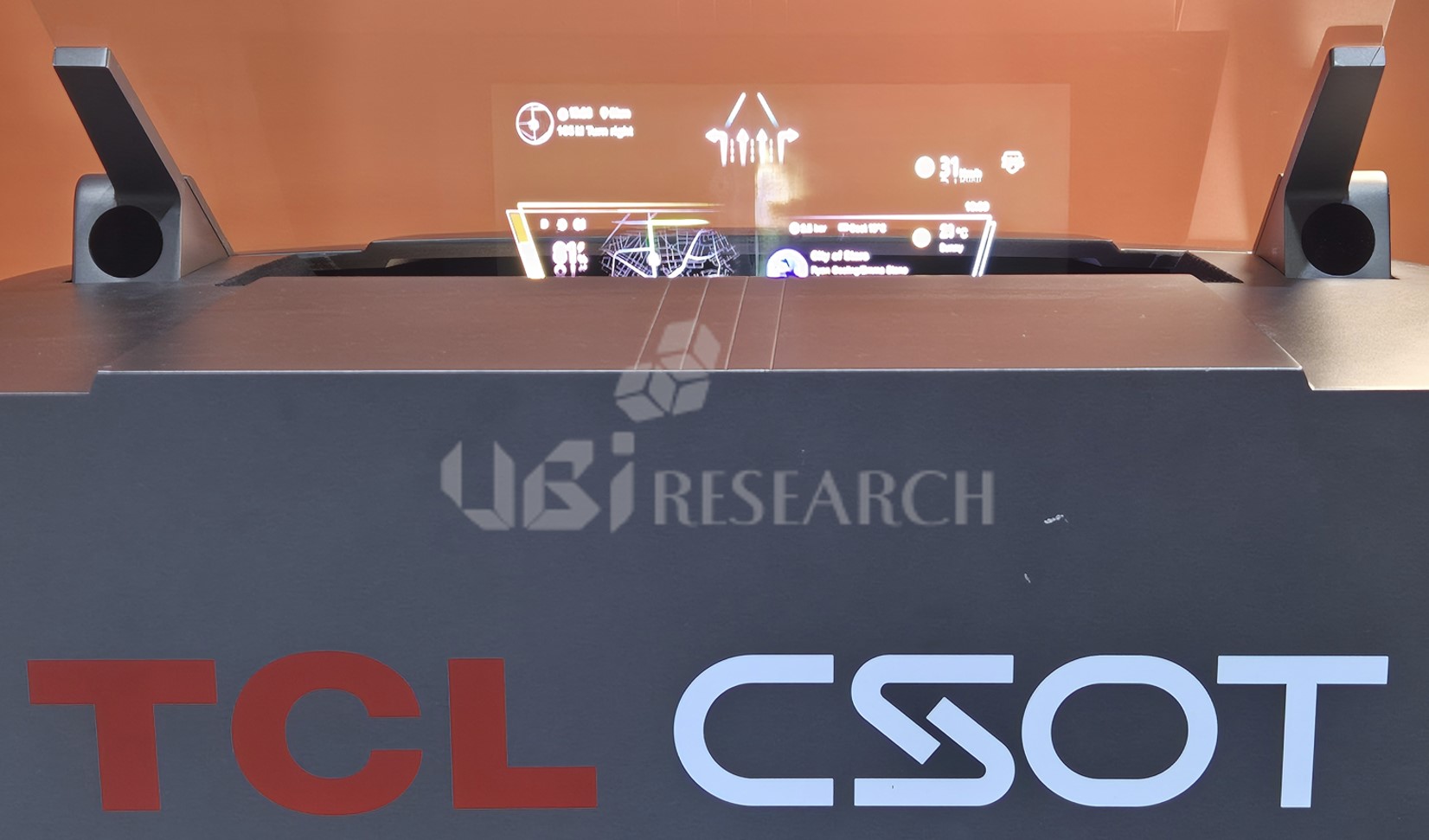
[ICDT 2026] TCL CSOT, 14.3-inch Micro-LED PHUD (12,000nit)

[ICDT 2026] TCL CSOT, 4.6-inch Micro-LED AR-HUD (18,000nit)

[ICDT 2026] Hisense, RGB Mini LED vs QD Mini LED

Exhibition displays at ICDT 2026 showcasing the commercialization of Micro-LED technology, featuring products from BOE, Tianma, and TCL CSOT.

ICDT 2026, Micro-LED Product Exhibition and Technology Trends

At the ICDT 2026 Display Symposium, it was confirmed that Mini/Micro-LED technology is being commercialized alongside technological development by many companies.

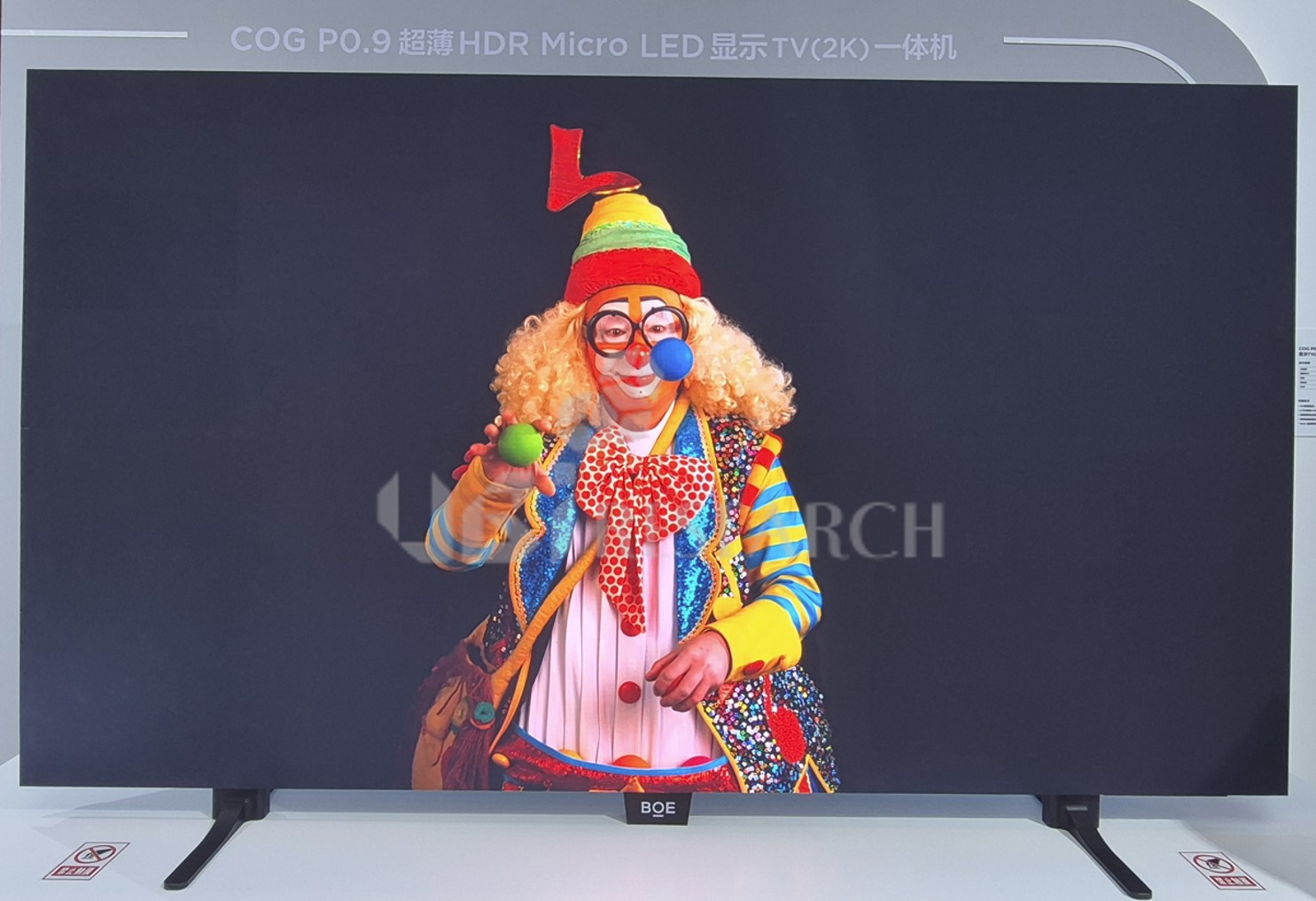
High-quality, ultra-large micro-LED panels were exhibited, manufactured using tiling on glass substrates rather than COB substrates. Micro-LED panels utilizing glass substrates are gradually expanding their presence in the ultra-large premium TV market due to their narrow pitch. BOE exhibited an 81-inch (2K, P0.9) TV combining Micro-LED chips with a TFT substrate and plans to begin mass production this year. Visionox exhibited a 135-inch (4K, P0.7) product featuring a micro-LED panel manufactured on a TFT substrate developed by Vistar.

BOE's 81-inch (2K, P0.9) Micro-LED TV showcased at ICDT 2026

BOE’s 81-inch (2K, P0.9) Micro-LED TV on a TFT substrate, presented at ICDT 2026. (Source: UBI Research)

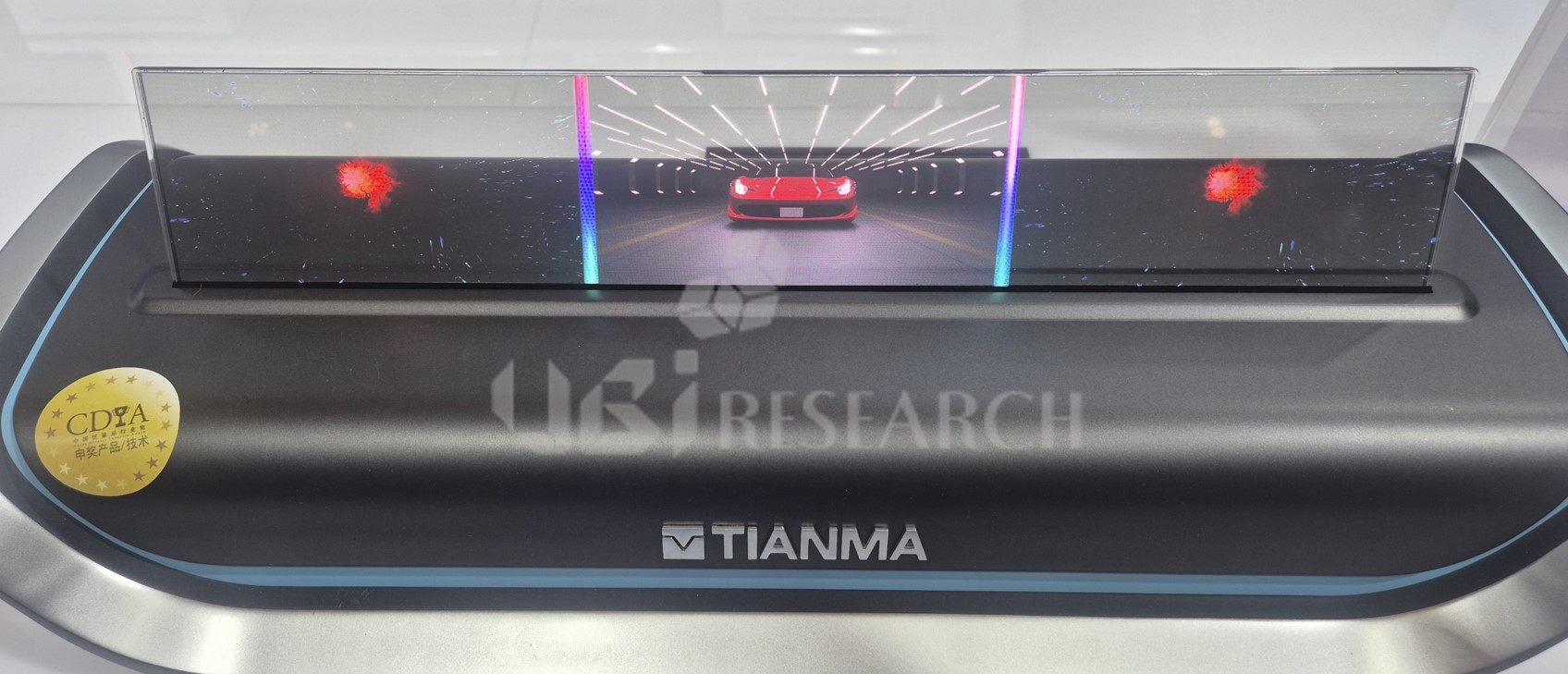
Expectations are growing for Micro-LEDs with high brightness and reliability as automotive displays. Tianma showcased 7-inch and 19-inch high-brightness (>5,000 nits) transparent Micro-LEDs for automotive applications. They feature a transmittance of 60%, a reflectance of less than 2.5%, and an outer border of less than 0.1 mm. While visibility has been enhanced by the high brightness, transmittance needs improvement for automotive applications. Currently undergoing evaluation by clients, their application in automobiles is anticipated.

Tianma's 19-inch transparent Micro-LED automotive display featuring over 5000 nits ultra-high brightness at ICDT 2026

Tianma’s 19-inch transparent ultra-high brightness Micro-LED. With 60% transmittance and over 5,000 nits of brightness, it is expected to be applied in automotive displays. (Source: UBI Research)

TCL CSOT also showcased a 14.3” ultra-high brightness (panel brightness: 45,000 nits) P-HUD Display and a 4.6” AR-HUD. Micro-LED transparent displays can enhance spatial transparency, technical appeal, and intuitive interaction, so a commercial market is expected to open within a few years.

TCL CSOT's 14.3-inch P-HUD display with 45,000 nits ultra-high brightness demonstrated at ICDT 2026

TCL CSOT’s 14.3-inch ultra-high brightness P-HUD display. Achieving a panel luminance of 45,000 nits, it targets the automotive Micro-LED market. (Source: UBI Research)

Regarding AR devices using Micro-LEDs, TCL CSOT exhibited a 0.05-inch (5080 PPI) Green Mono display product and a 0.28” (5131 PPI) single-substrate Full Color device. At the Micro-LED Technology Forum, discussions focused on improving key core technologies—such as Epi Wafer, Micro-LED chip technology, Mass Transfer and Bonding, and Inspection and Repair—as well as strategies for reducing product costs to expand the Micro-LED product market. It was evident that comprehensive cooperation among material, component, equipment, and panel manufacturers is further necessary for the rapid market penetration of Micro-LED display products.

A report published by UBI Research summarized development cases and technical issues regarding companies developing Quantum Dot (QD) conversion single-chip full-color technology.

Namdeog Kim, Senior Analyst at UBI Research (ndkim@ubiresearch.com)

▶101 inch Micro-LED Set BOM Cost Analysis For TVs

▶Industry Trends and Technology of Micro-LED Displays for XR Report

※ This article is produced by UBIResearchNet.

Unauthorized reproduction or citation without source attribution is prohibited.

When quoting, please clearly indicate the source (UBIResearchNet) and provide a link.
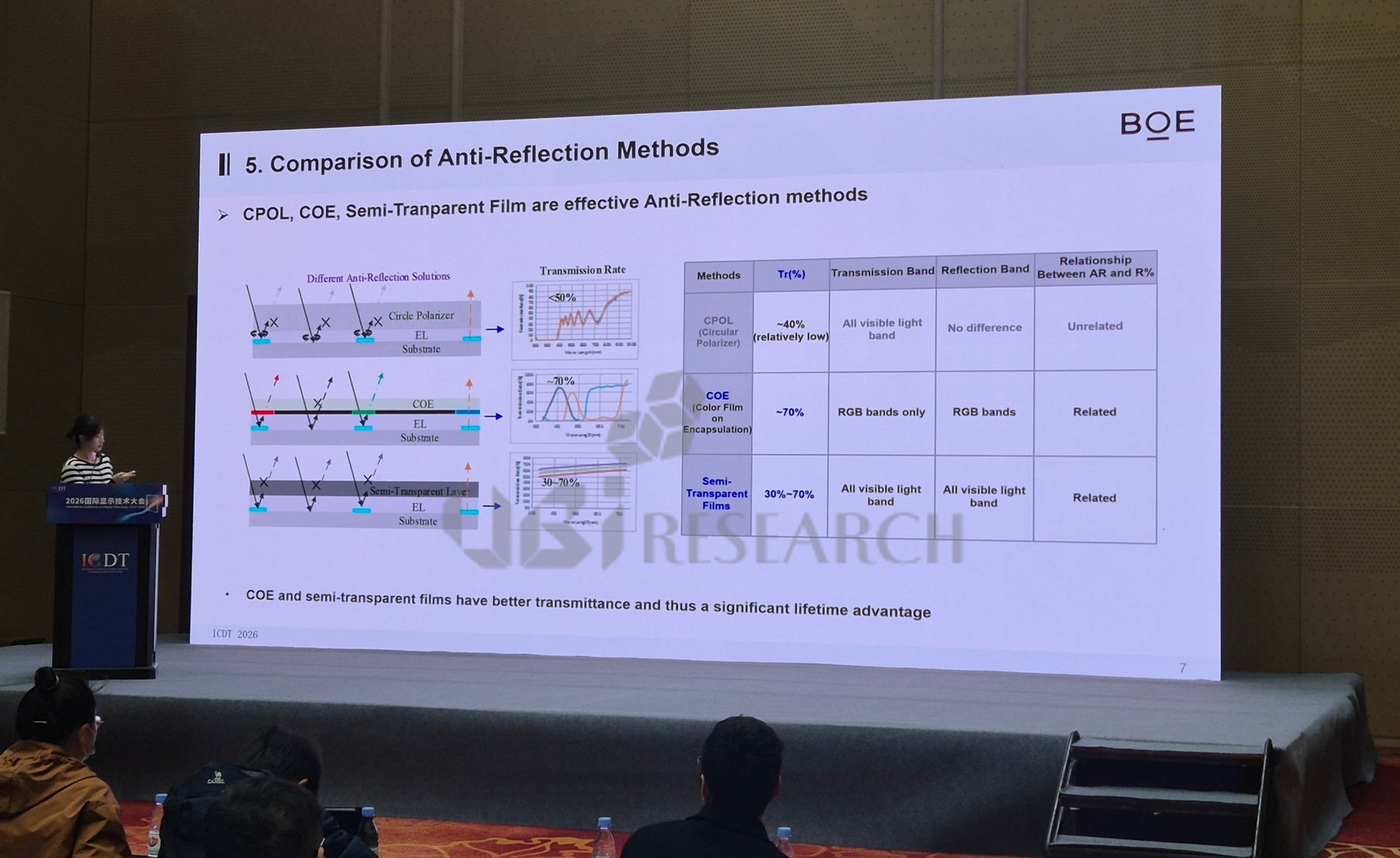
BOE presentation slide at ICDT 2026 comparing anti-reflection methods and highlighting the transmission rate advantages of COE over CPOL.

[ICDT 2026] BOE Highlights Low Reflectance as the Key for Ultra-Large OLEDs… Proposes COE Technology as a Solution

BOE presenting a comparison of anti-reflection methods including CPOL, COE, and Semi-Transparent Film at ICDT 2026

At ICDT 2026, BOE presented a polarizer-free structure using COE and Semi-Transparent Films as a solution for reducing reflection in large-size OLEDs, replacing the traditional CPOL structure. (Source: UBI Research)

At ICDT 2026, BOE presented “Application of ACR Optimization Technology for Wide Viewing Angle in Large-Size OLED Displays,” emphasizing low reflectance and improved ACR (Ambient Contrast Ratio) as key competitive factors for ultra-large OLED displays.

As the ultra-large display market expands into ultra-large TVs, commercial signage, and video walls, visibility in various environments is becoming more important than simple brightness competition. In environments with indoor lighting or external light sources, reflected light can significantly degrade image quality, making effective reflection control a critical technology.

To address this issue, BOE focused on the structural differences in reflectance characteristics in ultra-large OLEDs. In conventional OLEDs, surface reflection and internal reflection appear together, but in ultra-large OLEDs, diffuse reflection becomes the dominant reflection component due to the AG (Anti-Glare) layer and diffusion layer. BOE therefore emphasized that reducing internal reflection itself, rather than simply lowering surface reflection, is the key to improving ACR.

BOE also announced that it has developed an 81-inch P0.9 ultra-large OLED display with a reflectance of 6.9% and an ACR of over 200:1 under 100 lux conditions. The company stated that the display also achieved brightness above 500 nits and a lifetime exceeding 50,000 hours, making it suitable for commercial display environments.

In addition, seamless tiling is important for ultra-large displays. To achieve this, bezel reduction and a lower aperture ratio are both required. However, as the aperture ratio decreases, transmittance can also decline and affect lifetime, meaning that balancing reflectance, transmittance, and lifetime is essential.

In this context, BOE pointed out the limitations of conventional panel structures using CPOL (circular polarizer). While CPOL is effective in suppressing reflection, its relatively low transmittance makes it difficult to satisfy the lifetime and brightness requirements simultaneously in ultra-large displays.

As an alternative to CPOL, BOE proposed a non-polarizer structure using COE (Color Filter on Encapsulation) and semi-transparent film. According to BOE, this structure is more suitable for ultra-large OLEDs because it can secure lifetime and brightness through higher transmittance while also effectively controlling reflectance.

The non-polarizer approach proposed by BOE can address reflectance, transmittance, lifetime, and seamless tiling requirements simultaneously in ultra-large OLEDs. A structure using COE and semi-transparent film could be considered a more suitable solution for ultra-large OLEDs than conventional CPOL, and may become an important factor in the development of ultra-large commercial OLED displays.

Junho Kim, Analyst at UBI Research (alertriot@ubiresearch.com)

▶2026 Medium & Large Size OLED Display Annual Report

▶2026 Small OLED Display Annual Report

※ This article is produced by UBIResearchNet.

Unauthorized reproduction or citation without source attribution is prohibited.

When quoting, please clearly indicate the source (UBIResearchNet) and provide a link.
Tianma's next-generation smartphone AMOLED panel demonstrating 240Hz high refresh rate and ultra-slim bezels at ICDT 2026.

[ICDT 2026] Tianma Achieves 240Hz and 98.5% Screen-to-Body Ratio in Smartphone OLED… Balancing Performance and Design

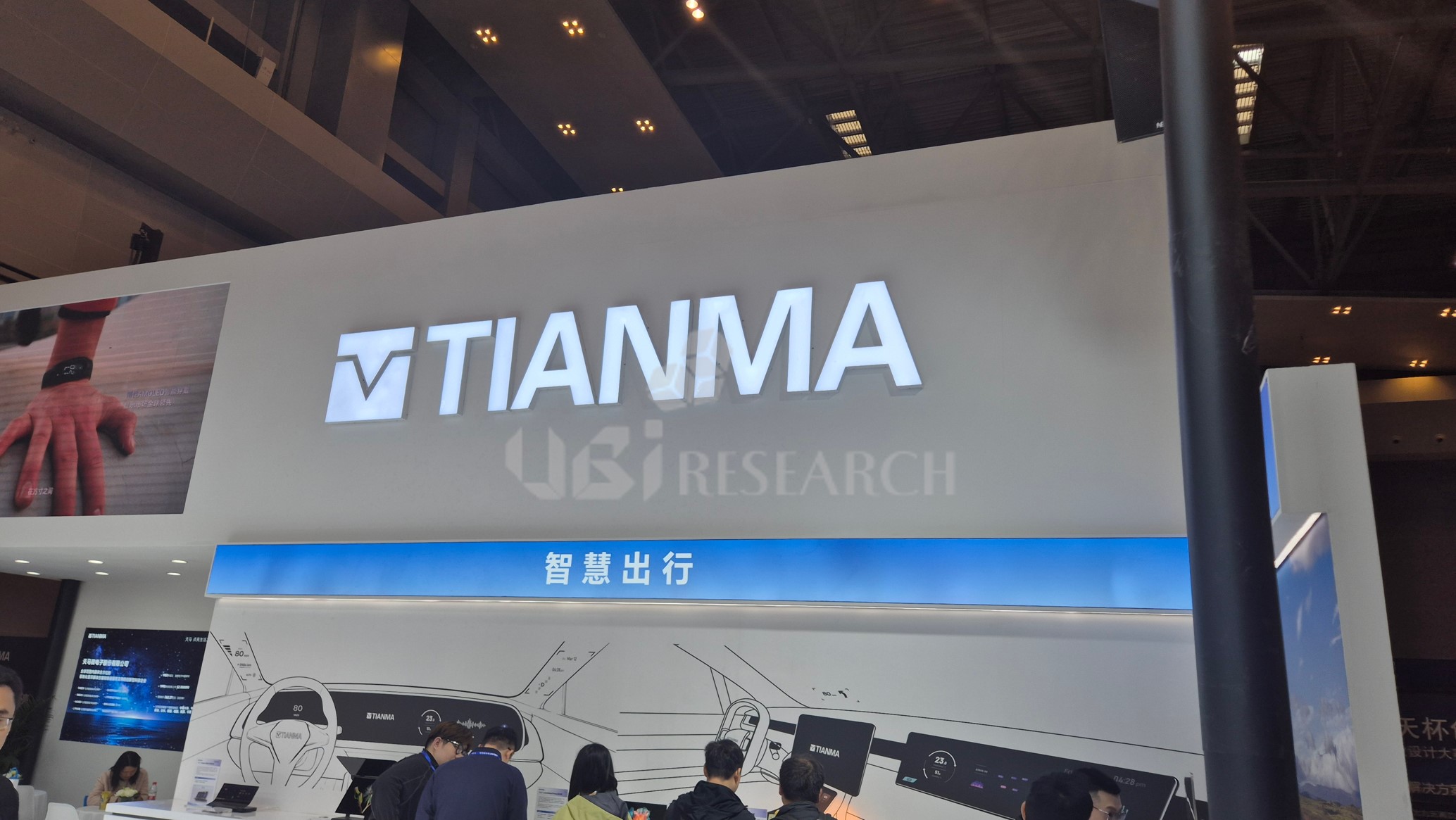
Tianma booth at the ICDT 2026 exhibition

Tianma booth at the ICDT 2026 exhibition. (Source: UBI Research)

At ICDT 2026, held in Chongqing, China starting March 31, Tianma presented a new direction for mobile OLED competition by emphasizing both high refresh rate and full-screen technologies in smartphone AMOLED displays.

At this exhibition, Tianma unveiled an Ultra-high Refresh Rate AMOLED and an FSD (Full Screen Display) AMOLED, along with an integrated panel combining both technologies. Notably, it achieved a 240Hz-class refresh rate and a 98.5% screen-to-body ratio simultaneously in a mobile OLED panel.

The Ultra-high Refresh Rate AMOLED focuses on delivering refresh rates exceeding 200Hz. Tianma applied a circuit structure that separates data writing and TFT driving, addressing the long-standing trade-off between speed and accuracy in conventional AMOLED panels. In addition, by significantly extending compensation time, the panel delivers clear image quality without motion blur even at high refresh rates, ensuring fast response, color uniformity, and long-term reliability.

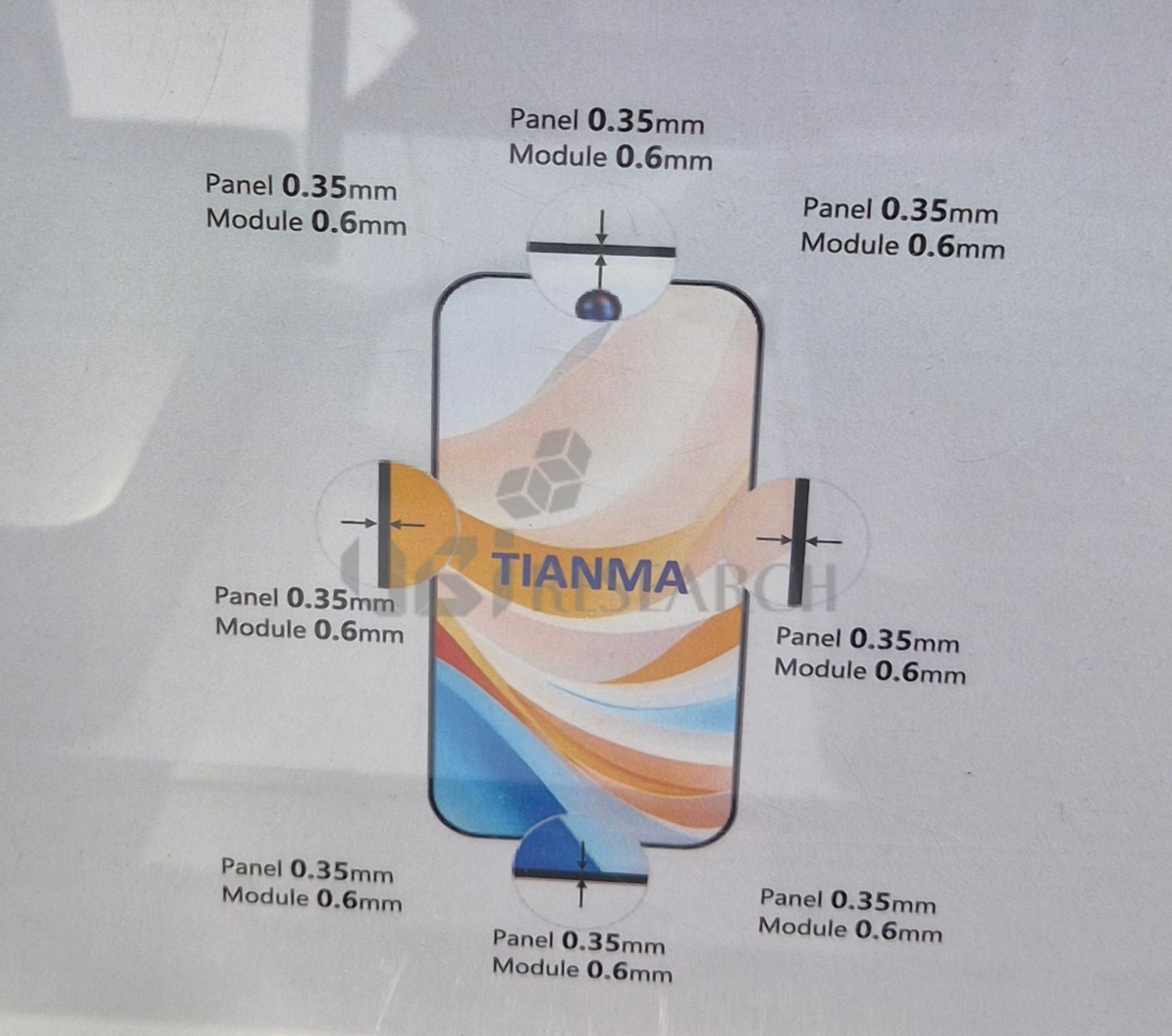
Diagram of Tianma's FSD (Full Screen Display) technology achieving 0.35mm panel and 0.6mm module bezel thickness on all four sides

Tianma’s FSD (Full Screen Display) AMOLED technology. It achieves a 98.5% screen-to-body ratio by reducing the bezel to 0.35mm for the panel and 0.6mm for the module on all four sides. (Source: UBI Research)

The FSD (Full Screen Display) AMOLED, on the other hand, focuses on bezel reduction. By adopting an integrated panel-module structure, Tianma achieved a uniform ultra-narrow bezel on all four sides. The bezel width was reduced to 0.35 mm at the panel level and 0.6 mm at the module level, resulting in a screen-to-body ratio of up to 98.5%. This represents a further reduction beyond the physical bezel limitations of conventional smartphone OLED displays.

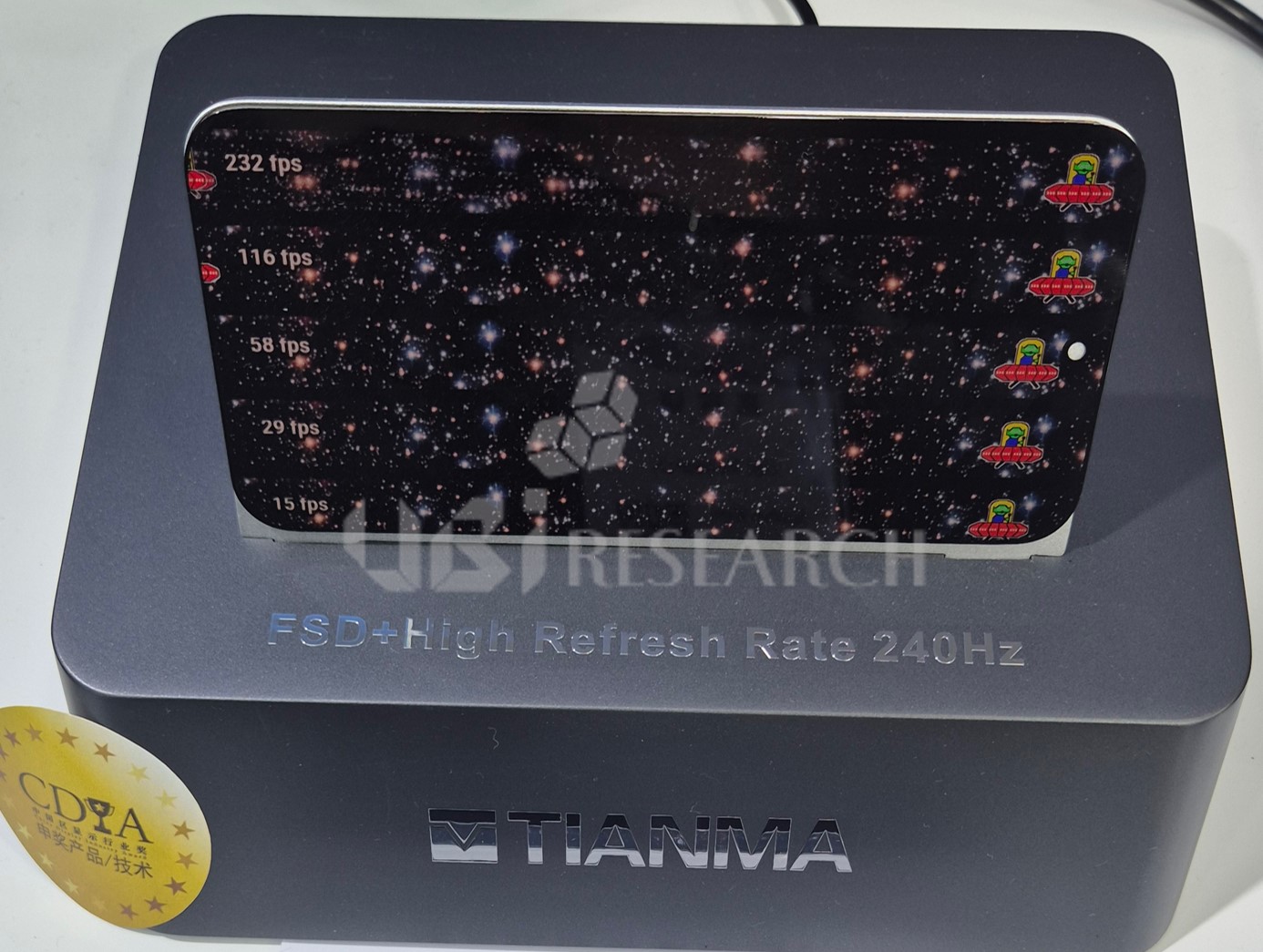
Demonstration of Tianma's 6.32-inch smartphone AMOLED panel integrating FSD and 240Hz ultra-high refresh rate

Tianma’s integrated AMOLED panel demonstrated at ICDT 2026. It combines a 240Hz ultra-high refresh rate and FSD technology in a single 6.32-inch panel. (Source: UBI Research)

The most notable exhibit was the integrated panel combining both technologies. Tianma demonstrated a 6.32-inch AMOLED panel achieving both a 240Hz refresh rate and a 98.5% screen-to-body ratio, indicating that mobile OLED development is moving beyond a trade-off between performance and design toward simultaneous advancement of both.

Considering that a representative premium smartphone such as the Galaxy S26 Ultra offers a 120Hz refresh rate and approximately a 90.7% screen-to-body ratio, Tianma’s exhibited panel surpasses it in terms of specifications.

However, whether such performance can be maintained in mass production with competitive yield and cost remains uncertain. Ultra-high refresh rate operation and extreme bezel reduction impose significant challenges in power consumption, heat generation, process complexity, and profitability. Nevertheless, Tianma’s exhibition demonstrates that Chinese OLED makers have moved beyond a catch-up phase and, in certain areas, have reached a level comparable to leading players.

Junho Kim, Analyst at UBI Research (alertriot@ubiresearch.com)

▶2026 Small OLED Display Annual Report

▶2026 Medium & Large Size OLED Display Annual Report

※ This article is produced by UBIResearchNet.

Unauthorized reproduction or citation without source attribution is prohibited.

When quoting, please clearly indicate the source (UBIResearchNet) and provide a link.
Visual data charts comparing BT.2020 color gamut achievements of BOE, Visionox, and Tianma at the ICDT conference.

China OLED Competition Intensifies on BT.2020… Technology Showdown at ICDT

At the ICDT (International Conference on Display Technology), held in Chongqing, China from March 31 to April 3, BOE, Visionox, and Tianma showcased AMOLED technologies emphasizing BT.2020 color gamut as a key performance metric. This demonstrated that competition among Chinese OLED manufacturers is increasingly centered on ultra-wide color gamut performance. While premium OLED displays were previously benchmarked at 100% DCI-P3 coverage, the industry is now pushing toward mid-90% coverage of the BT.2020 standard.

BOE Achieves 94% BT.2020 with TSF-Based AMOLED

BOE exhibited a smartphone AMOLED panel based on TSF (TADF-sensitized fluorescence) technology, achieving approximately 94% BT.2020 color gamut coverage. The panel features high resolution, HBM brightness of 2,000 nits, and peak brightness of 7,000 nits, maintaining strong color performance even under high-luminance conditions.

From a technical standpoint, the TSF structure improves exciton utilization efficiency, particularly enhancing color purity in the green region. This enables color reproduction that closely approaches the BT.2020 color coordinates.

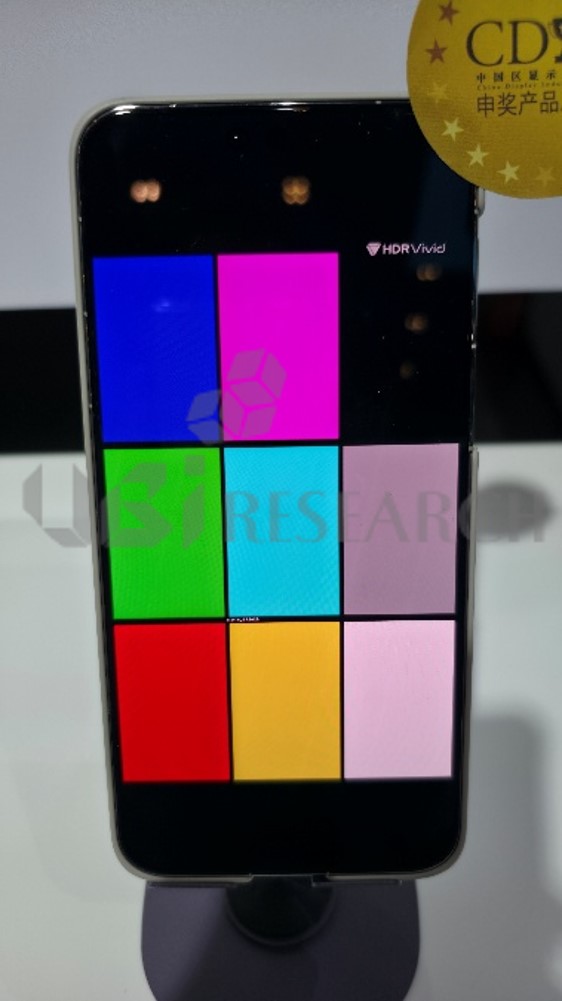
BOE's TSF-based BT.2020 94% color gamut AMOLED smartphone panel revealed at ICDT

BOE Achieves 94% BT.2020 with TSF-Based AMOLED (Source: UBI Research)

Visionox Presents High-Efficiency, Mass-Production Strategy Based on pTSF

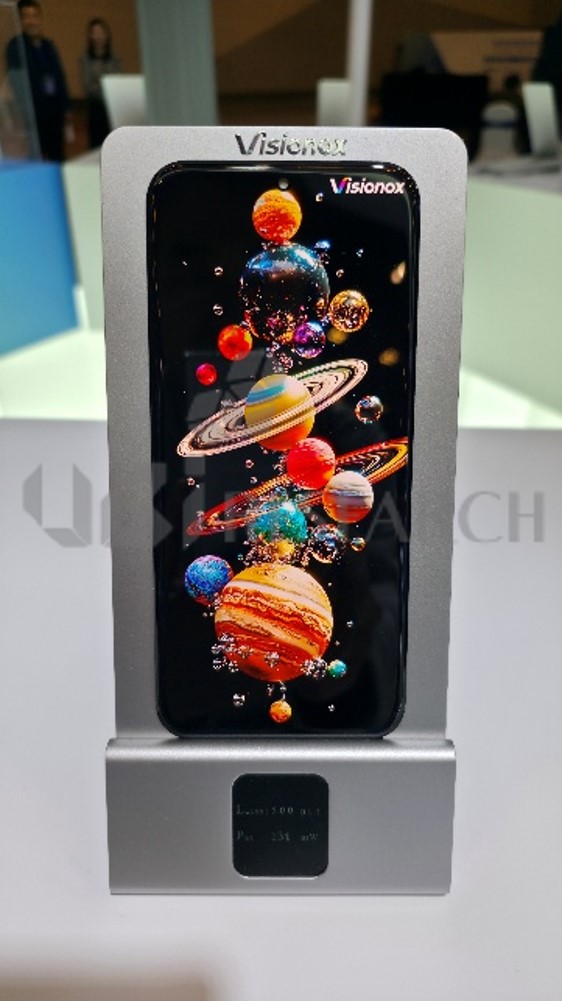
Visionox introduced an AMOLED based on pTSF (Phosphor-assisted TADF Sensitized Fluorescence), highlighting a color gamut strategy focused on high efficiency. pTSF combines a phosphorescent sensitizer with a TADF mechanism to improve exciton utilization, while maintaining the color purity characteristic of fluorescence and compensating for efficiency loss.

Rather than emphasizing color gamut figures alone, Visionox focused on achieving high color gamut while reducing power consumption by more than 6% and improving lifetime by 20% at the same time. Through its symposium presentation, the company also announced plans to mass-produce high-efficiency AMOLED panels with around 94% BT.2020 coverage in 2026, signaling that the competition has moved beyond the development stage and into commercialization.

Visionox's pTSF structure-based BT.2020 94% high-efficiency AMOLED technology revealed at ICDT

Visionox Targets 94% BT.2020 with pTSF-Based AMOLED (Source: UBI Research)

Tianma Leads Color Gamut Competition with Over 96% BT.2020

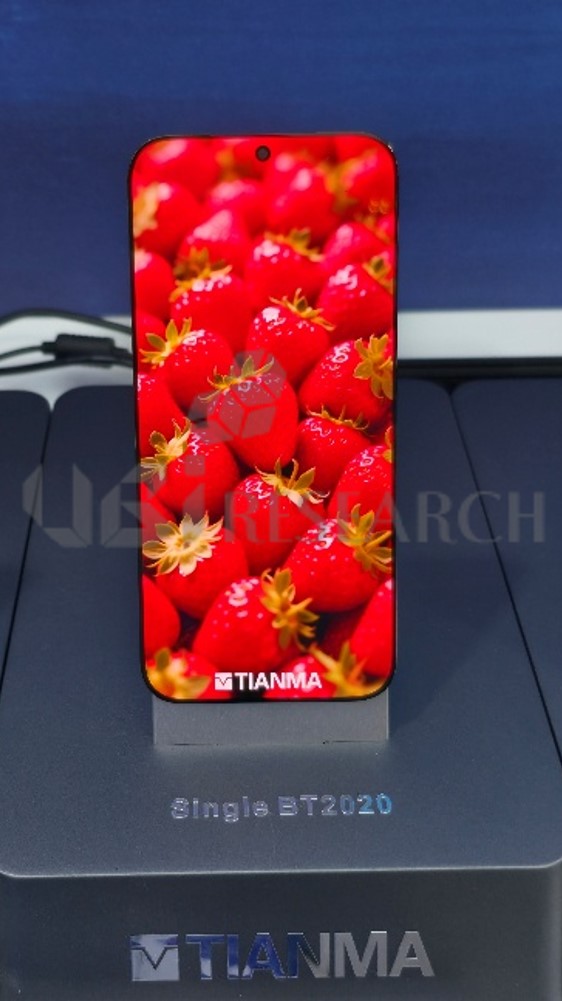
Tianma unveiled a panel achieving more than 96% BT.2020 color gamut coverage by combining PSF (Phosphor-Sensitized Fluorescence) technology with improved blue emission characteristics. By enhancing color purity in the green region through PSF and optimizing overall RGB color balance, Tianma further expanded the ultra-wide color gamut.

Tianma's PSF-based BT.2020 96%+ ultra-high color gamut OLED technology revealed at ICDT

Tianma Achieves 96% BT.2020 with PSF-Based AMOLED (Source: UBI Research)

BT.2020 Competition Enters the Commercialization Phase

What became clear at this year’s ICDT is that competition among Chinese OLED makers over BT.2020 performance is moving beyond simple technology demonstrations and entering a commercialization phase aimed at mass production.

Changwook Han, Executive Vice President of UBI Research, stated, “The competitive landscape among Chinese OLED manufacturers is rapidly shifting from a focus on resolution and brightness to color gamut performance based on BT.2020. In particular, competition in the 94% to 96% range is no longer just about numerical superiority, but is evolving into a broader performance race encompassing efficiency and lifetime as well.”

He added, “In the premium OLED market going forward, the key competitive advantage will lie in technologies that can simultaneously achieve ultra-wide color gamut, power efficiency, and reliability.”

Changwook Han, Executive Vice President/Analyst at UBI Research (cwhan@ubiresearch.com)

▶2026 Small OLED Display Annual Report

▶2026 Medium & Large Size OLED Display Annual Report

※ This article is produced by UBIResearchNet.

Unauthorized reproduction or citation without source attribution is prohibited.

When quoting, please clearly indicate the source (UBIResearchNet) and provide a link.