Posts

Samsung 130-inch Micro RGB TV showcasing (a) Timeless Frame and (b) Layered Wall design concepts.

At CES 2026 Samsung Electronics’ Next-Generation Display Strategy Revealed

Focus on Product Completeness and Premium Design

The display lineup unveiled by Samsung Electronics at CES 2026 focused on form factor innovation that considers usability in actual home and commercial environments, alongside the stabilization of next-generation panel technology. It is analyzed that Samsung Electronics has secured a level of completeness suitable for commercialization by supplementing technical challenges with mechanical engineering and design through its 130-inch Micro RGB TV, 140-inch Micro LED TV, and transparent Micro LED displays.

Targeting the B2C Market with Diversified Design Options: 130-inch Micro RGB TV

With this 130-inch Micro RGB TV, Samsung Electronics has solidified design choices tailored to the installation environment, going beyond just technical specifications. The two design concepts revealed at the Unpacked event present how this product can be applied to actual residential spaces.

First, the Timeless Frame is characterized by emphasizing frame elements so that the display is perceived as an independent piece of furniture (Object). On the other hand, the Layered Wall design is designed to provide a sense of unity, like architectural interior materials, by reducing the visual gap between the wall and the display. This appears to be a strategy to optimize hardware configurations to match consumers’ interior tastes and installation environments in the ultra-high-end display market.

Exhibition view of the 130-inch Micro RGB TV featuring (a) Timeless Frame and (b) Layered Wall designs (Source: Samsung Electronics)

Exhibition view of the 130-inch Micro RGB TV featuring (a) Timeless Frame and (b) Layered Wall designs (Source: Samsung Electronics)

Converting Structural Limitations of Modular Construction into Features: 140-inch Micro LED TV

The 140-inch Micro LED TV functionally reinterprets the structural characteristics inherent in modular (tile) displays. Typically, the tiling method of connecting multiple panels has the disadvantage of increased side thickness due to driver components and thermal design.

Samsung Electronics introduced a design that utilizes this side area as an extended display zone rather than leaving it as dead space. By utilizing it as an information bar that displays ambient light synchronized with the main screen or provides simple information such as video descriptions, they have reduced the visual burden caused by the thickness and increased hardware utility. This is an engineering solution that goes beyond simply hiding a disadvantage to converting it into a new user experience (UX).

Operational view of the side extension display area on Samsung's 140-inch Micro LED TV

The 140-inch Micro LED TV reinterprets modular thickness as an information display area, enhancing hardware utility. (Source: Samsung Electronics)

Securing Transparency to Enhance Spatial Value: Transparent Micro LED

The Transparent Micro LED display focused on delivering information while maintaining the openness of the space based on high transmittance characteristics.

Unlike conventional displays that block the view with a black screen when the power is turned off, the Transparent Micro LED sought harmony with the surrounding interior through a bezel-less design and high transparency. Samsung emphasized that this is a solution that can minimize visual obstruction and create a luxurious atmosphere in luxury residential spaces or high-end retail stores. This demonstrates that the display can function as an architectural and interior element beyond a simple output device.

Samsung Transparent Micro LED display demo at CES 2026 showing high transparency and information overlay

Transparent Micro LED display delivering information while maintaining spatial openness with high transparency and bezel-less design. (Source: Samsung Electronics)

Regarding this, UBI Research Analyst, Joohan Kim evaluated, “Samsung Electronics is focusing on securing a level of product completeness suitable for actual mass production rather than simply showing off Micro LED and Micro RGB technologies”.

He specifically assessed that “they have presented a concrete product roadmap capable of appealing to the premium consumer market by complementing physical hardware limitations, such as thickness or installation constraints, with design and mechanical engineering”.

Joohan Kim, Senior Analyst at UBI Research (joohanus@ubiresearch.com)

▶2025 Micro-LED Display Industry and Technology Trends Report

※ This article is produced by UBIResearchNet.
Unauthorized reproduction or citation without source attribution is prohibited.
When quoting, please clearly indicate the source (UBIResearchNet) and provide a link.
Graphic illustrating the split between XR devices using OLEDoS/LCD and AR glasses using Micro-LED/LCoS.

XR Devices and Smart Glasses Exhibition Trends at CES 2026: Display Technologies and Product Line Diversification

At CES 2026, various XR devices and related display products were introduced.

Summary table of display specifications and technology types for key XR and AR glasses at CES 2026

CES 2026 display trends showing clear technology segmentation (LCD, OLEDoS, Micro-LED) based on device characteristics (VR/MR, AR Glasses).

For XR headsets, LCD offers advantages in supply chain stability and cost, along with relatively easier productization. Valve’s Steam Frame utilizes dual 2160×2160 LCD panels, emphasizing affordability for gaming and practical use.

Conversely, OLEDoS is emerging as a key differentiator in premium XR (VR/MR) and AR glasses for video viewing. During CES 2026, Pimax highlighted Crystal Super micro-OLED for its sharpness and immersion. Among panel manufacturers, Samsung Display unveiled a 1.4-inch, 5,000 PPI-class RGB OLEDoS not just as a panel exhibit, but in a headset demo form.

Samsung Electronics’ ‘Galaxy XR’ was selected as a CES Innovation Awards 2026 Honoree, incorporating white OLEDoS from Sony and Samsung Display.

The AR glasses segment featured two product types: see-through AR glasses based on waveguides and AR glasses focused on video viewing.

In see-through AR glasses, micro-LED projectors and LCoS are competing based on their distinct advantages. JBD introduced an ultra-compact full-color AR projector with its Hummingbird II Polychrome Projector, a CES Innovation Awards 2026 winner. Cellid presented its 2026 reference design combining a micro-LED projector with its own waveguide, explaining its approach to simultaneously achieve lightweight and optical performance.

The LCoS camp attempts differentiation by quantifying outdoor readability and efficiency. Himax and AUO demonstrated maximum brightness, output, and efficiency while driving front-lit LCoS (720×720) at 200mW, presenting it as an integrated solution combined with AUO’s waveguide. This trend indicates that the AR glasses market is shifting beyond individual component specification competition towards proposing and evaluating systems that bundle projectors, waveguides, and driving conditions.

AR glasses for video viewing prioritize immersive viewing experiences, emphasizing perceptible metrics like resolution, FOV, refresh rate, and connectivity first. Xreal unveiled its entry-level Xreal 1S priced at US$449. This represents a $50 price reduction from the previous model, the $499 Xreal One, enhancing accessibility. Key display specifications have been improved: 1200p resolution (up from 1080p), 700 nits brightness, a 52-degree field of view, and a 120Hz refresh rate. Competitiveness is further strengthened by adding various new features like auto-dimming and 2D-3D conversion.

According to UBI Research, at CES 2026, XR devices will differentiate themselves by using LCDs for entry-level products, while premium VR/MR devices and AR devices for video viewing will adopt OLEDoS. Meanwhile, see-through AR devices will see competition between micro-LED projectors and LCoS at the system level (display, optics, and driver).

Visual segmentation of display technology ecosystems for XR devices (LCD, OLEDoS) and AR glasses (See-Through, Media Viewing)

Next-gen wearable display ecosystem dividing into OLEDoS for Premium VR/MR and Micro-LED/LCoS for See-through AR. (Created by ChatGPT)

Changho Noh,  Senior Analyst at UBI Research (chnoh@ubiresearch.com)

▶XR Industry Trends and OLEDoS Display Technology & Industry Analysis Report

▶2025 Micro-LED Display Industry and Technology Trends Report

※ This article is produced by UBIResearchNet.
Unauthorized reproduction or citation without source attribution is prohibited.
When quoting, please clearly indicate the source (UBIResearchNet) and provide a link.

Samsung’s “Intelligent Living” vs. LG’s “Visual Essence”: The Contrast at CES 2026

CES 2026 official logo (Source: CES)

CES 2026 official logo (Source: CES)

CES 2026 The world’s largest consumer electronics show, CES 2026, is expected to become a watershed moment clearly demonstrating the strategic pivot of South Korea’s two major home appliance giants. While the 2025 show just one year prior was a stage for showcasing technological maturity, 2026 will be a stage where the future TV visions defined by each company fundamentally diverge. Samsung Electronics will boldly pivot toward an AI living platform beyond TV, while LG Electronics will postpone form factor experimentation and return to the core of overwhelming picture quality—a fundamental super-gap.

1. LG Electronics: Transcending Form Factor Disruption to Overcome LCD Limitations

In 2025, LG Electronics’ booth featured the morphological evolution of displays as its main attraction, showcasing transparent OLED (Signature T) and freely bendable panels. The world cheered as displays became furniture, nullifying spatial constraints. Yet at CES 2026, LG returned to the fundamental challenge of “light control.”

LG Electronics’ 2026 OLED TV prominently features ‘Tandem 2.0’, a hardware structural innovation. This technology, which stacks the existing light-emitting layer into a 4-stack configuration, has resolved the maximum brightness issue—long considered OLED’s sole weakness. LG claims this model achieves brightness exceeding 4,000 nits while dramatically extending the lifespan of the elements. This appears to demonstrate confidence that OLED remains the brightest and clearest self-emissive display.

Meanwhile, the biggest reversal in LG Electronics’ exhibition this time is the introduction of Micro RGB Evo. LG Electronics is undertaking a groundbreaking attempt to transplant its OLED precision light source control DNA into LCD. This method uses RGB micro-LEDs directly as the backlight, pushing the physical limits of LCD panels to OLED levels. It is analyzed as a countermeasure to check Chinese companies dominating the premium LCD market.

2. Samsung Electronics: The End of Picture Quality Competition and the Dawn of “Intelligent Living”

Meanwhile, Samsung Electronics’ direction is moving beyond displays. Having focused on AI‑based upscaling and quantum dot picture quality innovations until 2025, Samsung will fully shift its 2026 exhibition theme to the “Intelligent Living Platform.” The TV will be redefined not as a screen-displaying device, but as an AI hub that manages the home’s energy, learns user preferences, and curates daily life.

Samsung Electronics plans to showcase a seamless home where product boundaries dissolve, extending beyond the LVCC main exhibition hall to a massive standalone pavilion at the Wynn Hotel. The TV will adjust lighting as users move through rooms, display washing machine completion notifications, and suggest recipes in the kitchen. Samsung’s strategy is clear. Chinese manufacturers may be able to match picture quality specs, but they cannot replicate the SmartThings ecosystem that connects hundreds of millions of devices worldwide.

3. Market Shifts Suggested by the “X-Shaped Intersection”

These contrasting moves by the two companies can be interpreted as a clash between defensive leadership (Samsung) and aggressive essentialism (LG). The dynamic where LG once proclaimed “changing the world through form factor” while Samsung insisted “picture quality is paramount” has now completely reversed. LG pursues technological depth to solidify its hardware dominance as the OLED TV pioneer, while Samsung, as the world’s top home appliance maker, focuses on the breadth of connectivity to platformize its hardware. Their approaches to MicroLED also diverge. Samsung treats it as an extension of its “ultra-large intelligent displays,” while LG plans to focus on demonstrating practical mass-production feasibility and pixel-level control for home TVs through its “Magnet Active” technology.

CES 2026 presents consumers with two choices: “A screen so perfect it hurts your eyes (LG)” or “A smart home that understands and manages my life (Samsung).”

While LG Electronics returns to the essence of technology to redefine display industry standards, Samsung Electronics seeks to transform the very definition of home appliances through lifestyle intelligence. The world’s attention is focused on Las Vegas, watching how this head-to-head race between two giants sprinting in opposite directions will reshape the global home appliance market landscape in 2026.

Joohan Kim, Senior Analyst at UBI Research (joohanus@ubiresearch.com)

▶2025 Micro-LED Display Industry and Technology Trends Report

※ This article is produced by UBIResearchNet.
Unauthorized reproduction or citation without source attribution is prohibited.
When quoting, please clearly indicate the source (UBIResearchNet) and provide a link.
Samsung TV’s Dual Strategy: “Exhibition Hall Change” and Micro-LED From Luxury Models in the Tens of Millions to the Mainstream Market

Samsung Electronics is reshaping the TV market landscape starting with CES 2026. Moving beyond the traditional “appliance show” format, Samsung’s clear strategy is evident in its standalone exhibition hall spanning approximately 4,645 square meters at the Wynn Hotel. It centers on a dual-pronged approach: self-emitting Micro-LED pursuing technological perfection and Micro RGB leading market mainstream adoption.

1. The Pinnacle of High-End: 2026 Micro-LED Luxury Line

Samsung positions its 2026 self-emissive Micro-LED luxury model, embodying the pinnacle of self-emissive technology, in the private room at the very heart of this showcase.

  • Technical Reality: Tens of millions of ultra-small LED chips emit light and color without a backlight. Using inorganic materials fundamentally solves the burn-in limitations inherent in organic OLEDs while achieving infinite contrast ratios.
  • The Arrival of Super-Large Flagships: Models over 110 inches (such as 140 inches), priced in the hundreds of millions, take center stage. Through this, Samsung redefines the standard for private home cinemas for VVIPs.
  • Commercialization of Transparent Displays: The transparent Micro-LED, which garnered attention as a prototype in 2025, will be showcased with further improved transmittance and brightness. Transparent Micro-LED technology enables intelligent spatial scenarios where window glass itself becomes a display to show information.

2. Democratizing Premium: Micro RGB TV Lineup with 6 Models

While self-emitting technology holds symbolic significance, the Micro RGB (R95H) product line is the main driver of substantial market share. Samsung will showcase this lineup across all sizes, from 55 inches to 115 inches, at this exhibition.

  • Strategic Positioning: By adopting advanced LCD technology that utilizes self-emitting elements as backlights, price competitiveness is secured. Samsung thereby establishes a new standard: “Premium TVs should deliver micro-level picture quality regardless of size.”
  • Overwhelming Specifications: Reportedly achieving 100% BT.2020 color gamut coverage—an industry first—and delivering high brightness exceeding 4,000 nits.
  • Confirmed Lineup: Six models in total—55, 66, 75, 85, 100, and 115 inches—offer consumers a wide selection tailored to their living room sizes.

3. “Agentic AI” Completes Smart Living

Both lineups feature Samsung’s next-generation AI engines: the Micro RGB AI Engine Pro and Agentic AI. The TV is no longer just a screen; it functions as an AI butler that contextually understands user speech through Gemini and Copilot, autonomously controlling home appliances throughout the house.

Samsung Electronics’ exhibition is said to demonstrate the results of a meticulous dual-track strategy: showcasing the pinnacle with Micro-LED while securing the mainstream with Micro RGB. The enclosed, luxurious space of the Win Hotel serves as the perfect stage to demonstrate both the awe-inspiring presence of the billion-dollar Micro-LED model and the sophisticated lifestyle proposed by the Micro RGB TV. Through this, Samsung is expected to block the low-price offensive from Chinese manufacturers and reaffirm its overwhelming dominance in the premium TV market.

Comparison table of Samsung's 2026 self-emissive Micro-LED (Luxury) and Micro RGB (Premium) TV lineups

Comparison table of Samsung’s 2026 dual-track TV strategy, dividing into Self-emissive Micro-LED (Luxury) and Micro RGB (Premium). (Source: UBI Research)

Joohan Kim, Senior Analyst at UBI Research (joohanus@ubiresearch.com)

▶2025 Micro-LED Display Industry and Technology Trends Report

※ This article is produced by UBIResearchNet.
Unauthorized reproduction or citation without source attribution is prohibited.
When quoting, please clearly indicate the source (UBIResearchNet) and provide a link.
OMNIVISION's new LCoS panel OP03021, highlighting its compact size and high resolution.

Next Generation AR and AI Glass Display Innovation: OMNIVISION LCoS Panel and JBD MicroLED New Products

OMNIVISION, which supplies LCoS to Meta’s smart glasses ‘Ray-Ban Display’, unveiled a high-resolution LCoS panel ‘OP03021’ for next-generation AR (augmented reality) glasses on December 16, 2025, and predicted mass production of the panel in the first half of 2026.

OMNIVISION's next-gen LCoS panel OP03021 for AR glasses

OMNIVISION’s 0.26-inch LCoS panel ‘OP03021’ with 2.5x higher resolution than previous models. (Source: Omnivision OP03021)

The newly released panel supports 1632 x 1536 resolution in a 0.26-inch optical format. This is an increase of about 2.5 times in resolution and nearly 6 times in total number of pixels compared to the existing 0.14-inch model (648p). When this panel is applied, it can secure a wide viewing angle of 30 to 40 degrees beyond the existing narrow viewing angle (20 degrees) limit, or dramatically increase the number of pixels per angle (PPD) to read web pages or e-mail text clearly. The volume of the optical engine equipped with the corresponding panel by integrating the driver IC is estimated to be about 1.5cc and the weight is about 4g.

Specification comparison table between the existing model and the new OP03021 model

The new OP03021 model features approx. 2.5x higher resolution and 1.85x larger panel size. (Source: UBI Research)

Meanwhile, JBD also officially announced that Hummingbird II, a next-generation microLED projector scheduled to be released in the first half of 2026, won the CES 2026 Innovation Award. It supports 500 × 380 resolution and 480Hz scan rate, and is an ultra-small and ultra-light product of 0.2cc and 0.5g that halves the volume and weight compared to previous generations. It emphasized that it is a full-color display solution optimized for AI and AR smart glasses for consumers by operating at low power of 95mW while implementing high luminance of up to 4,000 nits.

JBD Hummingbird II MicroLED projector on a fingertip

JBD’s ultra-compact MicroLED projector ‘Hummingbird II’, winner of the CES 2026 Innovation Award. (Source: JBD Hummingbird II)

The next-generation wearable display market is expected to clearly distinguish application fields according to technology characteristics.

  • MicroLED: Ultra-small size of 0.2cc is the strength, suitable for ‘everyday AI glasses’ that display simple data while maintaining the original design of glasses
  • LCoS: Responsible for the ‘universal AR glass’ market, which is suitable for web surfing or augmented reality information delivery, with high resolution and favorable characteristics for securing viewing angles.
  • OLEDoS: Based on high contrast ratio and color reproduction, market in the ‘MR headset and media glass’ area where video content consumption and immersion are important.

The industry is paying attention to the possibility of dualizing the smart glass lineup into ‘light AI glasses’ and ‘display-oriented AR glasses’ in the future. Expectations are growing for the possibility that new technologies such as OMNIVISION’s LCoS panel and JBD’s microLED will be applied to next-generation AR glasses of various global companies such as Meta, Apple, Google/Samsung.

Changho Noh,  Senior Analyst at UBI Research (chnoh@ubiresearch.com)

▶XR Industry Trends and OLEDoS Display Technology & Industry Analysis Report

▶2025 Micro-LED Display Industry and Technology Trends Report

※ This article is produced by UBIResearchNet.
Unauthorized reproduction or citation without source attribution is prohibited.
When quoting, please clearly indicate the source (UBIResearchNet) and provide a link.
TCL CSOT's 163-inch X11H Max Micro-LED TV representing the company's push for mass adoption.

Breaking the KRW 100 Million Barrier?” TCL CSOT’s Bold Bet on Micro-LED Mass Adoption

Micro-LED, the pinnacle of “self-emissive” display technology where each pixel generates its own light, is finally shedding its laboratory skin and attempting to enter the living room. At the forefront is TCL CSOT, which has thrown down a bold technical roadmap in a market once considered the exclusive domain of Samsung Electronics. We analyze their three-stage evolution—from CES 2025 through the recent DTC 2025 to the upcoming CES 2026—through the lens of display engineering.


1. [CES 2025] The 10,000-Nit Shock: Pushing the Limits of Inorganic Elements

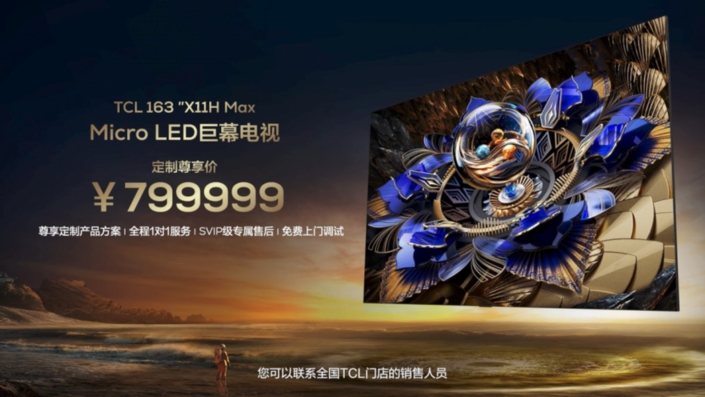
At CES 2025, TCL CSOT’s 163-inch Micro-LED TV, the ‘X11H Max’, injected significant technical tension into the industry. It wasn’t just about the size; the device achieved a staggering peak brightness of 10,000 nits by individually controlling approximately 24.88 million inorganic RGB chips at the pixel level. This was a landmark event that redefined the standards of “super-gap” picture quality, using the durability of inorganic materials to directly overcome the brightness degradation and burn-in issues inherent in organic-based OLEDs.

TCL CSOT's 163-inch X11H Max Micro-LED TV and pricing unveiled at CES 2025 (Source: TCL CSOT)

TCL’s 163-inch Micro-LED TV ‘X11H Max’ achieving 10,000 nits brightness, surpassing the limits of inorganic devices. (Source: TCL CSOT)

2. [DTC 2025] Technical Maturity in Driving Algorithms and Grayscale Expression

The key takeaway from DTC 2025 (TCL Global Display Tech Ecosystem Conference) was the “evolution of internal substance.” TCL addressed the chronic challenge of Micro-LEDs—color distortion in low-light areas—through its proprietary ‘Hybrid PWM+PAM Driving Architecture.’ This method, which sophisticatedly combines Pulse Amplitude Modulation (PAM) and Pulse Width Modulation (PWM), achieved a 24-bit color depth. It demonstrated technical maturity by perfectly resolving the shapes of objects even in pitch-black darkness through 16.77 million steps of grayscale.

TCL CSOT's 219-inch 36:9 ultra-wide Micro-LED display showcased at the exhibition (Source: TCL CSOT)

A 219-inch ultra-large Micro-LED display supporting 98% DCI-P3 color gamut and 120Hz refresh rate. (Source: TCL CSOT)

3. [CES 2026 Outlook] Crushing the “100 Million Won” Wall via Mass Transfer Innovation

At the upcoming CES 2026, TCL is expected to move beyond technical posturing and place a practical bet on “price destruction.” Experts predict that TCL will drastically lower the production cost of 100-inch+ models by significantly increasing the yield of the Mass Transfer process—the method of moving millions of microscopic chips onto a substrate. In particular, process efficiency linked with Inkjet Printing (IJP) technology is projected to be the detonator that pulls down Micro-LED TV prices, once exceeding hundreds of thousands of dollars, to the tens of thousands range (approx. 50–80 million KRW).

While past Micro-LEDs were merely “expensive display pieces densely packed with small LEDs,” today’s TCL CSOT is attempting to democratize “nanosecond-level response speeds” and “infinite contrast ratios” by perfectly grafting semiconductor micro-processes onto displays. CES 2026 will serve as the “technological singularity” where Micro-LED moves beyond being a luxury for the ultra-wealthy to become the new standard for premium home appliances.

Joohan Kim, Senior Analyst at UBI Research (joohanus@ubiresearch.com)

▶2025 Micro-LED Display Industry and Technology Trends Report

※ This article is produced by UBIResearchNet.
Unauthorized reproduction or citation without source attribution is prohibited.
When quoting, please clearly indicate the source (UBIResearchNet) and provide a link.
Meizu StarV Air2 Micro-LED AR glasses illustrating the trend of lightweight and AI-integrated eyewear.

Micro-LED AR glasses market is set for significant expansion… ‘Lightweight design, outdoor visibility, and AI integration’ emerge as core competitive factors

Meizu StarV Air2 Lightweight Micro-LED AR Glasses (Source: MEIZUWORLD)

Meizu StarV Air2, a mass-market AR glass featuring lightweight design and AI capabilities (Source: MEIZUWORLD)

A comprehensive review of major AR glasses released between 2023 and 2025 confirms that the global XR market is rapidly restructuring around ultra-lightweight AR glasses based on Micro-LED technology. Notably, lightweight AR glasses combining Micro-LED and waveguide technology have been successively launched, primarily in China. This trend clearly shifts the AR market’s focus from high-priced, high-performance MR headsets toward information-centric AR glasses suitable for everyday use.


Market Expansion: Rapid Commercialization Centered on Chinese OEMs

2024 marks the turning point where Micro-LED AR glasses began entering the actual consumer market. Chinese manufacturers including Orion AR from Southeast University, INMO, Dreame, and Thunderbird simultaneously launched numerous Micro-LED AR glasses around April 2024. Subsequently, in August and September, mass-market models like the Sihe G1 and Meizu StarV Air2 appeared at reasonable price points. Global brands such as Vuzix and Rokid also expanded their industrial and consumer models, joining the market expansion trend. This continuous product launch demonstrates that Micro-LED is no longer primarily a research and development technology, but has entered the market application phase as a practical technology.


Technical Direction: Monochrome Micro-LED + Waveguide Becoming Mainstream

The core technology combination in currently commercialized products is monochrome Micro-LED and waveguide. This structure offers significant advantages: high luminous efficiency, low power consumption, thin and lightweight optical structures, and excellent outdoor visibility.

Major models like the Meizu StarV Air2, INMO GO 2, and Vuzix Z100 all adopt monochrome Micro‑LED, making monochrome-based solutions the likely mainstream for consumer AR glasses in the near term.

On the other hand, prototypes like the ThunderBird X3 Pro and Meta Orion AR utilize full-color Micro‑LED. However, due to process complexity, yield issues, and cost concerns, they remain in the research and prototyping phase. While big tech companies are strategically developing this technology, indicating its high medium-to-long-term importance, short-term commercialization remains limited.


Price Structure: The US$100–500 range forms the mass-market segment.

Based on the Chinese market, the primary price range for Micro-LED AR glasses is established at US$100–500. This price range is advantageous for positioning AR glasses as an extension device for smartphones and smartwatches, indicating the potential for Micro-LED-based AR glasses to expand into a market of 10 million units.

  • Entry-level (Sihe G1, INMO GO 2)
  • Mid-range (Meizu StarV Air2)
  • Global Mid-Range Model (Vuzix Z100)


Player Landscape: A Tripartite Ecosystem of Local Chinese, Global, Niche, and Big Tech Players

Currently, the Micro-LED AR glasses ecosystem is led by three groups. The product ecosystem formed by Chinese OEMs intersects with the platform strategies of global companies, creating a multi-layered growth structure in the AR market across technology, price, and ecosystem.

1) Chinese Local OEMs (Meizu, INMO, Dreame, Sihe, Thunderbird, etc.)

→ Rapid productization, price competitiveness, platform expansion strategy based on JBD engine

→ Pioneering the mass market centered on domestic Chinese demand

2) Global Niche/Industrial Companies (Vuzix, Rokid, etc.)

Bridge role between industrial AR demand and lightweight consumer AR

→ Increasing Micro-LED adoption in B2B-centric markets

3) Big Tech Platforms (Google, Meta)

→ Building OS-SDK (Software Development Kit)-Cloud-based AR platforms

→ Technology development at the exhibition product stage to preempt next-generation interfaces based on Micro-LED


Market Outlook: Toward an ‘All-day AR’ Era with Ultra-Lightweight, Outdoor Visibility Foundations

Analyzing product specifications and launch trends, Micro-LED AR glasses are likely to evolve in the following directions:

  • Expansion from monochrome to full-color AR
  • Ultra-lightweight designs in the 40-50g range will become the de facto market baseline.
  • Accelerated standardization of engine-optics modules and design modularization
  • Intensified competition in the AR OS-AI-app ecosystem centered around Big Tech

The 44g Meizu StarV Air2, in particular, prominently features a practical price point, lightweight design, outdoor visibility, and wearable AI capabilities, positioning it as a likely benchmark model for mass-market AR glasses. The StarV Air2 has launched sales not only domestically in China but also on select global online channels, with a known price point around US$300-400. This represents a competitive price range within the existing, high-price-focused AR market and is expected to accelerate the adoption of ultra-lightweight AR devices.


UBI Research analyzed that “maximizing lightness and practicality instead of implementing full-color, high-resolution MR is the key differentiator,” adding that “this demonstrates the potential for information-assistance-focused AR glasses to enter the mass market.”

Joohan Kim, Senior Analyst at UBI Research (joohanus@ubiresearch.com)

▶2025 Micro-LED Display Industry and Technology Trends Report

※ This article is produced by UBIResearchNet.
Unauthorized reproduction or citation without source attribution is prohibited.
When quoting, please clearly indicate the source (UBIResearchNet) and provide a link.
Composite image of Garmin Fenix 8 Pro Micro-LED smartwatch showing front face and side view for outdoor visibility (Source: Garmin)

When will the commercialization competition of Micro-LED smartwatch products become feasible?

The development of Micro-LED-based smartwatches has continued since 2020 through prototype exhibitions, and their high brightness characteristics led to high expectations for commercialization. Previously, companies like KONKA, AUO, Innolux, and Apple had attempted development or commercialization. However, when Apple halted its own development in early 2024, the difficulties of the Micro-LED manufacturing process and high cost issues came to the fore, suggesting that commercialization of Micro-LED smartwatches would require more time.

Assorted Micro-LED smartwatch prototypes from multiple vendors

Assorted Micro-LED smartwatch prototypes from multiple vendors

However, sports smart wearable brand Garmin launched the world’s first Micro-LED smartwatch, the ‘Fenix 8 Pro’, in September this year. It is currently retailing for approximately 13,000 yuan on Chinese online shopping platforms. Garmin’s September launch sent a significant signal to the market, demonstrating that Micro-LED technology has secured commercial viability in the smartwatch sector.  Of course, there are still many areas requiring improvement. Nevertheless, beyond AUO, which is already in mass production, companies like PlayNitride, Innolux, Samsung Display, TCL CSOT, and Tianma are actively entering the market and accelerating efforts to commercialize Micro-LED smartwatches. By late 2023, AUO had already achieved mass production of Micro-LED watch panels. In its subsequent production plans, AUO’s 4.5-generation Micro-LED production line is scheduled to enter mass production this year, with products covering smartwatches and large TVs. At CES 2025, Samsung Display showcased a watch prototype (2.1 inches, 418×540 resolution, 326 ppi) developed over years of Micro-LED technology advancement. Chinese home appliance company KONKA also unveiled its Micro-LED watch, the APHAEA Watch, in 2020. The Chongqing KONKA Optoelectronics Technology Research Institute is enhancing core technologies to reduce manufacturing costs. PlayNitride has positioned smartwatches as a key growth driver this year, exhibiting a 1.39-inch smartwatch panel at Touch Taiwan 2025. This product applies high-efficiency, low-power ‘Tantium’ chip technology to achieve high resolution and 5,000 nits peak brightness, presenting a new solution that simultaneously delivers low power consumption and high image quality for wearable devices. Innolux has also developed 1.1-inch and 1.39-inch Micro-LED displays with integrated touch sensors. Tianma has established a dedicated Micro-LED research institute and is exploring new application areas like smartwatches, in addition to automotive applications.

Garmin Fenix 8 Pro Micro-LED smartwatch (Source: Garmin)

Garmin Fenix 8 Pro Micro-LED smartwatch (Source: Garmin)

Garmin has pioneered Micro-LED in smartwatches, but who will be the next contender for Micro-LED smartwatches? When will commercialization competition become feasible? Significant hurdles remain. Developed watch panels (326~338 PPI) achieve high brightness levels of 4,000~6,000 nits. However, to compete with existing OLED products, Micro-LED chip and manufacturing costs must be reduced, and power consumption characteristics must be improved. Recent announcements from Micro-LED technology companies clearly outline and are actively pursuing solutions to overcome these cost challenges. The mid-to-long-term strategy for Micro-LED smartwatches is to build integrated technological capabilities combining Micro-LED technology with health monitoring sensors. Long-term, as chip miniaturization technology matures and the advantages of sensor integration are fully realized, Micro-LED is expected to break free from its niche market limitations and expand into the broader wearable product market. UBI Research analyzed that the Micro-LED smartwatch market will fully open starting in 2028.

Namdeog Kim, Senior Analyst at UBI Research(ndkim@ubiresearch.com)

▶2025 Micro-LED Display Industry and Technology Trends Report

※ This article is produced by UBIResearchNet.
Unauthorized reproduction or citation without source attribution is prohibited.
When quoting, please clearly indicate the source (UBIResearchNet) and provide a link.
Tianma Unveils Future Display Roadmap at TIC 2025

On November 18th, the 2025 Tianma Microelectronics Global Innovation Conference (TIC 2025) was held in Wuhan, under the theme of “Innovation, New Horizons.” UBI Research summarized the key findings and technological trends presented at the event. This year’s TIC was attended by approximately 1,000 participants, including government and academic officials, global industry chain partners, investment institutions, and the media, who discussed the future direction of next-generation display technology. The conference served as a meaningful platform to showcase Tianma’s technological innovation achievements and simultaneously announce its ecological cooperation, technological standards, and sustainable development strategies.

The event featured specialized sessions on five key technology areas strategically strengthened by Tianma: the intelligent cockpit ecosystem, OLED technology, IT display technology, Micro LED, and intelligent sensing. A panoramic exhibition space encompassing smartphones, vehicles, IT, wearables, and professional displays was also unveiled. The “Tiangong Screen” experience zone showcased premium OLED technology, featuring eye protection, high resolution, and high refresh rates. The “Tianxuan Screen” exhibition area showcased advanced vehicle display experiences, showcased in real vehicles, including the Yangwang U9 and U7, ZEEKR 009 Glory Edition and 9X, NIO ES6, and Xpeng X9.

OLED technology for smartphones garnered significant attention at the presentation. Tianma unveiled the world’s first “Full Ambient Light Sensing Display,” which integrates fingerprint recognition, ambient light detection, and panel life monitoring into a single panel. This significantly enhances the user experience by reducing sensor thickness by 99% and improving light detection performance by 40x. Furthermore, the company unveiled “Super Narrow Bezel” technology, which utilizes circuit optimization based on LTPO 3.0 Pro to reduce the bezel by 20% for enhanced immersion, and the “Premium Health Display” solution, which improves blue and green light emission efficiency to reduce power consumption. In the automotive display sector, a number of technologies that best portray the future of cockpits have emerged. The 49.6-inch ultra-wide-angle panoramic screen integrates the instrument panel, side mirrors, rearview mirror, and center console into a single large screen. Its ACRUS-based pixel-level dimming technology delivers a contrast ratio of 100,000:1 and low reflectivity. Furthermore, the “IRIS HUD Panoramic Screen,” with its 12,000nit brightness, projects driving information clearly onto the windshield, garnering attention as a HUD solution that simultaneously addresses power and thickness issues. Adding to this a 13-inch central display with an L-shaped curved panel and a dynamic roll-up screen that can expand or hide a 17-inch screen in just six seconds, the possibilities for in-vehicle UX have been significantly expanded.

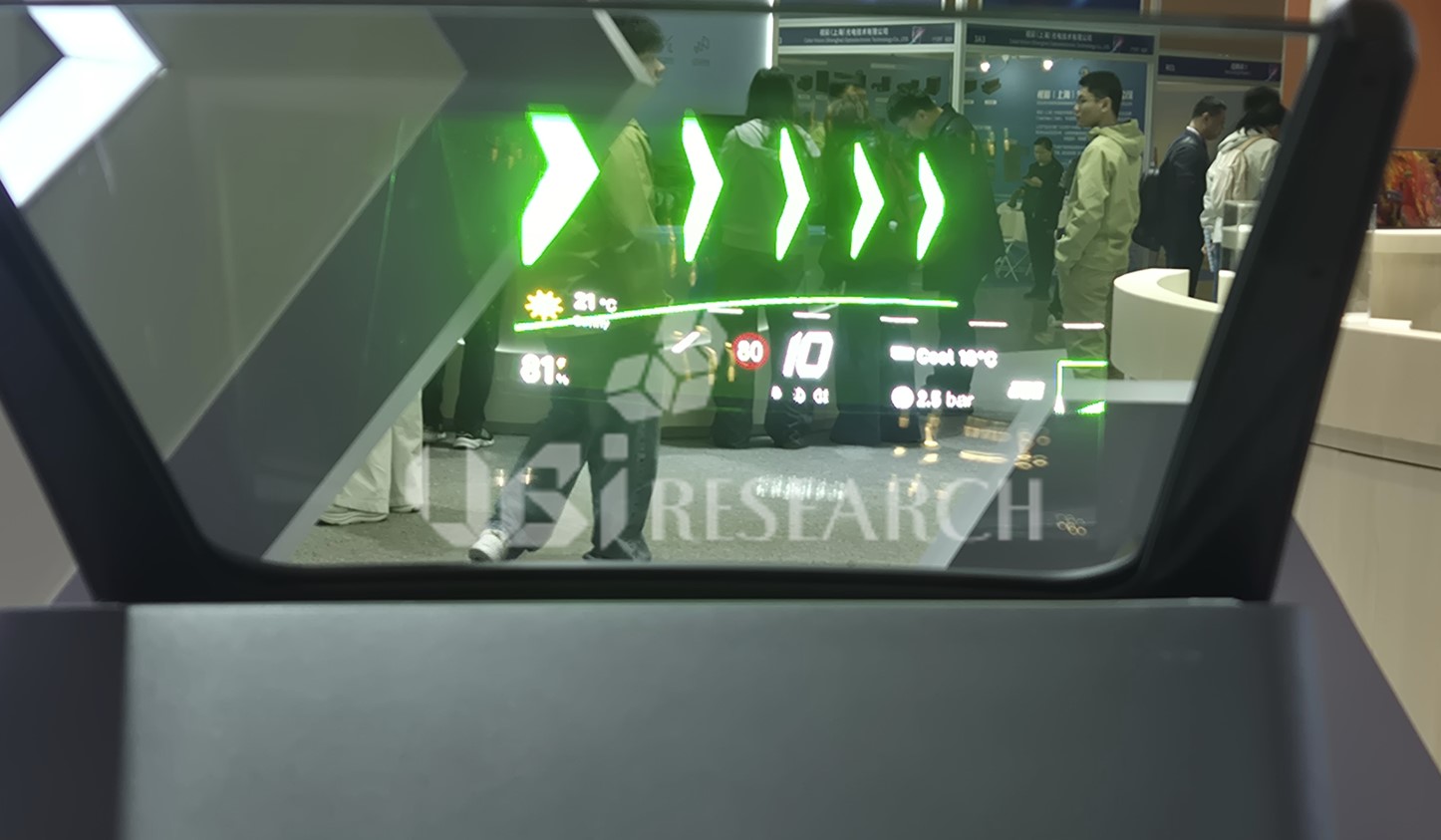
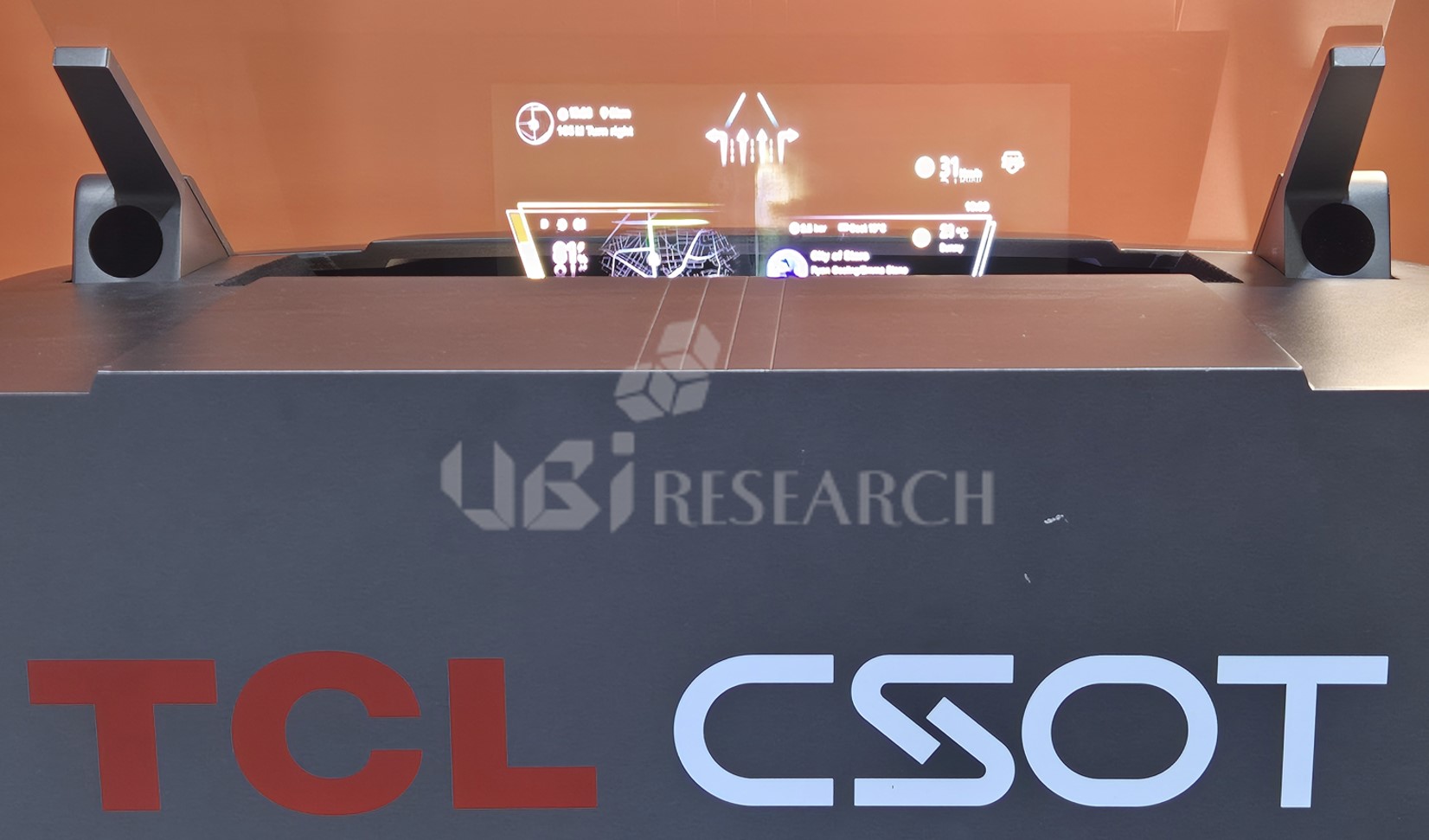
Tianma IRIS HUD Panoramic Automotive Display System (Source: Tianma)

Tianma IRIS HUD Panoramic Automotive Display System (Source: Tianma)

Tianma 49.6-inch Curved ACRUS Panoramic Screen for Automotive (Source: Tianma)

Tianma 49.6-inch Curved ACRUS Panoramic Screen for Automotive (Source: Tianma)

IT display technology targets next-generation PCs and esports demand. “LEAF 2.0” technology, which significantly reduces logic power consumption even at 1Hz through oxide-based ultra-low frequency operation, addresses the power efficiency demands of the AIPC era. The world’s first esports panel with a 610Hz refresh rate aims to optimize the screen for professional gaming environments with ultra-fast response and minimal afterimages.

Finally, in the Micro LED field, Tianma unveiled its flagship products, symbolizing the company’s technological prowess. The first exhibit to catch the eye was the 19-inch IRIS HUD Micro-LED, a HUD solution that delivers over 2,000 nits of brightness to the driver’s field of vision through precision tiling and a high-brightness design. Featuring a compact structure and non-reflective design, it suggests the potential for lighter and smaller HUDs for luxury vehicles.

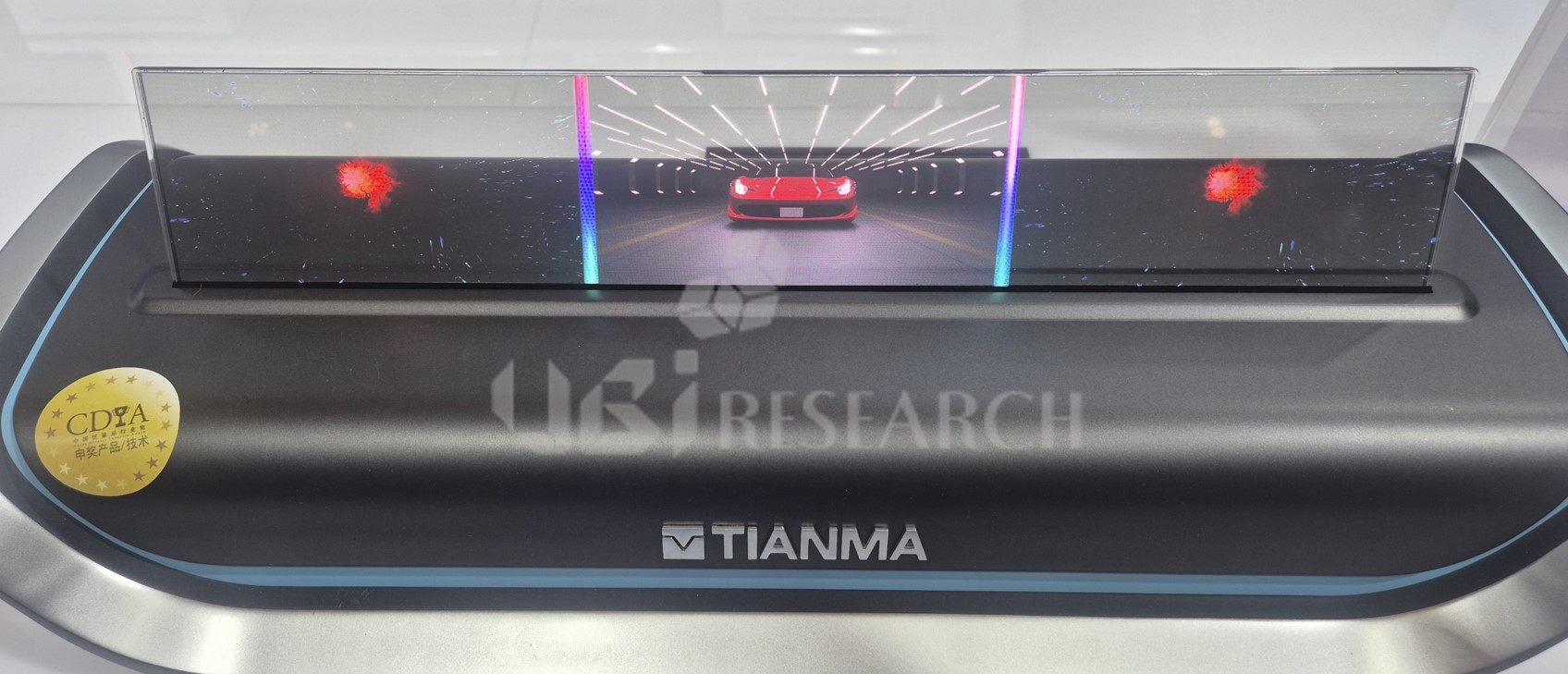
Furthermore, the 19-inch transparent Micro-LED tiling panel demonstrates next-generation HMI technology, combining 60% transparency with 5,000nits of brightness to display information while maintaining a clear view from inside the vehicle. The 7.05-inch ultra-slim bezel transparent Micro-LED, displayed alongside the display, boasts a bezel of less than 0.1mm, emphasizing the design perfection of the transparent display.

At the center of the exhibition was a 108-inch 4K Seamless Tiling Micro-LED. This all-laser transmission-based display features 1,500nits peak brightness, a 0mm bezel, and a sophisticated LTPS-based structure. The seamless implementation ensured that the module boundaries were virtually invisible during actual playback.

This exhibition demonstrated the rapid expansion of Micro-LED technology and its potential for implementation in diverse applications, including automotive, IT, and large commercial screens. Tianma showcased its extensive portfolio, encompassing HUDs, transparent panels, and large tiling screens, clearly demonstrating its Micro-LED R&D strategy and signaling its potential to shape a new competitive landscape in the premium display market.

Changwook Han, Executive Vice President/Analyst at UBI Research (cwhan@ubiresearch.com)

▶2025 Automotive Display Technology and Industry Trends Analysis Report

▶2025 Micro-LED Display Industry and Technology Trends Report

TIC 2025: Tianma Unveils Dual Micro LED Roadmap Targeting AR, Automotive, and IT

At the 2025 Tianma Microelectronics Global Innovation Conference (TIC 2025) held on November 18, Tianma garnered attention from the industry by unveiling its Micro LED technology roadmap and future strategy. The presentation began by emphasizing that Micro LED has passed the technology verification stage and entered a full-fledged growth phase. Tianma explained that Micro LED’s unique values ​​of high resolution, high brightness, and low power consumption are precisely aligned with the demands of major application fields such as AR and MR, automotive, IT, and TV, and are emerging as a key axis driving industrial change. In particular, Tianma clearly presented the future product development direction by presenting a two-track roadmap: completing a mass production platform based on high-speed laser transfer by 2025, and then simultaneously expanding ultra-high PPI AR Micro LED and mid- to large-sized IT and automotive panels.

Tianma Micro-LED Industrialization Layout and Prospects Roadmap (Source: Tianma)

Tianma’s Micro-LED Industrialization Layout and Prospects (Source: Tianma)

Tianma highlighted its rapid internalization of the entire value chain, encompassing chip, transfer, panel, and calibration technologies, as a key strength. According to the announcement, Micro LED chip sizes have been reduced from 20μm to less than 5μm, and efficiency has improved to 65-90%. At the module level, Demura-based ultra-high uniformity correction technology has secured screen uniformity of over 99%. A high-speed, large-area transfer platform has been established, laying the technological foundation for precise placement of millions of chips. Furthermore, chip-on-glass-based pixel repair technology supports its yield maximization strategy.

In terms of manufacturing structure, Tianma announced a hybrid roadmap that utilizes three manufacturing strategies: RGB precision transfer, bump structures, and QD color conversion, tailored to each application. RGB is optimized for large-scale, high-resolution panels for IT applications, while the blue single-chip-based QD color conversion method, with its high yield and simplified process, is emerging as a key solution for ultra-high PPI displays for AR and MR. Tianma predicts that ultra-high-resolution Micro LEDs focused on AR and MR, and mid- to large-sized panels focused on automotive and IT, will become the two pillars of the future Micro LED market, and announced that it will continue to strengthen its “dual strategy” to secure competitiveness in both markets.

The Micro LED products on display at TIC 2025 were a symbolic demonstration of Tianma’s technological maturity. The 108-inch 4K “Borderless Giant Screen” in particular attracted great attention. This screen, realized through a combination of Full Laser Mass Transfer (FLM) and Seamless Splicing technologies, has virtually invisible seams of less than 20μm. With a maximum brightness of 1,500 nits, a reflectivity of less than 2%, and a contrast ratio of 1,000,000:1, it demonstrated that Micro LED technology can achieve OLED-level picture quality while also offering higher brightness and durability than LCD. It is evaluated as a representative example that shows the potential of Micro LED in various fields such as large commercial spaces, high-end home cinema, and professional video environments.

Tianma 108-inch 4K Micro-LED Borderless Giant Screen (Source: Tianma)

Tianma’s 108-inch 4K Micro-LED Borderless Giant Screen displayed at TIC 2025 (Source: Tianma)

UBI Research Vice President Changwook Han evaluated this conference, saying, “What is particularly impressive is that Tianma is rapidly internalizing the entire Micro LED process technology.” He analyzed that in the Micro LED market, which is being reorganized into two axes of ultra-high-resolution AR/MR and medium- to large-sized IT/vehicle displays, Tianma is establishing a technological foundation that can compete in both areas. He also said, “The 108-inch borderless screen on display this time is a symbolic result that shows that Tianma has moved beyond the R&D stage and entered the actual product implementation stage,” and predicted that the completion of the entire process, yield, and large-area technology to secure future mass production competitiveness will be a significant inflection point in the global Micro LED market.

Changwook Han, Executive Vice President/Analyst at UBI Research (cwhan@ubiresearch.com)

▶2025 Micro-LED Display Industry and Technology Trends Report

Visualization of TCL CSOT’s 0.28-inch 5,131 PPI Micro LED and 2.56-inch 1,500 PPI OLED microdisplay technologies

0.28-inch 5,131 PPI Micro LED and 1,500 PPI OLED… TCL CSOT Takes the Micro-display Market to the Next Level

TCL CSOT is further solidifying its presence in the next-generation near-field display market and driving changes in the AR and VR ecosystem. Unveiled at the 2025 Global Display Ecology Conference, the two latest micro-displays – a silicon-based Micro LED that delivers ultra-high resolution and a glass-based Real RGB OLED that achieves high PPI – target key requirements for the development of AR and VR devices, respectively. This announcement is particularly noteworthy because TCL CSOT has achieved breakthroughs in both silicon-based and glass-based technologies, creating a significant shift in the technological landscape of the micro-display market.

The most noteworthy product is a 0.28-inch full-color silicon-based Micro LED micro-display. This product delivers full color with high color accuracy on a single chip, and with an ultra-high pixel density of 1280 x 720 and 5,131 PPI, it achieves a “retina-level clarity.” The high-density structure, which makes pixel particles completely imperceptible on small screens, offers significant advantages, particularly in devices with extremely close eye-to-screen distances, such as AR glasses. Furthermore, the silicon-based self-luminous structure facilitates high brightness and a high contrast ratio, enabling a clear image even in small displays prone to brightness loss. Combining Micro LED’s high-efficiency light-emitting characteristics with ultra-high brightness, its ability to maintain clarity even outdoors or in high-light environments is considered a clear competitive advantage over existing OLED-based micro displays.

TCL CSOT 0.28-inch 5,131 PPI silicon-based Micro-LED display (Source: TCL CSOT)

TCL CSOT 0.28-inch 5,131 PPI Micro-LED display (Source: TCL CSOT)

TCL CSOT’s proprietary quantum dot-based color conversion material is also significant. Combining a single blue Micro LED with a quantum dot color conversion layer, rather than individual RGB chips, for full-color implementation offers significant technological value in terms of simplified manufacturing processes, stable yields, and improved color reproducibility. In particular, managing luminous efficiency and color uniformity is crucial for AR displays, which are undergoing extreme miniaturization. TCL CSOT’s material technology is believed to have significantly addressed these limitations. This high-efficiency material-based approach demonstrates the potential for improved cost structure in future mass production and is a key step toward resolving the color process challenges that have hindered the commercialization of Micro LED AR devices.

On another front, the 2.56-inch glass-based Real RGB OLED is noteworthy. VR and MR displays have relied on silicon-based OLEDs to achieve high PPI, but their high manufacturing costs have limited their adoption in mainstream products. TCL CSOT’s achievement of over 1,500 PPI on a glass substrate goes beyond simple high-resolution performance and signals a potential shift in the VR and MR market structure itself. Adopting a Real RGB pixel structure ensures color accuracy and color coordinate stability, while specifications like a refresh rate of over 120Hz and a contrast ratio of 1,000,000:1 fully meet the demands of high-end VR and MR devices.

TCL CSOT 2.56-inch glass-based Real RGB OLED display (Source: TCL CSOT)

TCL CSOT 2.56-inch glass-based Real RGB OLED display (Source: TCL CSOT)

Global big tech companies, in particular, are embracing this same technological trend. Apple, following the launch of its “Vision Pro” in 2024, which uses silicon-based OLEDoS, is reportedly preparing a glass-based MR display for its next entry-level model to reduce costs. This demonstrates a growing shift in the high-resolution VR and MR market, moving away from a silicon-based, single-resolution strategy and toward diversifying substrate structures based on application and price range. The attention given to TCL CSOT’s glass-based, high-PPI OLED is aligned with this industry shift. Glass substrates, with their high cost competitiveness, play a crucial role in popularizing VR and MR. Their ability to lower price barriers while maintaining high resolution is likely to impact the entire global supply chain.

TCL CSOT’s technological advancements in both silicon-based Micro LED and glass-based OLED demonstrate the growing emphasis on high-density, low-power, and high-brightness requirements for future AR and VR devices. Micro LEDs, with their high brightness, peak performance, low power consumption, and long lifespan, are particularly suited for ultra-compact and lightweight devices centered around AR glasses. OLEDs, with their wide color gamut and high-quality image quality, enhance the immersive experience of VR and MR headsets. As the complementary nature of these two technologies becomes more evident, the micro-display market, which had stagnated in recent years, is rapidly expanding again.

UBI Research Executive Vice President Changwook Han commented on this technology announcement, saying, “Micro LED and high-resolution OLED are key technologies that determine the completeness and user experience of AR and MR devices.” He added, “Micro LED, in particular, is at a critical turning point that will accelerate the commercialization of AR glasses in terms of brightness, power, and lifespan. The proliferation of glass-based, high-PPI OLEDs will lower the cost barriers in the VR and MR markets, rapidly accelerating the expansion of mass-market models.” He summarized the future direction of the micro-display ecosystem as “lightweight, low power, and high definition,” predicting that companies that comprehensively optimize not only technology but also optics, materials, and actuator quality will secure future competitiveness.

Changwook Han, Executive Vice President/Analyst at UBI Research (cwhan@ubiresearch.com)

▶2025 Micro-LED Display Industry and Technology Trends Report

Illustration of the Peugeot Polygon Concept Car featuring Micro-LED HUD, front lighting, rear & C-pillar displays (Source: UBI Research)

Peugeot Polygon Concept Car: Micro LED Unlocks the Next-Generation UX Experience

Peugeot has unveiled its new “Polygon” concept car, a model that embodies the brand’s future design direction and signals a major leap forward in next-generation automotive displays. Positioned as a representative model of Peugeot’s post-2027 identity, the Polygon concept blends futuristic design language with production-ready engineering, drawing industry attention as a prototype that goes beyond the typical inspirational show car.

Inside the vehicle, the Polygon concept redefines the traditional in-car interface. The conventional instrument cluster has been removed, and key driving information is projected directly onto the windshield through a Micro LED module positioned behind the Hypersquare® steering controller. The projected display area measures approximately 24 × 74 cm, equivalent to about 31 inches, allowing drivers to view critical information without shifting their gaze-an evolution of AR-based HUD technology.

Micro LED technology is also extensively incorporated into the exterior lighting system. At the front, Peugeot’s signature Three-Claw Lighting design is arranged horizontally and powered by Micro LED to achieve high brightness and high-density illumination. Both the headlights and taillights utilize Micro LED screens capable of rendering dynamic graphics, creating a cohesive visual identity across the vehicle while enabling advanced personalization.

A dedicated Micro LED display is mounted on the rear C-pillar near the charging connector, allowing users to check the vehicle’s charging status without entering the cabin. Despite its small size, the display delivers outstanding visibility and energy efficiency-core strengths of Micro LED-offering both functional value and refined design aesthetics.

Peugeot Polygon Concept Car 31-inch Micro-LED HUD (Source: Peugeot)

31-inch Micro-LED HUD of the Polygon Concept Car (Source: Peugeot)

Peugeot Polygon Concept Car Micro-LED Front Lighting System (Source: Peugeot)

Micro-LED front lighting on the Polygon Concept Car (Source: Peugeot)

Peugeot Polygon Concept Car Micro-LED Rear & C-Pillar Displays (Source: Peugeot)

Rear & C-Pillar Micro-LED displays in the Polygon Concept Car (Source: Peugeot)

Micro LED stands at the center of this transformation. With its high brightness, long-term durability, and programmable graphic capability, the technology is emerging as a key enabler of next-generation automotive lighting and HMI. In particular, transparent PHUDs benefit from Micro LED’s high transparency and ultra-high luminance, ensuring excellent outdoor visibility and robust performance in harsh environments.

Automotive Micro-LED market revenue forecast graph (Source: UBI Research)

Automotive Micro-LED market revenue forecast (Source: UBI Research)

Major panel manufacturers are accelerating their Micro LED strategies in line with this trend. Companies such as AUO, BOE, Tianma, and TCL CSOT are actively showcasing transparent display and PHUD-oriented Micro LED solutions, signaling rapid expansion into the automotive Micro LED market.

According to UBI Research Executive Vice President Changwook Han, “Micro LED is a next-generation display technology optimized for automotive environments through its application to transparent displays and PHUD.” He further noted that “widespread adoption is expected to begin around 2028.” Based on UBI Research’s 2025 Micro-LED Display Industry and Technology Trends Report, the automotive Micro LED display market is forecast to exceed USD 110 million by 2030.

The Polygon concept symbolizes this broader industry shift, demonstrating how Micro LED technology can redefine the future of in-vehicle UX, lighting, and information visualization-positioning Peugeot at the forefront of next-generation automotive display innovation.

Changwook Han, Executive Vice President/Analyst at UBI Research (cwhan@ubiresearch.com)

▶2025 Automotive Display Technology and Industry Trends Analysis Report

▶2025 Micro-LED Display Industry and Technology Trends Report

Tianma’s 8.07-inch HUD, 8.07-inch low-reflection transparent, 9.38-inch adjustable-transparency, and 7.05-inch narrow-bezel transparent Micro-LED displays showcased at CIIE 2025 (Source: Tianma)

Tianma Unveils ‘Next-Generation Transparent Micro-LED’ at CIIE… Technology to Watch in the Premium Mobility Market

At the 2025 China International Import Expo (CIIE), Tianma Microelectronics Co. (Tianma) garnered attention from the industry by unveiling its latest Micro LED transparent display technology. CIIE is a national-level import expo led by the Chinese government, where global companies showcase their latest technologies and products to the Chinese market. This year’s event showcased a wide range of digital industry solutions, particularly next-generation display solutions. Tianma’s Micro LED technology received high praise for its diverse applications in automotive, commercial spaces, and smart homes.

Tianma has long been a competitive player in flexible OLED and mobile/automotive displays, and has been actively developing Micro LED technology since 2017. In particular, its glass-based Micro-LED transparent display technology has seen tangible results in recent years, overcoming technical challenges. The company has achieved high mass production by establishing the industry’s first G3.5 generation fully automated mass transfer production line, and its self-developed transfer equipment reportedly achieves a production efficiency of up to 40 million units per hour. This foundation has enhanced the industrial potential of transparent displays and contributed to meeting the key characteristics of transparent displays, including high brightness, high transparency, and low reflectivity.

At this year’s CIIE, Tianma demonstrated technological advancements centered on four key Micro-LED transparent displays. First, the 8.07-inch HUD was introduced, featuring high brightness of 10,000nits, a thin structure, wide color reproducibility, and a fast response speed, making it optimized for vehicle windshield HUD applications.

Tianma 8.07-inch HUD Micro-LED display (Source: Tianma)

Tianma 8.07-inch HUD Micro-LED (Source: Tianma)

The 8.07-inch transparent, low-reflection display has the industry’s highest resolution of 167 PPI, a transmittance of over 50%, and a low reflectance of less than 3%, demonstrating its potential for use in automotive windows and instrument displays.

Tianma 8.07-inch transparent low-reflection Micro-LED display (Source: Tianma)

Tianma 8.07-inch transparent low-reflection Micro-LED (Source: Tianma)

The 9.38-inch transparency-adjustable display can automatically adapt to the surrounding light environment by changing the transparency from 0.1% to 24%, ensuring high visibility even in complex lighting conditions.

Tianma 9.38-inch transparency-adjustable Micro-LED display (Source: Tianma)

Tianma 9.38-inch adjustable-transparency Micro-LED (Source: Tianma)

Lastly, the 7.05-inch narrow bezel transparent display has an ultra-thin bezel of less than 0.1mm and transparency of over 60%, suggesting expandability in various environments such as large commercial displays, smart homes, and vehicle interfaces.

Tianma 7.05-inch narrow-bezel transparent Micro-LED display (Source: Tianma)

Tianma 7.05-inch narrow-bezel transparent Micro-LED (Source: Tianma)

Automaker Xpeng also participated in the event, discussing how Micro LED technology will transform future vehicle display configurations. An expert from Xpeng stated that displays are evolving beyond simple information displays into interactive spaces, and transparent displays will be key to this transformation. He emphasized that Tianma’s technology holds the potential to deliver new user experiences in advanced vehicles, but noted that cost and energy consumption remain major obstacles to commercialization. He noted that the current technology is likely to be initially applied to luxury vehicles priced at 500,000 yuan (approximately $70,000) or more, and that further cost reductions and process optimization are needed to expand to mass-market vehicles.

Changwook Han, Executive Vice President of UBI Research, commented, “This collaboration demonstrates the expanding role of display technology in the future intelligent mobility market.” He added, “Transparent Micro-LED is a key technology that will transform vehicle interiors into platforms that combine information and interaction, and will be a crucial element in strengthening the differentiation of luxury vehicles in particular.” He also analyzed, “While there are still challenges to address in terms of cost and process efficiency, the technological achievements confirmed at this CIIE demonstrate the potential for new application markets to open up in various fields, including vehicle displays and smart spaces.”

Changwook Han, Executive Vice President/Analyst at UBI Research (cwhan@ubiresearch.com)

▶2025 Automotive Display Technology and Industry Trends Analysis Report

▶2025 Micro-LED Display Industry and Technology Trends Report

Goeroptics booth at CIOE 2025 representing Goertek’s AR/XR smart glasses optical technology and new subsidiary expansion (Source: Goeroptics)

Goertek advances as a powerhouse in the AR/XR glasses industry through the establishment of a new subsidiary

In 2025, the smart wearable device market is undergoing a new transformation, with AR/XR smart glasses advancing toward commercialization. Goertek, an audio, optical, and microelectronics manufacturer, has established several new companies and acquired businesses this year targeting its AR/VR operations.

In early November, Qingdao Goertek Xingqi Intelligent Technology Co., Ltd. was established in Qingdao City. This company is a wholly-owned subsidiary of Goertek, with a registered capital of 200 million yuan. Its primary business areas include manufacturing virtual reality (VR) equipment and wearable smart devices. This signifies the company’s accelerated push into the AR/XR ecosystem through technological advancement, organizational restructuring, and ecosystem collaboration. By dedicating this new entity to AR/XR smart glasses, Goertek has revealed its strategic ambition to position smart glasses as its next-generation growth engine.

Goretek has consistently strengthened its core hardware capabilities in acoustic modules, optical modules, and precision structural components over the long term. The company announced its expansion from traditional contract component manufacturing to the role of a ‘finished product and solution provider’. Regarding its collaborative ecosystem, Gore is actively pursuing deep cooperation with brand manufacturers and optical module companies. Industry reports indicate the company has signed supply contracts for AR modules with well-known brands and is establishing joint ventures with domestic and international optical module companies to enhance its optical waveguide manufacturing capabilities.

Goeroptics booth showcasing AR/XR optical solutions at CIOE 2025 (Source: Goeroptics)

Goeroptics booth at CIOE 2025 for AR/XR optical solutions (Source: Goeroptics)

The global AR/XR smart glasses market is projected to experience rapid growth between 2026 and 2030. According to public disclosures and external reports, the company’s internal goal is to secure a leading position as a ‘module + finished product’ solution provider and achieve a 10-20% global market share in the medium term. If Goretek successfully builds an industrial supply chain from components to finished products, it is projected to become a new growth driver for the company’s overall performance.

Despite aggressive market entry, this company and industry players face major challenges. First, core display components (e.g., micro-LEDs, light guide modules) have not yet fully entered mass production. Second, for smart glasses to become part of daily wear, key issues like weight reduction, battery life, and wearing comfort must be resolved. Furthermore, the consumer smart glasses ecosystem is still in its early stages, and content and usage scenarios require further development. Companies that overcome these challenges will emerge victorious in the AR/XR glasses market competition.

Namdeog Kim, Senior Analyst at UBI Research(ndkim@ubiresearch.com)

▶UBI Research’s Micro Display Report

270-inch 8K TFT-based Micro-LED display jointly developed by Chenxian and Vistar, representing next-generation large-format display innovation

World’s First 270-inch TFT Micro-LED Unveiled: Vistar-Chenxian Lead the Next-Generation Large-Format Display Era

At the 2025 World Display Industry Innovation and Development Conference held in Chengdu, China, Chenxian Optoelectronics unveiled the world’s first 270-inch TFT-based Micro-LED display. The announcement marks a new milestone in the development of China’s Micro-LED industry and is the result of close collaboration with Vistar, a Visionox-affiliated company specializing in Micro-LED technology.

The world’s first 270-inch 8K TFT-based Micro-LED display unveiled by Chenxian and Vistar (Source: Chenxian–Vistar)

World’s First 270-inch 8K TFT-Based Micro-LED Display (Source: Chenxian–Vistar)

The 270-inch large-format display achieves a 0.7 mm pixel pitch and 8K resolution (33 million pixels). With TFT-based active-matrix (AM) driving technology, each pixel is controlled independently, solving the brightness non-uniformity issues common in LED screens while delivering perfect blacks, high contrast ratios, and vivid color reproduction. This makes it ideal for professional cinemas, premium home theaters, command centers, and commercial display applications.

Alongside this flagship model, Chenxian unveiled several new products: a 13.55-inch P0.7 Micro-LED splicing module, a 27-inch P0.7 textured display, and a 19-inch P0.4 transparent Micro-LED screen. The modular design ensures high flatness and minimal seams, enabling scalability for large displays. The transparent model offers 72 % transmittance and supports touch interaction, providing a seamless fusion of digital imagery and real-world environments. Through these developments, Chenxian has established a comprehensive Micro-LED technology ecosystem encompassing materials, equipment, processes, modules, and complete display systems.

The company’s growth has been driven by its collaboration with Visionox and its subsidiary Vistar. Founded in 2020, Vistar specializes in Micro-LED productization and module integration, assembling the Micro-LED tiles manufactured by Chenxian into panel units and integrating drive modules. The tiling process-involving alignment, calibration, and fine adjustment-is carried out by Vistar’s System Integration (SI) engineering division, ensuring the precision required for large-format panels.

Vistar’s investment and mass-production roadmap also highlights the rapid pace of its expansion. A pilot line valued at USD 160 million broke ground in August 2020 and achieved lighting success in May 2021. In 2023, the company began construction of its first mass-production (MP) line worth USD 400 million. Following lighting completion in December 2024, full-scale mass production is scheduled for April 2025, with a USD 1 billion large-scale TFT-based line planned for 2026.

Vistar’s investment and mass production roadmap for Micro-LED lines from 2020 to 2028 (Source: Vistar)

Vistar Investment and Production Roadmap (Source: Vistar)

The unveiling of the 270-inch Micro-LED display demonstrates Chenxian’s emergence as a global leader in both technological innovation and production capability. The vertical collaboration structure between Vistar and Chenxian is accelerating the commercialization of Micro-LED technology and strengthening the overall competitiveness of China’s display industry.

UBI Research’s report, “Micro-LED Display Industry and Technology Trends,” provides a deeper analysis of China’s Micro-LED ecosystem, key investments, and technological roadmaps, offering valuable insights into the market’s future direction.

Changwook Han, Executive Vice President/Analyst at UBI Research (cwhan@ubiresearch.com)

▶2025 Micro-LED Display Industry and Technology Trends Report

Google and Magic Leap prototype AR glasses demonstrating Micro-LED and waveguide integration under Android XR ecosystem

Google’s Smart Glasses Development Trends and Announcement of Collaboration with Magic Leap

Starting in 2024, Google has intensified its strategic push into smart AR glasses. Notably, with the announcement of its collaboration with U.S. AR company Magic Leap on October 29 this year, Google is strategically shifting beyond simply building a software platform to aiming for an integrated solution encompassing optics, displays, and manufacturing.

  • Platform· and software-driven strategy

Building on its success with existing mobile OS, Google formalized the Android XR platform starting late 2024. This serves as an integrated operating system and ecosystem framework for XR devices, representing an expansion strategy that includes glasses-type AR devices. Through this, Google transforms smart glasses from simple camera/display devices into wearable computing platforms integrated with AI capabilities. Translation, object recognition, and voice/gesture interaction are part of this strategy.

  • Enhancing hardware and display capabilities

On the hardware front, the company has adopted a strategy of expanding its partner model based on platforms and ecosystems rather than launching numerous finished products itself. Notably, it acquired Raxium, a company possessing Micro-LED technology, to secure high-brightness, low-power displays. Furthermore, just a few days ago on October 29th, at the FII (Future Investment Initiative) event in Riyadh, Saudi Arabia, Magic Leap and Google unveiled a joint AR glasses prototype and announced a three-year extension of their collaboration period. The key points of this collaboration are as follows.

  • Magic Leap’s optical and waveguide technology + Google’s Raxium micro-LED light engine combination → Aiming for enhanced image quality, brightness, and comfort.
  • Development of AR glasses is being conducted in the form of a reference design, establishing a framework to provide foundational solutions to multiple manufacturers within the Android XR ecosystem.
Prototype Android XR smart AR glasses jointly developed by Google and Magic Leap (Source: Magic Leap)

Google & Magic Leap Prototype Android XR Smart Glasses (Source: Magic Leap)

This collaboration carries multiple strategic implications beyond a simple technological partnership between two companies. It signals Google’s shift toward an ecosystem-centric “platform + partners” strategy over self-production. Amidst competition in smart glasses/headsets from Meta, Apple, Samsung, and others, the Google-Magic Leap alliance appears to be a move to establish a differentiated foundation within the Android XR ecosystem.  However, challenges remain. Specifications for the consumer-ready final product (resolution, price, battery life, etc.) have not been disclosed, and the launch is expected after 2026. Technologies like Micro-LED and waveguides have progressed to some extent in research/prototype stages, but they still face challenges in terms of mass production and manufacturing costs.

This announcement of Google and Magic Leap’s collaboration can be seen as a pivotal turning point that redefines the landscape of the smart glasses market. Samsung has just unveiled the Galaxy XR, and it remains to be seen whether the situation could rapidly escalate into a competitive race if Google and its partners make proper moves.

Namdeog Kim, Senior Analyst at UBI Research(ndkim@ubiresearch.com)

▶UBI Research’s Micro Display Report

Samsung Electronics 114-inch Micro LED TV representing ultra-premium display market leadership

Diversifying Micro-LED Strategies – Samsung with Ultra-Premium, LG Electronics, Vistar with Market Diversification

The global display industry is taking different strategic directions in the race to commercialize Micro-LED, the next generation of technology, and the evolution of Micro-LED is being realized not through “falling prices” but through “market diversification. While Samsung Electronics is strengthening its symbolic technology leadership in the ultra-premium TV market, LG Electronics and Vistar are simultaneously driving the technological advancement and application expansion of the Micro-LED industry by exploring new growth paths in the ProAV and industrial markets.

Samsung Electronics has positioned its Micro-LED TV lineup as a flagship lineup of ultra-high-priced products and maintains its technological superiority, focusing on ultra-large models such as 110-inch and 114-inch models that are fully self-luminous through the precision transfer process and RGB chip integrated structure. However, the company has not been able to achieve this technological feat. However, despite this technological perfection, prices remain in the hundreds of millions due to limitations in production unit cost and process yield.

Currently, Micro-LED TVs have a strong “technology showcase premium product” character in the consumer market and need time to become popular. Market experts diagnose that it will take at least three to five years for the demand for Micro-LED TVs to grow, and that the market will not be able to fully expand unless improvements in price accessibility and production efficiency are made in tandem.

In contrast, LG Electronics has a strategy to expand Micro-LED technology into the commercial and professional imaging market (ProAV). The recently announced MAGNIT ProAV series, with a diverse lineup including 0.78mm, 0.94mm, and 1.25mm pixel pitch, is aimed at high-luminance, high-precision video environments such as conference rooms, broadcast studios, and exhibition halls.

This is regarded as an attempt to get ahead of the B2B market, which has lower technical barriers to entry than consumer TVs and a shorter investment payback period. The fact that the pixel pitch has been reduced to less than 1mm is a signal that LG’s Micro-LED transfer and calibration technology has entered the stabilization stage, and the foundation is now in place for the full-scale commercialization of Micro-LED as a large-sized display for commercial indoor use. The foundation for the full-scale commercialization of Micro-LEDs as large-sized commercial indoor displays is now in place.

Meanwhile, China’s Vistar (a Visionox subsidiary) has strengthened its presence in the large-area market by announcing a prototype of a Seamless Wall up to 135 inches in size through a tile-type Micro-LED display based on a TFT backplane. matrix (TFT) drive to minimize brightness, color uniformity, and tile-to-tile boundaries. This is an example of Visionox extending the TFT process technology it has accumulated in OLED production to Micro-LED, setting a new growth axis for the high-precision B2B display area, including large control rooms, exhibition halls, and industrial control systems.

UBI Research noted that “Micro-LED is no longer just a technology for premium TVs, but has entered a stage where it can lead to actual sales in B2B environments such as professional video, exhibition, and industrial control,” and analyzed that “LG Electronics and Vistar’s moves signal that the range of applications for Micro-LED is expanding. The moves by LG Electronics and Vistar are a signal that the range of Micro-LED applications is expanding.” 

Samsung 114-inch Micro LED TV — flagship product targeting the ultra-premium market (Source: Samsung Electronics)

Samsung 114-inch Micro LED TV (Source: Samsung Electronics)

LG MAGNIT ProAV Series — Micro LED display designed for commercial and professional AV markets (Source: LG Electronics)

LG MAGNIT ProAV Series (Source: LG Electronics)

Vistar 135-inch TFT-based Micro LED Seamless Display — prototype developed by Visionox subsidiary (Source: Vistar)

Vistar 135-inch TFT-based Micro LED Seamless Display (Source: Vistar)

Joohan Kim, Senior Analyst at UBI Research (joohanus@ubiresearch.com)

▶2025 Micro-LED Display Industry and Technology Trends Report

Micro-LED smartwatch market forecast, 2023–2030 (Source: UBI Research)

Micro-LED Smartwatch Market Set to Bloom… Projected to Grow to $1.2 Billion by 2030

The world’s first Micro-LED smartwatch has arrived, sparking a new wave of change in the wearable display market. While Garmin’s Fenix 8 Micro-LED is hailed as a new milestone in wearable display technology, analysis suggests a full-scale market shift will still require time.

Micro-LED smartwatch market forecast chart, 2023–2030 (Source: UBI Research)

Micro-LED smartwatch market outlook, 2023–2030 (Source: UBI Research)

Garmin’s Challenge: Achievements and Limitations

The Garmin Fenix 8 Micro-LED features a 1.4-inch display with a peak brightness of 4,500 nits, delivering overwhelming visibility in outdoor environments compared to existing OLED smartwatches. It also supports satellite messaging, solving connectivity issues in remote locations. These features have earned it significant recognition in the outdoor-focused market. However, its battery life remains inferior to existing OLED smartwatches.

Joohan Kim, an analyst at UBI Research, attributes this to reduced external quantum efficiency (EQE) in miniaturized Micro-LED chips, unoptimized drive circuit designs, and power efficiency losses due to performance variations between chips. He emphasized that overcoming these technical limitations is essential for Micro-LED’s widespread adoption.

Premium Market Expansion: TAG Heuer and Samsung Display

TAG Heuer, a luxury watch brand with strong acceptance in the high-price market, is preparing to launch a Micro-LED smartwatch. UBI Research analyzes that TAG Heuer’s entry will solidify Micro-LED’s premium image.

Additionally, Samsung Display showcased a 6,000-nit-class watch-type Micro-LED display at K-Display 2025, demonstrating its technological prowess. This panel, achieved by precisely transferring approximately 700,000 RGB chips each under 30μm, achieves a resolution of 326 PPI. Its flexible structure with 4,000 nits brightness opens possibilities for diverse designs. It is particularly evaluated for simultaneously ensuring high brightness, low power consumption, and high reliability, thanks to the characteristics of its inorganic light-emitting structure that exhibits minimal brightness and color shift with viewing angle.

The Biggest Variable: Apple’s Entry Timing

Apple Watch is the world’s largest smartwatch platform, shipping over 40 million units annually. UBI Research predicts Apple is highly likely to adopt Micro-LED in its Apple Watch Ultra series by 2027-2028. If Apple fully enters the market, this could trigger supply chain investments and large-scale mass production, potentially becoming the decisive catalyst to propel Micro-LED into mainstream technology.

Market Outlook and Supply Chain Impact

Short-term barriers include high prices and low production capacity. The Garmin Fenix 8’s $1,999 price tag is approximately $700 higher than AMOLED models, indicating a focus on the premium market rather than general consumers.

However, the entry of TAG Heuer, Samsung Display, and Apple is expected to drive significant investment and technological advancement across the entire Micro-LED supply chain. This process is expected to create ripple effects across the entire display value chain, including chip manufacturers, transfer equipment makers, driver IC companies, and back-end packaging and module assembly firms.

Joohan Kim, an analyst at UBI Research, forecasts the Micro-LED smartwatch market will grow to approximately $1.2 billion by 2030. This indicates the potential to move beyond a mere niche market, disrupt the current OLED-centric landscape, and establish itself as the new standard for premium wearables.

Micro-LED smartwatches have only just taken their first steps. Garmin’s pioneering challenge, TAG Heuer’s symbolic entry, Samsung Display’s technological competitiveness, and Apple’s potential influence will collectively propel the market onto a full-fledged growth trajectory.

UBI Research emphasizes that the pace of resolving micro-LED technical challenges and supply chain restructuring over the next five years will be the core factors determining the wearable market’s competitive landscape.

Joohan Kim, Senior Analyst at UBI Research (joohanus@ubiresearch.com)

▶2025 Micro-LED Display Industry and Technology Trends Report

Sony Honda Mobility to integrate Micro LED media bar into Afeela EV in 2026

Sony Honda Mobility to Implement Micro-LED Media Bar in Afeela by 2026… New Revenue Strategy Combining Subscription Models

Sony Honda Mobility (SHM) will be incorporating a micro-LED-based Media Bar into its Afeela electric vehicle, slated for release in 2026. The Media Bar, a display mounted on the front of the vehicle, can display a variety of information, including charging status, weather, welcome messages, and driving modes. It also offers customized communication features through animations and themes. It is considered a new experiment in the automotive industry, as it goes beyond a simple instrument panel or infotainment screen to visually express the vehicle’s “emotions and personality.”

Micro-LED media bar on the front of Sony Honda Mobility’s Afeela EV (Source: Sony Honda Mobility)

Afeela EV front view with Micro-LED media bar (Source: Sony Honda Mobility)

The problem lies in manufacturing costs. Currently, the production cost of micro-LEDs is nearly ten times higher than the automotive industry’s expectations. Even smartwatches and ultra-small displays are still prohibitively expensive to commercialize, and modules in the tens of inches required for vehicle fronts are even more expensive. Nevertheless, SHM’s decision to adopt micro-LEDs for the Afleea stems from strategic considerations. First, micro-LEDs are superior to conventional OLEDs and LCDs in terms of high brightness, durability, transparency, and design flexibility. They can deliver clear information even in outdoor driving conditions, and their long lifespan makes them ideal for exterior vehicle displays. The technological symbolism is also significant. By combining Sony’s display technology with Honda’s automotive brand image, the company aims to position the Afleea as a differentiated premium electric vehicle.

A more fundamental reason lies in its connection to the software subscription business. The automotive industry has recently evolved into a software-defined vehicle (SDV), offering driver assistance systems, infotainment, navigation, and connectivity features on a subscription basis. BMW, GM, Ford, and Tesla are already building new revenue models by converting some features to monthly subscriptions, and the global market is experiencing double-digit annual growth. SHM also plans to offer Afleea’s infotainment and driver assistance software as a subscription service, and by linking it with Media Bar, it aims to offer a differentiated subscription experience.

For example, Media Bar themes and animations can be expanded beyond basic functionality through a premium subscription model. Seasonal themes, brand-affiliated content, personalized designs, and social network integrations offer ongoing value for users. As the vehicle’s exterior itself becomes a means of communication, a new revenue model of “vehicle software subscription + Media Bar content subscription” becomes possible. This structure can offset the initial burden of implementing expensive micro-LEDs in the long term. In other words, it goes beyond hardware investment and enables ongoing service revenue generation based on this technology.

While the automotive industry has historically generated most of its revenue at the time of vehicle sales, the convergence of hardware, software, and services will become key in generating long-term revenue. SHM’s bold adoption of a micro-LED media bar in the Afleea is not simply a show of technology, but rather a strategic move to secure a new business model combined with software subscriptions. It reflects their confidence that, despite the high hardware investment and risk involved, they can secure profitability in the long term by combining it with subscription services.

When the Afleea hits the market in 2026, consumers will not simply be presented with an electric vehicle, but a new mobility platform offering a personalized, subscription-based display experience. This is likely to serve as a key benchmark for other automakers. It remains to be seen whether SHM’s decision will catalyze the expansion of subscription models in the automotive industry, despite the high cost structure.

Changwook Han, Executive Vice President/Analyst at UBI Research (cwhan@ubiresearch.com)

▶2025 Automotive Display Technology and Industry Trends Analysis Report

JBD and Chinese companies unveil Micro-LED AR/AI glasses and optical solutions at CIOE 2025

Accelerating the Advancement of Chinese Companies’ Technology and Supply Chain in Micro-LED Displays and Optical Solutions for AR/AI Glasses

The 26th China International Optoelectronic Expo (CIOE) was held at the Shenzhen International Convention Center on September 10, 2025. At this exhibition, new Micro-LED-based AR products from companies like JBD and Goeroptics were prominently unveiled.

JBD’s ‘Hummingbird II’ Micro-LED color light engine and AR glasses (Source: UBI Research)

JBD’s showcased ‘Hummingbird II’ color light engine and AR glasses (Source: UBI Research)

AR display image as seen through JBD’s ‘Hummingbird II’ light engine (Source: UBI Research)

AR display as viewed through the Hummingbird II light engine (Source: UBI Research)

JBD showcased its latest products, including the Micro-LED 0.1-inch micro display and the ‘Hummingbird II’ color light engine.  It achieved an ultra-compact size of 0.2cc and an ultra-lightweight of 0.5g through its X-Cube structure. Innovision exhibited a development sample with a 2.5 mm pixel size and 0.06-inch display. Micro-LED display sizes are progressively shrinking from 0.13 inches to 0.1 inches, and further to 0.06 inches. Resolve introduced a light engine equipped with a 0.13-inch PowerMatch1 full-color Micro-LED display. The engine’s volume is only 0.18cc, and its weight is just 0.5g, enabling lighter AR glasses.

Chinese companies also showcased advanced new products in AR glasses optical technology at this exhibition. Goeroptics unveiled new AR/VR optical products.  They drew significant attention with diverse products ranging from silicon carbide etched waveguides to ultra-compact optical modules for full-color AR glasses and monocular 4K VR/MR pancake solutions. Utilizing Micro-LED Full color (X-cube) and silicon carbide etched waveguide technology, they achieved a 30° field of view (FOV) and a weight of 4g (see photo below).

AR glasses with SiC waveguide exhibited by Goeroptics (Source: UBI Research)

Goeroptics’ exhibited AR glasses with SiC waveguide (Source: UBI Research)

Specifications of Goeroptics AR glasses with Micro-LED and waveguide (Source: UBI Research)

Specification sheet of Goeroptics exhibited AR glasses (Source: UBI Research)

In addition, numerous Chinese companies including Raypaitech (理湃光晶), SHOUJING Sci. & Tech (首镜 科技), and North Ocean Photonics (鲲游光电) showcased a large number of waveguide and smart glasses solution products. The Chinese industry has already established a smart glasses supply chain, encompassing not only micro-displays, waveguides, and optical engines, but also companies providing complete smart glasses solutions. This supply chain is accelerating its pace of development.

Namdeog Kim, Senior Analyst at UBI Research(ndkim@ubiresearch.com)

▶2025 Micro-LED Display Industry and Technology Trends Report

Entrance of the 26th China International Optoelectronic Expo highlighting Micro LED AR showcases

At the China CIOE Optoelectronics Exhibition, JBD, Goeroptics, and other companies unveiled new AR products using Micro-LEDs

The 26th China International Optoelectronics Exhibition (CIOE) opened at the Shenzhen International Convention Center on September 10, 2025. This expo, the world’s largest, attracted over 3,800 participating companies. The exhibition focused on “IC Design and Application,” “IC Manufacturing and Supply Chain,” and “Compound Semiconductors,” with participation from companies in key fields such as semiconductor materials, advanced processes, packaging testing, and optoelectronic chips.

Entrance of the 26th China International Optoelectronic Expo (CIOE) (Source: UBI Research)

Entrance view of the 26th China International Optoelectronic Expo (CIOE) (Source: UBI Research)

At this exhibition, new products for AR using Micro-LEDs were unveiled, including from JBD and Goeroptics.

JBD’s new 0.1-inch Micro LED light engine (Source: UBI Research)

JBD’s exhibited new product, 0.1-inch Micro-LED light engine (Source: UBI Research)

JBD showcased its latest products, including a 0.1-inch Micro-LED microdisplay and the Hummingbird II color light engine. The X-Cube structure achieved an ultra-compact size of 0.2cc and an ultra-light weight of 0.5g. Goeroptics showcased a product utilizing Micro-LED full color (X-cube) and silicon carbide etched light guide technology, achieving a 30° field of view and a weight of 4g.

Across the board, companies achieved breakthroughs in various technologies, including three-color combination, color conversion, and vertical stacking. Amidst the trend toward lightweight design, the “Micro-LED + light waveguide” solution has become a relatively mainstream technology. The exhibited products show that the size of Micro-LED light engines is gradually shrinking from 0.13 inches to 0.1 inches and even 0.06 inches, demonstrating the rapid advancement of this technology toward smaller volumes and higher brightness.

Namdeog Kim, Senior Analyst at UBI Research(ndkim@ubiresearch.com)

▶2025 Micro-LED Display Industry and Technology Trends Report

JBD, Completes Pre-B Round Financing, Plans to Fully Advance Consumer AR Ecosystem Development

JBD MicroLED-based AR glasses display structure

JBD MicroLED AR glasses display structure (Source: JBD)

Shanghai JBD Company announced on August 21 that it has successfully completed a B1 round of investment worth hundreds of millions of yuan. The funds from this round of investment will primarily be used for research and development of core technologies in MicroLED micro-displays, expanding production capacity, and deepening ecosystem collaborations. This initiative aims to address the anticipated surge in global demand for AR+AI devices in the coming years.

With the accelerated application of AI, the deep integration of AI and AR is expected to bring new experiences in human-machine interaction and emerge as a core area of competition among global technology giants. As a leader in MicroLED micro-display technology, JBD aims to collaborate with partners to drive the upgrade of the AR industry and build an open and collaborative consumer AR ecosystem. 

MicroLED micro-display technology is widely recognized as the next-generation solution for AR glasses displays. The recently completed funding will significantly strengthen JBD’s research and development capabilities and production capacity, accelerating the widespread adoption of MicroLED micro-display technology in the AR display sector. This is expected to further expand JBD’s influence in the global AR micro-display industry.

JBD, established in 2015, is a leading player in the MicroLED micro-display field, aiming to become a leading provider of AR display solutions. Over the past year, JBD has achieved significant results in various areas, including market expansion, product upgrades, and technological innovation. In terms of the market, there are currently about 50 smart glasses products using JBD’s MicroLED micro-display technology, recording rapid growth compared to the same period last year. Key products include Rokid Glasses, INMO GO2, Rayeo X3 Pro, and Alibaba Quark AI glasses, among other well-known Chinese brands. In terms of products, the ‘Hummingbird Mini II’ monochrome light engine launched last year features an ultra-compact size of 0.15 cc. Additionally, the new ‘Hummingbird I’ color optical module achieves a brightness of 6,000 nits. JBD’s upcoming ‘Hummingbird II’ color light engine is expected to become the industry’s first consumer-grade lightweight AR glasses-compatible color display solution.

Namdeog Kim, Senior Analyst at UBI Research(ndkim@ubiresearch.com)

▶2025 Micro-LED Display Industry and Technology Trends Report

LG Electronics and LG Display strengthen collaboration on LTPS-based Micro-LED signage

LG Electronics and LG Display Strengthen Collaboration on LTPS-Based Micro-LED Signage

LG Electronics is transitioning its Micro-LED signage products from conventional printed circuit boards (PCBs) to glass-based low-temperature polycrystalline silicon (LTPS) thin-film transistors (TFTs), and LG Display is partnering with the company. LTPS’s high electron mobility allows for the integration of per-pixel driving circuitry within the panel, reducing signal delays and wiring complexity and significantly improving performance and efficiency compared to PCBs.

LG Display is currently developing a 22.3-inch Micro-LED module. This module features a resolution of 480×540, a pixel pitch of 0.783mm, a contrast ratio of 1,000,000:1, and a bezel thickness of 1.94mm. Connecting 32 modules creates a 136-inch signage. The chip size is less than 50㎛, and a similar product was previously showcased at the previous K-Display exhibition. LG Electronics plans to utilize this module to expand its premium signage lineup. Micro-LED signage is better suited for large commercial displays than consumer TVs due to its high-precision, high-cost process. The signage market prioritizes image quality, durability, and brightness, allowing for the adoption of high-end equipment. The modular structure facilitates flexible expansion of size and resolution. Conversely, consumer TVs in the 55- to 75-inch range are price-sensitive, posing a high barrier to entry. Consequently, LG is maintaining its OLED TV expansion strategy while focusing on commercial applications such as video walls and billboards for Micro-LED.

As a panel manufacturer, LG Display utilizes existing TFT lines to manufacture Micro-LED TFT substrates. According to a published patent, the company has established a process that covers transferred LED chips with an organic insulating film, forms contact holes in the electrodes, and then deposits metal wires to electrically connect the chips and TFT substrates. Leveraging its experience in AMOLED manufacturing, LG Display has secured line switching efficiency and process reliability. LG Electronics is responsible for all aspects of final quality control, including finished product manufacturing, image quality correction, and compensation for defective pixels and color differences, ensuring brand reliability.

LG Electronics and LG Display Micro-LED manufacturing process and cross-sectional structure (LTPS-based TFT substrate)

Micro-LED manufacturing process and cross-sectional structure introduced in LG Display’s patent. (Source: LG Display)

LG Display demonstrated its Micro-LED tiling technology at SID 2025 and K-Display. The demonstration highlighted the scalability of large displays by separating and integrating two 22-inch modules, enabling a 136-inch 4K display in an 8×4 configuration.

According to the strategy announced last year, LG Electronics will focus on premium signage and fine-pitch LED displays in its business solutions segment. Its flagship product, the “MAGNIT” Micro-LED, has nearly doubled its annual sales since its launch in 2020, but its market size remains limited. In 2023, the company will launch the 118-inch 4K 120Hz MAGNIT (0.6mm pixel pitch) for home use at $237,000, targeting the ultra-high-end premium market.

The industry expects LG Electronics to prioritize its OLED TV business while pursuing mid- to long-term expansion of Micro-LED, focusing on commercial displays. The transition to LTPS is a key pillar of this strategy and is expected to serve as a springboard for conquering the high-performance, high-reliability signage market.

Changwook Han, Executive Vice President/Analyst at UBI Research (cwhan@ubiresearch.com)

▶2025 Micro-LED Display Industry and Technology Trends Report

Tianma Unveils Automotive Micro-LED Technology and Industrialization Strategy at DIC Forum 2025

Tianma Micro-LED development achievements roadmap (2017–2026), automotive display applications and industrialization strategy

Tianma’s roadmap of Micro-LED development achievements (2017–2026), including automotive display applications and industrialization strategy. Source: Tianma

At DIC Forum 2025, Tianma presented its Micro-LED technology development achievements under the theme of “Micro-LED Display – A New Opportunity for In-Vehicle Displays,” including a roadmap from 2017 to 2026 and the status of development and production establishment.

The Research phase, spanning from 2017 to 2019, involved basic research and technology verification. This phase focused on the basic design and testing of Micro-LED-based display technology, rather than specific commercial products.

The Technology Launch phase, spanning from 2019 to 2020, showcased a 7.56-inch 60% transparent screen, a 7.56-inch R50 curved flexible screen, a 5-inch Micro-LED + E-paper dual display, and a 5.04-inch dual-module display. This phase represented the initial commercial prototype stage, which included prototypes of various small displays, including transparent, curved, and E-paper combinations.

The Performance Improvement phase, spanning from 2021 to 2022, saw the development of an 11.6-inch 228ppi CID, a 9.38-inch 70% transparent screen, a 7.56-inch foldable screen, and a 5.06-inch small display. Performance improvements for practical use, such as resolution enhancements, transparency enhancements, and foldable display applications, were focused on.

The Application Expansion phase, spanning 2023-2024, showcased an 8.07-inch automotive free-form display, a 9.38-inch display with adjustable transparency of 0.1~24%, a 1.63-inch 403ppi ultra-high-resolution small display, and a 5.84-inch standard screen. This expanded the technology to diverse applications, including automotive, home appliance, and special-purpose applications, and commercialized ultra-high-resolution small panels with adjustable transparency.

The Industrialization phase, spanning 2024-2026, aims to establish a large-scale mass production system and expand the supply of commercial products. This phase will focus on increasing technological maturity and standardizing and mass-producing products for use across a wide range of industries.

Tianma Establishes Micro-LED Production Line

In 2022, Tianma established “Tianma New Display Technology Research Institute (Xiamen) Co., Ltd.” in Xiamen with a local partner. Leveraging its LTPS TFT backplane technology, Tianma is building a full-process Micro-LED production line, from mass transfer to display modules, located in Xiamen. Upon completion, Tianma will possess full-process capabilities for Micro-LED display modules.

Tianma’s Micro-LED production line utilizes its own core processes and, in a global market lacking mature technologies, provides customized, fully automated 3.5th generation mass transfer and bonding equipment. During the production line construction process, Tianma and upstream and downstream supply chain companies jointly developed over 30 types of mass production equipment and materials for the first time.

Leveraging its LTPS technology advantages and long-term R&D investment, and based on its full-process 3.5th generation Micro-LED production line, Tianma has developed cutting-edge display technologies with broad applications in automotive, video wall, and transparent display applications.

Tianma Micro-LED Industry Cooperation

Tianma held the Micro-LED Ecosystem Alliance Conference in Xiamen in December 2021 and announced the establishment of a Micro-LED industry chain. In 2022, it established a Micro-LED research institute and production line, integrated the Hubei Changxian experimental line, and established a Micro-LED multi-project development platform, fostering a virtuous cycle of internal innovation and development.

Tianma also continues to play a leading role in the industry chain, jointly releasing two group standards from 2023 to 2024 and spearheading the compilation of the FTS Mini/Micro LED Annual Technical Report. Currently, the production line is operating normally, and Tianma is expanding its technological competitiveness and market influence in the Micro-LED field.

Changwook Han, Executive Vice President/Analyst at UBI Research (cwhan@ubiresearch.com)

▶2025 Micro-LED Display Industry and Technology Trends Report

Micro-LED Market Expected to Grow to $1.3 Billion in 2030

UBI Research forecasts the Micro-LED market to reach $1.342 billion by 2030, with annual TV production capacity expanding from 50,000 to 6 million units

UBI Research projects the Micro-LED market to grow to around $1.342 billion by 2030, reshaping the premium TV market landscape. Source: UBI Research

– Annual TV production capacity of 50,000 → 6 million units will accelerate game changing in the premium TV market

According to the “2025 Micro-LED Display Industry and Technology Trend Report” recently published by Ubi Research, Micro-LED, which is touted as a “game changer” in the next generation display market, is on a full-scale growth trajectory. Global Micro-LED TV production capacity is expected to expand from the 50,000 units per year level in 2023 to approximately 6 million units in 2030, and the Micro-LED market size is expected to reach approximately US$1.3 billion (US$1.342 billion).

 Micro-LED is a self-luminous flat panel display technology with higher brightness, longer life, and better durability than OLED, and has emerged as a next-generation candidate in the premium TV and next-generation wearable device markets. Especially it has a wide range of applications from large displays to ultra-compact AR-VR devices due to its superior color reproducibility and visibility with no burn-in concerns.

 UBI Research analyzes that full-scale commercialization will begin after 2027, coupled with improved production efficiency and reduced manufacturing costs, and that the market will continue to grow at a high average annual rate of more than 50% from 2028 onward.

 The main factors driving market expansion are as follows

  •  Increased demand for premium TVs: Growing consumer preference for ultra‑large, high-resolution products.
  • Expansion of production infrastructure: Large-scale investment in mass production lines and process improvements by major manufacturers.
  •  Diversification of application fields: In addition to TVs, enter new markets such as transparent displays, smart glasses, and wearable devices.
  •  Enhanced price competitiveness: Expansion of consumer accessibility through mass production stabilization and cost reduction.

 Joohan Kim, an analyst at UBi Research, pointed out that “the key to Micro-LED proliferation is a stable supply of epi wafers. He added, “Large-scale MOCVD orders are expected to continue after 2026, and wafer production volume is expected to expand to 10 times the current level by 2030,” and “Such stabilization of material supply will support the mass production system of Micro-LED, strengthen price competitiveness, and accelerate market expansion. He added.

 Analyst Kim, Joohan added, “By 2030, the Micro-LED TV market will not only change the competitive landscape of the premium TV market but also affect the profit structure of the forward industry in general,” and “in particular, it will create new growth opportunities in the overall value chain.”

 More specific market outlooks and industry-specific ripple effects will be presented at the “Display Strategy Seminar for 2026 Readiness” to be held on September 5.

Joohan Kim, Senior Analys at UBI Research (joohanus@ubiresearch.com)

▶2025 Micro-LED Display Industry and Technology Trends Report

Samsung Display Featured at K-Display 2025 with Micro-LEDs for Premium Watches

Samsung Display 6,000-nit Micro-LED smartwatch showcased at K-Display 2025

Samsung Display unveils Micro-LED smartwatch at K-Display 2025, Source: Samsung Display

Samsung Display flexible Micro-LED display showcased at K-Display 2025

Samsung Display introduces flexible Micro-LED display, Source: Samsung Display

Samsung Display unveiled an innovative product at the K-Display 2025 exhibition that will change the game in the next-generation smartwatch market. The 6,000nit class smartwatch Micro-LED display presented at the show boasts the highest level of brightness of any wrist watch display announced to date. It has a resolution of 326 PPI and was achieved by precision transferring approximately 700,000 red, green, and blue (RGB) LED chips of less than 30μm in size. A Micro-LED display with a 4,000nit flexible structure that can be bent freely was also shown, presenting a variety of design possibilities. In particular, the inorganic light-emitting structure, which has high brightness, low power consumption, and high reliability at the same time, with absolutely no change in brightness and color depending on the viewing angle even when the screen is bent, is regarded as having greatly increased the competitiveness of next-generation wearable displays.

Through this exhibition, Samsung Display presented the market potential of the fusion of flexible design and Micro-LEDs together. Flexible displays go beyond simple curved surface mounting and enable a variety of form factor designs such as folding (Foldable), rolling (Rollable), stretching ( Stretchable), and can expand the range of applications to include not only smartphones, tablets, and wearable devices, but also automotive and aircraft displays. Another advantage is the use of thin and light plastic substrates instead of glass to reduce thickness and weight, and to ensure durability against drop impact.

 These characteristics are also advantageous for integrated component designs such as on-sell touch and under-panel cameras, providing production efficiency and cost reduction benefits, and are strategic assets for design differentiation and brand image enhancement in the premium product market. The flexible Micro-LED display announced by Samsung Display inherits these technological and market values of flexible OLED displays and is attracting attention as a core driving force that will simultaneously drive technological superiority and premium image in the wearable display market in the future. The flexible OLED display is expected to be the core driving force for both technological superiority and premium image in the wearable display market.

Joohan Kim, Senior Analys at UBI Research (joohanus@ubiresearch.com)

▶2025 Micro-LED Display Industry and Technology Trends Report

Tianma Company Showcases Micro-LED HUD and Vehicle Instrument Panel Displays at DIC EXPO 2025

From August 7 to 9, the 2025 International Display Technology and Application Innovation Exhibition (“DIC EXPO 2025”) was held at the New International Expo Center.  At this exhibition, Tianma showcased advanced display technology products across its entire product range. Leveraging its innovative capabilities and superior product quality, the company won four gold awards and six silver awards at the concurrently held DIC AWARD 2025 International Display Innovation Awards ceremony, drawing significant attention.

Tianma is focusing on cutting-edge technologies such as Micro-LED and OLED, which are gaining attention in the industry. Among these, the company showcased an 8-inch Micro-LED IRIS (Integrated Reflective Image System) HUD, symbolizing the future direction of the display industry. This display achieves ultra-high brightness of over 10,000 nits, significantly reducing afterimage effects compared to traditional LCD solutions, and its simplified optical system structure allows for a smaller overall size. With its high brightness and contrast ratio, it can display images and text more clearly and distinctly even in high-luminance environments.

Tianma’s 8-inch IRIS Micro-LED HUD at DIC EXPO 2025

8-inch IRIS Micro-LED HUD Application Product Source: TIANMA

Additionally, Tianma showcased a 12.3-inch 2D/3D switchable Light Field vehicle instrument cluster display. This product was recognized for its excellence at the DIC AWARD Display Application Innovation Award. It is a vehicle instrument cluster display that implements 2D/3D switching functionality using liquid crystal prism technology, and it is also the first vehicle instrument cluster display in the industry to adopt 500ppi. It offers real-time 3D depth adjustment (viewing distance ≥ 0.6m, viewing angle 25°) and seamless 2D/3D switching with a single button press. It employs proprietary Light Field rendering technology and lossless conversion algorithms to ensure smooth visual transitions. In 3D mode, it displays stereoscopic instrument panel information without the need for glasses, with data such as vehicle speed and rotation speed appearing in a three-dimensional effect.

12.3-inch 3D/2D switchable automotive cluster display with 500ppi resolution

12.3-inch 3D/2D switchable automotive cluster display with 500ppi resolution Source: TIANMA

This company successfully demonstrated a 7-inch Micro-LED automotive display sample device based on its own G3.5 generation production line in July this year. In terms of product industrialization, the company is focusing on three core areas: automotive displays, public information displays, and transparent displays, while also preparing for expansion into wearable and AR fields.

Namdeog Kim, Senior Analyst at UBI Research(ndkim@ubiresearch.com)

▶2025 Micro-LED Display Industry and Technology Trends Report

San An Optoelectronics Acquires Lumiles of the Netherlands for $239 Million

 Acquisition of 3rd Largest Automotive LED Manufacturer Accelerates Global Automotive and Micro-LED Market Capture

 San’an Optoelectronics, China’s largest LED epitaxial wafer and chip manufacturer, announced that it will acquire Lumileds, a Dutch LED specialist, for $239 million in cash.

 Lumileds was originally founded as a joint venture between Philips and Agilent and has grown to become a leading global LED solution supplier in the automotive and architectural lighting segments. The company currently holds the third place in the global automotive LED market (1st ams OSRAM, 2nd Nichia) and recorded sales of approximately $600 million in 2024.

 In the micro-LED field, Lumileds is also actively developing technologies: in 2024, in cooperation with XDC, the company demonstrated a 140 PPI micro-IC driven micro-LED display on a 13× 20 μm LED chip substrate, demonstrating its commercial viability.

San An Optoelectronics accounts for about 60% of China’s LED wafer production, producing more than 24 million wafers annually. In the micro-LED field, the company is working with global display manufacturers such as Samsung and TCL CSOT, and has announced plans to build a $1.8 billion Mini-LED and Micro-LED production center in Hubei Province, China, in 2019. 6-inch by 2025 with a monthly capacity of 1,400 Micro-LED wafer production capacity.

 The acquisition is expected to help Shan’an achieve its two strategic goals of expanding its automotive LED market share and strengthening its Micro-LED technology portfolio. China will have an integrated system from Micro-LEDs for vehicles to ‘chips→ , modules→ , and application to complete vehicles. In particular, the combination of Lumileds’ high-reliability automotive lighting technology and micro-LED device design capabilities is expected to greatly enhance competitiveness in next-generation application markets such as vehicle displays, AR HUD, and smart lighting. If San’an maintains Lumileds’ global OEM network intact, the speed of entry into the European and American luxury vehicle markets could also be very fast.

The reasons for this, in stages, are as follows

1. pre-acquisition – post-acquisition changes in San’an’s value chain

 2. Significance in the Automotive Micro-LED Field

  •  Lumileds Strengths
    •  Experience in automotive reliability certifications such as AEC-Q100/102/104
    •  LED module design capability for headlamps, DRLs, and HUDs
    •  Supply contracts and networks with global automotive suppliers
  •  San’an Strengths
    •  High-volume production capacity of RGB chips for Micro-LEDs
    •  Cost competitiveness +  Government support (China LED Independence Strategy)

Synergies: San’an produces chips OEM delivery can be done within one company →  Complete vertical affiliation

3. Impact on China’s Automotive Micro-LED Strategy

  1.  Technology internalization
    •  Absorption of Lumileds’ vehicle standards compliance and optical design technologies enables development of proprietary automotive Micro-LED modules in China.
  2.  Self-sufficient supply chain
    •  Everything from chips to modules to certification can be handled within China. →  Reduces dependence on foreign countries.
  3.  Cost and speed competitiveness
    •  Shorter certification and mass production conversion time. →  Enhanced negotiating power with global OEMs.
  4.  Competitive pressure
    •  Possible to put pressure on Taiwanese, Korean, and U.S. companies such as AUO, PlayNitride, and JBD in terms of cost and supply speed.

4. Scenario for the next 3-5 years

 Period  Change Forecast
 2025-2026  Integration of Lumileds and production and certification lines in China, demonstration of initial automotive Micro-LED modules
 Year 2027  Full-scale application of Micro-LED modules in HUDs, transparent displays, and lighting for finished vehicles in China (Geely, BYD, etc.)
 After 2028 Expansion of overseas OEM supply, possible reorganization of global Micro-LED market share for vehicles into a China-centric structure

Joohan Kim, Analyst at UBI Research (joohanus@ubiresearch.com)

▶UBI Research’s Micro Display Report

[K-Display 2025] LG Display, Zero Bezel AM Micro-LED Display

[K-Display 2025] LG Display, Stretchable Micro-LED Display

[K-Display 2025] Samsung Display, Micro-LED (Curved, Watch)

Accelerating competition in the development of next-generation HUD display products with Micro-LED technology

This year, companies are engaged in intense competition to develop Micro-LED HUD products for automotive use at display exhibitions such as CES, Touch Taiwan, and SID. Major panel manufacturers such as AUO and Innolux in Taiwan, and BOE, TCL CSOT, and Tianma in China have unveiled a host of new products. These companies are the main suppliers of LCD HUD products.

AUO exhibited a 13-inch micro LED AR HUD, while Innolux’s CarUX implemented a HUD on the windshield using a 9.6-inch Micro-LED reflective display solution with 9.6-inch Micro- LED.

AUO-13”-AR-HUD

AUO 13” AR HUD

BOE showcased two HUD display solutions at SID. One is a 6.2-inch (624×360) RGB Micro-LED HUD, and the other is a monochrome Micro-LED HUD achieving up to 300,000 nits. TCL CSOT unveiled a 14.3-inch (1700 x 650) Micro-LED PHUD, while Tianma showcased an 8-inch (1204×608) HUD.

BOE-6.2”-HUD

BOE 6.2” HUD

TCL-14.3”-HUD

TCL 14.3” HUD

Tianma-8”-HUD

Tianma 8” HUD

These products achieve high resolution and high contrast ratios based on the advantages of Micro-LEDs, offering differentiation and the potential to replace existing LCOS products. As a result, panel manufacturers are engaging in intense competition to secure a technological lead in the market.

According to UBI Research’s “2025 Automotive Display Technology and Industry Trend Analysis Report,” this year’s vehicle display shipments are expected to exceed 240 million units, with Mini-LED and OLED panels gradually increasing. As competing technologies, companies are actively developing differentiated technologies applied to Micro-LED HUD products.

In summary, automotive displays are one of the key areas of the future display market. As the importance of displays has grown as a key differentiating factor in smart cars, the automotive display market will become an essential competitive arena for panel manufacturers. In other words, with the smart evolution of vehicles, HUDs will become mainstream, and companies will need to respond and compete accordingly.

Namdeog Kim, Senior Analyst at UBI Research(ndkim@ubiresearch.com)

▶2025 Automotive Display Technology and Industry Trends Analysis Report