



OLED panel for smartwatches using ViP deposition method unveiled by Visionox
Chinese display specialist Visionox showcased products manufactured using its ViP (Visionox Intelligent Pixelization) technology at the DIC 2025 (Display Innovation China) exhibition held in August 2025. ViP is Visionox’s next-generation core technology, enabling ultra-high resolution, improved device lifetime, and high brightness—representing performance enhancements across multiple dimensions.
At the exhibition, Visionox revealed that panels produced with the ViP method offer a resolution of up to 1700 ppi, an aperture ratio of 69%, a sixfold improvement in device lifetime, and four times higher brightness compared to conventional technologies. The company emphasized that this technology is widely applicable—from AR/VR microdisplays to smartphones, automotive displays, and large-sized TV panels.
A Visionox representative at the exhibition stated, “Among the panels produced using the ViP method on our V3 line, small-sized display panels such as those for smartwatches have achieved yields of over 90%. Yields for medium-sized displays, such as those for smartphones, have also reached around 60%.”
However, since the ViP deposition method is applied to 8.6-generation medium-to-large OLED production lines, the technical difficulty of yield improvement increases with larger substrate sizes. Therefore, further monitoring of yield stabilization will be necessary going forward.
The ViP deposition method is compatible with both regular and irregular panel structures, supports low minimum order quantities, and is compatible with pol-less and transparent display technologies. As such, it is considered well-suited for high-mix, low-volume production and customized display markets.
Junho Kim, Analyst at UBI Research (alertriot@ubiresearch.com)


At SID 2025, Samsung Display unveiled its Sensor OLED technology that enables both biometric authentication and cardiovascular data monitoring on a single OLED screen.
Source: Samsung Display, SID 2025 Digest (Paper 80-1)
Display technology is evolving yet again. They’ve gone beyond just displaying images to detecting and analyzing vital signs and even diagnosing your health. Samsung Display’s paper “Sensor OLED Display-Based Mobile Cardiovascular Health Monitor” (SID 2025 Digest, Paper 80-1), presented at SID 2025, symbolizes this change. The paper introduces Sensor OLED technology, which integrates organic photodiodes (OPDs) into OLED displays at high resolution and down to the pixel level, and demonstrates the potential for smartphones to evolve into cardiovascular disease monitors and digital treatment platforms.
Traditionally, measuring biometric data has required the use of separate wearable devices or standalone sensors, but Sensor OLED is designed to simultaneously collect high-resolution image sensing and photoplethysmography (PPG) signals on the display itself, enabling fast and precise measurement of a variety of vital signs with the simple act of placing a finger on the smartphone display. It can simultaneously measure PPG signals from the left and right fingers and compare the features of the pulse waveforms to screen for cardiovascular disease with 90% accuracy, according to the paper. This method achieves similar levels of accuracy to Doppler or sphygmomanometers used in healthcare organizations but offers greater convenience in that it does not require a hospital visit or wearing any equipment.
The paper specifically focuses on the cuffless blood pressure measurement algorithm, which compares a single-point method that utilizes PPG signals from a single finger to a dual-point method that analyzes signals from both fingers together, demonstrating that both accuracy and reliability can be achieved. In a clinical trial involving 120 people and a four-week follow-up, medical device-level accuracy was achieved, and the signal loss rate was significantly reduced. As such, sensor OLED-based smartphones are expanding into mobile healthcare platforms that can analyze blood pressure, heart rate, stress, respiration rate, and even vascular structure and blood flow.
The best feature of sensor OLEDs is the interactive sensing experience. While measuring vital signs, the signal quality can be checked in real time, and users can adjust finger position or pressure on the screen to improve data accuracy. The paper defines this as ‘User Interactive Sensing’ and emphasizes its potential to evolve into a device-based solution that can replace existing complex biofeedback devices. High-resolution image-based blood flow analysis also makes it possible to visualize and measure the structure and flow of blood vessels in the finger. This technology paves the way for smartphones to replace existing hospital Doppler machines.
As such, sensor OLEDs are gaining traction as a key platform for next-generation smartphones and wearable devices because they can integrate displays and sensors into a single device, dramatically improving measurement performance while reducing the thickness and complexity of the device. In particular, its convergence with artificial intelligence (AI) and Internet of Things (IoT) technologies can be linked to a variety of digital therapeutics (DTx) services, including personalized health monitoring, early disease prediction, and telemedicine.
In the paper, the research team said that the technology is not just a technical experiment but has achieved medical device-level reliability in real-world clinical environments and has the potential for commercialization through large-scale clinical validation. This is expected to enable basic health care in areas where it is difficult to visit a hospital or where medical infrastructure is lacking.
Changho Noh, Analyst at UBI Research (chnoh@ubiresearch.com)


Samsung Display’s OLED panel shipments from 1Q24 to 2Q25
Samsung Display saw a significant increase in Mid-large area OLED panel shipments during the second quarter. According to UBI Research’s quarterly publication, OLED Display Market Tracker, the company shipped a total of 4.9 million large-area OLED panels in Q2 2025, marking a 58.2% rise from 3.1 million units in the first quarter.
By product category, OLED panel shipments for notebooks reached 2.5 million units, representing the largest share and more than double the volume of the previous quarter. UBI Research forecasts continued growth in notebook OLED shipments in the second half of the year, with total shipments in 2025 expected to reach around 10 million units. Furthermore, starting in 2026, Samsung Display is set to supply 2-stack tandem OLED panels for Apple’s MacBook Pro series, which is projected to drive notebook OLED shipments to over 15 million units annually.
OLED panel shipments for monitors also showed solid growth. Q2 shipments were estimated at 700,000 units, up approximately 44% from the first quarter. The annual shipment volume for 2025 is projected to reach about 2.5 million units.
In addition to notebooks and monitors, shipments of OLED panels for automotive displays, tablet PCs, and TVs remained similar to Q1 levels, with slight increases observed.
Chang Wook Han, Executive Vice President of UBI Research, commented, “Samsung Display experienced a temporary decline in shipments during Q1 due to reduced demand for tablet PC and notebook panels, but recovered to typical levels in Q2. From Q3 onward, panel shipments for the new iPad Pro models and notebook panels for DHL are expected to increase, further boosting Samsung Display’s shipment volume in the third and fourth quarters.”
Samsung Display is actively strengthening its presence in the large-area OLED market, accelerating business expansion across various sectors including notebooks, monitors, tablets, and automotive applications. Industry observers expect this trend to become a key growth driver for the overall OLED market.
Changwook Han, Executive Vice President/Analyst at UBI Research (cwhan@ubiresearch.com)


Chinese display maker BOE has reportedly cleared Apple’s qualification (Qual) process for producing OLED panels for the iPhone 17 Pro. Industry insiders had initially predicted that BOE would struggle to obtain approval for the premium model’s panels within this year, but the faster-than-expected qualification suggests the company is strengthening its readiness for Apple’s 2025 lineup.
While BOE has received panel-level qualification, it has yet to pass the module qualification stage. Nevertheless, the company is expected to begin risk production of iPhone 17 Pro panels as early as August. These early batches are believed to be for verification or initial delivery purposes.
With this additional qualification, BOE’s total shipment forecast for iPhone OLED panels in 2025 has been revised upward from 40 million units to approximately 45 million units, reflecting the newly approved volume for the iPhone 17 Pro.
BOE is currently operating its B11 facility in Mianyang, Sichuan Province, as a dedicated OLED production line for iPhones. The company has configured six module lines in total: two lines for iPhone 14 and 16e, two for iPhone 16, and two verification lines for the iPhone 17 Pro. Given the high complexity and stringent quality standards required for the Pro model, securing stable yield rates will be a key challenge moving forward.
Clearing this qualification marks a significant step for BOE toward entering Apple’s premium lineup in earnest. It also adds competitive pressure to the current iPhone OLED panel supply structure, which is largely dominated by Samsung Display and LG Display. However, since BOE has not yet secured module-level qualification, additional verification and technical stabilization will be necessary before full-scale deliveries can begin.
Junho Kim, Analyst at UBI Research (alertriot@ubiresearch.com)

As digitalization accelerates in the automotive industry, the sophistication of in-vehicle displays is accelerating. OLED displays, in particular, are rapidly being adopted, particularly in premium vehicles, due to their superior image quality and flexible design possibilities.
The first automotive application of OLED displays was the instrument clusters of the 2016 Audi TT RS and Q7. These vehicles featured OLED panels supplied by Samsung Display, leading to the early commercialization of digital clusters. Following this, the 2017 Cadillac Escala concept car featured LG Display’s curved OLED display in its instrument cluster, demonstrating the potential of OLED in luxury vehicles.
OLEDs were first commercialized in the central information display (CID) with the 2021 Mercedes-Benz S-Class. This vehicle features a 12.8-inch vertical OLED touchscreen, which integrates with haptic feedback and Mercedes-Benz’s next-generation infotainment system, MBUX 2nd Generation, significantly enhancing the passenger experience. The 2022 EQS and EQS SUV will then see the introduction of the ‘MBUX Hyperscreen’, which integrates a 17.7-inch central OLED and a 12.3-inch passenger OLED under a curved glass panel.

Mercedes-Benz S-Class (12.8-inch OLED CID)

MBUX Hyperscreen (17.7-inch OLED CID, 12.3-inch OLED CDD)
Amidst this trend, LG Display was the first company to establish a mass production system for automotive OLEDs, steadily supplying OLED panels to various brands, including Mercedes-Benz. Notably, LGD has established itself as a key partner for Mercedes-Benz, leading the premium display market for its electric vehicle lineup, including the EQS and EQE.
Meanwhile, Samsung Display is actively expanding its supply of next-generation automotive OLED panels. Specifically, it plans to supply a 48-inch “pillar-to-pillar” OLED display for the 2028 Mercedes-Maybach S-Class, as well as future CLA, SL, and electric vehicle lineups. This display, with its integrated structure spanning the entire front of the vehicle, is attracting attention for its ability to deliver both immersive and design perfection.
Despite the high cost and limited supplier base compared to LCD, OLED is becoming a key element in providing differentiated user experiences and strengthening brand identity for luxury brands such as Mercedes-Benz, BMW, Genesis, Lucid, and BYD. “Automotive OLED panel shipments are expected to reach approximately 3 million units in 2025, and by 2030, they are expected to exceed 6 million units, accounting for 14.4% of the total automotive display market in terms of value,” said Changwook Han, Executive Vice President of UBI Research. “This demonstrates that in-car displays are evolving beyond a simple means of conveying information to become the center of UX that provides emotion and immersion.”

Changwook HAN, Executive Vice President/Analyst at UBI Research (cwhan@ubiresearch.com)
 2025 Automotive Display Technology and Industry Trends Analysis Report


Westlake Smokey Mountain Technology (WSMT), headquartered in Hangzhou, China, has recently successfully attracted a pre-series A investment of approximately RMB 100 million (approximately US$14 million). The investment was made by Shenzhen Capital Group (SCGC), Ivy Capital, Moganshan Fund, Lenovo Capital & Incubator Group, and others, suggesting that WSMT has entered into full-scale preparations for Micro-LED mass production.
WSMT is a company developing Micro-LEDs with a vertically stacked structure of RGB elements based on technology from Westlake University (Westlake University). Unlike the conventional RGB separated structure, this technology vertically stacks red (R), green (G), and blue (B) LEDs on a single chip, fundamentally solving the problem of pixel alignment accuracy, and is regarded as an advantageous structure for realizing high-resolution small displays.
The company is currently building an epi-wafer production line for Micro-LEDs in Huzhou, Zhejiang Province, which is expected to be in production by the end of 2025.WSMT emphasizes that this technology will enable ultra-high resolution of over 5,000dpi, a lifetime of over 100,000 hours, low power (<50mW, 10K nits standard) The company emphasizes that this technology can be used not only for microdisplays for AR/VR, but also for scalability of large-area displays of 8 inches or larger.
At the same time, Jade Bird Display (JBD), located in Shenzhen, China, also started sample shipments of its “Phoenix series” of RGB vertically stacked micro-LED microdisplays. ㎛JBD also plans to mass produce 0.3-inch, 4K resolution products by the end of 2025.
JBD has until recently secured tens of millions of dollars in funding through the A4 strategic investment round and A3 round, with major global companies such as Alibaba, Samsung, BYD, and Geely as major investors. In particular, JBD is working with BYD on the joint development of Micro-LED displays for vehicles. Currently, JBD is operating a $92 million mass production line in Hefei with a total capacity of 120 million 0.13-inch panels per year.
WSMT and JBD are both developing Micro-LED technology based on the vertically stacked RGB structure, but WSMT, as a research-oriented startup, is emphasizing the perfection of the technology and the potential for large-area deployment, while JBD is securing an advantage in terms of commercialization and speed of market entry.
The competition between WSMT and JBD is part of China’s strategy to secure technology leadership in the global MicroLED ecosystem. The competition between WSMT and JBD can be interpreted as part of China’s strategy to secure technology leadership in the global MicroLED ecosystem, and is expected to influence the strategic choices of Apple, Meta, Samsung Electronics, and others in the future.
Joohan Kim, Analyst at UBI Research (joohanus@ubiresearch.com)


Flex Magic Pixel™ at MWC (Mobile World Congress) 2024
Samsung Display is expected to introduce Flex Magic Pixel™, a revolutionary viewing angle adjustment technology, to its next flagship smart device, bringing a new level of user privacy experience. Through synergies with Samsung Display’s core OLED technology, CoE (Color filter on Encapsulation), this technology is expected to secure even stronger competitiveness.
‘Flex Magic Pixel’ first garnered significant attention from the industry at the MWC (Mobile World Congress) 2024 exhibition. This proprietary Samsung Display technology combines artificial intelligence (AI) to dynamically control the display’s viewing angle. When a user runs sensitive applications like banking apps, the AI recognizes this and automatically adjusts the screen to be clearly visible only from a direct frontal view. From side angles, the screen appears blurry or invisible, effectively preventing the leakage of personal information.
Traditional privacy films, attached to the display, typically suffer from reduced screen brightness and degraded picture quality. Their fixed viewing angles also limit user convenience, and their thickness can restrict design flexibility. ‘Flex Magic Pixel,’ however, fundamentally resolves these issues. ‘Flex Magic Pixel’ is not merely a film technology that blocks light from certain angles, but a sophisticated technology that controls the viewing angle through precise manipulation of individual OLED pixels. This ensures users can experience top-tier picture quality while their privacy remains protected.
Furthermore, ‘Flex Magic Pixel’ maximizes its synergy when combined with Samsung Display’s OLED CoE technology. CoE technology removes the conventional polarizer from OLED panels and directly forms a color filter on the encapsulation layer. This dramatically reduces display thickness and enhances light transmittance, delivering exceptional brightness and superior power efficiency.
The high brightness and flexibility achieved with CoE technology are expected to have a positive impact on the functionality of Flex Magic Pixel. The high-bright screen based on CoE compensates for the slight light loss that may occur when Flex Magic Pixel is activated, enabling perfect privacy protection even in next-generation form factors such as foldable and rollable devices.
The combination of Flex Magic Pixel and CoE technology enables users to use smart devices with confidence anytime, anywhere, while providing overwhelming picture quality and design flexibility, and is expected to be expanded to next-generation displays such as automotive displays and IT devices.
The future application of ‘Flex Magic Pixel’ will once again demonstrate Samsung Display’s technology leadership in satisfying user convenience and security at the same time and is expected to set a new direction for the future display market.
Changho Noh, Analyst at UBI Research (chnoh@ubiresearch.com)


HKC, one of China’s leading display panel manufacturers, is accelerating its transition into the small- and medium-sized OLED market. Moving beyond its traditional focus on large-sized LCDs, the company is now expanding into flexible OLED panels for smartphones and IT devices, while also actively investing in next-generation maskless OLED fabrication technologies.
HKC plans to begin trial production of smartphone OLED panels at its H6 facility in July 2025. The Phase 1 line has been built using secondhand 5.5-generation equipment previously owned by Royole, and features a hybrid structure that applies flexible encapsulation on glass substrates. The TFT backplane has a monthly capacity of 4,000 substrates, and the evaporation process follows a quarter-cut method.
In Phase 2, HKC is incorporating 4.5-generation EVEN equipment transferred from Japan’s Sharp, which is expected to be restored and operational by April 2026. The company also owns a dedicated OLED R&D line, currently undergoing restoration, with completion targeted for September 2025.
Notably, HKC is planning to build a dedicated G6 (6th-generation) OLED mass production line based on eLEAP technology. While Kunshan was initially considered as the investment site, current indications suggest the project will likely shift to Mianyang in Sichuan Province, due to changing policy dynamics and stronger local government partnerships. HKC is currently seeking regulatory approval from the Chinese government for its G6 OLED line based on eLEAP technology. While FMM (Fine Metal Mask) processing is also being considered as an option, it is understood that approval for FMM is highly unlikely due to regulatory constraints. The production line is expected to incorporate secondhand equipment from Japan Display Inc. (JDI), with potential for accompanying technical support.
This strategy signals a broader shift in China’s OLED industry, moving beyond simple production scale-ups to focus on achieving global competitiveness in advanced manufacturing technologies.
A parallel effort is underway at Visionox, which is building a G8.6 OLED line (V5) in Hefei. There, the company is developing and preparing to mass-produce OLED panels using ViP (Visionox Intelligent Pixelization), a maskless pixel formation technology based on photolithography and patents from Japan’s SEL. This approach avoids the resolution and yield limitations associated with traditional FMM processes.
HKC’s eLEAP investment aligns with this broader maskless OLED trend. Developed by JDI, eLEAP technology enables precision pixel formation without metal masks, offering advantages in aperture ratio and panel longevity. HKC signed an MOU with JDI in 2023 for joint development of eLEAP-based OLEDs. Although the companies later scaled back plans for a joint OLED fab, technical collaboration is understood to be ongoing.
The parallel efforts of HKC with eLEAP and Visionox with ViP demonstrate China’s intent to lead not only in OLED manufacturing capacity, but also in core next-generation fabrication technologies. This shift underscores the nation’s strategic ambition for technological self-reliance and global leadership in OLED production—an ambition likely to reshape the future of the small- and medium-sized OLED industry.
Changwook Han, Executive Vice President/Analyst at UBI Research (cwhan@ubiresearch.com)


OLED Layer Structure Comparison: FMM vs. ViP (Source: Visionox)
The key infrastructure processes for Visionox’s V5 project in China are progressing smoothly, signaling the full-scale preparation for next-generation OLED production. In parallel, Visionox has made a significant leap in securing core technological capabilities by signing a strategic patent license agreement with Japan’s Semiconductor Energy Laboratory (SEL).
The V5 line, currently under construction by Visionox in Hefei, Anhui Province, aims to move away from the conventional FMM (Fine Metal Mask) process and focuses on the production of mask-less OLED panels. To that end, the company is advancing its ViP (Visionox Intelligent Pixelization) technology—recently rebranded as mask-less OLED—as a next-generation high-resolution OLED manufacturing method.
Recently, Visionox successfully completed the roofing work for the V5 plant, wrapping up groundwork for major equipment installation. Core production equipment, including OLED deposition systems, has been ordered from AKT, a subsidiary of Applied Materials. Orders for additional essential equipment—such as exposure systems (Nikon), ion implanters (Nissin), and Excimer Laser Annealing tools—are also underway. The technical committee’s review for final investment approval of the V5 line shows positive progress.
In the meantime, Visionox has entered into a licensing agreement with SEL for core OLED-related patents. SEL holds a large number of fundamental patents related to LTPS (Low-Temperature Polycrystalline Silicon), oxide TFTs, and OLED driving technologies. The company is developing a lithography-based OLED process called metal maskless lithography (MML). Through this agreement, Visionox aims to reduce global patent risks and strengthen its technological competitiveness in mask-less OLED technologies and high-resolution panel design. Visionox’s mask-less OLED process is based on Applied Materials’ OLED Max (photolithography) technology. Unlike SEL’s approach, which performs cathode processing after the lithography step, OLED Max conducts lithography after forming both the cathode and encapsulation layers. Although SEL’s method may lead to shorter OLED material lifespan, it offers an advantage in improving process yield. The partnership with SEL is expected to become a major milestone in Visionox’s push toward commercialization of next-generation OLED technology.
With progress in the V5 project and expanding global technological partnerships, Visionox plans to continue reinforcing its leadership in the global OLED market through initiatives such as establishing a national-level R&D institute in Kunshan, diversifying AMOLED applications, and improving asset efficiency for sustainable, technology-driven growth.
Changho Noh, Analyst at UBI Research (chnoh@ubiresearch.com)

– OLED shipments expected to rise by approx. 70% in Q3 with the mass production of iPhone 17 series

2025 Panel Shipment Share For Apple
LG Display is poised for a rebound in earnings in the second half of the year as it ramps up OLED panel shipments for iPhones and iPads. According to market research firm UBI Research, Apple’s new iPhone 17 series and iPad Pro models entered full-scale mass production in July, leading to a projected sharp increase in LG Display’s OLED panel shipments in Q3.
UBI Research reports that LG Display accounted for 21.3% of iPhone panel shipments in Q2, falling behind China’s BOE for the first time, which recorded a 22.7% share. Samsung Display remained the leader, commanding 56% of shipments for iPhones.
Currently, LG Display supplies small- and mid-sized OLED panels exclusively to Apple, primarily focusing on LTPO panels used in the iPhone Pro lineup. These panels are priced higher than the LTPS panels supplied by BOE for the standard iPhone models, which means LG Display still leads in revenue terms despite lower shipment volumes.
The Q2 decline in LG Display’s shipments is seen as a temporary setback. Since Apple’s new iPhone series typically enters mass production in July each year, shipments are expected to surge starting in Q3. In fact, LG Display’s iPhone panel shipments are forecasted to reach around 18.5 million units in Q3—a 70% increase from Q2—and exceed 25 million units in Q4.
In addition to iPhones, shipments for iPad panels are also expected to rebound in Q3. Production of new iPad Pro models, which had sluggish sales last year due to high retail prices, began in July. As a result, iPad OLED panel shipments are expected to double from 800,000 units in Q2 to 1.6 million units in Q3.
Changwook Han, Executive Vice President of UBI Research, stated, “With both the iPhone 17 series and the new OLED iPad Pro models entering mass production in July, LG Display’s performance is set to show a clear recovery starting in the third quarter.” He added, “On an annual basis, LG Display is expected to secure over 30% of total iPhone OLED panel shipments in 2025.”
Changwook Han, Executive Vice President/Analyst at UBI Research (cwhan@ubiresearch.com)


On June 26, 2025, Micro-OLED specialist Seeya Technology (希显科技) submitted its application for listing on the STAR Market (科创板) of the Shanghai Stock Exchange. Through this IPO, the company aims to raise approximately 2.015 billion RMB (about KRW 380 billion), with the funds primarily allocated to expanding production capacity and strengthening R&D.
Seeya currently operates with a monthly production capacity of 9,000 sheets (based on 12-inch wafers) and began equipment installation for Phase 2 in May 2025, which will add another 9K to its capacity. Depending on market conditions, Phase 3 investment is also planned, and once all phases are completed, the company is expected to reach a total monthly capacity of 27K.
The IPO process began at the end of 2024 and has recently completed all major pre-listing procedures. If all goes smoothly, Seeya is expected to complete its listing by 2026. The company is already supplying mass-produced products to key customers such as Xiaomi, DJI, XREAL, and Thunderbird (雷鸟科技). It is currently competing with BOE to secure Meta’s business, and has also established a strategic partnership with Apple.
With this IPO, Seeya is expected to further strengthen its position within China’s Micro-OLED industry and expand its influence in the global XR and AR device markets.
Detailed information on the current status of China’s Micro-OLED industry, including Seeya Technology, can be found in UBI Research’s China Trends Report.
Junho Kim, Analyst at UBI Research (alertriot@ubiresearch.com)

As in-vehicle display technologies continue to evolve rapidly, the head-up display (HUD), which projects various types of information into the driver’s forward field of view, is becoming an essential interface in modern vehicles. Recently, Panoramic HUDs (PHUDs) capable of displaying not only speed and navigation data but also augmented reality (AR) content have emerged, showcasing significant technological advancement. At the core of this evolution is Micro-LED technology, which is gaining traction as the key enabler of PHUDs.
PHUDs project information across the entire or a substantial portion of the windshield, requiring a wide field of view, high resolution, and high brightness. Currently, the most commercially viable implementation is the black strip reflection method. This approach utilizes the lower black band area of the windshield as a reflective surface, allowing for a simpler optical system and lower production costs—making it an attractive option for many automakers. However, to avoid obstructing the driver’s view, the image projection height is limited, typically restricted to a narrow vertical range of approximately 3 to 6 cm.

BMW Panoramic Vision
For a more immersive and premium experience, some high-end vehicles adopt a transparent reflection method. This involves embedding multilayer optical films or applying special structures within the windshield, allowing images to be reflected even in transparent areas without the need for a black band. While this method offers advantages in immersion and design, it poses significant challenges in optical complexity, higher costs, and low reflectivity—necessitating the use of ultra-bright displays.
Micro-LED provides a compelling solution to these structural and technological challenges. Thanks to its self-emissive pixel structure, Micro-LED can achieve brightness levels exceeding 1,000 nits, with ultra-high brightness capabilities reaching 30,000 to 50,000 nits—all while maintaining excellent power efficiency.
At SID 2025, major display companies such as AUO, BOE, and CSOT unveiled a range of Micro-LED-based PHUD prototypes. BOE showcased a 6.2-inch Micro-LED HUD with sub-0.2mm pixel pitch and 30,000 nits peak brightness (15,000 nits perceived brightness). CSOT presented a large 14.3-inch PHUD featuring 45,000 nits peak brightness (12,000 nits perceived brightness) and a wide viewing angle, while AUO demonstrated a 13-inch high-brightness PHUD with 12,000 nits of perceived brightness.

AUO 13” PHUD (12,000nits)

BOE 6.2” PHUD (15,000nits)

TCL CSOT 14.3” PHUD (12,000nits)
Micro-LED is not merely enhancing display performance—it is fundamentally transforming the structure and implementation of Panoramic HUDs. It overcomes the limitations of restricted reflection areas, enables the projection of high-brightness, high-resolution images onto various curved windshields, and meets the demands for transparency and design flexibility. As the commercialization of PHUDs becomes a reality, Micro-LED stands at the center of this transformation. The future of automotive vision and interface will unfold on Micro-LED.
Changwook HAN, Executive Vice President/Analyst at UBI Research (cwhan@ubiresearch.com)
2025 Automotive Display Technology and Industry Trends Analysis Report


Galaxy Z Fold7 & Z Flip7 (Source: Samsung Electronics)
Samsung Electronics unveiled the Galaxy Z Fold 7 on July 9, announcing its global launch in late July. The new Z Fold 7 reduces weight to 215 grams and measures just 8.9 mm when folded and 4.2 mm when unfolded, making it the thinnest and lightest Z Fold series yet. Compared to its predecessor, the Fold 6, the Galaxy Z Fold 7 offers noticeable improvements in thickness and weight. When folded, it’s 8.9mm thick, down from 12.1mm, which is about 3.2mm thinner, a reduction of about 26%. When unfolded, the thickness has also been reduced from 5.8 mm to 4.2 mm, which is about 28% thinner. The weight is also 24 grams lighter, from 239 grams to 215 grams. The main display has grown from 7.6 inches to 8.0 inches, and the cover display has widened from 6.3 inches to 6.5 inches. This is designed to improve both portability and visual immersion. The new “Armor Flex Hinge” uses enhanced materials and structural innovations to achieve a durable and thin design.
The 2025 foldable cell phone market is facing an intensifying race to slim down, and in addition to Samsung, other major manufacturers such as Vivo, Oppo, and Honor are launching a series of products in the 9mm or smaller class. The thinnest major foldable smartphone currently on the market is Honor Magic V5 White, which measures 8.8mm when folded and 4.1mm when unfolded. The lightest is the Galaxy Z Fold 7, which weighs just 215g, making it extremely portable. In terms of battery capacity, the Vivo X-Fold 5 has the largest at 6,000 mAh, which gives it an advantage for extended use. In terms of camera resolution, the Galaxy Z Fold 7 has a 200MP main camera, which offers top-notch shooting performance. Meanwhile, the OPPO Find N5 has the largest main display size at 8.12 inches, which is favorable for content viewing and multitasking.
Apple is currently working on its first foldable iPhone, which is expected to be released as early as the second half of 2026. Apple is preparing a book-type form factor with a 7.8-inch internal display and a 5.5-inch external display supplied by Samsung Display, and it is expected to be the thinnest device ever made by Apple, with a thickness of approximately 4.5 millimeters when unfolded and 9 to 9.5 millimeters when folded. The foldable iPhone will be powered by the next-generation A20 or A21 Pro chipset and will feature an iOS custom UI optimized for foldable experience. Foxconn plans to begin mass production of foldable iPhone around September or October 2025, and the product is expected to cost about twice as much as the iPhone 16 Pro Max. Meanwhile, Apple’s entry into the foldable market is expected to have a major impact on the entire foldable phone market, and competition among global manufacturers is expected to be in full swing between 2025 and 2027. In particular, the points of competition in the foldable market are becoming increasingly clear.
Ultra-slim design is not just a design innovation but also requires lightweight and slimmer technologies for core components and materials such as ultra-thin glass (UTG), hinge structures, battery packs, and highly integrated FPCBs. Therefore, the future foldable competition is expected to be characterized not only by device perfection, but also by securing technology at the component and material level as a key differentiator. Battery performance is also an important competitive factor, with the Vivo X-Fold 5 featuring a large 6,000mAh battery for long-lasting use, while the OPPO Find N5 supports 80W wired charging and 50W wireless fast charging. In terms of camera performance, Samsung’s Fold 7 has the highest image quality among foldable phones, with a 200-megapixel (200MP) main camera. In terms of software and AI optimization, Samsung is actively applying Google Gemini-based Galaxy AI, while Apple is preparing a multi-screen iOS for foldable displays. Finally, durability and waterproofing and high prices remain the biggest weaknesses of foldable phones and will likely be the key to product differentiation in the future.
In the end, the market for foldable phones will evolve toward “thinner, lighter, and smarter,” with design sophistication, software integration, battery life, and AI utilization emerging as key competitive factors. Apple’s entry is likely to accelerate all these competitive points.
Changho Noh, Analyst at UBI Research (chnoh@ubiresearch.com)


Samsung Display held its first employee communication event, Detox (D- Talks), since President Lee Chung took office. At this event, President Lee clarified the future strategic direction of Samsung Display and expressed his strong will to sustainably expand global competitiveness through securing ultra-differentiated technologies. In particular, he emphasized the need for business diversification beyond the conventional OLED-centered structure in a situation where the display industry is rapidly undergoing a transition, and clearly mentioned the technological advancement and product expansion in the Micro LED field as part of such diversification.
President Lee Chung’s statement is more than a simple statement of direction; it can be taken as a declaration that Samsung Display will secure a competitive advantage in panels, materials, and processes in general, rather than simply supplying backplanes for the Micro LED business. This is interpreted as a signal that the Micro LED TV business, which has been led by Samsung Electronics, may break away from its focus on set manufacturing and expand into the overall display sector.
Samsung Electronics has been leading the Micro LED industry ecosystem domestically, but in terms of actual device supply and panel production, it has had to work with partner companies in Taiwan and China. (Taiwan) and Sanan Optoelectronics (China), and backplane drive technology cooperation with AUO (Taiwan) and BOE (China), reflecting the situation where Korea’s core components and materials ecosystem has not been fully internalized. While such cooperation has the advantage of global technology integration, it has been a disappointing structure in terms of technological independence of the domestic Micro LED industry and the establishment of an independent ecosystem.
With Samsung Display’s full-scale expansion of technology investment and clarification of its position on applying ultra-differentiated technology to Micro LEDs, the Korean ecosystem is expected to reach a qualitatively different turning point. Samsung Display already possesses the world’s best TFE (thin film encapsulation), LTPO, low power design, and backplane drive technologies for OLEDs, and these technologies can be applied to driving high resolution, improving yield, and ensuring transfer accuracy of Micro LED devices. In particular, highly integrated drive circuit design, ensuring low current drive characteristics, and process automation are areas of relative advantage for Samsung Display, which is based on OLED technology.
Beyond simple technological sophistication, Samsung Display’s participation may serve as a signal to promote stronger cooperation with Korean material, component, and equipment manufacturers. This could serve as a foundation for Samsung Electronics to simultaneously strengthen its internal technological capabilities and promote domestic production of its supply chain in core areas such as chip supply and demand, company-wide equipment, and process equipment, on which it has long relied externally, and in the long run could serve as a catalyst for the formation of a domestic Micro LED cluster.
President Lee’s comments can be interpreted as a strategic declaration to redefine the next-generation technology initiative in the display industry within the domestic ecosystem, beyond simply strengthening the development of Micro LED technology. In that Samsung Display has begun to seriously nurture a new axis of Micro LED in preparation for OLED and beyond, the time has come when new opportunities may open up not only for changes in the industrial foundation but also for small and medium-sized Korean partners and investors in the future.
Joohan Kim, Analyst at UBI Research (joohanus@ubiresearch.com)


BOE Chairman Chen Yanshun met with senior executives from Samsung Electronics’ Video Display (VD) division on June 30, according to industry sources. The meeting was attended by Chen and other top BOE executives, and was reportedly held to explore ways to improve relations and seek potential strategic cooperation between the two companies.
BOE is China’s largest display manufacturer, producing large-size LCD and OLED panels. The company maintains a strong presence in the domestic TV and IT display markets and supplies products to global clients. Samsung Electronics’ VD division, which oversees its TV business, has maintained the No.1 position in the global TV market for several years, making stable panel procurement a key strategic focus.
The meeting was part of a formal consultation between the two companies and is seen as a move to reset relations that have been relatively distant in recent years. Specific details or outcomes of the discussion were not disclosed.
Industry observers note that the direct involvement of Chairman Chen highlights BOE’s strong interest in restoring its business ties with Samsung Electronics. With Samsung also reviewing and restructuring its display supply chain, this meeting could mark an inflection point in the relationship between the two firms.
Junho Kim, Analyst at UBI Research (alertriot@ubiresearch.com)

As displays have become a core interface that influences the overall user experience beyond a component of the vehicle interior, technological evolution is also reaching a new turning point. The technology at the center of this is ‘Stretchable Micro LED’. This display, which can be freely applied to curved surfaces as well as implemented with elasticity and three-dimensional physical manipulation, is drawing attention as the future of digital interfaces, especially in the automobile industry.
Initially, stretchable OLED based on organic materials was studied as a promising technology candidate. OLED has strengths in thin film and self-luminous structure, and is also relatively advanced in terms of yield. However, OLED has a structure that is vulnerable to moisture and oxygen, so TFE (Thin Film Encapsulation) is essential, and it is difficult for this encapsulation layer to secure both flexibility and stretchability. In particular, in an environment where the display is stretched, the encapsulation layer may crack or it is difficult to maintain uniformity, so the actual stretch ratio of OLED that can be stretched is limited to 10% or less. Accordingly, the industry has recently shifted its focus back to Micro LED, as research on stretchable displays that was once conducted based on OLED.

Stretchable OLED & Micro-LED
Micro LEDs are composed of inorganic-based components, so they can operate stably even in harsh environments inside a vehicle, such as high temperatures, vibrations, and ultraviolet rays. In fact, in 2023, Samsung Display unveiled an 11-inch stretchable micro LED prototype and demonstrated a stretch ratio of 25%.
However, stretchable micro LEDs are not yet technically complete. The most important challenge is productivity. Micro LED chips must be accurately transferred in millions of units, but if the substrate is a stretchable soft material, it is very difficult to secure transfer precision. Another challenge is cover fusion technology for implementing touch and operability. Since stretchable displays are implemented on soft substrates such as silicone rubber, they are fundamentally limited in terms of touch sensitivity and durability. In particular, to implement precise touch recognition or physical operability, a hard cover layer like glass is required. Accordingly, the industry is focusing on developing hybrid cover materials that can simultaneously satisfy flexibility and rigidity, and high-elasticity hard polymers and film-glass composite structures are being considered as viable alternatives.
A representative example that showed the practical possibility of stretchable displays is LG Display’s ‘3D interface type stretchable display’ unveiled at SID 2025. This technology has a structure in which the surface rises in response to the user’s movements, and has garnered attention as an HMI that can provide not only visual information but also physical feedback. Also, at CES 2025, AUO unveiled a ‘3D stretchable display’ with a similar concept. This display is composed of stretchable micro LEDs, and when the user touches or raises their hand, the display locally rises, allowing it to be operated like an actual button.

LGD 12-inch Stretchable Micro-LED@SID 2025

AUO 14.3-inch Stretchable Micro-LED @CES2025
Automotive interiors are gradually evolving into ‘digital sculptures’, and displays are playing a central role in delivering real-time responsiveness and emotional experiences. Stretchable micro LEDs are not simply displays that can be stretched, but are evolving into ‘three-dimensional interfaces’ that can organically connect the entire physical space of a car. Although there are still technical challenges to be solved, if cover substrates, touch integration, and large-area precision transfer technologies are completed, this technology will become an essential core axis in future vehicle interior UX design.
Changwook HAN, Executive Vice President/Analyst at UBI Research (cwhan@ubiresearch.com)
2025 Automotive Display Technology and Industry Trends Analysis Report


Plans for 8.6G OLED Line Construction by Panel Makers
Monthly Production Capacity of 45K; Equipment Installation Targeted for End of 2026
According to UBI Research’s China Market Trend Report, Chinese display company TCL CSOT (China Star Optoelectronics Technology) is planning to construct a new 8.6-generation (2290x2620mm) OLED line at the T8 site near its existing T9 OLED line in Guangzhou. This investment will be based on inkjet printing technology, with a Step 1 investment fund scale of approximately RMB 20 billion (approximately KRW 3.8 trillion).
The T8 site was initially intended to be converted for a solar project, but that plan has been put on hold, and the site will now be used for its originally planned OLED production line. The T8 project is designed to consist of two 8.6G OLED lines with a total monthly production capacity of 45,000 substrates (45K), and the initial investment will be made for one line.
The investment schedule for the T8 line includes an official announcement in July 2025, groundbreaking in October, and the start of equipment installation by the end of 2026. The general manager of the project has been appointed as Linpei (林佩), and the core inkjet process technology is being led by a Korean expert.
Inkjet printing technology is known for its approximately 30% lower equipment investment cost compared to the traditional mask-based deposition method. For example, Samsung Display is investing around KRW 4 trillion to build an 8.6-generation OLED line for IT applications (15K per month) at its A6 site in Asan, Chungcheongnam-do, based on the conventional deposition process. In contrast, TCL CSOT plans to adopt inkjet printing technology to secure a monthly production capacity of 45K at the 8.6-generation level, with an initial investment of RMB 20 billion.
Han Changwook, Executive Vice President of UBI Research, commented, “Inkjet OLED still faces technological challenges in brightness, lifespan, large-area uniformity, and yield. Nevertheless, China is positioning this differentiated technology from traditional deposition as a next-generation growth driver and, under strategic government support, is preparing for full-scale mass production. Through investments in inkjet technology by TCL CSOT and ViP (Visionox intelligent Pixelization) by Visionox, China is pushing ahead with the first mass production of large-area OLEDs, aiming to secure technological leadership.”
As demand for IT displays is expected to grow, it remains to be seen whether the commercialization of inkjet technology in large-area OLEDs will determine future market leadership.
Changwook HAN, Executive Vice President/Analyst at UBI Research (cwhan@ubiresearch.com)


As AI technology advances, the XR market is heating up again, evolving from a simple wearable device to a personalized digital assistant. Global big tech companies such as Google, Meta, Apple, and others are taking the lead in the market with their respective ecosystems, and Samsung Electronics is also joining the trend with aggressive investments and product strategies.
Recent XR devices have gone beyond basic functions such as music listening, camera shooting, and voice control to include advanced AI functions such as real-time translation, object recognition, and personalized information at their core. This is greatly increasing their utility in everyday life and evolving the way they interact with users.
For example, Meta has sold over 1 million units of AI smart glasses in collaboration with Ray-Ban and is leading the democratization of AI glasses with real-time content generation and Q&A capabilities. Google is building a smart glasses ecosystem that combines its Gemini AI with the Android XR SDK, and a joint development project with Samsung is well underway.
Apple is expected to launch a Vision Pro M5 version in Q3 2025, followed by the lighter Vision Air in 2027 and a display-less Ray-Ban-style smart glasses in 2028. In the second half of 2028, the second generation of Vision Pro with an all-new design and XR glasses with a color display are planned for mass production. Vision Air and Vision Pro Gen 2 are expected to be lighter and more affordable with a new design. Apple’s Vision Pro launched in 2024, was priced at $3,499, which was considered too high for consumer expectations and a product that was technologically advanced but disconnected from the market and consumer reality. The Apple Vision Pro’s 1.42-inch, 3391 PPI high-resolution display was a major contributor to its high cost. Apple’s development plan shows Apple’s long-term vision to enter the mass smart glasses market and build an ecosystem while maintaining the premium XR headset market.
Samsung Electronics will officially launch its next premium XR device, Moohan, in the second half of this year. The product will provide new XR experience through the convergence of AI and display technology and will signal Samsung’s entry into the XR ecosystem. The device will feature a 1.3-inch, 2000 PPI OLED-on-Silicon (OLEDoS) display developed by Samsung Display, which is expected to offer light weight, excellent battery efficiency, and a price below $2,000. Samsung initially looked at Sony’s 1.3-inch, 3800 PPI OLEDoS. It remains to be seen whether Samsung will split the product into premium and entry-level variants for price competitiveness or release it as a single product.
Starting with Project Moohan, Samsung plans to launch an integrated strategy that encompasses XR hardware, software, content, and platforms. To this end, Samsung is strengthening its collaboration with big global tech companies such as Google and Qualcomm and is simultaneously promoting ‘Project Hyean’ to maximize connectivity with the entire Galaxy ecosystem, including smartphones, watches, and rings.
Changho Noh, Analyst at UBI Research (chnoh@ubiresearch.com)


BOE’s OLED Panel Production Complex (Source: BOE)
Concerns Rise That B9 Funds May Be Diverted to Visionox’s FMM-Based Line Following ViP Investments
BOE is strongly opposing the Hefei local government’s move to withdraw its stake in the B9 OLED plant. The Hefei government is reportedly seeking to divest its shares worth around 20 billion yuan, and there are growing concerns that the funds could be redirected to Visionox’s V5 line—a direct competitor. BOE is closely monitoring the direction of this potential fund reallocation.
Currently, Visionox is investing in a 7.5K production capacity line at the V5 plant, implementing its proprietary ViP (Visionox intelligent Pixelization) technology. Visionox initially planned to build a 15K production capacity line using a ViP + FMM (Fine Metal Mask) hybrid method. However, due to financial constraints, the FMM portion of the investment was put on hold. If the capital withdrawn from B9 is allocated to Visionox, the company could not only complete the ViP line but also proceed with the additional 7.5K FMM-based investment. This would pose a direct long-term threat to BOE’s market share and competitiveness.
For this reason, BOE is opposing the Hefei government’s withdrawal and aims to maintain its leadership in OLED investments in the Hefei region. BOE is also internally reviewing plans to reinvest the B9 equity into new production lines or expand existing ones. Meanwhile, the Hefei municipal government is reportedly considering new investment strategies to restructure the region’s display industry.
This issue of divestment and fund reallocation by the Hefei government signals more than just a financial adjustment—it indicates a potential realignment of technology, capital, and production capabilities within China’s OLED industry. The rivalry between BOE and Visionox is expected to intensify, possibly escalating into a broader strategic competition for OLED market leadership.
Junho Kim, Analyst at UBI Research (alertriot@ubiresearch.com)

As AI technology continues to mature, the AI era is upon us. Following last year’s trend, 2025 is expected to see the release of even more AI-powered eyewear products. The integration of AI and AR technologies, which began last year, is set to flourish further by 2025. There are also rumors that Apple’s smart glasses will be released by the end of 2027. The competition among big tech companies to emerge victorious in the AI war is intensifying.
“AI” was a highlight of CES 2025, and AI smart glasses were one of the focal points of attention. Companies such as Vuzix, Rokid, Goertek, and RayNeo unveiled new AI glasses incorporating micro-LED technology. The TCL RayNeo X3 Pro model was announced to enter mass production in the second quarter.
On June 26, Xiaomi held a new product launch event in Beijing. The announcement of Xiaomi’s new AI smart glasses is sure to have sent shockwaves through Ray-Ban Meta.

Xiaomi AI Glasses (Source: Xiaomi)
Xiaomi’s AI glasses are a product aimed at becoming “the next generation of personal smart devices.” They are smart glasses that do not include a display and are operated by voice and touch, supporting voice calls, photo shooting, and video recording. The basic model starts at $280 (1,999 yuan), and the high-end photochromic model is priced at up to $420 (2,999 yuan). The directly competing product, Ray-Ban Meta AI glasses, starts at $299.
Compared to Meta glasses, Xiaomi glasses are superior in terms of hardware specifications, such as the camera sensor (equipped with a 12-megapixel IMX681 sensor), and the frame weighs only 40 grams, which is lighter than Meta’s 48 grams. The battery life is also longer, with Xiaomi offering 8 hours, which is twice as long as Meta’s. However, a weakness lies in the lack of an application ecosystem for connecting and sharing with social content platforms like Facebook or Instagram. Nevertheless, Chinese companies are expected to address these technical and functional shortcomings, and competition in the AI glasses global market is likely to intensify further.
Namdeog Kim, Senior Analyst at UBI Research(ndkim@ubiresearch.com)

Samsung Display researchers revealed it in a recent paper published in J. Soc. Info. Display, the official journal of the Society for Information Display (SID), that they have developed a next-generation OLED-on-Silicon (OLEDoS) microdisplay with 4032 PPI (pixels per inch). This technology is optimized for the next generation of XR devices, including virtual reality (VR), mixed reality (MR), and augmented reality (AR), with panels that dramatically reduce system power consumption and crosstalk while maintaining high resolution and image quality.
This 1.3-inch panel has an ultra-high resolution of 4032PPI, delivering images so precise that pixels are indistinguishable to the naked eye. This minimizes the screen door effect in VR and AR glasses, enabling an immersive content experience. The display of the Apple Vision Pro, released in 2024, features a high-resolution display with a size of 1.42 inches and 3,391 PPI.
In this paper, a pixel compensation circuit structure with 7T1C (7 transistors and 1 capacitor) structure was introduced for high-resolution implementation, which complemented the shortcomings of the previous generation, 6T2C structure, and realized a design that was strong against voltage deviation.
Existing 6T2C pixel structures have caused problems with threshold voltage (Vth) deviations and image distortion between small transistors when implemented in high resolution. Accordingly, Samsung Display’s newly devised 7T1C structure provides the following major advantages.
In addition, improvements have been made in the way data is driven. The existing 6T2C circuit consumes a lot of power because it has to charge and discharge a data line every frame, but the 7T1C greatly reduced power consumption by a single charging method. For example, in the same full gray pattern, the power consumption of the source IC decreased from 120 mW to 0.1 mW.
In addition, while lowering the operating voltage through the 8V CMOS-based design, it secured more than 50% of the power efficiency compared to the previous one.
Samsung Display officially announced its dual-track strategy to develop RGB OLEDoS and white-based OLEDoS simultaneously last year, and this 4032PPI panel is considered the result of that technological achievement. Although the mass production date for this newly developed product has not been announced, this technology is expected to serve as an important step in accelerating the development of the next-generation XR device market.
About the paper: J Soc Inf Display, 1–9(2025).
SID 2025 Digest 1424 (P-8)

4032-PPI 1.3-inch OLEDoS Reference Image

4032-PPI 1.3-inch OLEDoS Reference Image and Specifications
Changho Noh, Analyst at UBI Research (chnoh@ubiresearch.com)

The application areas of transparent displays applicable to automobiles are diversifying along with technological advancements, and currently, the feasibility of four major areas is being discussed. First, a windshield transparent display that directly integrates the display into the windshield of a vehicle; second, a front combiner-type transparent display installed within the driver’s field of vision; third, a rear-seat side transparent display applied to the rear-seat side window; and fourth, a transparent partition display that separates the driver’s seat and the rear seat. Each display has different transmittance and technical requirements depending on the characteristics of the application area and legal standards. A windshield transparent display is a technology that projects vehicle driving information directly onto the windshield, allowing the driver to recognize various information without taking their eyes off the road. However, the windshield is legally required to have a visible light transmittance (VLT) of 70% or higher, and the current transparent OLED (approximately 45%) and Micro LED (approximately 55%) technologies do not meet this requirement. Therefore, directly inserting a display into the windshield is still realistically difficult not only due to technical limitations but also from a regulatory perspective.
The front combiner type transparent display is a method of installing a separate transparent display panel on the instrument panel or near the windshield, and requires a transmittance of VLT 70% or higher. Therefore, even in this area, OLED or Micro LED technology currently has limitations in meeting regulations in terms of transmittance, and some pilot products are being developed in a way that circumvents regulatory standards by limiting the size and installation location.
The rear seat side transparent display can be used for entertainment, information provision, advertising, etc., and most countries have no or relaxed regulations on transmittance for rear seat side windows, so commercialization is highly likely. OLED and Micro LED technologies with transmittances of 45-55% can also be sufficiently applied, and there have been cases where they have been used as advertising-type transparent displays because visibility is secured from outside the vehicle. In particular, Micro LED is evaluated more favorably than OLED in terms of commercialization due to its high brightness, durability, and strong resistance to external temperature changes.
The transparent partition display is a new area that can separate the driver’s seat and the rear seat space in a vehicle as autonomous driving becomes more advanced, while simultaneously performing privacy protection and information transmission functions. Since the relevant area is located in the interior of the vehicle, legal regulations on transmittance do not apply, and both OLED and Micro LED can be freely used.
The biggest limitation of current automotive transparent display technology is low transmittance. Transparent OLED has a VLT of about 45%, and Micro LED has a VLT of about 55%, so a transmittance of at least 70%, and ideally 75% or more, is essential for application to the windshield or front combiner area. To achieve this, various technological advances are necessary, such as improving the pixel transparency, minimizing the light-emitting area, developing high-transparency electrodes, and optimizing the optical structure. In particular, Micro LED is a structure that can theoretically increase transmittance by expanding the non-occupied area between pixels, so it is attracting attention as a technology with a higher possibility of meeting future regulations.
In conclusion, the applicability and required transmittance of vehicle transparent displays differ depending on the area, and with the current level of technology, it can be applied primarily to areas such as the rear seat side and interior partition. In order to apply it to the windshield and direct view area, two tasks must be solved simultaneously: improving technical transmittance and meeting legal standards. The transmittance required at this time should be at least 70%, and ideally 75% or more for actual use. When technology that satisfies these conditions is developed, a truly transparent display-based smart car environment can be realized.

Required Transmittance for Automotive Transparent Displays

Windshield Transparent Display

Combiner Transparent Display (Source: AUO)

Partition Transparent Display

Rear Side Window Display (Source: LG display)
Changwook HAN, Executive Vice President/Analyst at UBI Research (cwhan@ubiresearch.com)
2025 Automotive Display Technology and Industry Trends Analysis Report


BOE’s panel shipments for iPhone
According to UBI Research’s China Industry Trends Report, BOE has established an annual production capacity of up to 100 million OLED panels for iPhones, primarily through its B11 line.
BOE currently operates 26 Apple-dedicated module lines, of which 11 lines are in mass production and 3 lines are being used for development purposes. With a tact time reduced to 5.5 seconds, each line can produce up to 350,000 modules per month, resulting in a total monthly capacity of around 8 million iPhone modules. If the B11 line is fully dedicated to iPhone production, BOE can produce 8–9 million panels per month, or approximately 100 million panels annually, based on a 90% utilization rate and 85% yield.
Despite this significant production capacity, BOE’s actual panel shipments remain well below this level. In the first half of 2025, BOE shipped approximately 21 million iPhone panels, marking a 13% increase compared to 18.6 million units during the same period in the previous year. The company is expected to ship 24 million units in the second half of 2025, with total annual shipments projected at 45 million units. Should BOE succeed in supplying panels for the iPhone 17 series, shipments could increase further. However, as with the iPhone 16, BOE is likely to face difficulties in the early phase of new model production.
Although BOE still lags behind Samsung Display and LG Display in terms of technology, industry analysts note that it is rapidly narrowing the gap.
UBI Research’s Analyst Junho Kim commented, “As BOE’s share of iPhone panel supply continues to grow, this is expected to put increasing pressure on Samsung Display and LG Display during pricing negotiations with Apple. With BOE aggressively catching up, it will be critical to see how the Korean companies maintain their technological lead and strategic partnership with Apple.”
Junho Kim, Analyst at UBI Research (alertriot@ubiresearch.com)


Lenovo’s ThinkBook Plus Gen 6 with Samsung Display’s 16.7-inch Slidable Flex Solo
“SID Display Week 2025,” the world’s largest display technology event held in San Jose, USA, in May 2025, was a stage where you can directly see the evolution of next-generation form factor technology. In particular, rollable and slidable displays are no longer concepts, but have become technologies that are about to be commercialized as actual products. At the same time, Samsung Display has significantly improved its technological completeness by announcing material technology innovations to solve the structural problems of rollable displays.
Rollable displays have been gaining attention as next-generation displays that simultaneously provide portability and large-screen experiences, with a structure that expands as if the screen is rolled up. At SID 2025 and CES 2025, major global companies drew attention by implementing these into actual products.
Lenovo’s ThinkBook Plus Gen 6 Slidable AI PC, which was commercialized in the first quarter of 2025, is equipped with Samsung Display’s slidable OLED and extends from 14 inches to a maximum of 16.7 inches and has passed durability tests more than 30,000 times.
At CES 2025, Samsung Display unveiled a prototype of its vertically expanded “Slidable Flex Vertical” smartphone. It is evaluated as a new method that simultaneously provides portability and a large screen experience by sliding vertically from the basic 5.1-inch screen size to a 6.7-inch large screen. There is also interest in whether Samsung will commercialize a Galaxy Rollable Phone based on its own slidable OLED technology in the future.
At SID 2025, BOE unveiled a rollable OLED prototype that extends from 12.3 inches to 17.3 inches. The product is characterized by an expansion ratio of 4 mm and 3.2:1 in roll radius and has been introduced to have a flexural durability of more than 100,000 times.
Tianma entered the advanced form factor competition by introducing a 13-inch sliding AMOLED prototype. It was designed with a radius of curvature (R) of 5 mm, the screen can move 70 mm, and it was reported that there was little change in thickness and flatness before and after the slide.
Rollable and sliderable displays still face technical challenges such as durability, uniform resilience, and reliability of the drive mechanism, but structural design and material innovation are emerging as the key to solving these issues.
Samsung Display emphasized the importance of material development, a core technology of rollable displays, by publishing a paper titled “Highly Reversible and Robust Rollable AMOLED Display with Smart Elastomer Materials” at SID 2025. The paper was chosen as the Distinguished Paper for Display Week 2025.
Samsung Display has greatly increased the durability and resilience of rollable displays with its two-layered smart elastomer structure, which is highly elastic and low elastic. Thanks to the new structure, the deformation of the edge of the panel has been significantly reduced even after the pen drop test and repeated rolling. The elastomer layer significantly reduces deformation compared to conventional polyimide and showed excellent recovery even in repeated rolling. Anti-static treatment was added to effectively suppress panel image damage due to repetitive friction and charging.
Rollable and slidable OLED technologies are now entering various product markets such as smartphones, laptops, and vehicle displays beyond the technology demonstration stage. At the same time, the mechanical stress, durability, external impact and electrostatic accumulation problems they experience cannot be solved without high-performance material technology. The smart elastomer-based double-layer design proposed by Samsung Display presents an answer to these problems, potentially giving the company a technological edge in the premium mobile device and automotive large-format display markets. The next initiative in the display industry will be completed through integrated technology that synergistically combines materials, structures, and processes for design innovation.
Changho Noh, Analyst at UBI Research (chnoh@ubiresearch.com)


Monthly Smartphone & Foldable Phone OLED Display Market Tracker
According to the Monthly Smartphone & Foldable Phone OLED Display Market Tracker published by UBI Research, a market research firm, Samsung Display’s shipments of foldable OLED panels surged starting in May, securing the top market share in the second quarter of 2025.
In the first quarter of 2025, Samsung Display shipped approximately 250,000 foldable OLED panels, trailing behind major Chinese panel makers such as BOE, CSOT, and Visionox. However, beginning in May, the company significantly ramped up mass production of panels for the upcoming Galaxy Z Flip/Fold 7 series, driving a sharp increase in shipments.
Samsung Display shipped 1.78 million units in May and 1.53 million units in June, accounting for 52% of total foldable OLED shipments in the second quarter, ranking first in the market. Following Samsung Display, BOE recorded shipments of 1.8 million units in the second quarter, CSOT 900,000 units, and Visionox 500,000 units.
Samsung Display is expected to maintain the top share in the third quarter as well. Furthermore, with its exclusive early supply of panels for Apple’s foldable iPhone in 2026, Samsung Display is projected to sustain its dominance in the foldable OLED market.
The global foldable OLED panel market continues to expand. Annual shipments grew from 15 million units in 2022 to 21.8 million in 2023, reaching 25 million units in 2024. The figure is forecasted to grow to 30.8 million in 2025. With Apple’s anticipated entry into the foldable phone market and the increasing number of foldable models launched by Chinese smartphone brands, annual shipments are expected to surpass 50 million units by 2029.
UBI Research Executive Vice President Chang Wook Han stated, “Thanks to the full-scale mass production of the Galaxy Flip/Fold 7 series, Samsung Display is expected to maintain the highest shipment volume in the third quarter,” and added, “The overall foldable phone market is likely to remain at a similar level to last year in 2025, but will begin significant expansion from 2026 with the anticipated release of Apple’s foldable phone.”
Changwook Han, Executive Vice President/Analyst at UBI Research (cwhan@ubiresearch.com)
Monthly Smartphone & Foldable Phone OLED Display Market Tracker


LG Display has embarked on a major initiative to strengthen its OLED business. On June 17, the company announced that its board of directors had approved a large-scale facility investment plan worth KRW 1.26 trillion (approx. USD 900 million), aimed at enhancing next-generation OLED technologies at its production bases in Paju, South Korea, and Vietnam.
The core of this investment is focused on the Paju plant in Gyeonggi Province and the company’s module plant in Vietnam.
Approximately KRW 700 billion will be invested in Paju, covering upgrades such as LTPO 3.0 technology for smartphones and IT devices, COE (Color on Encapsulation) implementation, enhancements to the RGB 2-stack tandem OLED structure, and additional chamber installations for 4-stack WOLED production.
The Vietnam module facility will receive about KRW 560 billion, primarily to improve module process efficiency and automation capabilities.
As LG Display transitions its Paju panel production lines to LTPO, the company expects a temporary reduction in production capacity. To mitigate this, it will also optimize overall production facilities.
With this facility upgrade, LG Display aims to secure a competitive edge in next-generation IT OLED panels and strengthen its responsiveness to premium mobile and tablet markets.
The investment will be funded through capital raised from the sale of the company’s LCD plant in Guangzhou, China, in 2023 (approx. KRW 2.2466 trillion). LG Display is also registered with the Ministry of Trade, Industry and Energy as a reshoring company, making it eligible for subsidies worth around KRW 50 billion.
An LG Display representative stated, “This investment is not just about expanding facilities but is a strategic move to shift toward high-value OLED products. We aim to strengthen both our technological capabilities and profitability, laying a solid foundation for a return to profitability in 2025.”
Junho Kim, Analyst at UBI Research (alertriot@ubiresearch.com)


LightBundle™ — Using microLEDs to “move data” (Source: Avicena)

The performance of an interconnect (Source: Avicena)
Micro LED, which has been attracting attention as a next-generation display technology, is finding commercialization possibilities in new applications. Although its entry into the display market has been delayed due to low yields and complex manufacturing processes, the practicality of Micro LED is drawing attention again as demand for high-speed optical communication (Co-Packaged Optics, CPO) between AI semiconductors has recently increased. The CPO field is a field that matches well with the characteristics of Micro LED, which are small, high-speed, and low-power, and commercialization in this market is likely to act as a turning point that can accelerate its entry into the display market.
Micro LED is a display technology that combines the advantages of OLED and LCD to provide high brightness, long lifespan, no burn-in characteristics, and excellent color reproducibility. However, there are technical, manufacturing, and economic challenges that must be resolved for full-scale market expansion.
Technologically, millions of RGB chips of several μm in size must be precisely arranged and bonded, and the mass transfer process for this still has room for improvement in terms of speed, precision, and yield. In the bonding process, precision control technologies such as thermal stress and alignment errors need to be continuously advanced.
The manufacturing process also requires optimization. Since more than one pixel can affect the overall screen quality, high-precision inspection and advanced correction technologies are essential, and the current yield remains at around 10-30% based on the pilot line. The level of automation and the precision of inspection equipment are also major improvement tasks for securing future productivity.
In terms of economic feasibility, efficiency in yield and process cost structure is required. For example, Samsung Electronics’ 110-inch Micro-LED TV ‘The Wall’ is currently sold at around $150,000, and the material and equipment ecosystem also needs additional expansion to establish a full-scale mass production system.
Currently, Micro-LED is being introduced to the premium market centered on ultra-high-end TVs and large commercial signage, and expansion to various product groups such as AR and IT devices is expected in the future. Process standardization and supply chain establishment are gradually progressing across the industry, and this trend is expected to lead to a practical foundation for market expansion. Although various technology and process-related challenges still exist, they are recognized as step-by-step tasks that can be solved through improvement and evolution. In particular, the expansion of technology application in the non-display field is acting as a positive opportunity to verify the practicality and reliability of Micro-LED. AI servers and high-performance semiconductor systems require a high-speed, low-power optical communication environment, which is exactly aligned with the technical characteristics of Micro-LED. Existing electrical-based interconnects show limitations such as heat generation and bandwidth bottlenecks, and CPO technology, an optical signal-based communication structure, is being rapidly adopted to solve these problems.
Avicena, a US startup, is a leading company pioneering this field, and is implementing high-speed, low-power interconnects suitable for AI and HPC systems through its LightBundle™ solution, an optical communication technology based on Micro-LED. Avicena drives thousands of Micro-LED arrays in parallel to realize transmission speeds of tens to hundreds of Gbps, and demonstrates technological advantages in terms of low heat generation, low operating voltage, miniaturization, and parallelization compared to existing VCSELs. In addition, since it can be manufactured based on a CMOS process, it is also advantageous for integration with semiconductor packages.
Micro-LEDs for optical communication have simpler implementation conditions than those for displays. Since multi-color elements or high resolution are not required and the number of chips is limited to the thousands to tens of thousands, productization is possible even with a somewhat low yield. In fact, some companies including Avicena are entering the AI server market with Micro-LED-based optical communication solutions, and in this market, actual communication performance and long-term reliability are key competitive factors rather than yield.
The expansion of demand in the AI optical communication market is becoming an important catalyst for strengthening the mass production base of Micro-LED. Increased production, equipment investment, and expansion of the material supply chain can also lead to a virtuous cycle of yield improvement, process automation, and cost reduction in the display market. In fact, some equipment companies are developing integrated equipment that can simultaneously handle display and optical communication processes, and this is working as a positive signal for the entire industrial ecosystem.
Micro-LED is no longer a simple display technology. It is first proving its technical feasibility in practical applications such as AI optical communication and laying the foundation for commercialization, and this foundation is expected to be an important key to making full-scale entry into the display market a reality.
Changwook Han, Executive Vice President/Analyst at UBI Research (cwhan@ubiresearch.com)


Patterning process with MAX OLED™ from Applied Materials
OLED technology has become the centerpiece of smartphone displays due to its superior image quality and flexibility. The fine metal mask (FMM) process is currently the dominant technology for patterning RGB subpixels in small and medium-sized OLED displays, such as smartphones.
However, conventional FMM methods suffer from limited aperture (around 30%), uneven brightness due to increased electrical resistance, and high production costs. Due to the sensitivity of OLED materials, photolithographic patterning, which was considered as an alternative to FMM, has also been difficult to commercialize due to concerns about OLED damage during the process.
Applied Materials presented its MAX OLED™ process technology at the SID 2025 conference. MAX OLED™ utilizes a proprietary pixel architecture and a novel process to capitalize on the advantages of conventional photolithography while compensating for the sensitivity of OLED materials. In particular, the sensitive organic layer is protected by thin film encapsulation (TFE) immediately after OLED deposition, which enables multiple complex photolithography and etching processes.
The MAX OLED™ process doubles the aperture ratio compared to FMM, significantly improving pixel brightness, resolution, and display lifetime. In addition, the localized cathode contact structure solves the problem of increased electrical resistance and reduces power consumption by 33% for notebook PC displays and 47% for monitor displays. High resolutions of up to 2,000 ppi are possible, and individual optimization of each RGB color OLED stack is also possible.
From an economic perspective, MAX OLED™ also makes a positive difference. It shortens new product development cycles by significantly reducing photomask lead times and lowering costs compared to FMM. It also increases glass utilization through multi-product in a mother glass (MMG), which is widely applied in LCD processes, and contributes to material cost reduction by approximately doubling OLED material utilization with short source-to-substrate distances.
Visionox recently announced that it is investigating a maskless process (ViP, Visionox intelligent Pixelization) using its MAX OLED™ process to produce 8th generation OLEDs. While Visionox’s announcement is a positive sign for the commercial viability of photolithography-based OLED processes, the company is cautious about investing in mass production as it has not yet achieved sufficient yields. This shows that the complex photolithography process and yield stabilization of MAX OLED™ technology still needs to be validated. The TFE process after OLED deposition for each RGB color, followed by repeated photolithography and etching, requires high precision and process control, which is the main factor contributing to the difficulty in securing yields. The fact that Samsung Display is also conducting pilot evaluations of the MAX OLED™ process demonstrates that the technology is gaining traction with major industry players.
In conclusion, MAX OLED™ is a promising technology that will overcome the limitations of the existing FMM process and revolutionize the performance of next-generation OLED displays. Although the challenge of achieving yields due to the complexity of the process remains, the attention of leading companies in the display industry strongly suggests that MAX OLED™ has the potential to emerge as a key technology to drive the future display market. This will open up the possibility of new applications such as VR displays, transparent OLEDs, and under-panel camera (UPC) integration.
Changho Noh, Analyst at UBI Research (chnoh@ubiresearch.com)


Apple iPad Pro(2024)
(source: Apple)
Following the introduction of OLED displays in the 2024 iPad Pro series, Apple is set to continue using OLED panels in the 2025 iPad Pro lineup. Panel production for the next-generation iPad Pro is scheduled to begin in July.
In 2024, Samsung Display and LG Display supplied OLED panels for the iPad Pro. Samsung Display delivered 2.8 million units for the 11-inch model, while LG Display supplied 700,000 units for the 11-inch and 2.8 million units for the 13-inch model. However, total shipments fell short of the initially expected 9 million units, as high retail prices led to sluggish sales and reduced shipments in the third and fourth quarters.
In 2025, both Samsung Display and LG Display are expected to supply panels for both the 11-inch and 13-inch models. Notably, Samsung Display, which previously did not supply panels for the 13-inch model, is expected to begin production of 13-inch panels starting in July.
In Q1 2025, Samsung Display shipped 300,000 units and LG Display 700,000 units for the OLED iPad Pro. Overall shipments for the upcoming model are expected to remain at a similar level to 2024. Apple’s OLED tablet PC lineup is anticipated to expand beyond the iPad Pro starting in 2025, with OLED displays expected to be adopted in mid-range models such as the iPad mini and iPad Air.
Meanwhile, BOE is developing OLED panels for the iPad Pro at its B12 line, aiming for Apple’s approval. However, the company is reportedly facing technical difficulties in meeting Apple’s strict quality standards.
Junho Kim, Analyst at UBI Research (alertriot@ubiresearch.com)


OLED Display Market Tracker
According to UBI Research’s quarterly publication, OLED Display Market Tracker, the global OLED TV market is projected to approach annual shipments of 10 million units by 2028. As the OLED TV market enters a full-fledged growth trajectory, attention is turning to the production expansion strategies of key panel manufacturers.
Recently, Samsung Electronics has expanded its OLED TV lineup featuring WOLED (White OLED) panels and is actively increasing panel purchases from LG Display. Currently, all WOLED TV panels used by Samsung Electronics are supplied exclusively by LG Display.
UBI Research’s analysis indicates that considering the current mass production capacities of LG Display’s WOLED panels and Samsung Display’s QD-OLED panels—along with yield rates—the actual annual output amounts to approximately 10 million units. While existing production capabilities are sufficient to meet current market demand, a surge beyond the 10 million unit mark in 2028 and continued growth thereafter will likely necessitate additional line expansions to satisfy panel demand.
Samsung Electronics is further strengthening its OLED strategy to counter the aggressive Mini-LED push by Chinese TV makers. Following its announcement of a goal to “become No.1 in the OLED TV market,” the company has steadily increased OLED adoption within its premium TV segment.
As a result, LG Display is expected to directly benefit from rising OLED TV demand. Samsung’s aggressive OLED strategy not only improves profitability for WOLED suppliers but also serves as a driving force for long-term production expansion.
UBI Research forecasts that global OLED TV shipments will surpass 10 million units in 2028 and predicts that leading panel manufacturers are highly likely to begin full-scale expansion of dedicated OLED TV production lines.
Changwook Han, Vice President of UBI Research, stated, “OLED has proven its superior picture quality and brand value in the premium TV market. As such, major panel makers will actively consider expanding large-size OLED lines,” adding, “2028 will mark a turning point for the OLED TV market’s resurgence.”
Changwook Han, Executive Vice President/Analyst at UBI Research (cwhan@ubiresearch.com)


Google Headset and Smart Glasses Examples
The introduction of 4G was a decisive factor in the popularization of smartphones. 3G technically enabled ‘data communication’, but it was difficult for consumers to experience it. On the other hand, 4G brought about visible changes such as high-resolution video streaming, real-time games, and SNS activation, and the development of smartphone displays was at the center of this experience. As screens became larger, clearer, and faster, the advancement of network speeds became an everyday experience.
The communications industry is now preparing for the commercialization of 6G, targeting around 2030. 6G supports speeds up to 100 times faster than 4G (up to 1 Tbps), delay times of less than 1 ms, and broadband hyperconnectivity. However, this level of speed is difficult to experience simply by downloading content or watching videos. The only interface that allows you to ‘experience’ the speed and low-latency characteristics of 6G is XR (eXtended Reality), or extended reality devices.
XR includes AR, VR, and MR, and is considered a core service of 6G. However, XR devices that will implement this still face various technical challenges, such as high-resolution displays, weight reduction, heat control, and optical system configuration. In particular, the display is the center of the XR experience quality. Based on a single eye, a resolution of 2000×2000 or higher, a pixel density of 100PPD or higher, and high brightness of 5,000 to 10,000 nits or higher are required, which far exceeds the level of general smartphones.
Currently, major XR companies and display companies are moving as follows.
In this way, displays for XR devices are divided into two axes: OLEDoS and LEDoS. OLEDoS has strengths in resolution and color expression, while LEDoS has strengths in brightness and lifespan, and they are selected according to the purpose of each device.
Ultimately, 6G means not only the evolution of network speeds, but also the redefinition of the human-machine interface. If displays were at the center when moving from 3G to 4G, then XR devices and display technology will take that place in 6G. In order for consumers to ‘feel’ 6G, technology must now be implemented through a new window called XR.
Changwook HAN, Executive Vice President/Analyst at UBI Research (cwhan@ubiresearch.com)


At the Korea Society of Industrial and Engineering Chemistry (KSIEC) Spring Meeting held at Jeju International Convention Center on June 3, 2025, the Display Section hosted the session “Solution Process, Pixelation, and Large Area Display Technology for Commercialization” session organized by the Display Section at the KSIEC Spring Meeting. The session consisted of a convergence of presentations covering materials, processes, and systems for next-generation display technologies, and was highly praised for its emphasis on key technologies for commercialization and linkages with industry.
The Display Subcommittee was established in the early 2000s as a technology network organized by researchers from industry and academia focusing on light-emitting materials, printing processes, and high-resolution display technologies. In the field of displays such as OLED, QD-LED, and MicroLED, in which Korea has led the global market, the subcommittee has served as a bridge between academia and industry and is now recognized as one of the subcommittees with the greatest industrial impact within the Industrialization Society.
This year, the Display Section was organized by Prof. Tae Woo Lee of Seoul National University, who provided his expertise and technical insights.
The session featured eight presentations, four from industry and four from academia, with many topics directly related to commercialization. In the industrial session, Dr. Taekhoon Kim from Samsung Electronics presented a technology that improves the quality of quantum dot materials through an AI-based automated synthesis system for quantum dot materials and suggested the possibility of transitioning to a mass production system. Mr. Hyukmin Yoon, Managing Director of Dongjin Semi-chem, presented photoresist properties applicable to the process of ultra-large OLED substrates (6th and 8.6th generation), which drew great attention from the industry in terms of securing process stability and yield.
Dr. Kwan-Hyun Cho from the Korea Institute of Industrial Technology (KITECH) then presented a quantum dot pixel formation technology based on inkjet printing technology, which has attracted attention as a practical solution for realizing high-precision, large-area displays. Dr. Byung-Hwa Kwon from the Korea Electronics and Telecommunications Research Institute (ETRI) introduced technology for integrated pixels and devices through a solution process, showing the technical feasibility of low-cost mass production.
The academic session continued with research on perovskite-based light-emitting devices. Prof. Minjae Choi of Dongguk University presented a technology for precisely controlling the emission wavelength through precursor design of InP-based quantum dots, while Prof. Seokjoo Yang of Kyungpook National University presented the potential applications of two-dimensional perovskite-based LEDs. Prof. Jong-Hyun Park from Chonnam National University presented a strategy for developing high-efficiency and high-stability perovskite nanocrystals, and Prof. Jong-Hee Yang from Yonsei University introduced a rapid material optimization approach through a synthetic condition space exploration technique using machine learning.
The display breakout session demonstrated that next-generation display technologies are close to practical commercialization, focusing on the organic linkages between materials, processes, and systems, and opened new opportunities for industry-academia-government collaboration. The conference organizers said, “This is a representative breakout session where the achievements of basic research led to industrial applications,” and it is expected that there will be continued technical exchanges and joint research in the future.
Changho Noh, Analyst at UBI Research (chnoh@ubiresearch.com)
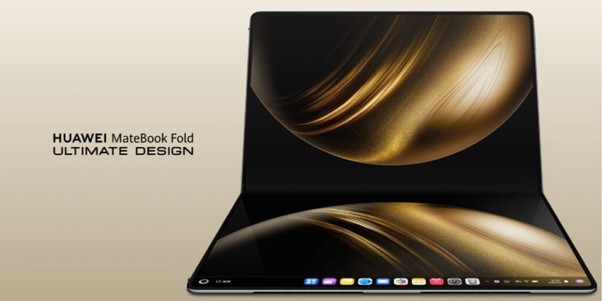
Huawei’s MateBook Fold
The foldable device market is rapidly expanding beyond smartphones into medium-to-large display segments such as tablets and laptops. Recently, Amazon and Huawei have begun developing and releasing foldable tablet and laptop products, marking a significant step in market expansion. Apple is also reportedly preparing to launch a foldable tablet PC after 2027.
Amazon is currently developing an 11.3-inch foldable tablet PC, with the display panel being supplied from BOE’s B12 production line. The first samples are scheduled for delivery in Q1 2026, with mass production set to begin in April of the same year. The planned production volume is approximately 1 million units, and the cover window will use Ultra Thin Glass (UTG).
Meanwhile, on May 19, Huawei officially launched its first foldable laptop, the MateBook Fold. The device features an 18-inch display when unfolded and functions as a 13-inch device when folded. It offers a 3.3K resolution and a 4:3 aspect ratio. The weight is 1.16 kg, and the thickness when unfolded is only 7.3 mm. The display is supplied by Chinese OLED panel maker TCL CSOT and adopts LTPO and tandem structures, achieving about 30% power consumption reduction compared to previous models. The folding radius is 1.5 mm based on Token UTG, significantly enhancing durability. In fact, its shock resistance is reported to be improved by approximately 200%.
Apple is also developing a foldable tablet and is expected to launch the product as early as 2027 or as late as 2028. Samsung Display is anticipated to be the initial supplier of panels for Apple’s foldable tablet PC. Industry watchers believe Apple’s entry will serve as a catalyst for growth in the medium-to-large foldable display market.
While foldable devices have traditionally been limited to smartphones, they are now expanding into tablets and laptops, creating new demand. This shift is accelerating the evolution of related display technologies and component ecosystems.
Junho Kim, Analyst at UBI Research (alertriot@ubiresearch.com)
Visionox is promoting the establishment of a national-level laboratory in Kunshan City, located in Jiangsu Province, China, to lead the next generation OLED technology, and the ViP (Visionox Intelligent Pixelization) project is also making investments to secure production lines. At the recent SID Display Week 2025, the world’s largest display event, Visionox reaffirmed its global technology leadership by showcasing AMOLED applications in various fields including automotive, smart home, healthcare, and metabus.
Visionox is preparing to establish a national-level research institute in Kunshan to secure the source technology, the core competitiveness of the display industry. The institute will concentrate on next-generation OLED technology, and the D2 pilot plant located on the existing V2 line will be relocated to the Kunshan institute site to organically integrate research and development (R&D) and prototyping. The Kunshan municipal government will provide financial support for the project, which is expected to serve as an exemplary case of cooperation between local government and business in fostering advanced technology.
The name of the ViP (Visionox intelligent Pixelization) technology will be changed to ML OLED, meaning Mask-less OLED. The V5 line currently being promoted in Hefei, Anhui Province, is focusing on 7.5K OLED production using Mask-less OLED technology instead of FMM (Fine Metal Mask) method. The technical committee is currently discussing the project, and a final investment decision is expected by the end of June 2025.
Some equipment investments have already been finalized, with LOI (Letters of Intention to Purchase) issued for Nicon lithography equipment, Nissin ion implanter, and APSYSTEM ELA equipment, and AKT, a display equipment subsidiary of Applied Materials, is the likely supplier for deposition equipment. However, the possibility has been raised that investment in FMM-related equipment may be put on hold.
Visionox is also planning a 15K-scale addition to its V2 line, and equipment orders are expected this year. The company plans to secure the necessary funds through the sale of the existing D2 pilot line and patents, as well as policy funding from the Hebei provincial government. The expansion strategy being pursued in parallel with the V5 project is a preemptive response to increasing OLED demand and to improve production efficiency and cost competitiveness.
Visionox is pursuing technology-centered sustainable growth through the establishment of the Kunshan National Research Institute, the transformation of mask-less OLED-centric production lines, and a strategy to diversify AMOLED applications. Through cooperation with the government, asset efficiency, and strategic capital investment allocation, Visionox has simultaneously secured financial stability and technological competitiveness, strengthening its position as a technology leader in the global OLED market.
Changho Noh, Analyst at UBI Research (chnoh@ubiresearch.com)
As the development of intelligent and networked automobiles accelerates, the demand for various types of vehicle displays is rapidly increasing. In terms of display technology, the adoption rate of LTPS TFT LCD and OLED is increasing, and interest in Micro-LED is also growing.
In 2024, the shipment volume of OLED panels for vehicles is expected to increase by 126% year-on-year to approximately 2.48 million units. It is expected to increase to approximately 3 million units in 2025. This is because OLED is expanding its adoption, contributing to luxurious interiors and efficient space utilization, especially in premium vehicles.
LG Display, BOE, Visionox, Tianma, etc. recently presented various OLED vehicle display solutions at the SID 2025 and Shanghai Auto Show. As major automakers such as Mercedes-Benz, Audi, GAC, and Ideal are also installing OLED in their latest models, the market penetration is further expanding.
LG Display has organized an exhibition space dedicated to automobiles under the theme of ‘Driving the Future.’ The concept car on display featured a 57-inch pillar-to-pillar OLED that covers the entire dashboard and an 18-inch sliding OLED for the rear seats.
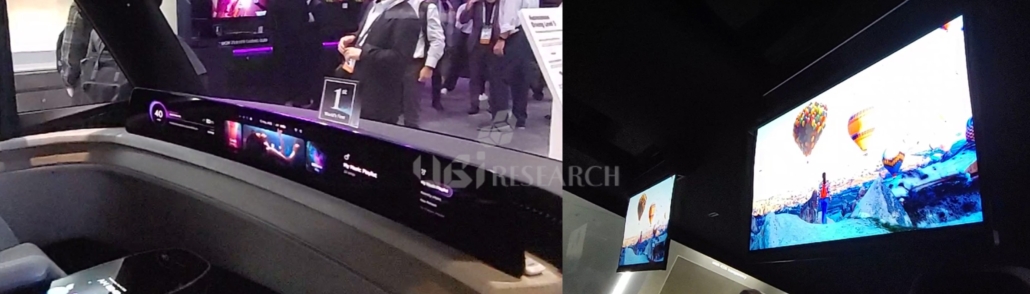
LG-Display-57-inch-pillar-to-pillar-OLED-18-inch-sliding-OLED
BOE showcased a smart cockpit consisting of a total of eight OLED displays, including a 55-inch transparent OLED sunroof. Key specifications include a 12.3-inch instrument panel and CID (resolution 720×1920), a switchable privacy display with a relative brightness of less than 0.5% at a viewing angle of 48 degrees or more, a 1.5-inch circular OLED with a resolution of 466×466 and 310 PPI, and two CMS OLEDs.
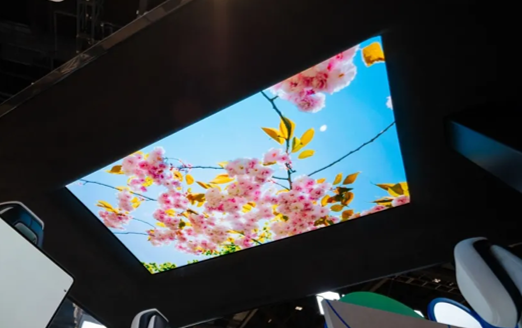
55-inch OLED transparent sunroof
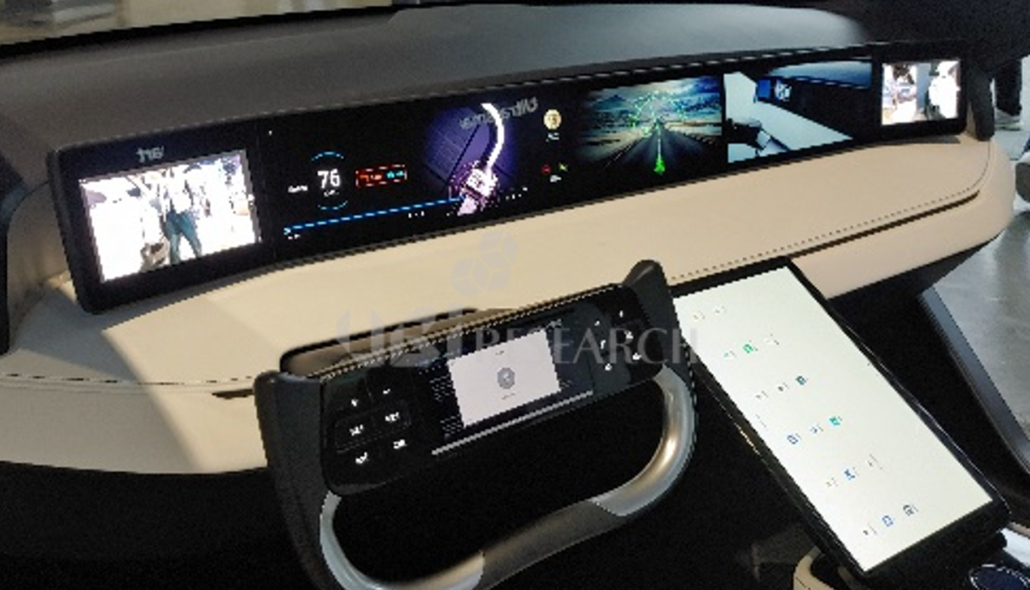
OLED smart cockpit
Visionox unveiled a smart C-type armrest flexible OLED, a dual-screen integrated flexible OLED, a UDIR flexible OLED for vehicles, and a switchable privacy display at SID 2025.
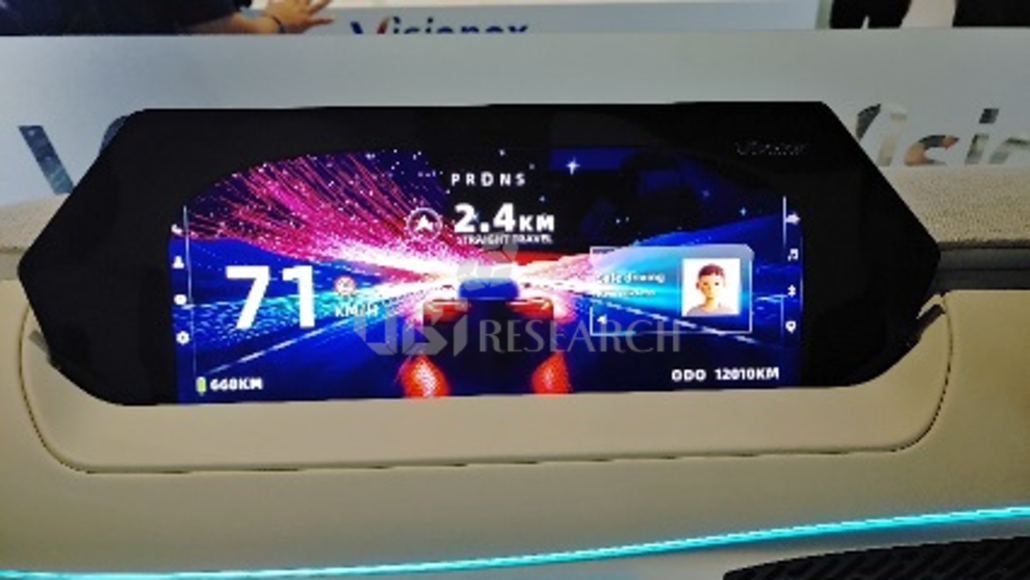
UDIR OLED
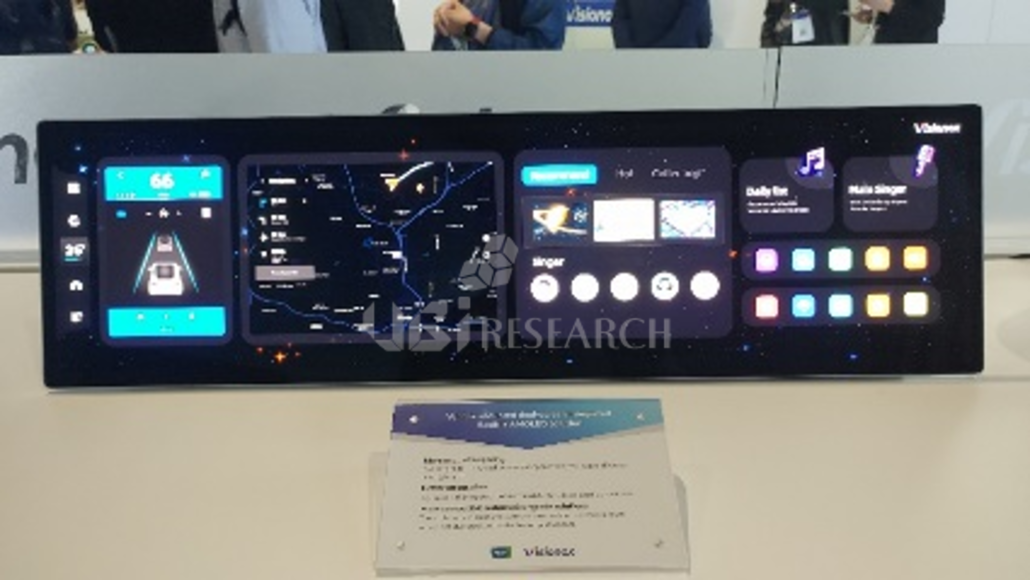
Dual screen
Privacy OLED
Tianma exhibited a 13-inch slider OLED and a dual 13-inch multi-curvature integrated black OLED display with a curvature range of R800~2000mm.
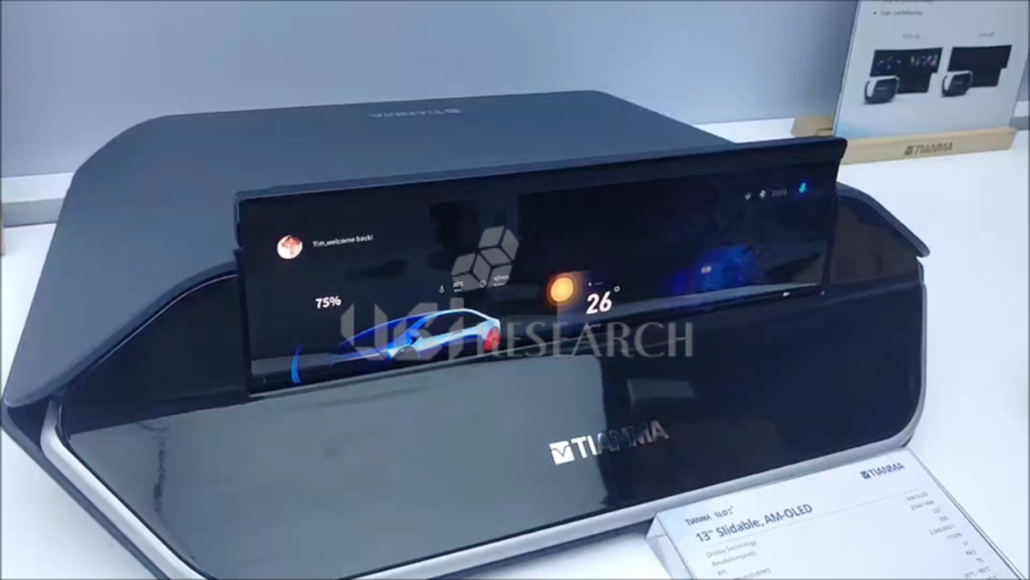
13-inch slidable OLED
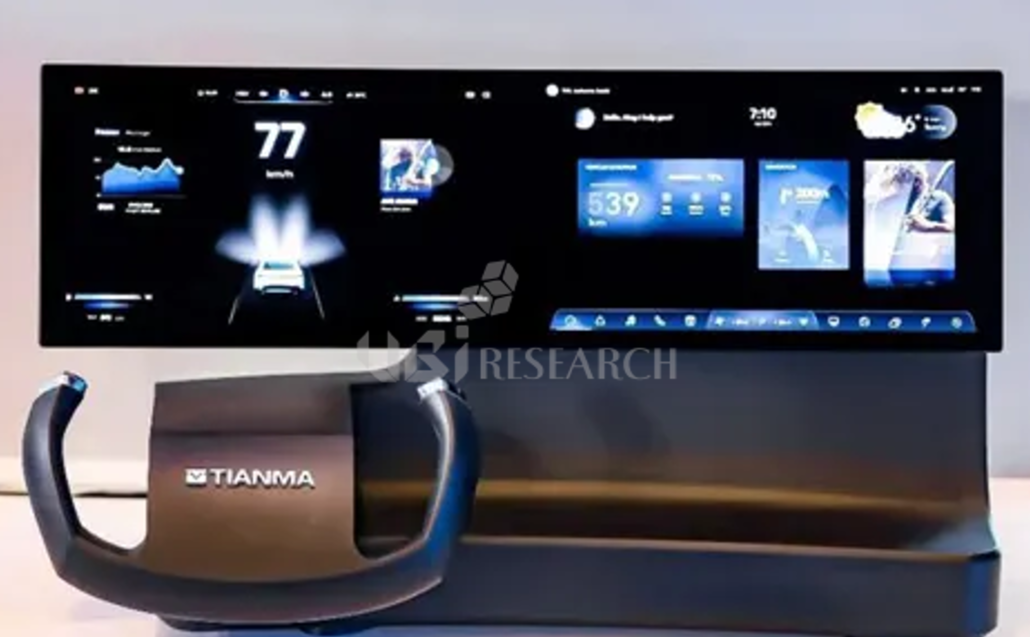
13-inch multi curvature OLED
Changwook HAN, Executive Vice President/Analyst at UBI Research (cwhan@ubiresearch.com)
2025 Automotive Display Technology and Industry Trends Analysis Report
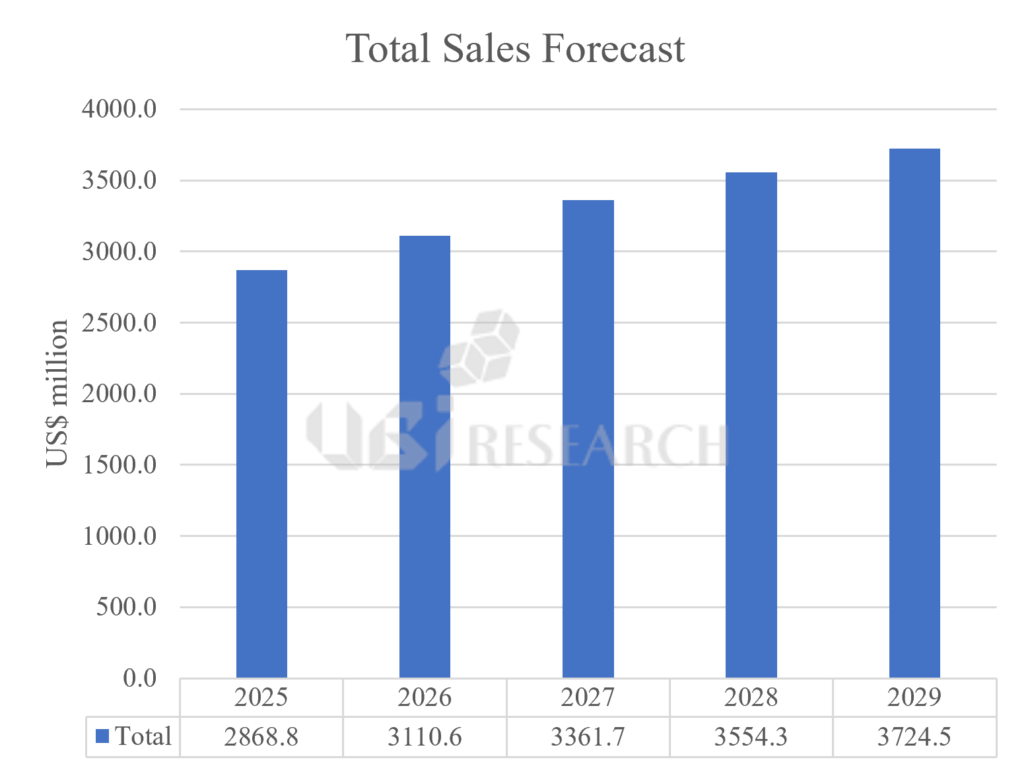
‘2Q25_Quaterly OLED Emitting Material Market Tracker’
According to UBI Research’s “2Q25_Quarterly OLED Emitting Material Market Tracker”, the OLED emitting material market reached $490 million in the first quarter of 2025 and is expected to achieve a total of $2.86 billion for the full year. The market is projected to grow at a compound annual growth rate (CAGR) of 6.7%, reaching $3.72 billion by 2029.
By nation, due to the production cycle characteristics of Korean panel makers—whose shipments are concentrated in the second half of the year—Chinese OLED panel makers surpassed Korean makers in terms of emitting material revenue for the first time in Q1 2025. However, with the mass production of Apple’s iPhone 17 and iPad Pro panels beginning in Q2, Korean panel makers are expected to regain the lead in the second half of the year.
In terms of company-specific material usage in 2025, Samsung Display is projected to hold a 39.8% share, followed by LG Display with 19.9%, and BOE with 13.1%. Korean panel makers are expected to maintain a combined market share of 55% through 2029.
UBI Research analyst Changho Noh stated, “Although Chinese panel makers temporarily overtook their Korean counterparts in emitting material revenue in Q1 2025, Korean companies are expected to recover soon,” and added, “While Korean panel makers may fall behind Chinese makers in shipment volume from 2025, they will continue to dominate in terms of emitting material revenue for the time being.”
Chang Ho NOH, Analyst at UBI Research (chnoh@ubiresearch.com)
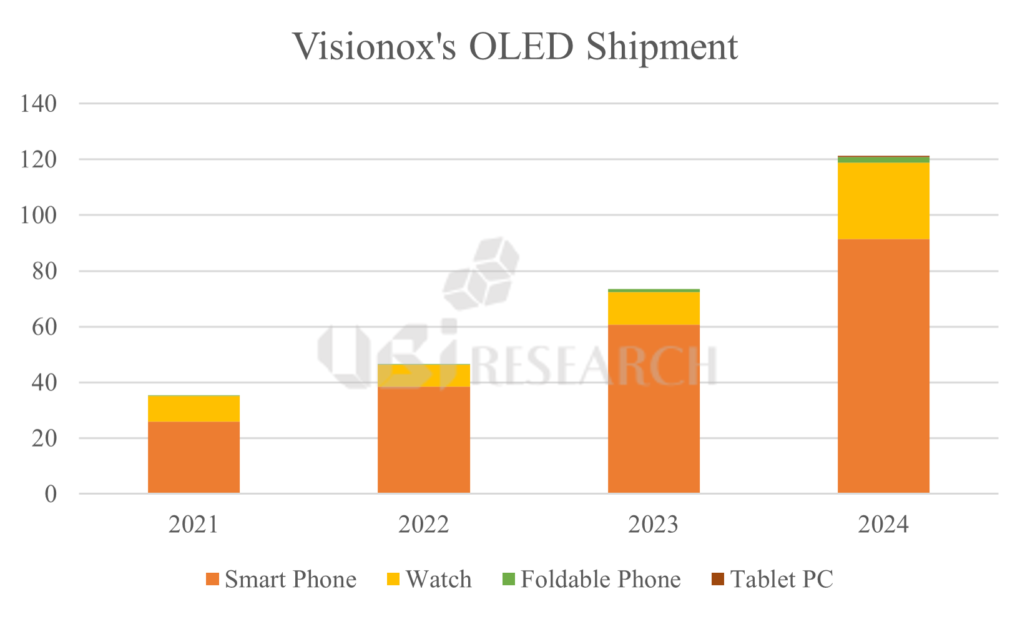
Visionox is reportedly reconsidering the expansion of its V2 line located in Guan, China. The expansion plan had been on hold due to delays in local government investment support, but recent renewed discussions with the Guan municipal government have reignited the possibility of investment. If the plan moves forward, an additional monthly deposition capacity of 15K is expected to be added to the V2 line. Combined with the existing V1 line in Kunshan (5.5-generation, 15K) and the V3 line in Hefei (6-generation, 30K), Visionox would establish a total monthly production capacity of 60K for small-size OLED panels.
Currently, Visionox produces rigid and flexible OLEDs for smartwatches and smartphones at the V1 line, while the V2 and V3 lines mainly manufacture LTPO OLEDs used in flagship smartphones. Major clients include leading Chinese smartphone brands such as Xiaomi, Oppo, Honor, Huawei, and Vivo.
Visionox’s OLED panel shipments have shown clear growth in recent years: 35 million units in 2021, 46 million in 2022, 73 million in 2023, and a sharp increase to 120 million in 2024, representing a year-on-year growth of approximately 64.4%. However, shipments in Q1 2025 stood at 26.1 million units, suggesting that the full-year figure may remain similar to that of 2024.
Meanwhile, Visionox is also building a new 8.6-generation OLED line (V5) in Hefei to enter the medium- to large-size OLED market. This line targets IT and automotive applications such as laptops, tablets, and vehicle displays, positioning itself as a strategic hub for Visionox’s portfolio diversification and future growth.
If the V2 line expansion is realized, Visionox is expected to significantly strengthen its small-size OLED production capabilities while simultaneously accelerating a multifaceted growth strategy that includes its entry into the medium- to large-size display market.
Junho Kim, Analyst at UBI Research (alertriot@ubiresearch.com)
This year, companies are engaged in intense competition to develop Micro-LED HUD products for automotive use at display exhibitions such as CES, Touch Taiwan, and SID. Major panel manufacturers such as AUO and Innolux in Taiwan, and BOE, TCL CSOT, and Tianma in China have unveiled a host of new products. These companies are the main suppliers of LCD HUD products.
AUO exhibited a 13-inch micro LED AR HUD, while Innolux’s CarUX implemented a HUD on the windshield using a 9.6-inch Micro-LED reflective display solution with 9.6-inch Micro- LED.
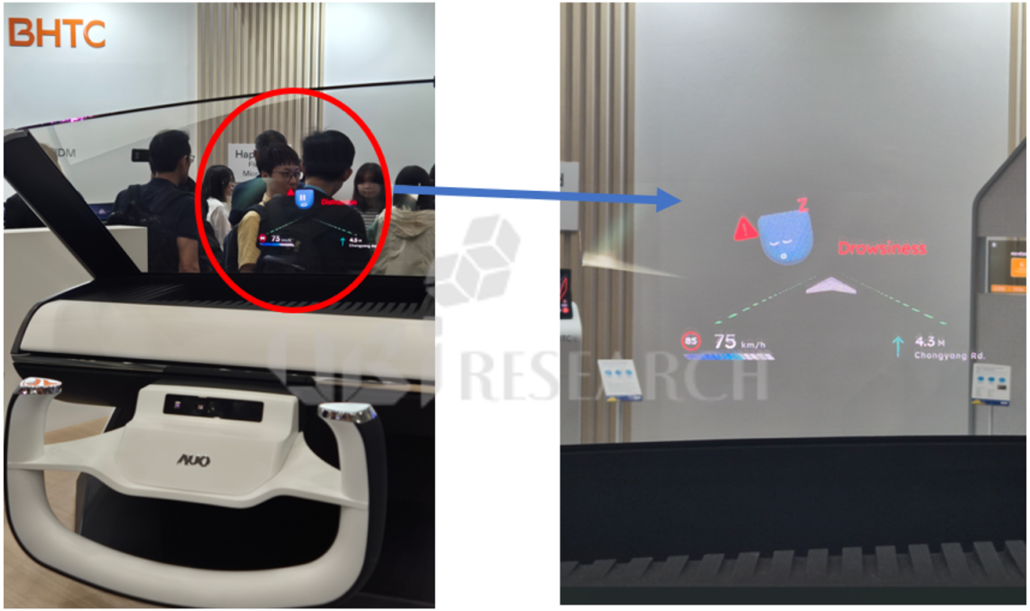
AUO 13” AR HUD
BOE showcased two HUD display solutions at SID. One is a 6.2-inch (624×360) RGB Micro-LED HUD, and the other is a monochrome Micro-LED HUD achieving up to 300,000 nits. TCL CSOT unveiled a 14.3-inch (1700 x 650) Micro-LED PHUD, while Tianma showcased an 8-inch (1204×608) HUD.
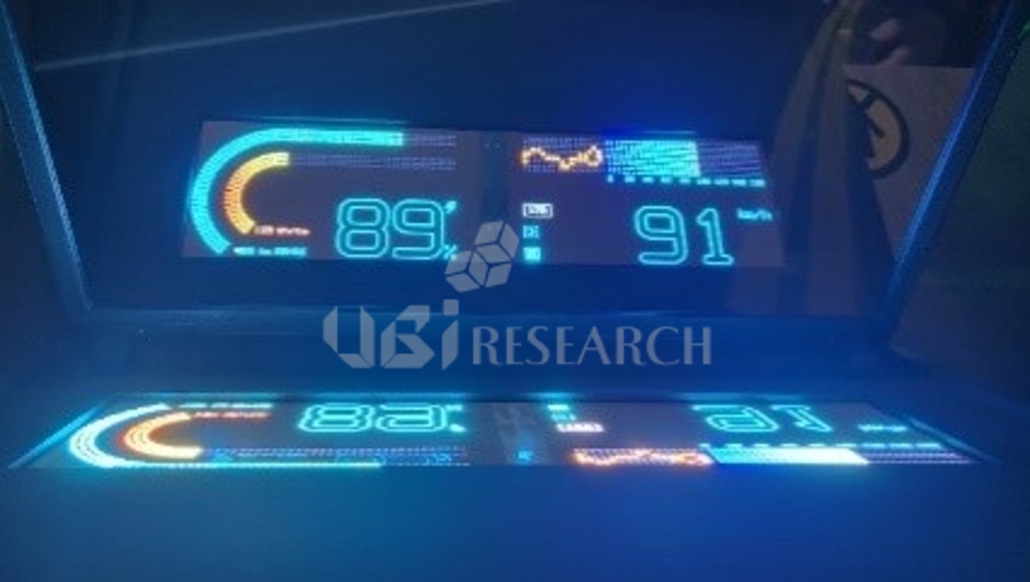
BOE 6.2” HUD
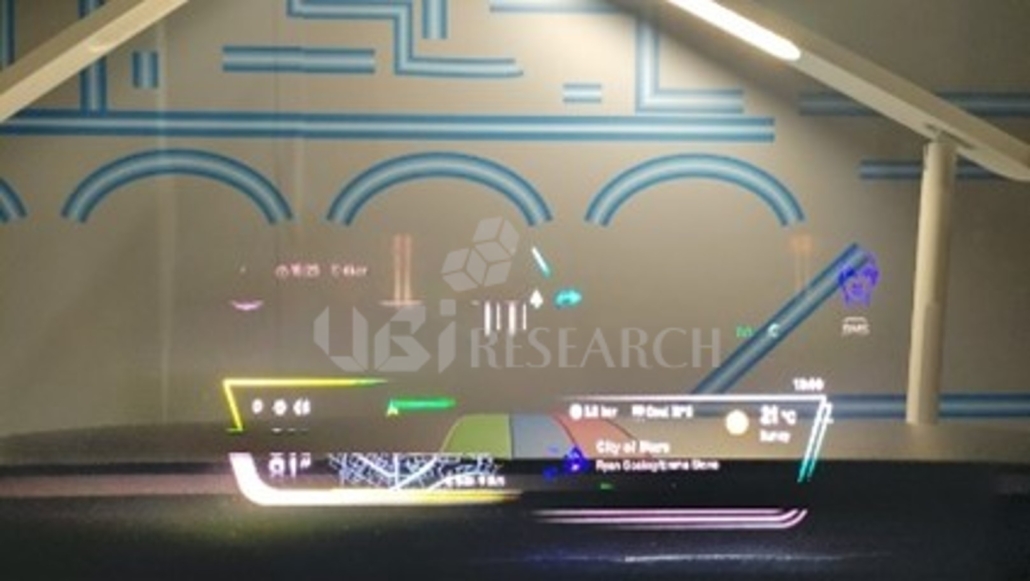
TCL 14.3” HUD
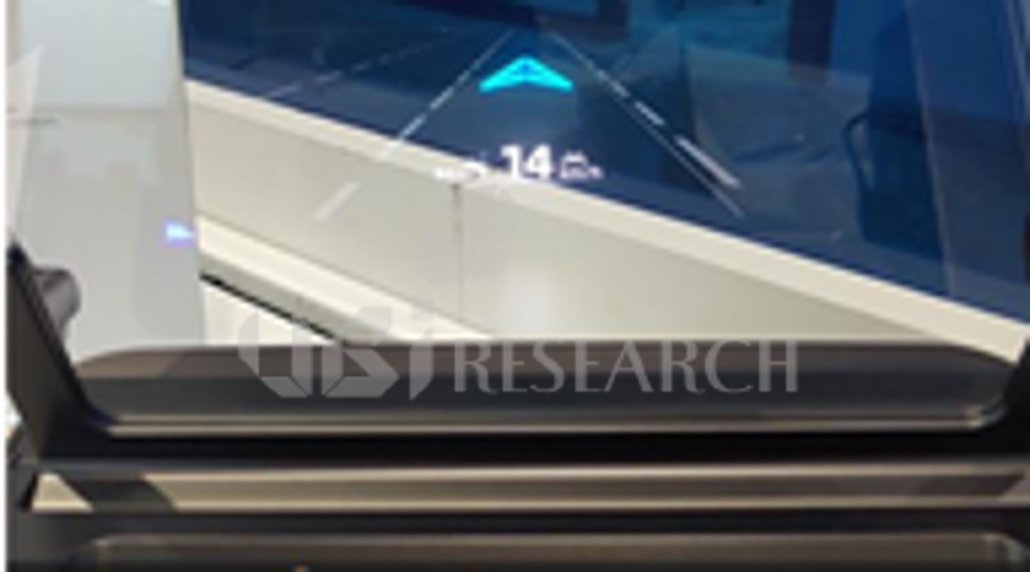
Tianma 8” HUD
These products achieve high resolution and high contrast ratios based on the advantages of Micro-LEDs, offering differentiation and the potential to replace existing LCOS products. As a result, panel manufacturers are engaging in intense competition to secure a technological lead in the market.
According to UBI Research’s “2025 Automotive Display Technology and Industry Trend Analysis Report,” this year’s vehicle display shipments are expected to exceed 240 million units, with Mini-LED and OLED panels gradually increasing. As competing technologies, companies are actively developing differentiated technologies applied to Micro-LED HUD products.
In summary, automotive displays are one of the key areas of the future display market. As the importance of displays has grown as a key differentiating factor in smart cars, the automotive display market will become an essential competitive arena for panel manufacturers. In other words, with the smart evolution of vehicles, HUDs will become mainstream, and companies will need to respond and compete accordingly.
Namdeog Kim, Senior Analyst at UBI Research(ndkim@ubiresearch.com)
2025 Automotive Display Technology and Industry Trends Analysis Report
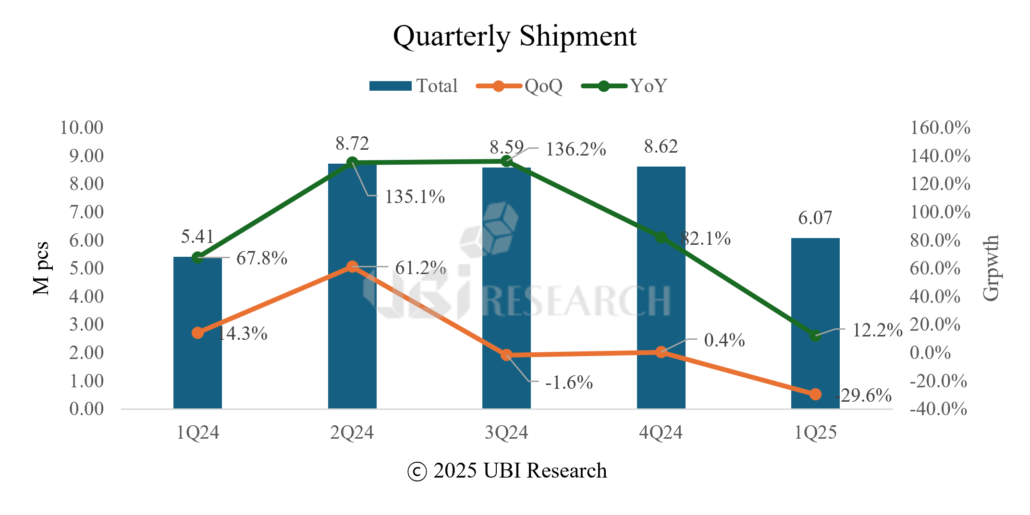
2Q25 Medium-to-Large OLED Display Market Track
According to UBI Research’s “2Q25 Medium-to-Large OLED Display Market Track,” OLED panel shipments for medium-to-large displays in Q1 2025 increased by 12.2% year-over-year, while revenue grew by 17.1%.
By manufacturer, Samsung Display and LG Display saw year-over-year growth in their medium-to-large OLED shipments, whereas Chinese panel makers maintained a similar performance compared to Q1 2024.
By application, shipments increased across tablet PCs, monitors, automotive displays, and TVs, while notebook panel shipments experienced a slight decline. Notably, shipments for automotive OLED panels tripled, growing from 270,000 units in Q1 2024 to 810,000 units in Q1 2025. Samsung Display’s automotive OLED shipments surged from 100,000 to 540,000 units, while LG Display, BOE, and Everdisplay maintained levels similar to the previous year.
In addition to BOE and Everdisplay, Tianma has recently been actively promoting its automotive OLED panels and expanding its customer base. The 2025 shipment forecast for automotive OLED panels stands at 3 million units, reflecting a 20% increase from 2024.
For tablet PCs, OLED shipments in Q1 reached 1.95 million units, a decrease of 250,000 units from 2.2 million units in the previous quarter. While both Samsung Display and Chinese panel makers experienced slight quarter-over-quarter declines, LG Display more than doubled its shipments compared to Q4 (300,000 units), thanks to the resumption of panel production for the iPad Pro.
“Chang Wook Han, Executive Vice President at UBI Research, stated that the growing demand for high-end automotive displays, combined with the increasing adoption of OLED by premium brands, is expected to drive continued growth in the automotive OLED market.”
Chang Wook HAN, Executive Vice President/Analyst at UBI Research (cwhan@ubiresearch.com)
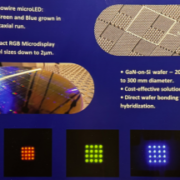
Aledia is a micro-LED R&D startup headquartered in Grenoble, France, which was spun out from the French National Scientific Institute CEA-Leti in 2011. LEDs and plans to supply them for all display applications that require them. The company claims that the properties of nanowires make them energy efficient and suitable for high resolution, but if the pixels are configured in the form of m x n arrays, they will also be the best choice for large-area, high-brightness product lines.
Aledia’s core technology is a method of growing GaN nanowires in a three-dimensional structure on a silicon substrate. This technology is suitable for high-performance display solutions such as augmented reality (AR) because the direction of light emission can be precisely controlled.

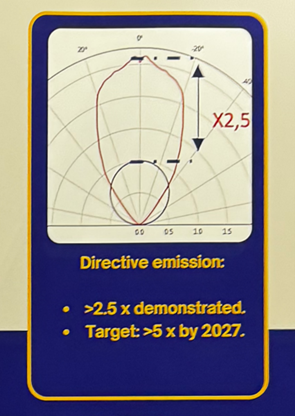
Aledia holds approximately 300 patents and has completed the development of the world’s highest efficiency of 32% EQE in micro-LEDs with a size of 1.5 µm or smaller, its manufacturing technology, and circuit bonding technology.
Aledia is investing US$200 million in Champagnier, France, to build a microLED production line that is expected to be completed in the first half of 2025. The facility will be capable of mass producing microLEDs on 8″ and 12″ silicon wafers with a capacity of 20K wafers per month; Aledia is expected to produce micro-LEDs for AR in earnest.
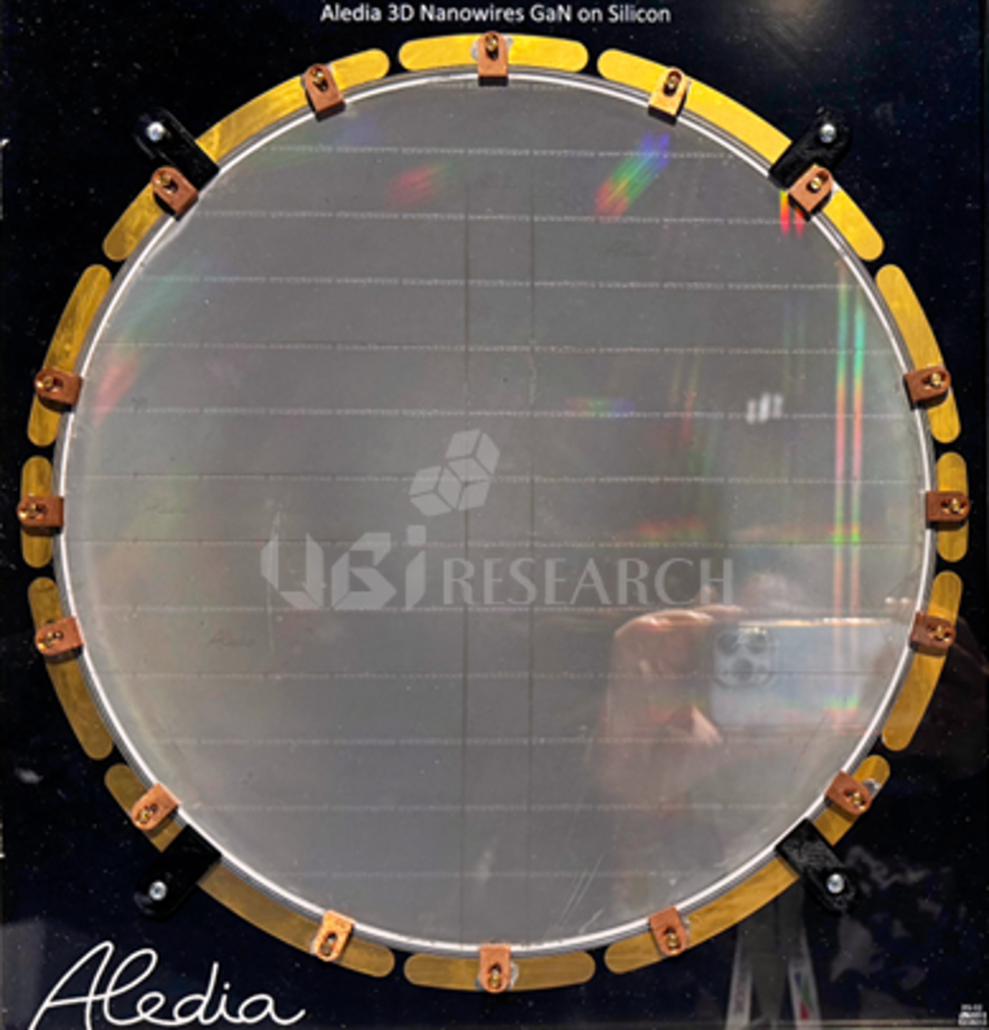
Aledia researchers let us know that they are ready to work together to solve the challenges of the micro-LED industry at SID 2025.
Joohan Kim, Analyst at UBI Research (joohanus@ubiresearch.com)
Micro-LED Display Technologies for XR Applications Report Sample
May 2025 — A research team led by Professor Stephen R. Forrest at the University of Michigan has developed a deep blue phosphorescent OLED (PhOLED) that simultaneously achieves up to more than 10 times longer lifetime and high color purity, addressing the long-standing challenge of blue OLEDs. The results are published in the latest issue of Nature Photonics, and a related paper was presented at SID2025.
While OLEDs are widely used in smartphones and premium TVs, blue OLEDs have relied on inefficient fluorescence, leading to high power consumption and short operational lifetimes. This is because blue light has the highest energy level, causing molecules in the emitting layer to degrade quickly. To overcome this, the team developed a tandem PEP (polariton-enhanced Purcell effect) OLED with multilayer architecture and double-sided electrode design.
Previous work by the Forrest team demonstrated that surface plasmons near metal electrodes could help excitons in light-emitting molecules release energy faster. Building on this, the new device incorporates an organic semiconductor on both electrodes, enabling the formation of plasmon–exciton–polaritons. This structure acts like a high-speed lane, allowing excitons to convert to photons more efficiently and reducing destructive interactions.
Moreover, the tandem architecture divides the light-emission workload between two layers, cutting degradation in half. An optical cavity (Fabry–Pérot cavity) further boosts efficiency and color purity.
First author Dr. Haonan Zhao stated, “Instead of letting excitons collide and decay, we gave them an expressway to escape — a physical design solution to a two-decade-old problem.” Professor Forrest added, “This may not be the final solution, but we’ve finally shown the way forward that has eluded researchers for 20 years.”
The results of this study are expected to play a key role in advancing the performance of various display products, such as next-generation smartphones, TVs, and wearable devices. It also has the potential to bring about innovative changes in the lighting field, where energy efficiency is important. This study was supported by the US Department of Energy and Universal Display Corporation.
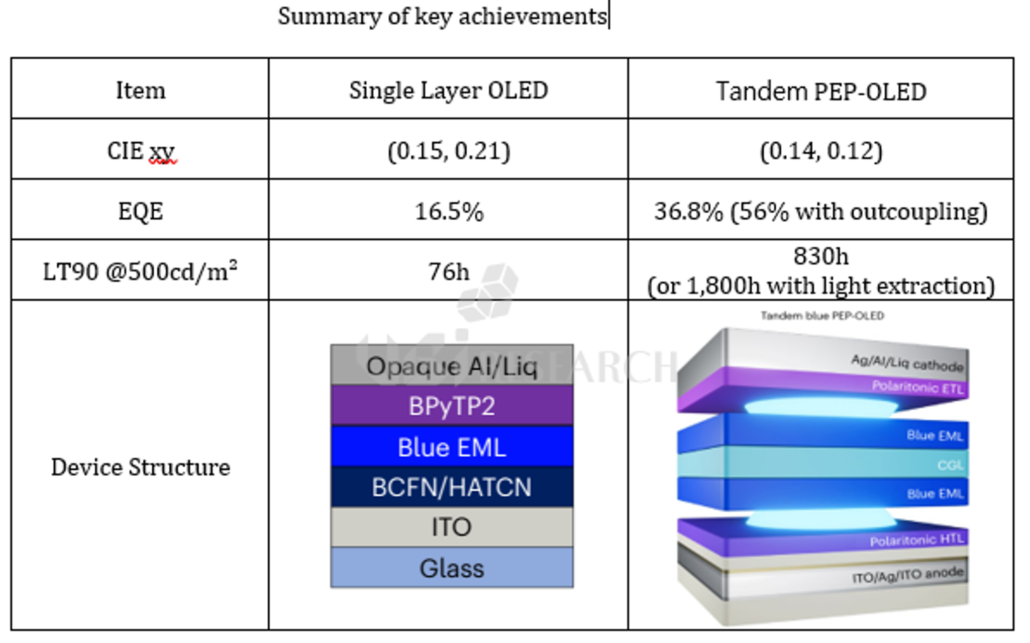
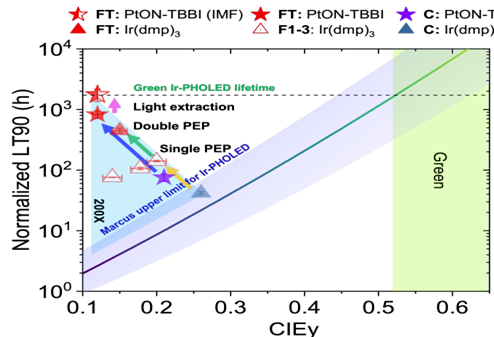
Paper Information
– Title: Stable, deep blue tandem phosphorescent organic light-emitting diode enabled by the double-sided polariton-enhanced Purcell effect
– Authors: Haonan Zhao, Claire E. Arneson, Stephen R. Forrest
– Journal: Nature Photonics (2025)
– Journal: SID 2025 Digest148 (13-4)
Chang Ho NOH, Analyst at UBI Research (chnoh@ubiresearch.com)
At the SID 2025 Display Week, TCL showcased various sizes of inkjet OLED products. The inkjet method is considered to be a technology that is advantageous in reducing material costs compared to the vacuum deposition method due to its high utilization efficiency of luminescent materials. TCL officially announced the mass production of a 21.6-inch 4K inkjet OLED professional display in November 2024, and is currently considering investment for mass production.
At this exhibition, TCL showcased a 6.5-inch inkjet OLED display for smartphones, which provides a high resolution of 360ppi based on real stripe, which is equivalent to approximately 460ppi based on pentile. In addition, a variety of product lines were exhibited, including a 14-inch oxide TFT-based OLED notebook panel with a 2.8K resolution (243ppi), a 27-inch OLED monitor with 4K 120Hz specifications, and a 65-inch OLED TV display with 33 million pixels and 8K 120Hz.

TCL, 6.5” Smartphone
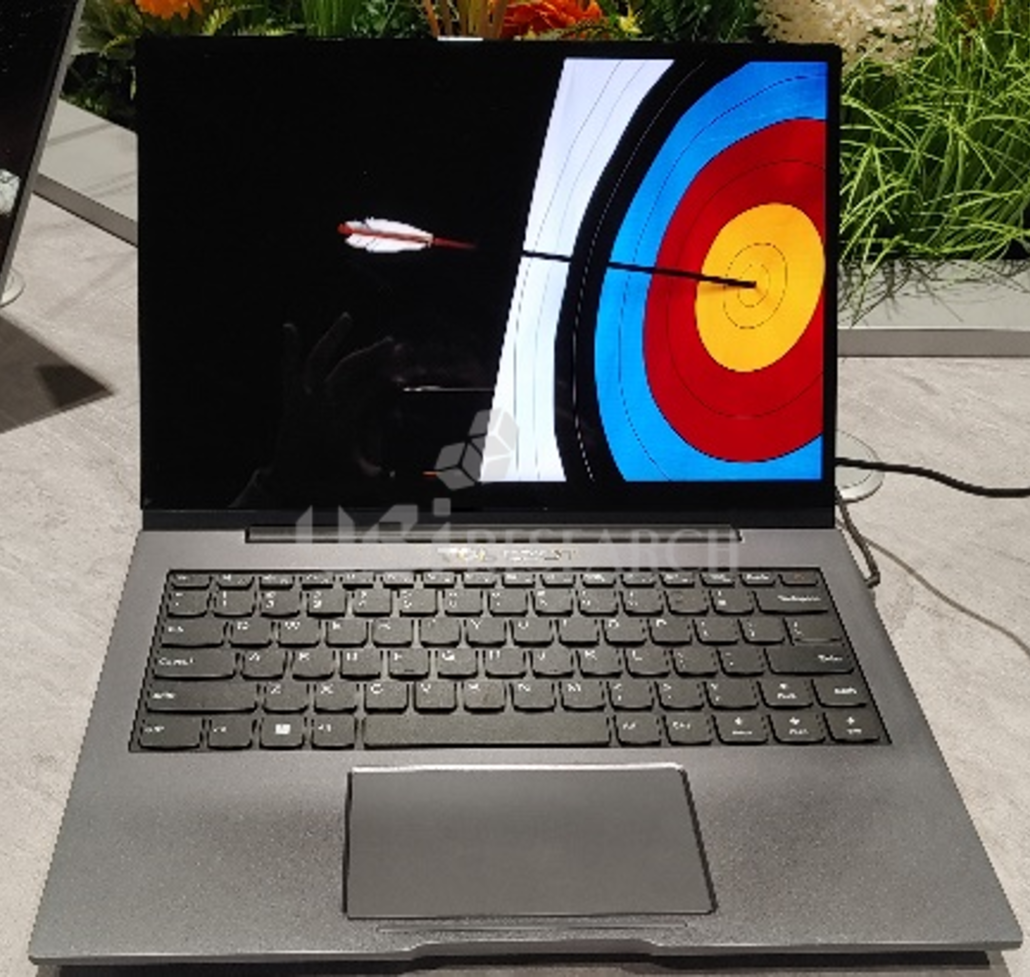
TCL, 14” Notebook PC
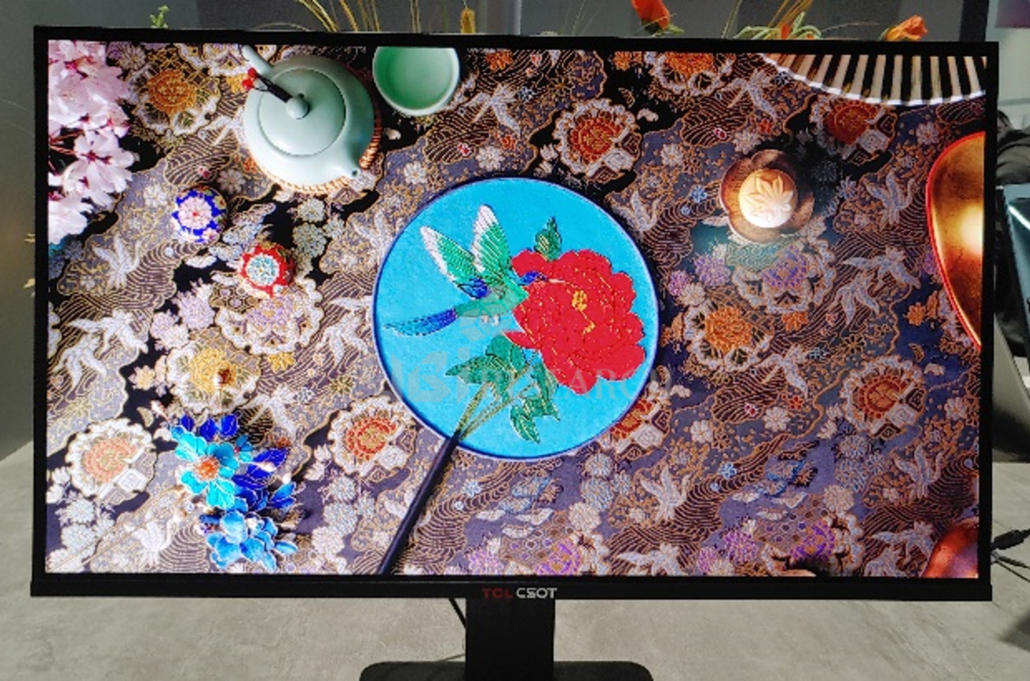
TCL, 27” Monitor
The 65-inch product maintains 99% of the DCI-P3 color gamut even in low-gradation, and has applied technology that doubles the utilization of light-emitting materials and reduces blue light by 50%. This is evaluated as a significant technological breakthrough in the large-scale and commercialization of inkjet OLED.
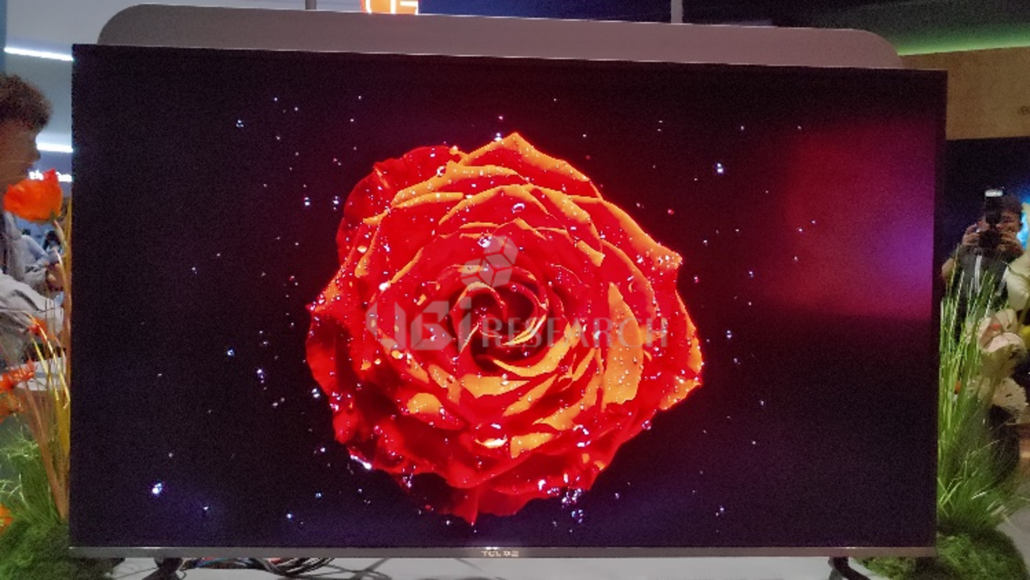
TCL 65” 8K TV
With a full lineup from 6.5 inches to 65 inches, TCL has shown confidence that inkjet OLED technology can be applied to all product lines from mobile to TV. Up to now, Chinese OLED panel manufacturers have focused on production based on technologies first verified by advanced companies, but inkjet OLED is the first technology that China has led in mass production. The success of this technology can be an opportunity for Chinese panel manufacturers to leap forward in both technology and production.
However, OLED using vacuum deposition method is continuously improving brightness and lifespan through tandem IT OLED structure or multi-stack TV OLED structure, and inkjet OLED still has the task of not only securing productivity but also reducing this performance gap.
Chang Wook HAN, Executive Vice President/Analyst at UBI Research (cwhan@ubiresearch.com)
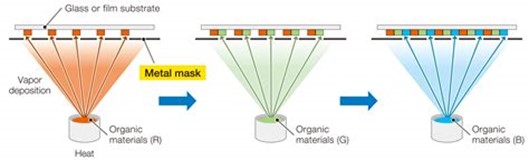
(Source: DNP)
Japan’s Dai Nippon Printing (DNP) is reaffirming its dominance in the Fine Metal Mask (FMM) market, a key component in OLED manufacturing. Recently, DNP signed an exclusive supply agreement with China’s leading display company BOE for FMMs used in 8.6-generation OLED panels, signaling a proactive move into the expanding large-size OLED market.
This agreement is part of BOE’s strategy to begin mass production on its new 8.6-generation OLED lines. To support this, DNP has established a new FMM production line at its Kurosaki plant in Fukuoka, Japan. The facility is equipped to handle substrates over twice the size of those used in 6th-generation lines and is optimized for high-resolution, large-size OLED panel deposition processes. The new line has also been designed with flexibility in mind, capable of producing some 6th-generation products as needed.
Currently, DNP holds exclusive supply agreements with major Chinese panel makers—including BOE (excluding its 5.5-generation lines), CSOT, and Tianma—for 6th-generation lines, maintaining a 100% market share in that segment. However, some panel manufacturers have started trialing domestically produced FMMs, although the extent of their use has not been statistically verified. Despite ongoing efforts to localize FMM production in China, achieving the same level of precision and yield as DNP remains a significant challenge.
To ensure stable supply and expand production capacity, DNP is operating both its existing Mihara plant in Hiroshima and the new facility in Fukuoka. This dual-site strategy not only enhances production scalability but also improves customer trust by serving as a Business Continuity Plan (BCP) safeguard against natural disasters like earthquakes.
FMMs are critical materials used in the OLED deposition process to accurately pattern RGB subpixels, directly affecting panel resolution and production yield. Samsung Display also sources ultra-thin 25μm FMMs from DNP while pursuing diversification strategies through collaborations with Korean companies. Domestic suppliers such as Poongwon Precision are accelerating their FMM mass production efforts to challenge DNP’s market dominance.
By securing this major deal with BOE, DNP has solidified its position as a key partner in the transition to next-generation OLED mass production and once again demonstrated its strategic edge in the increasingly high-generation global OLED market.
Junho Kim,Analyst at UBI Research (alertriot@ubiresearch.com)
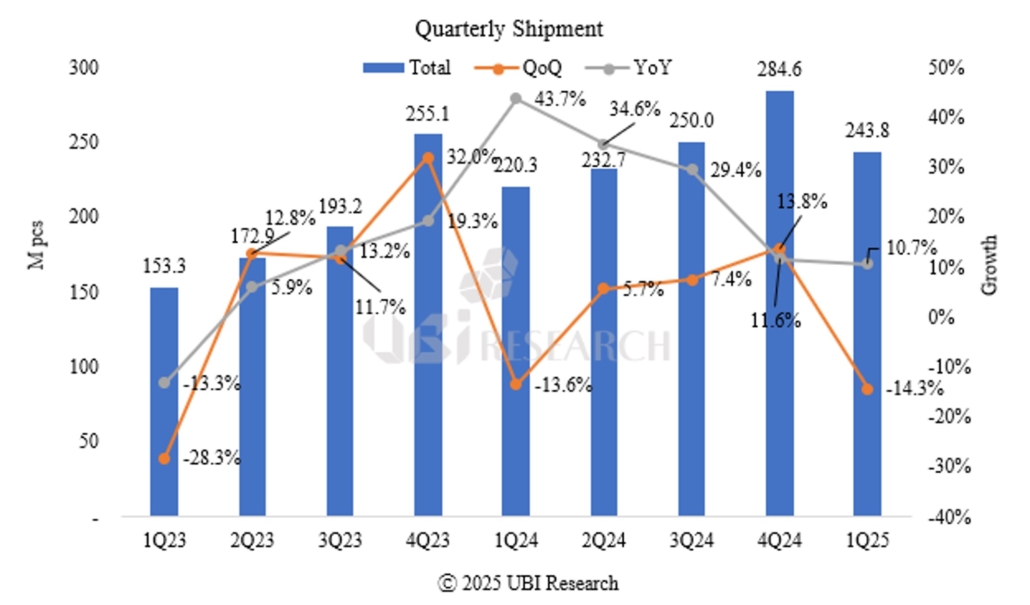
2Q25 Small OLED Display Market Track
According to UBI Research’s “2Q25 Small OLED Display Market Track,” which includes performance and forecasts for applications such as smartphones, foldable phones, and smartwatches, small OLED panel shipments in the first quarter of 2025 reached 243 million units. This represents a decrease of 40 million units compared to the fourth quarter of 2024, which recorded 284 million units.
While this marks a 14.3% decrease quarter-on-quarter, it reflects a 10.7% increase year-on-year, making 1Q25 the highest first-quarter shipment volume on record for small OLED panels.
Breaking down the 1Q25 results, shipments from Samsung Display and LG Display both declined compared to the previous quarter. Among Chinese panel makers, Visionox recorded the steepest decline in shipments from 4Q24.
Despite a decrease in shipment volume, Samsung Display’s shipment share rose by 2.9 percentage points compared to 4Q24. Similarly, LG Display’s market share dropped from 13.1% to 9.3%, largely due to the seasonal concentration of Apple-bound panel production in the second half of the year. However, this still marks a 3.3 percentage point increase from the 6% share in 1Q24. LG Display’s shipments of panels for Apple continue to grow annually, and 2025 shipments are expected to exceed those of 2024 by over 10%.
Chinese panel makers showed a downward trend in shipments compared to 4Q24. However, their year-on-year growth remains strong when comparing 1Q23 and 1Q24 data. Notably, BOE is undergoing evaluation to gain approval for supplying panels for Apple’s iPhone 17 Pro. If BOE passes the certification, it is projected to ship approximately 50 million iPhone panels in 2025.
Han Chang Wook, Vice President at UBI Research, stated, “All iPhone 17 models are expected to adopt LTPO panels, which will drive up the average panel price. Although Korean panel makers saw a decline in shipments compared to the previous quarter, performance is expected to improve in the second half of the year with the full-scale production of Apple panels, potentially resulting in higher revenue than in 2024.”
Chang Wook HAN, Executive Vice President/Analyst at UBI Research (cwhan@ubiresearch.com)
With the technological advancement of the automobile industry, the importance of the Camera Monitoring System (CMS) is gradually increasing. This technology, which replaces existing side mirrors, provides the advantage of securing a wider field of vision for the driver and improving the design and aerodynamic performance of the vehicle. CMS captures the surroundings in real time through high-resolution cameras installed outside the vehicle and transmits this to the display inside the vehicle, helping the driver to recognize the surroundings without blind spots. It provides excellent visibility even in driving environments such as night or bad weather, which leads to improved overall driving safety.
CMS also reduces the air resistance of the vehicle by eliminating the outside mirror, thereby increasing fuel efficiency and contributing to reducing carbon emissions. There is an analysis that the introduction of CMS can lead to a fuel saving effect of up to 1.5% for large commercial vehicles. Despite these technological advantages, there are still several challenges to the spread of CMS. First, securing the durability and reliability of the camera and display is essential, and thorough quality control and testing are required because a failure or malfunction of the system can have a fatal impact on the driver’s field of vision. In addition, drivers accustomed to traditional side mirrors may take time to adapt to the new display-based viewing method, and user education and development of linkages with driver assistance functions must be carried out in parallel. In addition, the fact that legal standards and safety regulations in each country are not yet completely unified is also acting as an obstacle to the spread of the industry.
In this trend, CMS technology was highlighted as one of the key technologies that many global companies paid attention to at the recent ‘Shanghai Auto Show 2025’. This exhibition introduced a variety of CMS-related technologies, and it was evaluated as a place to show the future direction of vehicle design and driving environment.

AVITA 12
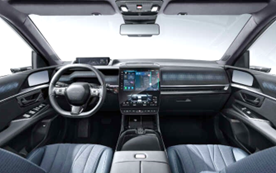
Honda Ye GT
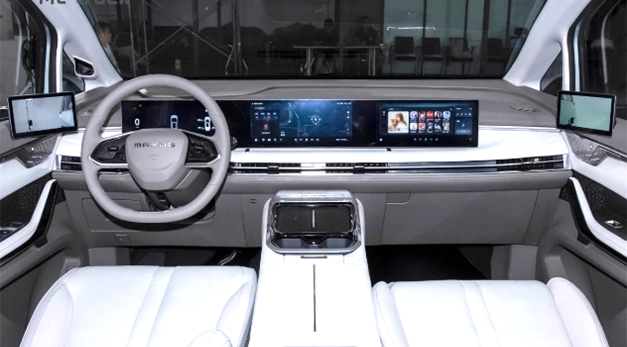
SAIC Maxus MIFA 7 EV
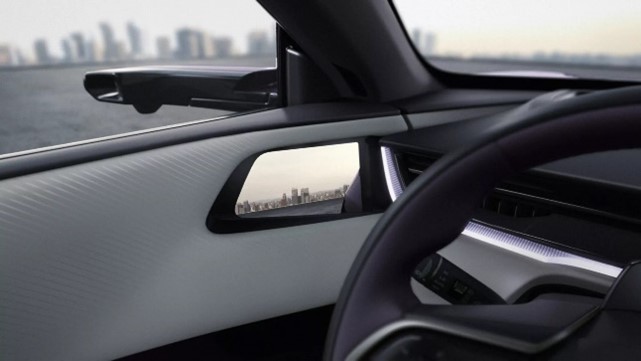
Mazda EZ-60
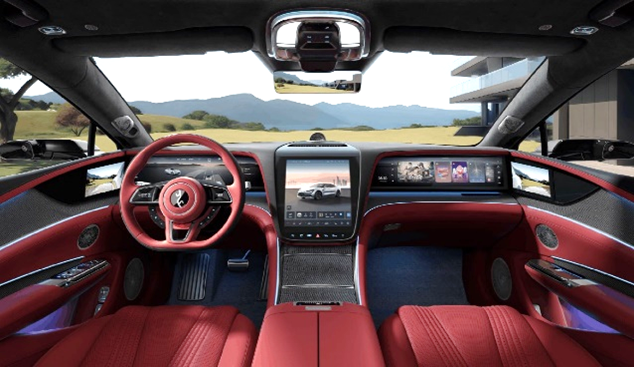
BYD U7

Changan Deep Blue S09
Chang Wook HAN, VP/Analyst, UBI Research(cwhan@ubiresearch.com)
2025 Automotive Display Technology and Industry Trends Analysis Report
Visionox announced at SID 2025 International Display Week that it has successfully demonstrated the commercialization potential of pTSF (Phosphor-assisted Thermally Activated Delayed Fluorescence Sensitized Fluorescence), a fourth-generation OLED technology. This technology is part of hyperfluorescence OLED technology, the fourth generation of OLED technology, and has been attracting attention as a key technology for the next-generation OLED display industry, as it simultaneously satisfies high color reproduction, high efficiency, and long life.
The research team developed green OLED devices with an ultra-wide color gamut that not only exceeds the DCI-P3 standard but also meets the requirements of AdobeRGB and BT.2020. In particular, the newly developed pTSF-based hyperfluorescence OLED device achieved high color purity with CIEx < 0.21 and FWHM (wavelength width) of 21-27 nm and reported up to 12% efficiency improvement and 20% lifetime improvement compared to existing commercial phosphorescence OLEDs.
The pTSF mechanism combines the excellent color purity of fluorescent emitters, the 100% exciton utilization of TADF hosts, and efficient energy transfer from phosphorescent assistant dopants, resulting in a more precise and stable emission system compared to traditional OLED structures. In addition, by optimizing the material deposition process for the G6 mass production line, material usage was reduced by over 10% without compromising quality.
Two prototype products—Product A and Product B—utilizing the pTSF technology were also developed. Compared to existing Visionox OLED products, Product A and B showed 12% and 6% lower power consumption, respectively, while achieving over 99.5% coverage of both DCI-P3 and AdobeRGB color gamuts. Furthermore, both maintained comparable reliability in high temperature and high humidity endurance tests.
A Visionox representative stated, “This milestone marks a pivotal step toward the commercialization of hyperfluorescence OLEDs. Starting with green, we aim to expand pTSF architecture to red and blue devices as well, ultimately achieving full BT.2020 color gamut coverage in next-generation OLED displays.”
The research was presented with sample demonstrations at SID 2025, and was conducted in collaboration with the Department of Chemistry at Tsinghua University, supported by China’s National Key R&D Program.
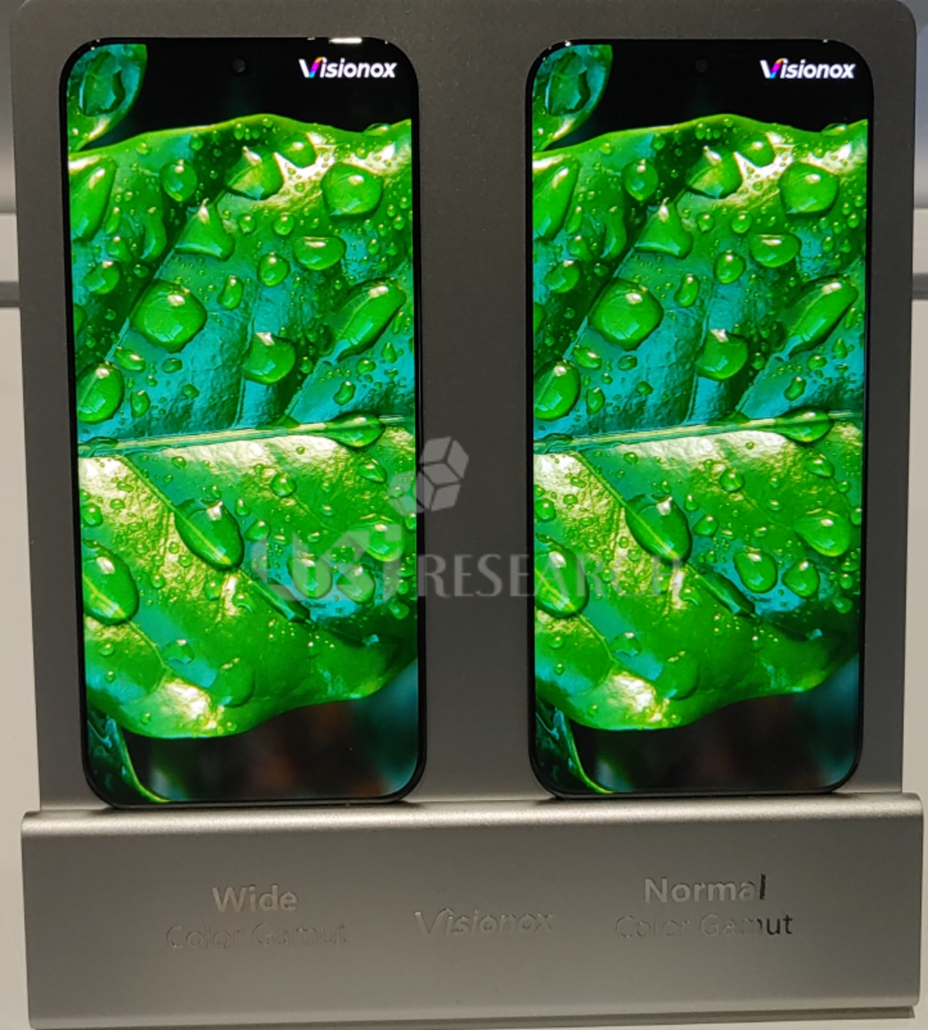
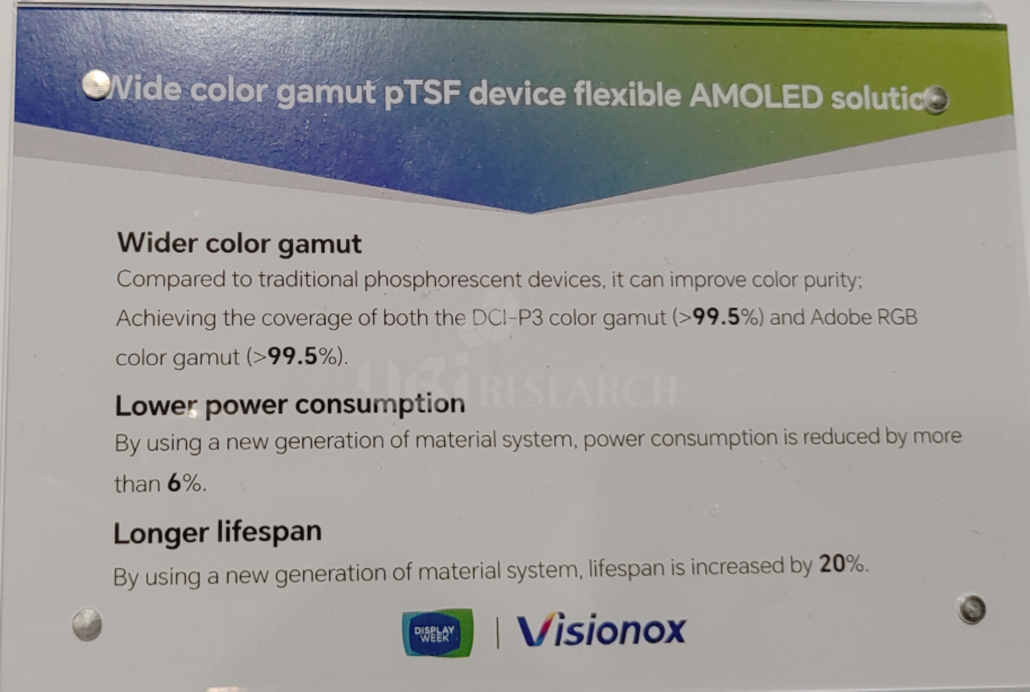
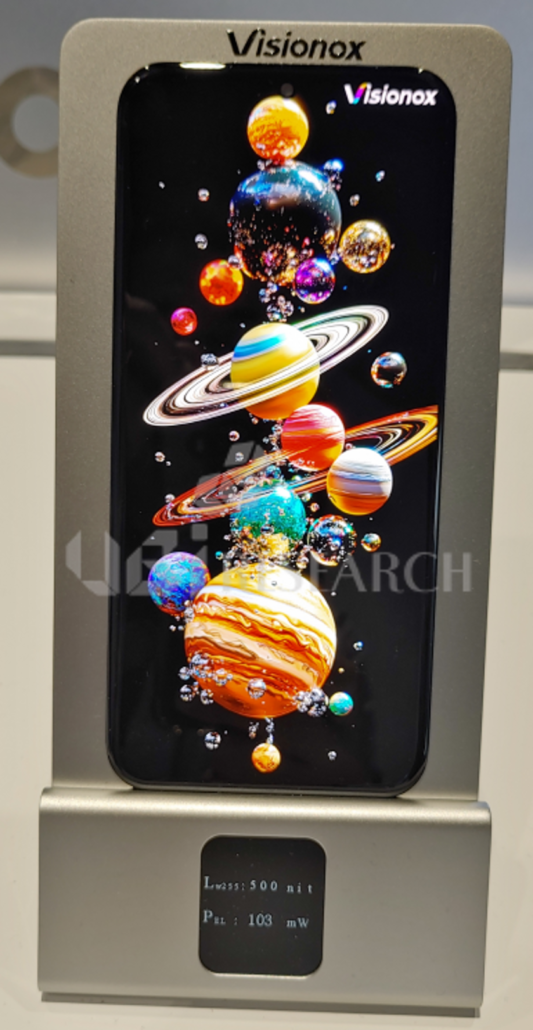
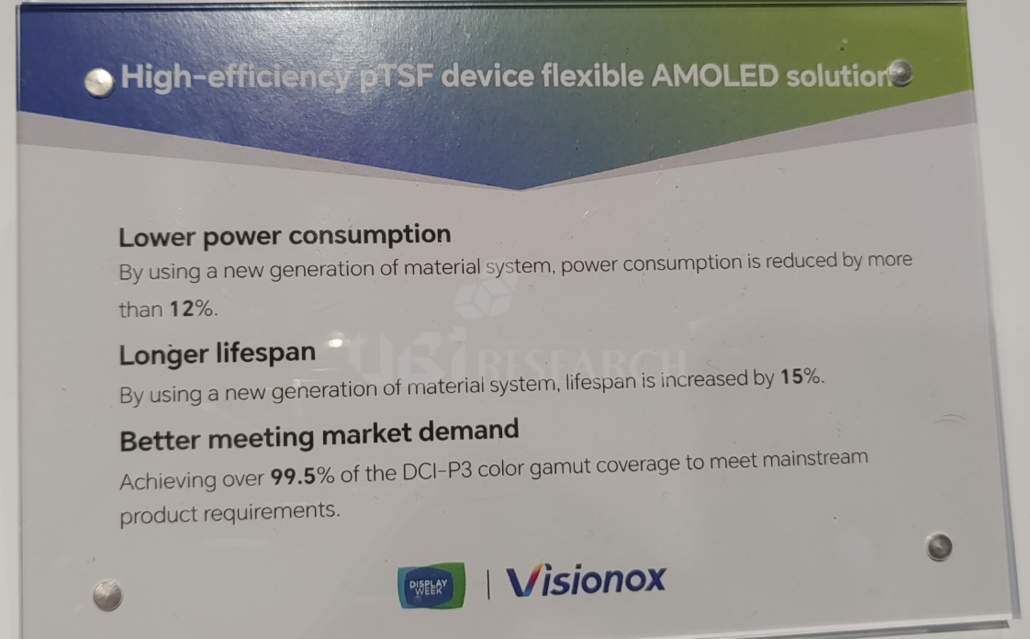
Chang Ho NOH, UBI Research Analyst(chnoh@ubiresearch.com)
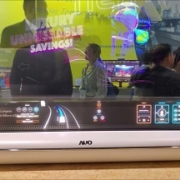
Huawei ‘MatePad Pro’

EDO
Chinese OLED specialist Everdisplay Optronics (EDO) is ramping up efforts to improve profitability and prepare for a potential listing on the Hong Kong Stock Exchange. The company is currently upgrading its production lines using vacuum deposition equipment from Japan’s Ulvac to enable manufacturing of tandem-structure OLED panels.
Tandem OLED technology stacks two or more light-emitting layers to achieve superior power efficiency and longer lifespan, making it increasingly favored in high-end OLED applications. EDO has already supplied tandem OLED panels for Huawei’s tablets—a production line that is reportedly operating profitably.
However, EDO’s broader OLED business remains in the red. To address this, the company is investing in new equipment as part of a long-term strategy to enhance profitability and expand production capabilities. The latest investment focuses on scaling up tandem OLED mass production, with a particular emphasis on the growing mid-to-large-sized OLED segment.
As of 2024, EDO’s shipments of mid-to-large-sized OLED panels are estimated at around 1.9 million units. Approximately 6–7% of these panels are used in automotive displays, while the majority are for tablet PCs. With increasing demand for OLED in the automotive sector, industry watchers expect EDO’s share in that segment to steadily grow in the coming years.
Junho Kim, UBI Research analyst(alertriot@ubiresearch.com)

Samsung Display proved itself as an OLED pioneer at SID 2025. Samsung Display presented the world’s best technology in three themes: the best technology possessed by OLED pioneer companies, and a three-dimensional exhibit that allowed visitors to experience in advance what tomorrow’s OLEDs will look like.
The ‘OLED Frontier’.
The world’s first QED 18.2-inch display applying environmentally friendly Cd-free field emission quantum dot (EL-QD) technology, EL-QD is a new technology that applies an electric field directly to quantum dots to emit inorganic light, realizing accurate color representation and accurate color representation of QD. It achieves BT2020 86% color reproduction and 400 nits performance without color filters. Samsung Display will further improve the performance and aims to launch the product within two years. The 27-inch QD-OLED monitor presented together will experience the world’s largest resolution of 220ppi with 5,120 x 2,880 pixels. With organic light diode bilo sensors built into every pixel in the display area, the Sensor OLED display can measure physical indicators such as heart rate, blood pressure, stress, and atrial fibrillation with a finger.The Sensor OLED display, which was named SID Outstanding Paper of the Year, was also featured in ” Nature Communications” and was also featured in the Nature Communications.
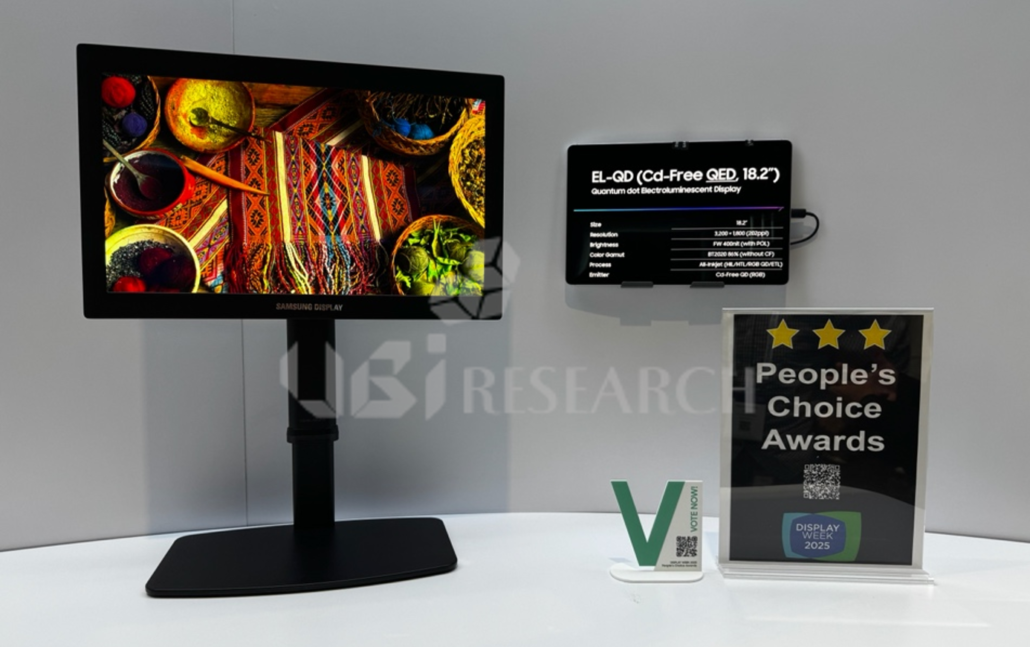
‘From Pixel to Perfection’.
With the introduction of new EL materials with improved blue organic materials, the 65″ UHD TV in 2025 achieves 4,000 nits of brightness, a 33% improvement over the previous model and the world’s highest brightness. The company also introduced the world’s first 27″ OLED gaming monitor with 500Hz drive technology. 6.8″ Bezel-less smartphone display with up to 0.6mm thin bezel creates an unrealistic illusion. 6.8″ OLED on top of a 14.6″ OLED panel The panels were displayed in such a way that they appeared to be a single panel, as their boundaries were not visible. LEAD technology, introduced for the first time in the world, is an OLED panel technology that has the same reflectivity and bright room contrast as before, even when the polarizer on the OLED surface is removed. LEAD technology is originally characterized by low power consumption, thinness and lightness.
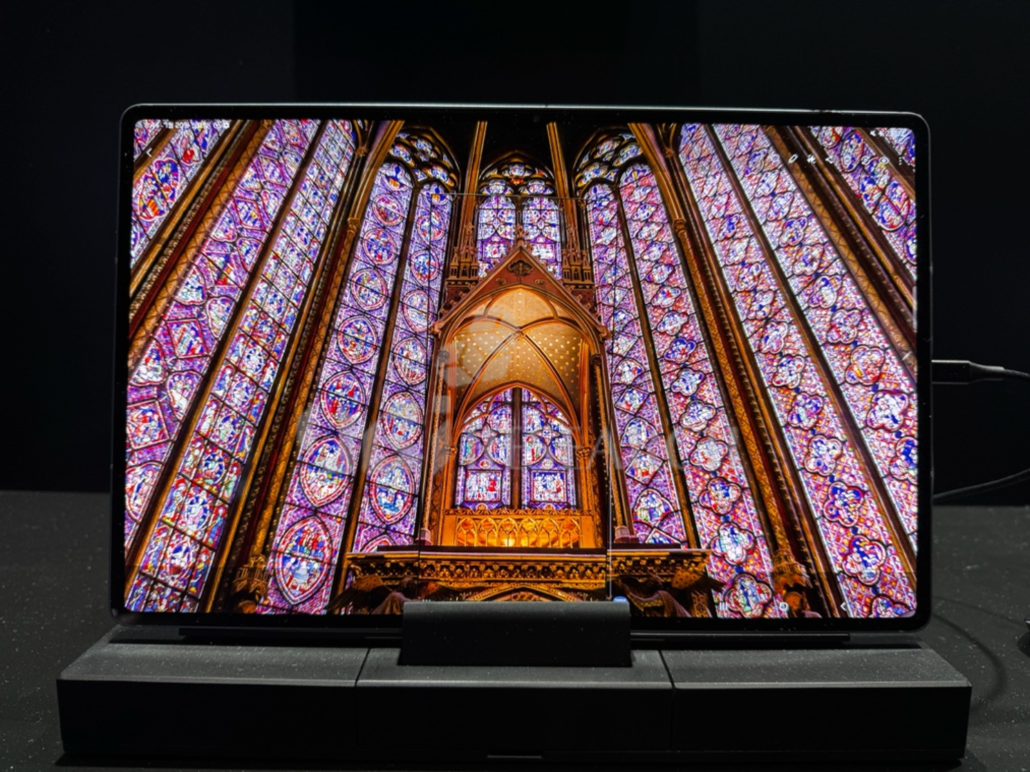
‘Designing Tomorrow’
Future next-generation displays were also unveiled through Samsung Display, introducing unique form factors such as rollable and foldable displays. Stretchable displays with increased displacement from last year were also exhibited. RGB OLEDoS with up to 5,000ppi were shown as a solution for ‘new realities’.
Mr. Lee Chang-hee, Director (Vice President) of the Display Research Institute, expressed his pride in being able to showcase Samsung Display’s unparalleled technological capabilities and emphasized the company’s commitment to further pioneering the development of new technologies.
Joohan Kim, UBI Research Analyst(joohanus@ubiresearch.com)
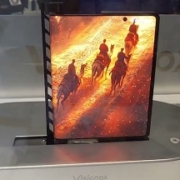
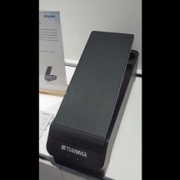
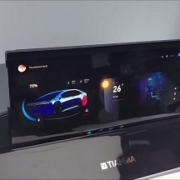
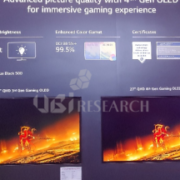
LG Display divided the SID 2025 exhibition hall into three zones to introduce the evolution of large OLED technology, vehicle display solutions targeting future mobility, and next-generation display technology for a sustainable future.
In the large OLED zone, the excellence of the 4th generation OLED panel and TV and gaming panels that applied it were showcased under the theme of ‘Another evolution for mainstream adoption.’ It achieved a maximum brightness of 4,000 nits by applying the ‘Primary RGB Tandem’ structure, a proprietary technology that independently stacks RGB devices to emit light. The ‘27-inch gaming OLED’ was exhibited to allow visitors to experience LG Display’s evolved gaming OLED, such as improved brightness and color reproducibility, by comparing products that applied the existing 3rd generation OLED with new products that applied the 4th generation OLED.
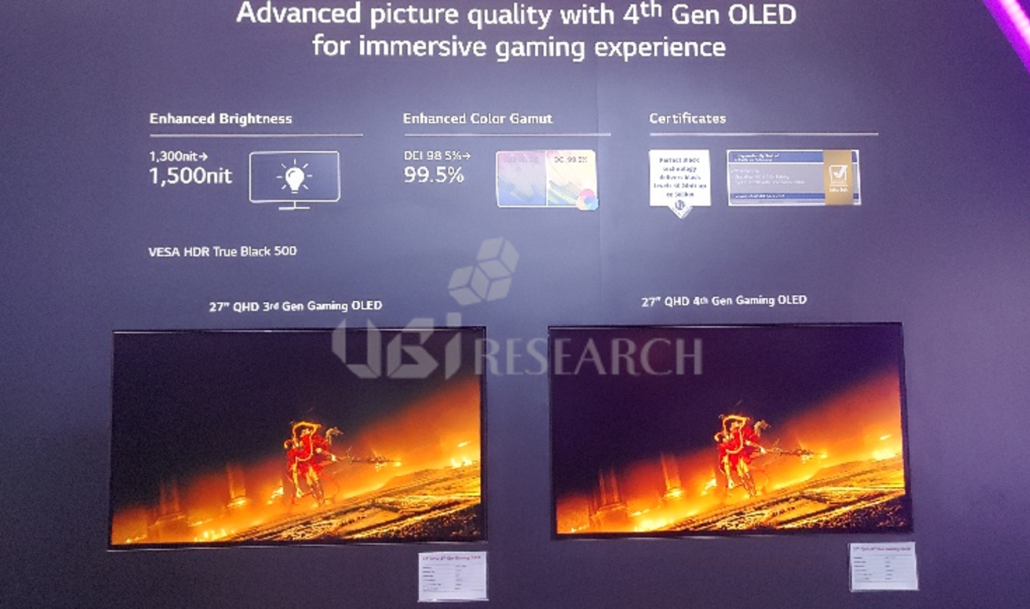
27-inch Gaming OLED: 3rd Gen vs 4th Gen OLED
The ‘45-inch 5K2K gaming OLED’ that provides the best gaming experience with the world’s highest resolution (5120×2160) was also unveiled. Approximately 11 million pixels are densely arranged on the 45-inch large screen to realize excellent picture quality, and it features a 21:9 ratio similar to a movie theater screen to provide a next-level sense of immersion. LG Display’s proprietary technology ‘DFR (Dynamic Frequency & Resolution)’ that can optimize various contents from gaming to watching movies with a single monitor also garnered attention. Depending on the content, you can freely choose between high refresh rate mode and high resolution mode.

45-inch DFR gaming monitor
The ‘stretchable display for vehicles’ offers the possibility of innovation in future mobility design by applying a stretchable display whose screen can be freely stretched to the vehicle’s center fascia area where existing physical buttons were located.
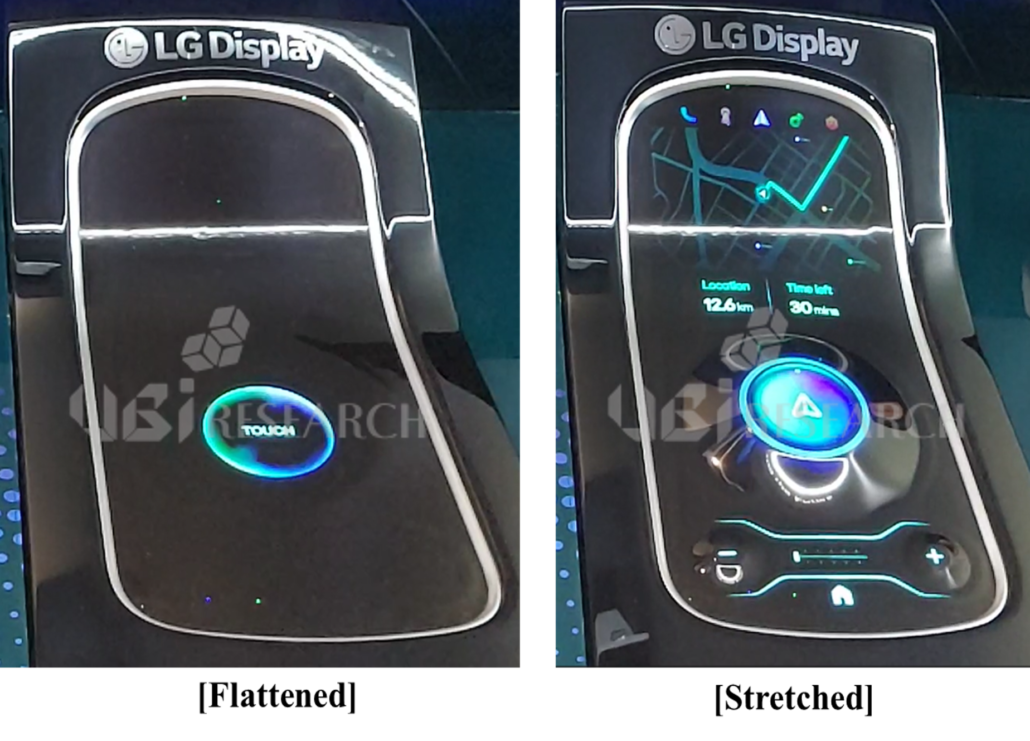
A concept car that applied a vehicle display optimized for SDV was introduced. The front seat dashboard of the concept car was equipped with an ultra-large 57-inch pillar-to-pillar that LG Display commercialized for the first time in the industry, and an ‘18-inch sliderable OLED’ was installed for rear seat entertainment. It secured reliability and durability that can operate normally even in extreme environments from -40 degrees Celsius to 85 degrees Celsius, making it suitable for use in vehicles.
In addition, under the theme of ‘Display for a Sustainable Future,’ a next-generation display that applied low-power technology and eco-friendly components was unveiled. The ‘16-inch Neo:LED panel for laptops’ implemented the best color reproducibility suitable for professionals from photography to video production, while developing and applying new LED technology to reduce power consumption. This significantly improved the battery efficiency of IT devices. In addition, a ‘14-inch laptop panel’ was unveiled that made 41% of the product weight out of eco-friendly materials to preserve the future environment. LG Display plans to increase the use of eco-friendly materials in this product to 50% by 2030. In addition, it introduced tiling technology using micro -LED through a demonstration of operating two 22-inch micro-LED panels as independent screens and seamlessly connecting the two panels to operate them as a single screen.

Chang Wook HAN, VP/Analyst, UBI Research(cwhan@ubiresearch.com)

In March 2024, China’s BOE began construction of B16, an 8.6-generation (2290×2620 mm) OLED production line for IT, in Chengdu, Sichuan Province, with a total investment of RMB 63 billion (approximately KRW 12.4 trillion).
In April 2024, BOE ordered a horizontal evaporator from Sunik Systems, and in May 2025, the B16 line will receive key equipment, including Abaco’s evaporator logistics system and Sunik Systems’ horizontal evaporator.
Unlike Samsung Display’s glass substrate-based hybrid OLED process at its 8.6 generation line, BOE has invested approximately three times the amount of Samsung Display’s investment of approximately KRW 4.1 trillion to introduce a process design that can support both flexible and glass substrates. As a result, it was expected that the B16 line would be able to produce flexible OLED panels for smartphones as well as panels for IT.
However, BOE reviewed the economics of smartphone production on the B16 line and concluded that the 8.6th generation line is less efficient than the existing 6th generation line because it is difficult to secure yields in the high-resolution FMM (Fine Metal Mask) process of 450ppi or higher, and the cost of FMM has also skyrocketed.
The first mass-produced product of the B16 line is expected to be a panel for a laptop for a brand in China, and development of a 14.8-inch MacBook panel for Apple is also underway. Meanwhile, the 11-inch panel for the iPad is being developed on the B12 (6G) line.
BOE is looking for alternative applications, such as automotive displays, as the B16 line is not efficient enough to produce OLED panels for smartphones.
Chang Ho NOH, UBI Research Analyst(chnoh@ubiresearch.com)

The development of LEDoS for AR glasses by Samsung Electronics’ semiconductor (DS) division has been the focus of much attention. Last year, the DS division of Samsung Electronics established a department dedicated to micro-LEDs within the CSS (Compound Semiconductor Solutions) business team, but there have been ongoing discussions with Samsung Display regarding the selection of a business manager. In April last year, the company discussed the idea of transferring the department in charge of the project to Samsung Display. This year, the development of LEDoS will be in full swing, and the roles of the Mobile Experience (MX) Division, the DS Department, and Samsung Display are expected to become clearer.
According to industry experts, it would be efficient for Samsung Display to promote commercialization once the LEDoS base technology reaches the completion stage first, which is estimated to be in the middle of next year. For the time being, there will be no major changes, and the CMOS Backplane technology and micro-LED device technology will be developed by a department dedicated to micro-LEDs in the CSS business team.
Vice President Kwon Sang-deuk, who heads the division dedicated to micro-LEDs, is known as a circuit expert with a system LSI background. While Taiwan and China are the fastest-growing countries in the field of AR glasses, Samsung may be the fastest-growing.
Joohan Kim, UBI Research Analyst(joohanus@ubiresearch.com)
Micro-LED Display Technologies for XR Applications Report Sample
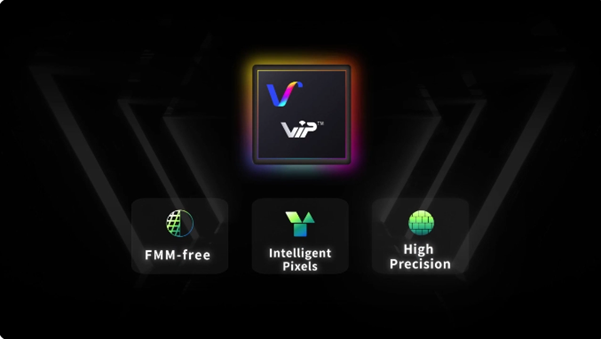
Visionox’s ViP(Visionox intelligent Pixelization)
According to UBI Research’s China Trend Report, Chinese display company Visionox has finalized the technical direction for its V5 OLED production line. The company will invest in two separate 7.5K capacities using its proprietary ViP (Visionox intelligent Pixelization) deposition technology and the conventional FMM (Fine Metal Mask) method. The investment in the ViP-based 7.5K capacity will be carried out first, followed by the FMM investment approximately six months later.
ViP is a high-precision deposition technology based on photolithography, enabling high-resolution OLED production without the need for FMM. Visionox has been intensively developing this technology as a core strategy to enhance its future manufacturing competitiveness. However, challenges related to yield have made mass production using ViP alone difficult. As a result, the company has decided to adopt a dual-track strategy for the V5 line, incorporating both ViP and FMM processes.
To support this plan, Visionox will host a supplier conference in Hefei, China, on May 22. Local government officials are also expected to attend, and the event is anticipated to help resolve outstanding funding issues for the V5 investment.
Visionox’s recent move is drawing attention in the context of the global OLED industry’s ongoing investments in 8.6-generation OLED lines. Samsung Display is currently building an 8.6-generation OLED line for IT applications (30K capacity) in Asan, South Korea, aiming to begin mass production in the second half of next year to supply panels for Apple’s iPads and MacBooks. BOE is also investing in its Chengdu-based 8.6-generation OLED line in China, targeting the production of OLED panels for smartphones as well as IT OLED panels for the domestic market.
Junho Kim, an analyst at UBI Research, commented, “Although there is still a need for significant improvements in yield and technology, Visionox appears to be pursuing enhanced production efficiency and differentiated technological competitiveness through its ViP technology.”
UBI Research’s China Trend Report provides the latest information on Chinese display companies, including shipment data from Chinese OLED panel makers, investment trends, and equipment disclosures.
Junho Kim, UBI Research analyst(alertriot@ubiresearch.com)
If we look at the contents of the recently published hybrid phosphorescent blue tandem patent, it is evaluated as a patent that can apply phosphorescent blue to product production at an early stage. This is because it uses a luminescent material that has been verified and can be mass-produced by a material company, and the current OLED deposition system optimized for mixed host can be used as is.
The main contents of the patent are that
– The phosphorescent emitting layer must be configured at the top, and in this case, the efficiency index (blue index) increases by 1.7 times compared to the fluorescent blue tandem. (If the phosphorescent emitting layer is located at the bottom, the efficiency index increases by only 1.4 times.)
– The thickness of the fluorescent emitting layer must be 60% or less of the phosphorescent emitting layer thickness.
– As shown in the figure below, the blue phosphorescent dopant spectrum must have a second peak intensity of 50% or less of the first peak intensity.
– The difference between the highest intensity wavelength of the phosphorescent dopant and the highest intensity wavelength of the fluorescent dopant must be 20 nm or less.
We look forward to seeing LG Display’s blue phosphorescent panel, which has completed product verification, at Display Week 2025.
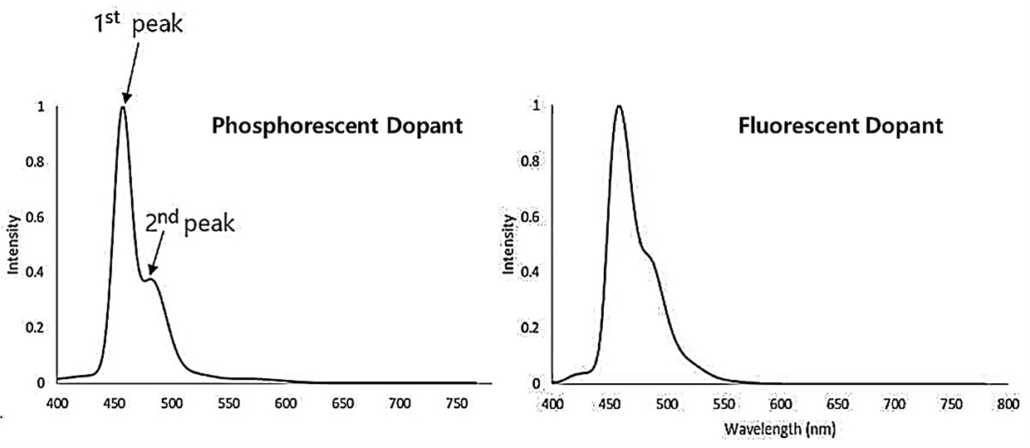
Chang Wook HAN, VP/Analyst, UBI Research(cwhan@ubiresearch.com)
Samsung Display’s ‘LEAD™’, the world’s first non-polarized OLED technology commercialized, has won the ‘Displays of the Year (DIA)’ award from the Society for Information Display (SID). ‘LEAD™’ is an OCF (On Cell Film) technology that replaces the polarizer, an opaque plastic sheet, and has been praised for improving brightness, enhancing outdoor visibility, and making the panel 20% thinner.
Samsung Display is actively marketing its proprietary technology to the market through the brand name ‘LEAD™’, which includes the four representative characteristics of this technology: ▲Low Power Consumption ▲Eco-Friendly ▲Augmented Brightness ▲Designed to Slim & Light.
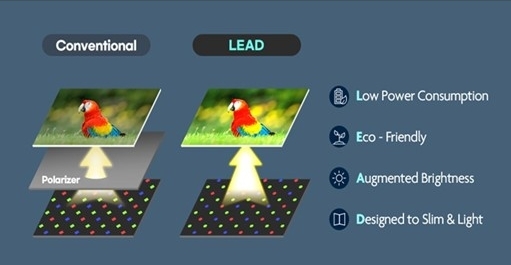
SDC LEAD™ Technology
LG Display plans to showcase the world’s best vehicle display optimized for future mobility under the theme of ‘Expanding business through new technology (Driving the future)’.
With ▲Vehicle stretchable display solution that can display all spaces in a vehicle, it proposes design innovation possibilities suitable for future mobility. The stretchable display, which implements high-resolution 100ppi (pixels per inch) and red, green, and blue (RGB) full colors at the same time as a general monitor while the screen can be stretched by up to 50%, has been applied to the center fascia area of the vehicle to maximize aesthetics and convenience.
LG Display, which recently succeeded in commercializing the world’s first ’40-inch pillar-to-pillar’, is exhibiting ▲57-inch vehicle pillar-to-pillar, the world’s largest single panel. ▲18-inch sliderable OLED unfolds from the ceiling down only when needed. It implements entertainment functions with OLED’s unique three-dimensional picture quality and provides a new mobility experience. In the trend of larger vehicle displays, we introduce ▲SPM (Switchable Privacy Mode) mode, a key technology that enhances safety by controlling viewing angles.

LG Display Automotive Stretchable Micro-LED Display
Chang Wook HAN, VP/Analyst, UBI Research(cwhan@ubiresearch.com)
2025 Automotive Display Technology and Industry Trends Analysis Report
UBI Research’s “2025 OLED Emitting Materials Report” analyzes the latest trends and key issues in the OLED industry and comprehensively analyzes the technological development direction of OLED panel companies and luminescent materials companies. It also analyzes the mass production capacities of OLED panel companies, supply chain and panel structure, and analyzes the performance of luminescent materials in detail and forecasts the market size.
In terms of technology trends, the competition for high-efficiency and long-life luminescent technologies such as hyperfluorescence and phosphorescent materials is intensifying, and improving the external quantum efficiency and lifetime of blue materials is emerging as a key challenge for market expansion. While material innovations such as deuterium-substituted and boron-based fluorescent materials are actively underway, Chinese companies are rapidly expanding their presence in the dopant and host sectors, deepening their penetration into the global supply chain.
In 2024, the use of luminescent materials was 129 tons. This was up nearly 30% from 101 tons in 2023, driven by simultaneous increases in shipments from Korean and Chinese panel makers. Samsung Display continues to account for the largest share, and its rigid OLED shipments have been increasingly driving material usage.
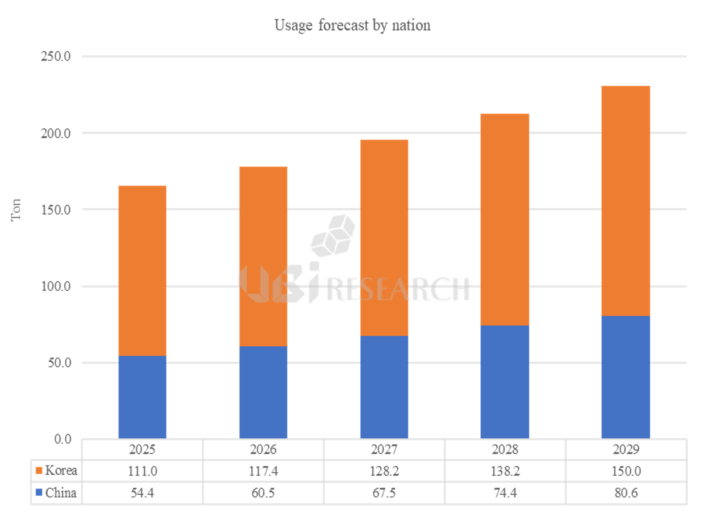
“OLED emitting material demand from Korean panel makers is expected to reach 111 tons in 2025 and 150 tons in 2029, while material demand from Chinese panel makers is expected to grow at a CAGR of 10.3% from 54.4 tons in 2025 to reach 80.6 tons in 2029,” said Changho Noh, a research director at UBI Research.
Chang Ho NOH, UBI Research Analyst(chnoh@ubiresearch.com)
LetinAR’s PinTilt technology was introduced at the three-day OLED & XR KOREA 2025, held in April 16. The development of AR glass optics, on which global interest is concentrated, is still in its current state of development; AR technology begins with optics that superimpose a virtual image on the real environment. Manufacturers such as Google, Upson, Meta, Microsoft, and Sony are competing fiercely with Birdbath and Exit Pupil Expander (EPE) Waveguide optics, maximizing their advantages but failing to address their disadvantages. BirdBath has failed to reduce size and weight, EPE has failed to improve image quality and power consumption, and LetinAR has made it clear that it can chase the double rabbit with its PinTilt technology.
The PinTilt technology is said to be capable of producing a high quality, distortion-free screen with a wide 48-degree FOV on AR glasses weighing the weight of a typical pair of glasses. The company is also working on the production of the glasses by using the conventional injection molding method. The company also says that it is equipped with a conventional method of manufacturing and cost performance, which could be a game changer in the AR glasses industry.
Along with technological solutions such as variable focus and improved drive engines, this is probably why industry experts predict that the day is not far off when AR glasses will be used in real life.
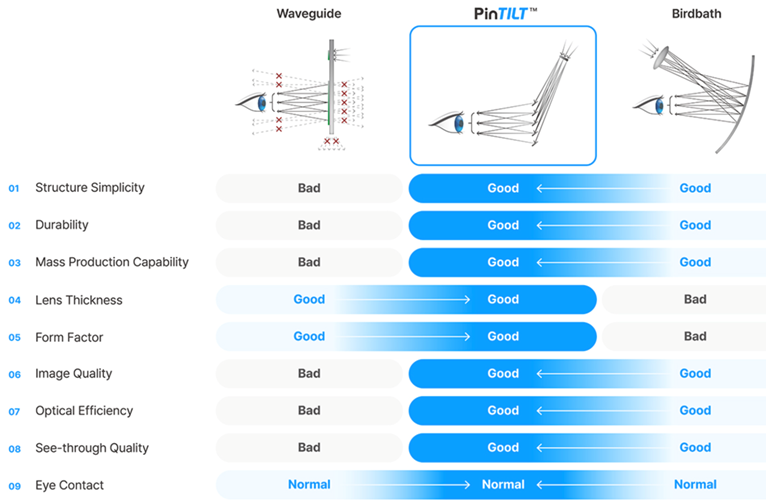
(Source: LetinAR)
Joohan Kim, UBI Research Analyst(joohanus@ubiresearch.com)
Micro-LED Display Technologies for XR Applications Report Sample
Over the past few years, we have analyzed trends in micro-LED technology and products. Along with the advancement of mini-LED backlight technology, micro-LED has emerged as the next-generation display technology, and interest is growing in when micro-LED will enter the mainstream market. Major display companies and research institutions in countries such as China, Taiwan, South Korea, the United States, and Europe have been accelerating technology development and product commercialization through years of investment, achieving a significant transition from the laboratory stage to mass production. However, the market share of micro-LED in the overall display market remains low, and the pace of commercialization as a mainstream product is still slow.
Samsung Electronics has been leading the way in next-generation display technology with its giant micro-LED TV, ‘The Wall,’ for several years now. Now, with price competitiveness and production efficiency improvements, the company is at a point where it needs to expand into the consumer market in earnest.
Taiwan’s AUO recently showcased automotive micro-LED displays and mirror displays at CES and Touch Taiwan, focusing on targeting the B2B market. The company aims to begin mass production of its 4.5-generation micro-LED production line this year. PlayNitride is preparing to mass produce panels for smartwatches and AR glasses based on its high-brightness, high-resolution technology.
Chinese companies BOE, TCL CSOT, and Tianma are expanding their demonstrations and investments in micro-LED panels and are leading the way in preparations for mass production. BOE’s subsidiary HC SEMITEK is promoting the construction of a micro-LED Epi wafer manufacturing, chip production, and packaging base in Zhuhai City, and at the end of last year, it announced the start of production of a 6-inch substrate micro-LED mass production line. TCL CSOT is preparing to enter the TV and automotive display markets through a joint research institute established with Sanan in 2020 and a joint venture, Extremely Display, to develop and commercialize products. Tianma completed its TFT-based micro-LED production line in December last year and is ready to begin small-scale shipments in phases starting this year. In addition to leading in mass production speed, the company is also accelerating technological advancements such as improving yield rates for 6-inch wafer Micro LED, enhancing laser transfer efficiency, and refining precise tiling bonding. This has been confirmed through the company’s efforts to showcase technological improvements and strengthened productization at technology exhibitions.
At the international business conference ‘OLED & XR KOREA 2025’ hosted by UBI Research, presentations on Micro-LED technology and market trends were provided for TV/large-screen displays, AR, smartwatches, and automotive displays.
According to UBI Research’s analysis, the Micro-LED consumer market is expected to be driven by TVs and AR glasses by 2027, with smartwatches and automotive displays gaining market share by 2028. It is predicted that Micro-LED will break into the mainstream market around 2028, moving beyond premium product segments.

More detailed information and technical analysis will be provided in a report to be published by UBI Research at a later date.
Nam Deog Kim, UBI Research Analyst(ndkim@ubiresearch.com)
Micro-LED Display Technologies for XR Applications Report Sample
LG Display announced on May 1 that it had successfully verified the performance of a blue phosphorescent OLED panel for mass production for the first time in the world. Following the development of blue phosphorescence in collaboration with UDC last year, this achievement was made in just 8 months, and it is evaluated as one step closer to realizing the ‘dream OLED’.
LG Display solved this problem with a hybrid two-stack tandem structure that stacks blue fluorescent material on the lower layer and blue phosphorescence on the upper layer. By adding the stability of the fluorescent method and the low power of the phosphorescent method, it maintained the stability of the existing OLED panel while reducing power consumption by about 15%.
In particular, LG Display is the first company to have successfully completed the productization stage, which requires performance evaluation, optical characteristics, and fairness on an actual mass production line, and has already completed product verification with UDC.
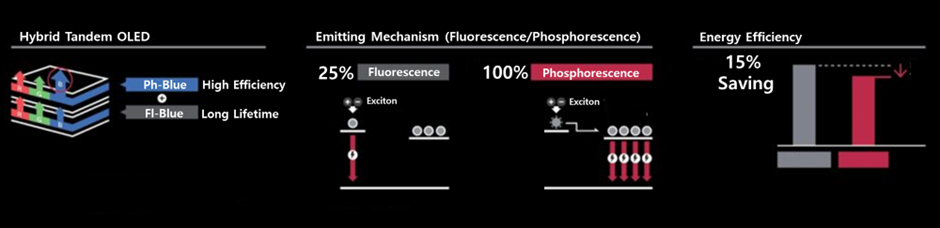
(Source: LG Display)
LG Display has exclusively applied for a hybrid phosphorescent blue tandem technology patent in both Korea and the United States. According to LG Display’s published patent, the hybrid phosphorescent blue tandem is shown to achieve efficiency that is about 1.7 times higher than the existing fluorescent blue tandem. In order to optimize efficiency, color coordinates, and lifespan, the spectral shape of the blue phosphorescent dopant, the thickness ratio of the fluorescent layer and the phosphorescent layer, and the location of the emitting layer are important, and the patent rights the technology content centered on these factors. It is evaluated as a patent that optimizes the commercialization of the hybrid phosphorescent blue tandem by utilizing high-efficiency phosphorescence and long-life fluorescence.
LG Display’s OLED panel with hybrid two-stack tandem applied can be seen at the world’s largest display event, ‘SID (Society for Information Display) 2025’, held in San Jose, California, USA from the 11th of this month (local time). The products on display this time are small and medium-sized panels that can be applied to IT devices such as smartphones and tablets. As the number of products that require both high image quality and high efficiency, such as AI PCs and AR/VR devices, is increasing, the application of blue phosphorescence technology is expected to expand rapidly.
Yoon Soo-young, CTO (Executive Vice President) of LG Display, said, “The success of the verification of blue phosphorescence productization, which is called the last puzzle for the dream OLED, will be an innovative milestone toward next-generation OLED,” and “We expect to be able to enjoy the effect of preempting the future market with blue phosphorescence technology.”
Chang Wook HAN, VP/Analyst, UBI Research(cwhan@ubiresearch.com)
This article introduces the contents of the “2025 OLED Emitting Materials Report” published by UBI Research in May 2025.
The “2025 OLED Emitting Materials Report” analyzes the latest trends and major issues in the OLED industry and comprehensively analyzes the technology development direction of OLED panel companies and emitting materials companies. It also analyzes the mass production capacities of OLED panel companies, supply chain and panel structure, and analyzes the performance of emitting materials in detail and forecasts the market size.
In terms of technological trends, competition for high-efficiency, long-life light-emitting technologies such as hyperfluorescence, TADF, and phosphorescent materials is intensifying, and improving the external quantum efficiency and lifetime of blue materials is emerging as a key issue for market expansion. With material innovations such as deuterium-substituted and boron-based fluorescent materials on the rise, Chinese players are rapidly expanding their presence in the dopant and host space, penetrating deeper into the global supply chain.
In 2024, the use of emitting materials was estimated at 129 tons. This was up nearly 30% from 101 tons in 2023 due to simultaneous increases in shipments from Korean and Chinese panel makers. By company, Samsung Display continues to account for the largest share, and its rigid OLED shipments have been increasingly driving material usage.

OLED emitting material demand from Korean panel makers is expected to reach 111 tons in 2025 and 150 tons in 2029, while material demand from Chinese panel makers is expected to grow at a CAGR of 10.3% from 54.4 tons in 2025 to reach 80.6 tons in 2029.
This report comprehensively analyzes the latest trends in the emitting materials industry, market size forecasts, strategies of major players, and technology development directions, providing important guidance for those in the display and materials industries to understand the market status and plan new businesses.
Chang Ho NOH, UBI Research Analyst(chnoh@ubiresearch.com)
As vehicle displays move beyond simple driver assistance devices to become a core element of the vehicle experience, the global auto industry is seeking a balance between two opposing trends. One is the ‘minimalism’ trend, which emphasizes simplicity by eliminating unnecessary elements, and the other is the ‘living room’ trend, which seeks to decorate vehicles like living rooms. These two trends are unfolding with distinct differences across regions, customer groups, and manufacturers.
Minimalism is developing in the direction of providing only necessary information intuitively and minimizing the number of physical buttons. This trend, which has spread mainly in the United States and Germany, is gaining strong support, especially among the younger generation with high tech sensibilities and consumers who value practicality.
On the other hand, the living room trend reflects the trend of transforming the interior of a vehicle beyond a means of transportation into a space where passengers can enjoy various entertainment such as movies, music, and games while driving. Large curved displays, passenger-only screens, and rear-seat entertainment screens are being installed throughout the vehicle, creating an environment where users can consume rich content while on the move. This living-room-type trend is particularly strong in the Chinese and Korean markets. Chinese consumers perceive their cars as a “second living space,” and they clearly prefer vehicles equipped with multiple large displays. In Korea, demand for living-room-type displays is also increasing, especially in electric vehicles and luxury SUVs.
The response methods are also different for each manufacturer. European companies maintain minimalism as their basic philosophy, but actively reflect living-room-type elements in their flagship models to enhance their sense of luxury. American companies are placing a relatively stronger emphasis on minimalism, but there is a movement to strengthen entertainment functions in luxury vehicles. Chinese companies have been expanding their market by emphasizing the living-room concept from the beginning, while Korean companies are flexibly adjusting their strategies by vehicle segment, applying the two trends in a balanced way.
We have summarized the ‘minimalism’ and ‘living room’ trends of vehicle displays by automakers exhibiting at the “Shanghai Auto Show 2025” is being held from April 2 to May 2.
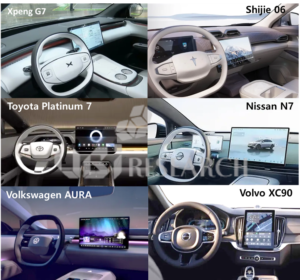
‘Minimalism’ Trends
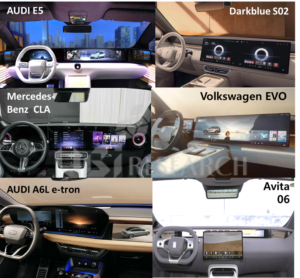
‘Living Room’ Trends
Chang Wook HAN, VP/Analyst, UBI Research(cwhan@ubiresearch.com)
2025 Automotive Display Technology and Industry Trends Analysis Report
In the ‘2025 Automotive Display Technology and Industry Trends Analysis Report’ by UBI Research, various technologies, companies, and market trends of automotive displays were introduced. In 2024, global shipments of automotive display panels reached 236 million units, an 8.3% increase from the previous year. It is expected to reach 241.8 million units in 2025. In 2024, OLED panel shipments reached approximately 2.48 million units, an increase of 126% from the previous year.
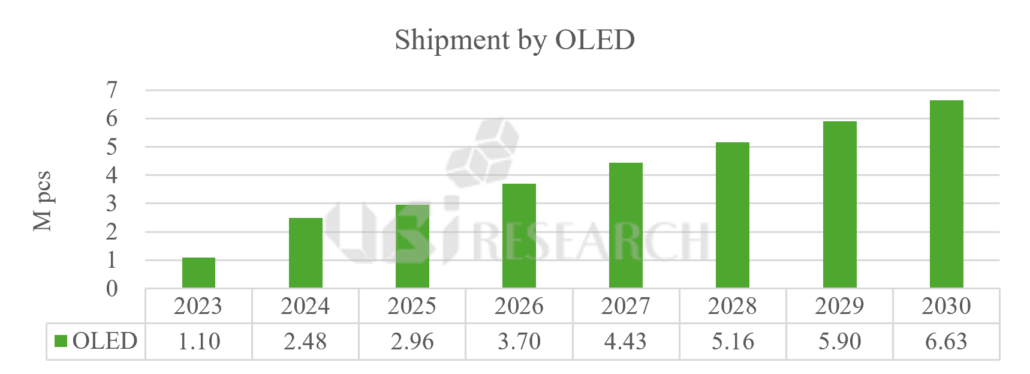
This is because OLED displays can contribute to the sophistication and efficiency of vehicle interior design, so OLEDs are actively adopted, especially in premium cars. Hyundai Motor Company’s Genesis GV80 vehicle, released last year, applied a 27-inch OLED display produced by LG Display. In addition, Nio, a Chinese EV car manufacturer, will adopt a 15.6-inch OLED and a 14.5-inch OLED display for passengers in its 2025 ET9 model.

27-inch OLED mounted on Genesis GV80 (source: Hyundai Motor Company)
As the entertainment use of vehicle displays increases, LCD displays are increasingly adopting Mini-LED with local dimming to provide a contrast ratio similar to OLED. In 2024, Mini-LED panel shipments was more than double to 3.4 million units compared to the previous year. Sony Honda Mobility’s electric vehicle, AFEELA, to be released in 2026, will use a 40-inch Pillar-to-Pillar Mini-LED display provided by LG Display.
“Software-defined vehicles (SDVs) require high resolution, low power, AR, and multi-display performance, and they require real-time data provision and optimized user experience. Accordingly, the adoption of OLED displays suitable for this will continue to expand, and vehicle OLED panel shipments will reach approximately 3 million units in 2025,” said Chang Wook Han, Executive Vice President of UBI Research.
Chang Wook HAN, VP/Analyst, UBI Research(cwhan@ubiresearch.com)
2025 Automotive Display Technology and Industry Trends Analysis Report
AUO, a Taiwanese global display specialist, captured the attention of the industry by showcasing a 127-inch Micro-LED TV with its latest technology at Touch Taiwan 2025 in April. More than just a technology demonstration, AUO’s exhibit is seen as a strategic move with the company’s full-scale commercialization in the ultra-large premium TV market in mind.
The 127-inch Micro-LED TV on display was based on AUO’s proprietary bonding technology and pixel structure design, and realized 4K resolution and high brightness of over 1,000 nits on average. It demonstrated excellent picture quality performance, including color reproduction (DCI-P3 100%), which is an advantage of Micro-LED TVs.
AUO’s 127-inch Micro-LED TV on display is aimed at commercial digital signage, as well as high-end home cinema and special purpose markets. Considering the commercialization potential of Micro-LED technology and the spread of demand, AUO will continue to expand its product lineup with various sizes and specifications.
Micro-LED is a next-generation spontaneous light display technology that miniaturizes LED devices into individual pixels, offering longer lifetimes, higher brightness, freedom from burn-in, and superior response speeds compared to OLEDs. However, the technology is still technically complex and expensive, so AUO’s prototype display can be considered a symbolic milestone. It will be interesting to see how AUO’s Micro-LED technology will make an impact in the global premium TV market and whether it will be commercialized and achieved high production yields in the future.
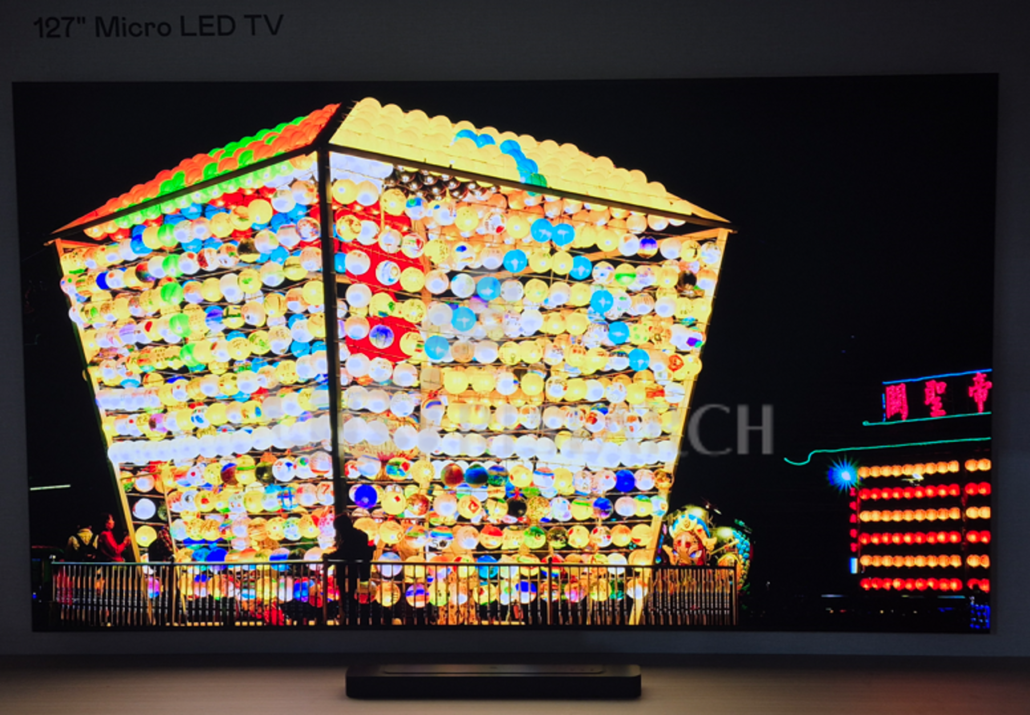
127-inch Micro-LED TV (Resolution: 3840×2160, Pixel Pitch: 0.732mm)
Here are some of the key implications of the 127” Micro-LED TV development
More details and technical analysis will be presented in a forthcoming Micro-LED report from UBI Research.
Nam Deog Kim, UBI Research Analyst(ndkim@ubiresearch.com)
Micro-LED Display Technologies for XR Applications Report Sample
Micro-LED display technology leaders AUO, Innolux, and PlayNitride showcased their latest technologies at Touch Taiwan 2025 on April 16 to demonstrate the wide range of applications and commercialization possibilities of Micro-LEDs. They showcased products for large displays and automotive solutions, as well as a variety of other applications.
AUO’s Micro LED presented exhibits in two areas, “Display” and “Mobility Solutions”, showcasing AUO’s technological innovations in the field of advanced displays. The company exhibited a 114-inch Micro LED TV developed in collaboration with Samsung Electronics, and also introduced a 127-inch TV tiled with eight 42-inch single modules, the world’s largest in-house development.
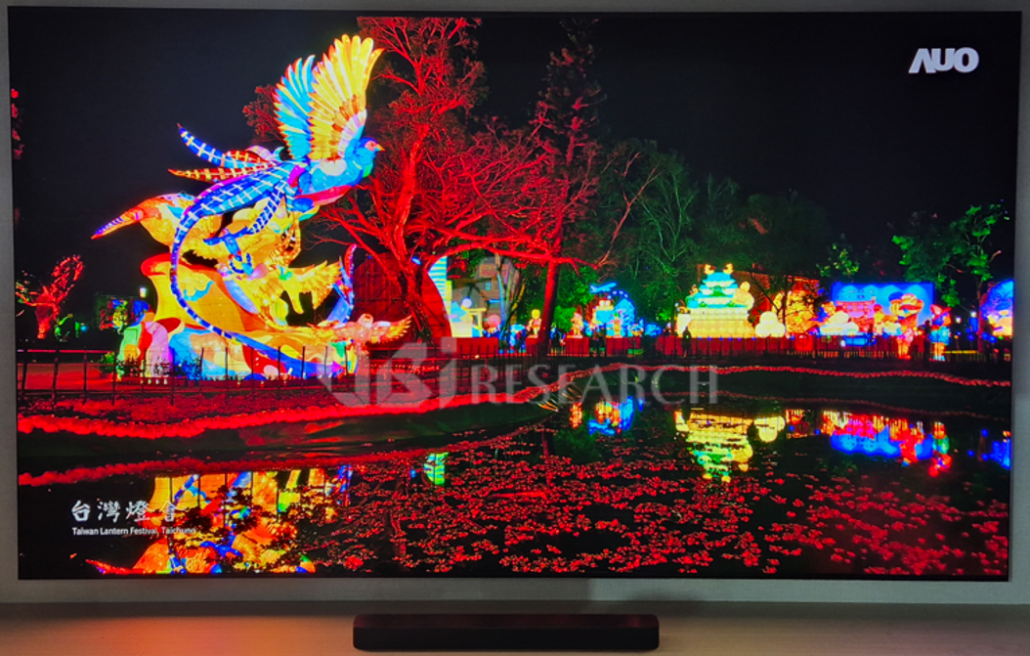
127” Micro-LED TV (Resolution: 3840×2160, 1000nit, Pixel Pitch: 0.732mm)
In addition, the 17.3-inch double-sided transparent Micro-LED display (shown below) is an application that can display different information on both sides, creating interactive services on both sides. Displays like this can also be used in many applications, such as commercial advertising, home decor, and more, where they can convey information while enhancing the style of the display.
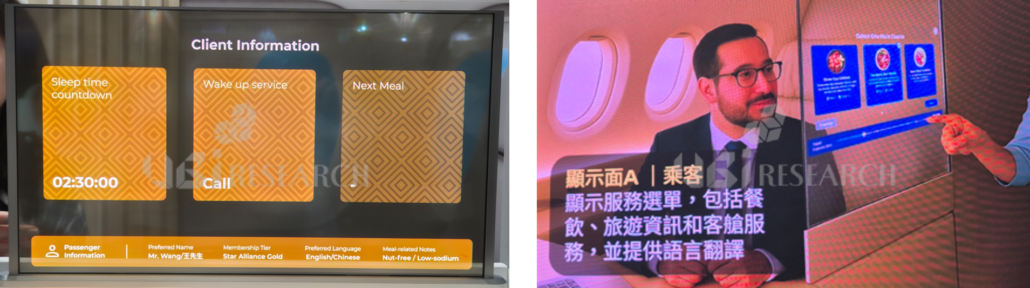
17.3” Dual-side Transparent Micro-LED Display (left), Application case(right): from AUO
When it comes to smart mobility solutions, AUO, together with its subsidiary BHTC, demonstrated the vision and possibilities of various automotive display applications, including Virtual Sky Canopy, XR Interactive Window, Morphing Center Control, Foldable Cruise Pilot, and Horizon Image Glass. (Shown below)
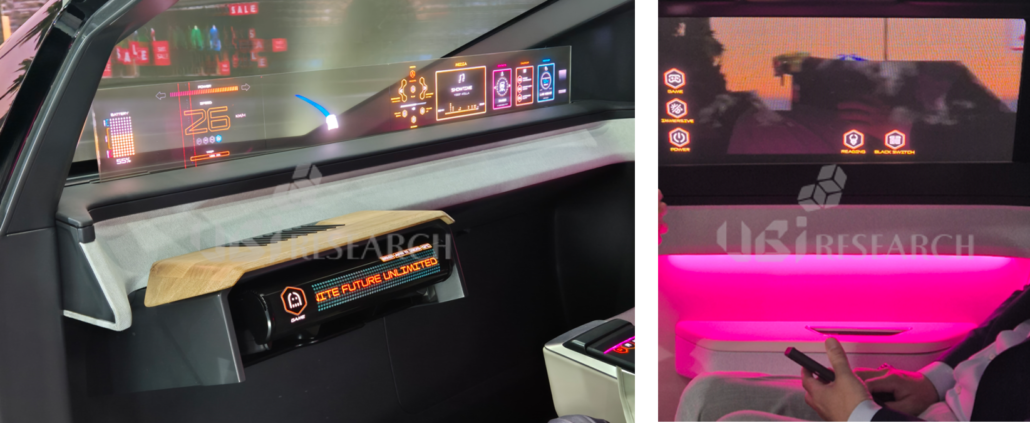
Other leading technologies include a 13-inch 3D AR heads-up Micro-LED display and a 14.6-inch flexible Micro-LED touch display with haptic capabilities.
Innolux’s Micro-LEDs were front and center at the booth with a 204-inch 8K Micro-LED display and a 130-inch foldable Mini-LED 4K TV (shown below). Other products included a 1.39-inch touch-embedded wearable Micro-LED display, Micro-LED mirror products, transparent displays, and Micro-LED floating displays. In the automotive application area, Innolux exhibited various automotive displays under the brand of their subsidiary CarUX. Among them, the Light Field Projective display with 9.6-inch Micro-LEDs was introduced.

Innolux, 204” 8K Micro-LED Display
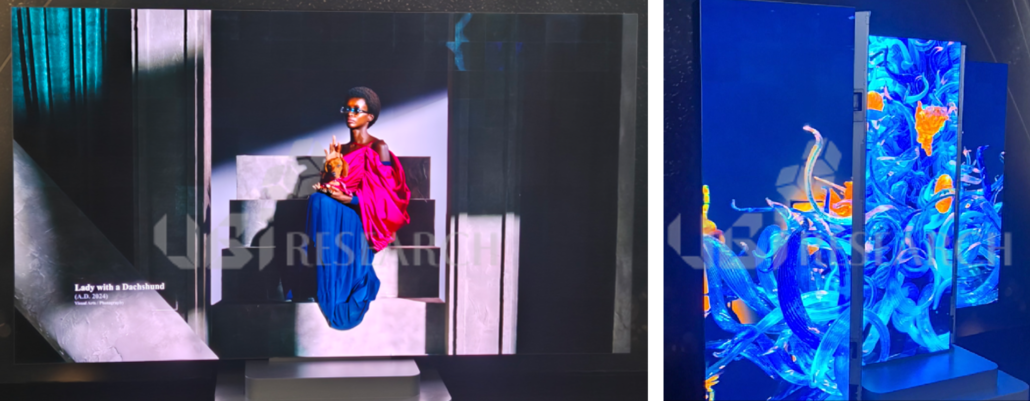
130” foldable Mini-LED 4K TV (left: unfolded view, right: folded view)
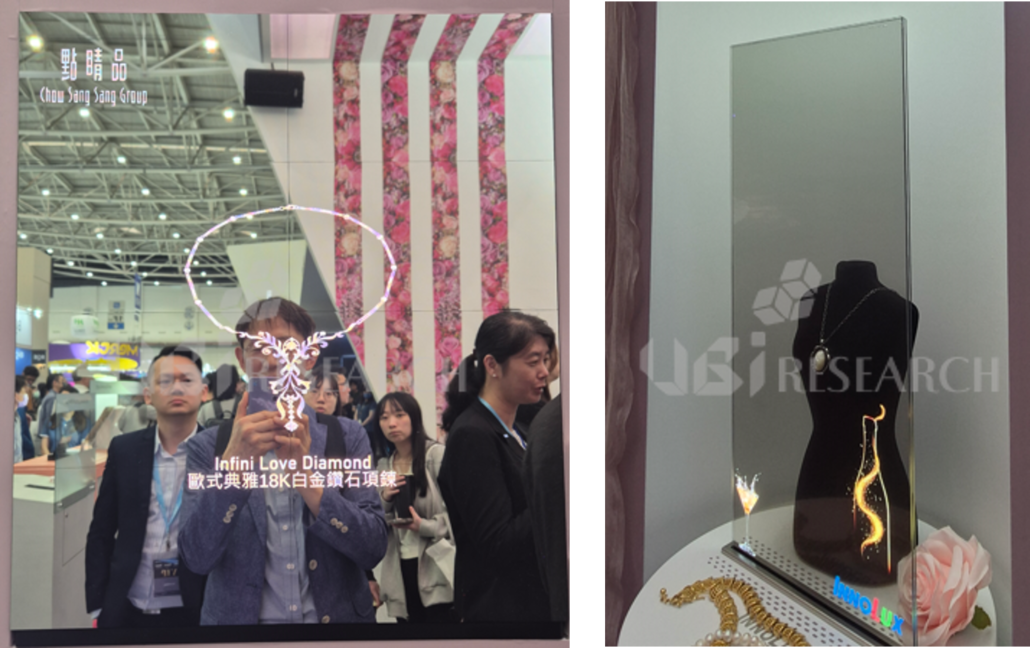
Micro-LED Mirror Product (left) and Transparent Display (right)
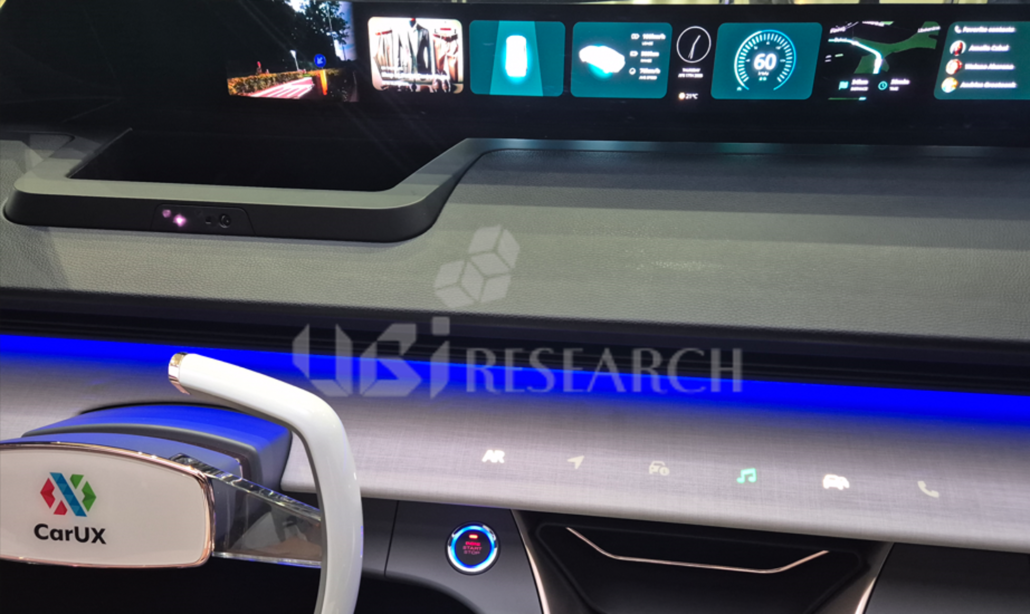
Innolux, 48” Windshield Reflective Solution
In addition to the 89-inch Micro-LED TV product developed in collaboration with Samsung, PlayNitride has developed a 1.39-inch Tantium Micro-LED display with a high brightness of 5000nits, a high brightness 8.07-inch transparent display, and a 0.18-inch high brightness (>500,000nits), high resolution (5,644 PPI, 720×720) and full color display for AR glasses based on its own technology platform. In addition to technology improvements, they also introduced applications such as a 9.38-inch floating display and a 3D display developed in collaboration with outside companies.
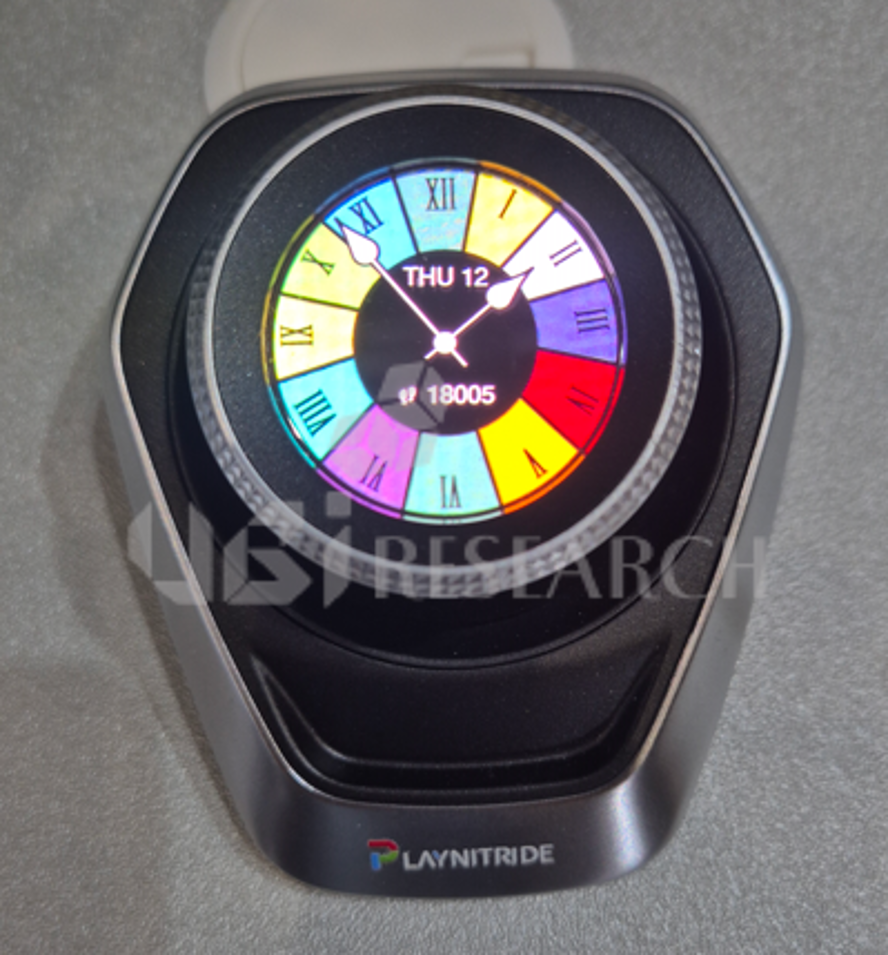
1.39” (326PPI, 5000 nits) Tantium Micro-LED Display Product
More details and technical analysis will be presented in a forthcoming Micro-LED report from UBI Research.
Nam Deog Kim, UBI Research Analyst(ndkim@ubiresearch.com)
Micro-LED Display Technologies for XR Applications Report Sample
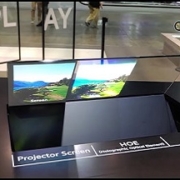

Apple iPhone 16 (Source: Apple)
It is anticipated that Apple will delay the launch of the standard model in the iPhone 18 series, which is expected to be released in 2026.
Until now, Apple has released four models for each iPhone series: the standard model, Max, Pro, and Pro Max. In the 2025 iPhone 17 series, the Max model is expected to be replaced by a new Air model, and the Air model is projected to be the most expensive among the four.
While four smartphone models are expected to be released through 2025, it is now anticipated that the standard model will not be launched in 2026 and will be postponed to 2027.
In 2026, when Apple is expected to release the iPhone 18 series, the company is also likely to introduce its first foldable phone. Since the launch of the foldable phone could disperse sales volume, this strategic move seems to be under consideration.
If the release of the iPhone 18 standard model is delayed to the first half of 2027, it is expected to launch alongside the successor to the iPhone 16e, which is also anticipated to debut around that time. In this scenario, Apple would release higher-end models—such as the Pro, Air, and foldable phone—in the second half of the year, and lower-priced models in the first half of the following year, thereby securing different sales routes throughout the year.
Should Apple adopt this biannual product release strategy, it may affect the performance of panel suppliers such as Samsung Display, LG Display, and BOE. Historically, the release of the iPhone series in Q3 boosted the earnings of Korean panel makers starting in the third quarter, peaking in Q4. However, if new iPhone models are also released in the first half going forward, the earnings gap between the first and second halves of the year may narrow. On the other hand, if BOE continues to fall short in technology and only supplies panels for the standard model, its strong performance in the second half may shift to the first half instead.
Junho Kim, UBI Research analyst(alertriot@ubiresearch.com)
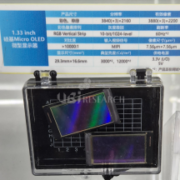

At a recent display industry exhibition, ULVAC unveiled its silicon-based Micro OLED display and mass production process, highlighting its competitive edge in the expanding XR and metaverse device market. The showcased solution is a result of collaboration with Zhejiang Hongxi Technology Co., Ltd. (Metaways), a rising Chinese player specializing in Micro OLED development and module integration.
The exhibited display is designed for ultra-compact, high-resolution applications including AR/VR smart glasses, pilot HMDs, infrared night vision systems, and wearable medical devices.
ULVAC introduced its optimized equipment for Micro OLED manufacturing, including the SELION-E300, NET-300C, and NET-300S. These tools are used for precise patterning of metals and insulators, low-temperature PECVD deposition, and advanced packaging. They offer high efficiency, high reliability, and stable throughput, making them ideal for silicon-based OLED production.
Metaways, ULVAC’s processing partner, has established itself as a leading Micro OLED module manufacturer in China. The company has developed a vertically integrated production line covering design, chip fabrication, driver circuitry, and final module assembly. With a strong R&D team including PhDs and experts from the University of Science and Technology of China, University of Electronic Science and Technology of China, and Nanjing University, Metaways is focusing on independent innovation and in-house technology development.
This collaboration represents a notable example of a Japanese equipment manufacturer working with a fast-growing Chinese display startup. As global demand for Micro OLED continues to rise, such partnerships are expected to accelerate the convergence of equipment and device technology across borders—paving the way for the next wave of high-resolution, ultra-compact display innovations.
Junho Kim, UBI Research analyst(alertriot@ubiresearch.com)

At FPD China 2025’s “CDC Metaverse – Display on Silicon” on March 26, 2025, a group of experts presented on topics such as building AI and AR glass ecosystems, silicon-based display technology roadmaps, key process, equipment and material innovations, and industry and market trend forecasts.
BOE presented “The Progress and Roadmap of BOE Si-Based Micro Display Technology,” revealing its plans to build a micro display base in Beijing and add silicon-based OLED and silicon-based LED technologies to form an ecosystem covering high-, medium-, and low-level micro displays of all required specifications.
In the high-speed LCD segment, the company is building a research and development line and manufacturing line for high-resolution (2000 ppi) LCDs for microdisplays at B20, the sixth-generation LTPS-LCD line in Beijing. Qingdao and Ordos, the regional bases for LCD, are manufacturing modules and panels for high-speed LCDs.
Beijing is also preparing R&D and production lines for OLEDoS and LEDoS for high-end applications. The company plans to design its own Si backplane after relying on design houses. In Chongqing, it is responsible for the development and production of AMOLED panels for VR, and BMOT, an OLEDoS line in Kunming, is producing 12-inch and 8-inch OLEDoS.

Chang Ho NOH, UBI Research Analyst(chnoh@ubiresearch.com)
The ICDT2025 conference was held from March 23rd to 25th in Xiamen, China. Among the exhibitors, Tianma company exhibited more Micro-LED products than other companies, showing that Tianma is the most active in product development among Chinese companies. Of course, in addition to Micro-LED, Tianma also exhibited automotive display products using LCD technology and OLED technology at the ICDT 2025 conference to showcase its technology.
The main Micro-LED products exhibited by Tianma are as follows. First of all, in terms of Micro-LED products, in addition to normal transparent displays, transparent Micro-LEDs with low-reflection technology and 27” Micro-LEDs for TVs and large screens (Tiling method) were exhibited. In addition, an 8” HUD screen for automobiles was exhibited using a Micro-LED panel with a brightness of 10000 nits.
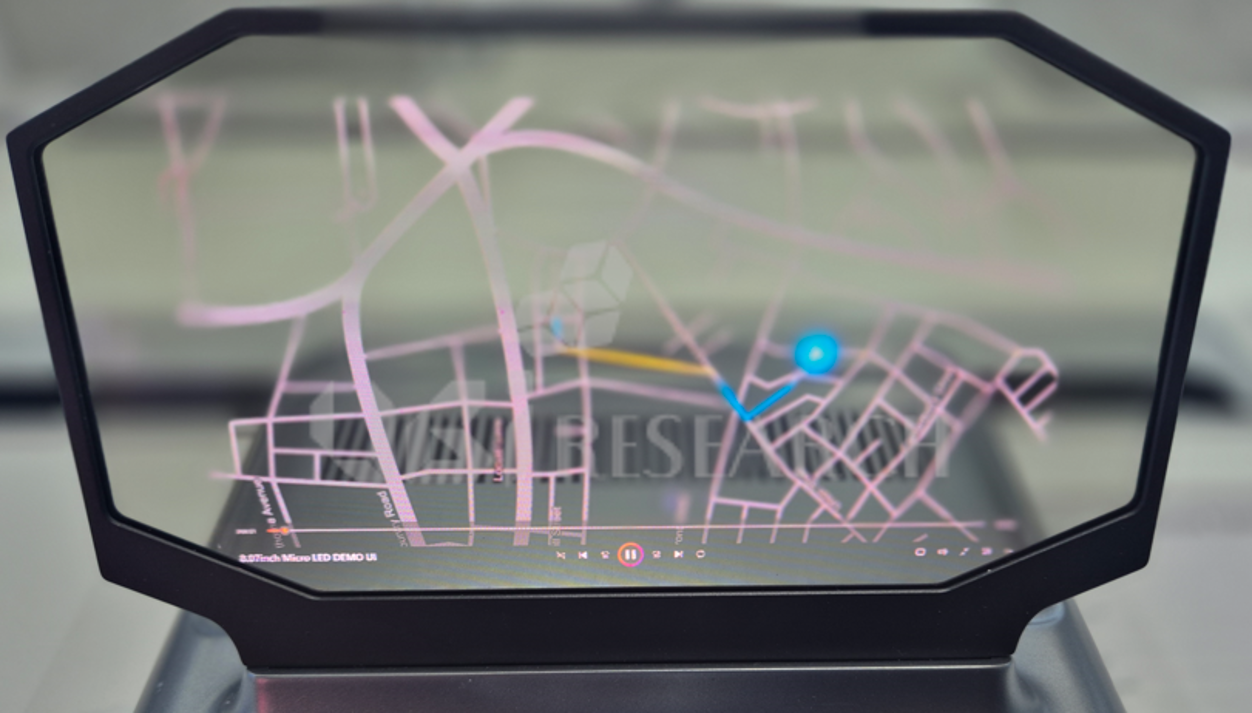
8.07” Low-reflective Transparent Micro-LED Display
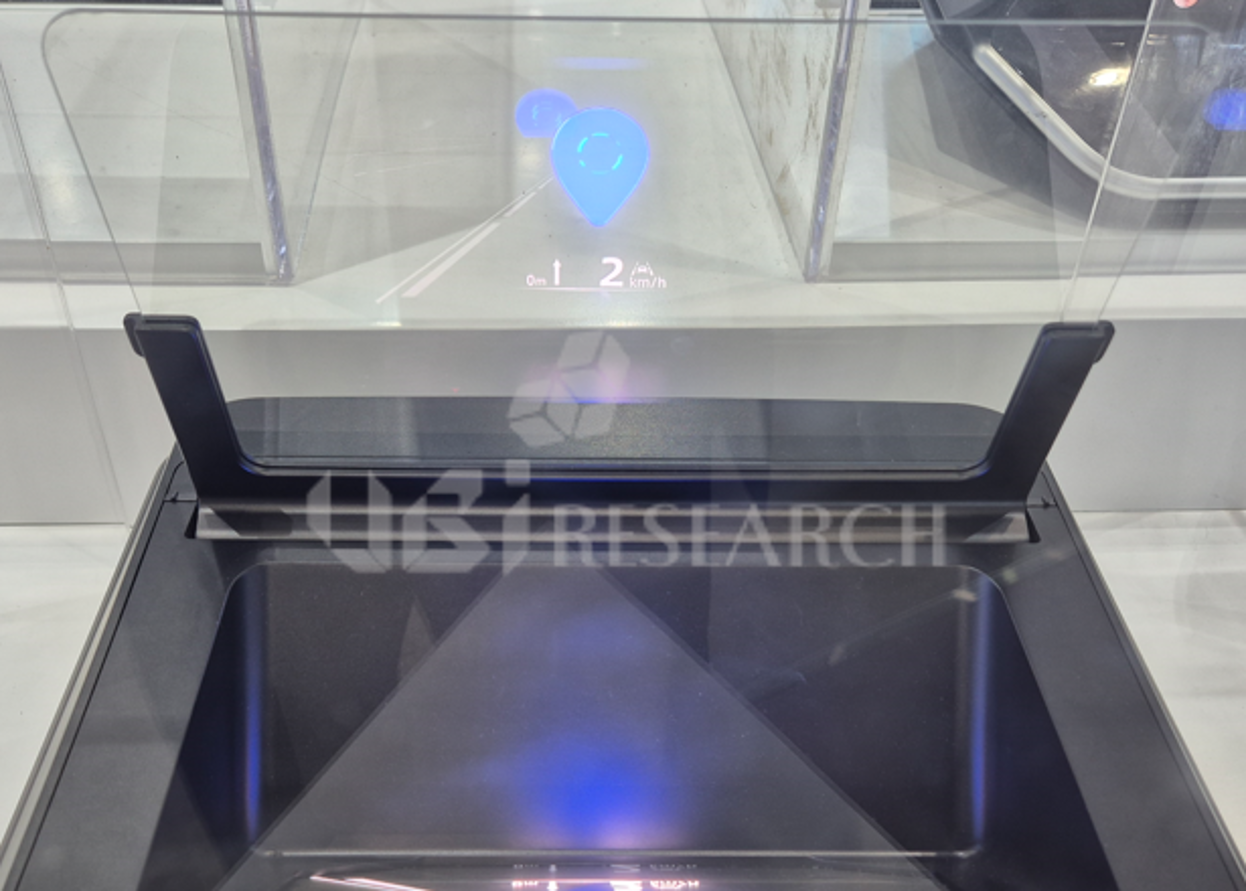
8.0” HUD Application Display (10,000 nits luminance)
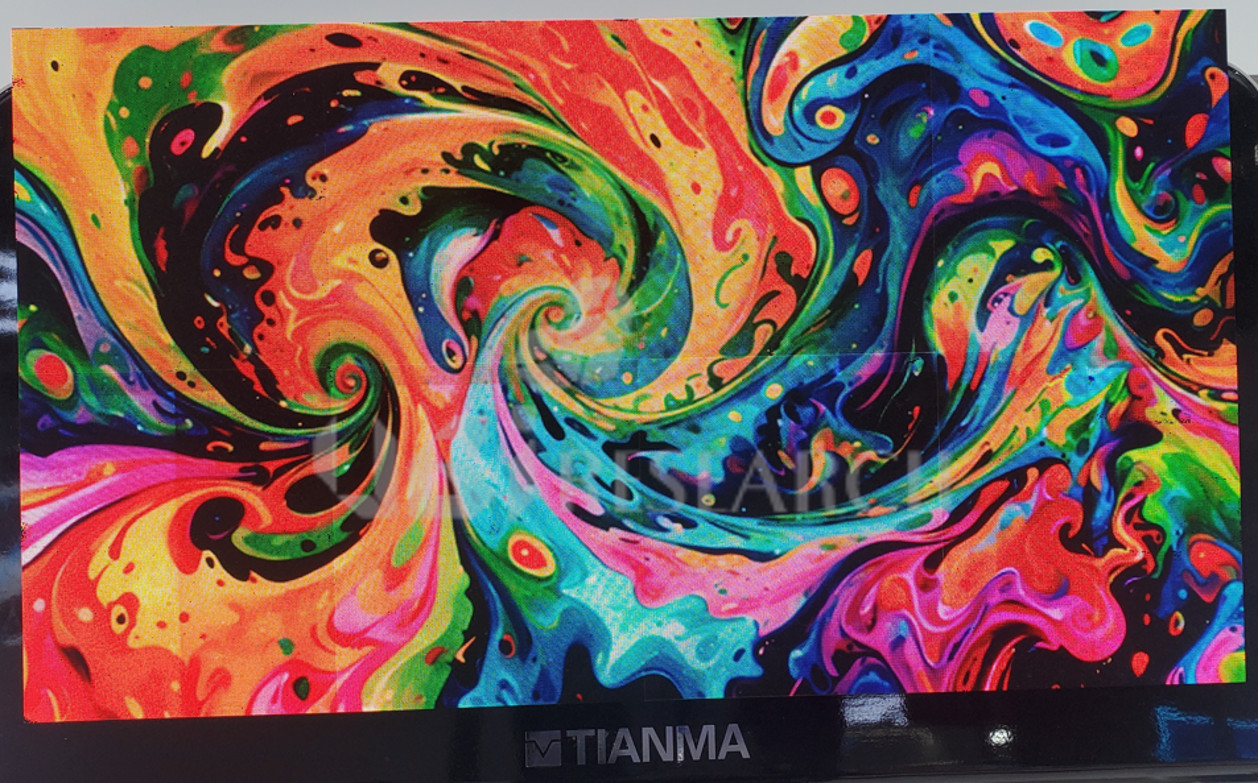
27” Splicing Micro-LED Display
The 27“ Micro-LED panel is made by stitching together a 7.5” screen with P0.4 mm, and the number of stitches can be increased to create video wall and commercial display applications. At the conference, we also presented Micro-LED efficiency enhancement technology and mass-transfer technology, showing that we are very active in technology development. These will be detailed in UBI Research’s Micro-LED technology report this year.
Through the project to build a micro-LED production line in Xiamen City, China, Tianma invested in equipment in March 2022 and is now equipped with a 3.5-generation micro-LED automation line. Based on Tienma’s LTPS technology, the company is accelerating technology development across the entire Micro-LED process and commercialization of automotive, tiling, and transparent display modules.
Nam Deog Kim, UBI Research Analyst(ndkim@ubiresearch.com)
Micro-LED Display Technologies for XR Applications Report Sample

1Q25 Quarterly OLED Emitting Material Market Tracker
According to UBI Research’s “1Q25 Quarterly OLED Material Market Tracker,” the amount of emitting material used in 2024 was 130 tons. Shipments from Korean and Chinese panel makers increased simultaneously, up nearly 30% from 2023.
By company, Samsung Display continues to hold the largest share, and its rigid OLED shipments have been rising rapidly, driving material usage higher and higher. Samsung Display accounted for 42% of the total OLED emission materials market by volume, followed by LG Display at 20% and BOE at 13.2%.
While Korean panel makers still dominate in terms of material usage, Chinese panel makers are not far behind. In China, OLED shipments for smartphones from BOE, TCL CSOT, Tianma, Visionox, and EDO grew at a CAGR of 51% from 114 million units in 2021 to 394 million units in 2024. In addition, as Chinese panel makers such as BOE and EDO have recently begun supplying OLED panels for IT, the consumption of luminescent materials by Chinese panel makers is expected to increase even more steeply.
“In 2025, Samsung Display and LG Display are expected to ship more panels for iPhones than in 2024, and the overall shipments of IT devices such as tablet PCs, notebooks, and monitors are expected to increase significantly compared to 2024, so the growth of the luminescent material market is expected to continue for a while,” said Dr. Changho Noh of Ubi Research. “Additionally, with the expansion of mass production of OLEDs for IT by Chinese panel companies, the luminescent material market is expected to exceed 200 tons by 2028.”
Chang Ho NOH, UBI Research Analyst(chnoh@ubiresearch.com)
While Micro-LED TVs are expected to enter the consumer market in 2025, RGB Mini-LED TVs with lower OLED performance are expected to enter the market and compete with OLED TVs. Chinese panel producers, which lag far behind Korea in OLED production volume, are strategically focusing on RGB Mini-LED technology development, while Samsung Electronics and SONY are also entering this field.
Hisense introduced a 116″ 4K TriChroma RGB Mini-LED TV at CES2025, featuring 97% BT.2020 color reproduction, 10,000 nits peak brightness, and a 10K-class local dimming zone. TCL also plans to launch an RGB Mini- LED TVs in 2026.
Samsung Electronics plans to launch RGB Mini-LED TVs, including Mini-LED and Micro-LED under the brand name RGB Micro-LED TV, in various sizes during 2025, and quietly unveiled a 98-inch 8K product at CES 2025.
Sony has also revealed that it is developing a general RGB LED Backlight technology, which is expected to be introduced into the Bravia XR Mini-LED TV and released as the Bravia XR RGB Mini-LED TV.
The price of the RGB Mini-LED Backlight is expected to be similar to the price of the traditional Mini-LED Backlight, and it will be interesting to see how it will fare against OLED TVs in the future.

Hisense 116UX 4K TV with TriChroma RGB mini LED backlight system (CES2025).

Samsung 98-inch 8K Neo QLED prototype with RGB micro-LED backlighting (CES2025)
Joohan Kim, UBI Research Analyst(joohanus@ubiresearch.com)
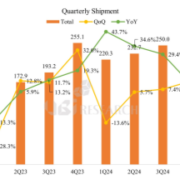

‘1Q25 Small OLED Display Market Track’
According to UBI Research’s ‘1Q25 Small OLED Display Market Track’, which includes application performance and outlook for smartphones, foldable phones, smartwatches, etc., small OLED shipments in 2024 are expected to reach 980 million units, an increase of approximately 200 million units from 773 million units in 2023. The small OLED market is expected to exceed 1 billion units in 2025.
Looking at the 2024 performance, most panel manufacturers in Korea and China saw an increase in shipments of 40 to 50 million units, and in particular, Chinese panel manufacturers TCL CSOT, Tianma, Visionox, and Everdisplay saw shipments increase by more than 50% compared to 2023. BOE, China’s largest panel manufacturer, saw its panel shipments increase by only about 8% due to temporary production suspensions caused by disruptions in iPhone supplies throughout the year.
Not only Chinese panel makers, but also Korean panel makers have seen a significant increase in shipments. As rigid OLED panels began to be applied to Samsung Electronics’ Galaxy A series, Samsung Display’s shipments are expected to surge from 320 million units in 2023 to 380 million units in 2024. LG Display’s smartphone OLED shipments also increased from 52 million units in 2023 to 68 million units in 2024 as its supply of panels for iPhones expanded.
With Chinese panel makers’ shipments steadily increasing, and Samsung Display’s rigid OLED shipments and LG Display’s iPhone panel shipments also increasing, small OLED shipments in 2025 are expected to easily exceed 1 billion units.
“OLEDs are being widely applied to lower-end models of Samsung Electronics’ Galaxy A series and low-cost models from Chinese set manufacturers, and BOE and Visionox’s new 8.6G lines are also designed to produce panels for smartphones, so small-sized OLED shipments are expected to continue to rise for the time being,” said Han Chang-wook, Vice President of UBI Research.
Chang Wook HAN, VP/Analyst, UBI Research(cwhan@ubiresearch.com)
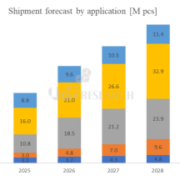
This article introduces the contents of the ” 2025 Mid-to-Large OLED Display Annual Report” published by UBI Research in March 2025.
The ” 2025 Mid-to-Large OLED Display Annual Report” covers key issues, product trends, panel development trends and production line status, market outlook, etc. of the medium and large OLED industry.
OLED for IT (laptops and tablets) is driving the market for medium and large OLEDs. Automotive OLEDs and OLEDs for monitors are also growing rapidly, mainly in the premium market.
In 2024, OLED shipments for notebooks and tablets were 8.46 million and 7.5 million units, respectively. In 2023, OLED shipments for laptops and tablets were 5.4 million and 1.85 million units, respectively, an increase of 57% for laptops and 400% for tablets. The surge in tablet OLED shipments in 2024 was driven by 6.2 million OLEDs supplied for the iPad Pro.
In 2025, OLED shipments for laptops and tablets are forecast at 10.8 million and 16 million units, respectively.
It is projected that IT OLED shipments will exceed 50 million units by 2028, owing to their high contrast ratio, rapid response time, and superior color reproduction, making them well-suited for AI-enabled content.

UBI Research’s 2025 Mid-to-Large OLED Display Annual Report
For medium and large OLEDs, various TFT substrate technologies, OLED materials, and process technologies are applied depending on the application field, such as IT OLED panels, TVs, monitors, and automotive OLED panels. This report introduces the development trends of core technologies such as tandem OLED, emitting materials, and encapsulation technologies, classifies the characteristics of technologies by application field, and analyzes the development trends of LTPO and oxide TFT technologies. It also grasps the development trends of core technologies for next-generation OLED development, such as inkjet process and photolithography patterning technology, and analyzes technological competitiveness.
This report analyzes issues such as 8.6G IT line investment trends, OLED for IT and automotive OLED panels, and provides technology development trends by panel companies and OLED market forecasts through 2029, providing useful guidelines for researchers and developers to establish development directions and grasp market conditions for new business planning.
Chang Ho NOH, UBI Research Analyst(chnoh@ubiresearch.com)
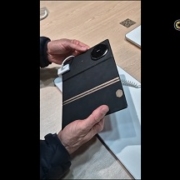
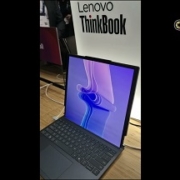
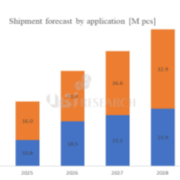

UBI Research’s 2025 Mid-to-Large OLED Display Annual Report
According to UBI Research’s latest report, “2025 Mid-to-Large OLED Display Annual Report,” the number of IT OLEDs, especially notebook and tablet launches, surged in 2024, unlike small OLEDs, which have maintained a similar number of launches over the past four years. In 2024, OLED shipments for notebooks and tablets were 8.46 million and 7.5 million units, respectively. In 2023, OLED shipments for notebooks and tablets were 5.40 million and 1.85 million units, respectively, representing an increase of 57% for notebooks and 400% for tablets. The increase in tablet OLED shipments in 2024 was largely due to 6.2 million OLED units shipped for the iPad Pro.
There were eight OLED tablet PCs released in 2024: two from Apple, two from Samsung, two from Huawei, and two from Honor. Following the release of Apple’s iPad Pro in 2024, the market for OLED tablet PCs is expected to continue expanding, with models such as the iPad mini and Air also incorporating OLED technology.
The number of OLED-equipped laptops, which saw a slight decrease from 52 models in 2022 to 44 models in 2023, nearly doubled to 80 models in 2024. Looking ahead, the MacBook Pro is anticipated to feature OLED technology in 2026, and the MacBook Air is expected to adopt OLED in 2028.
“OLED, which is well established in the premium smartphone market, is expected to rapidly increase its use in IT products, especially at the premium end of the spectrum,” said Chang Wook Han, Vice President of UBI Research. “By 2025, OLED shipments for laptops and tablets are expected to reach 10.8 million and 16 million units, respectively, and by 2028, IT OLED shipments are expected to exceed 50 million units,” said Han. “OLEDs will become the premium display in IT devices, as they have the right characteristics for AI-powered content consumption, such as high contrast ratio, fast response time, and excellent color reproduction.”
Chang Wook HAN, VP/Analyst, UBI Research(cwhan@ubiresearch.com)
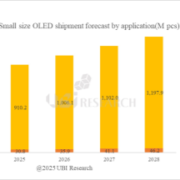

According to the ‘2025 Small OLED Display Annual Report’ recently published by UBI Research, in 2024, OLED shipments for smartphones and foldable phones totaled 8.34 billion and 24 million units, respectively. In 2023, OLED shipments for smartphones and foldable phones were 65.5 billion and 22 million units, respectively.
In 2024, the total OLED shipments for smartphones and foldable phones increased by 27% year-on-year due to the expansion of rigid OLED usage by Samsung Electronics and the increase in flexible OLED shipments by Chinese panel makers.
In 2025, OLED shipments for smartphones and foldable phones are expected to reach 910 million and 38 million units, respectively, representing a 9% increase for smartphones and a 27% increase for foldable phones compared to 2024.
In 2025, OLED shipments for smartphones and foldable phones in China are expected to reach 4.9 billion units, compared to 4.51 billion units in South Korea.
With Apple expected to launch a foldable OLED phone in 2026, the foldable phone market is expected to grow rapidly.
OLED shipments for smartphones and foldable phones are expected to exceed 1 billion units in 2026 and 1.3 billion units in 2029.

Although small OLED shipments are expected to increase, sales are expected to decline from 2025 onwards. China’s flexible OLED shipments will continue to grow, but overall revenue will decline due to lower selling prices.
As panel shipments increase, the revenue share of Chinese panel makers will slowly increase, but Korean panel makers are expected to account for more than 50% of the revenue share by 2029.
Chang Ho NOH, UBI Research Analyst(chnoh@ubiresearch.com)
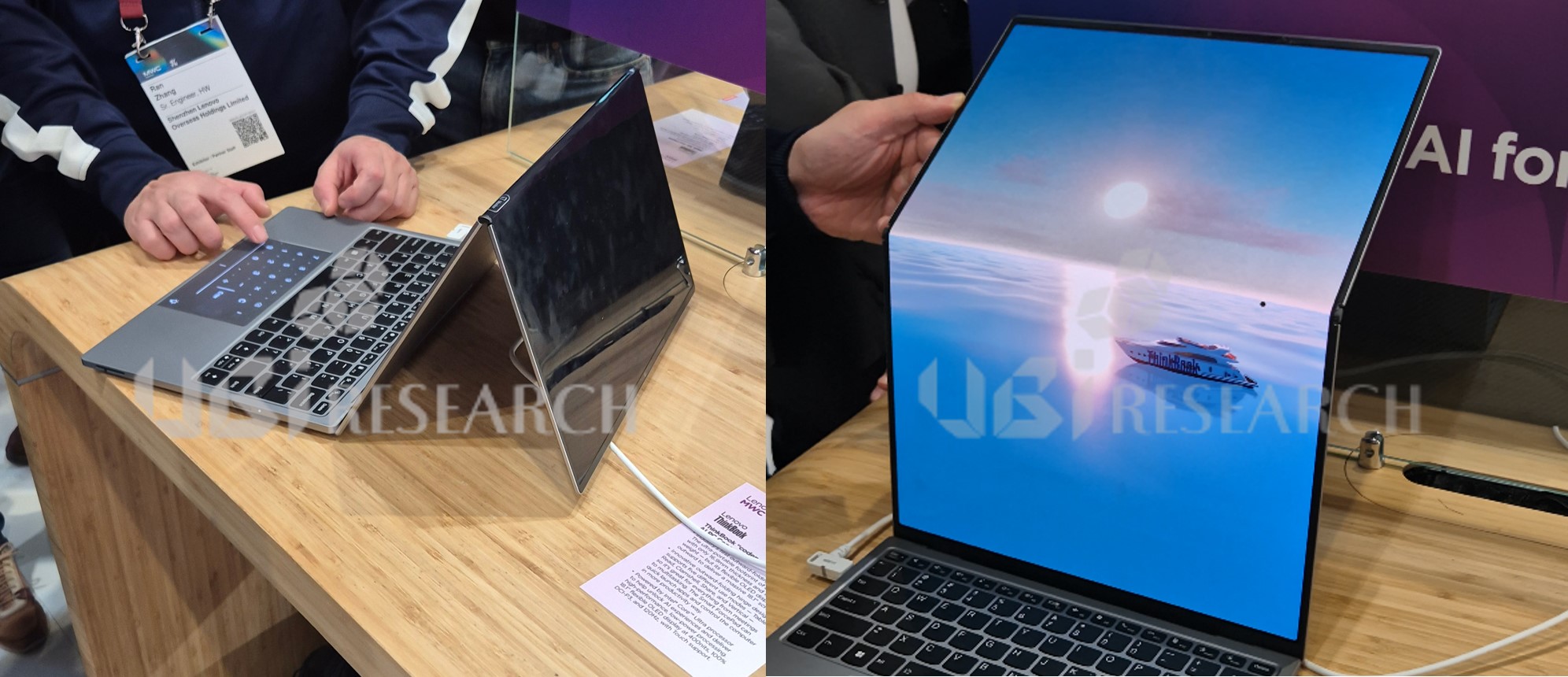
foldable notebook exhibited by Lenovo
Laptop manufacturer Lenovo plans to launch a rollable OLED notebook in 2025, and Samsung Display is expected to exclusively supply the panels.
Lenovo simultaneously exhibited an AI notebook with foldable OLED and an AI notebook with rollable OLED at MWC 2025 held in Barcelona, Spain.
The name of the foldable notebook displayed by Lenovo is ‘ThinkBook codename Flip’, and it has a screen size of 13 inches when folded and 18.1 inches when unfolded. It is very light at 1.4 kg and has a thickness of 16.9 mm.
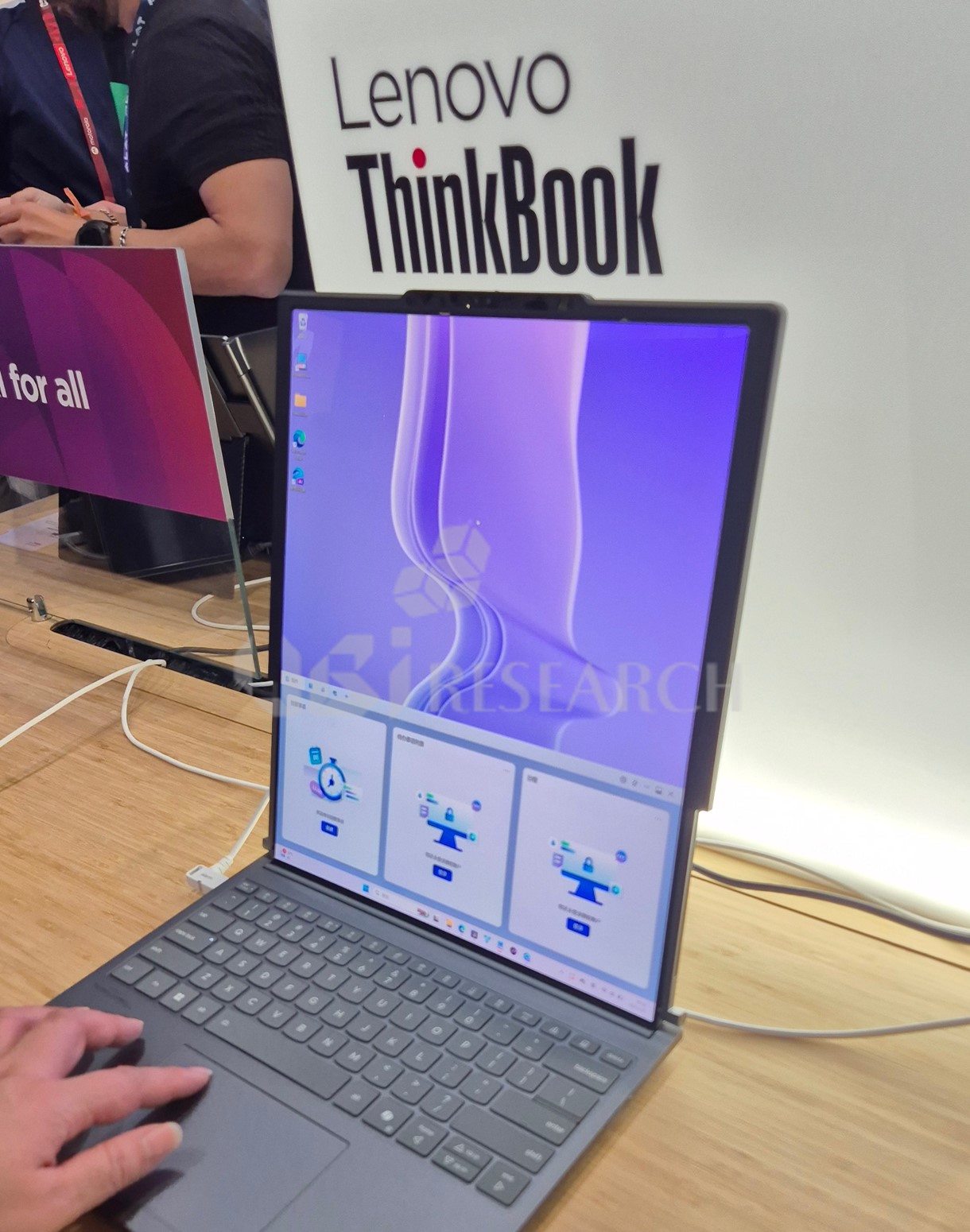
ThinkBook Plus Gen 6 Rollable AI PC
Lenovo introduced Rollable AI PC as another new product. The name of the Rollable AI PC is ‘ThinkBook Plus Gen 6 Rollable AI PC’ and it is equipped with a rollable display that increases in size from 14 inches to a maximum of 16.7 inches. Both Lenovo products are exclusively supplied by Samsung Display and are scheduled to be released in mid-2025.
Attention is being paid to whether the size of the foldable/rollable notebook market will expand with Lenovo’s entry into the rollable notebook market.
Junho Kim, UBI Research analyst(alertriot@ubiresearch.com)
The “2025 Small OLED Display Annual Report” by UBI Research, released in March 2025, forecasts significant growth in OLED shipments. In 2024, smartphone and foldable phone OLED shipments are projected to hit 8.33 billion and 25 million units, respectively, rising to 9.1 billion and 30 million units in 2025. This growth is driven by Samsung’s increased use of rigid OLEDs, more flexible OLED shipments from Chinese manufacturers, and a shift from LCD to OLED displays.
In 2025, China is expected to ship 4.9 billion units for smartphones and foldable phones, surpassing South Korea’s 4.51 billion units. Additionally, Apple’s anticipated launch of a foldable OLED phone in 2026 is expected to further accelerate market growth.

The use of new LTPO, pol-less, and low reflectivity technologies is increasing, especially in premium models, to reduce device thickness. Chinese companies are adopting tandem OLEDs for smartphones to gain market share. BOE is developing an 8.6-generation OLED production line in Chengdu B16 to produce hybrid OLEDs for IT devices and flexible OLEDs for smartphones.
The “2025 Small OLED Display Annual Report” analyzes small OLED trends, panel development, and future market forecasts. It covers technology trends, monthly utilization rates for 2024, and market forecasts by panel maker, application, and country up to 2029, providing a crucial guide for market understanding and business planning.
Chang Ho NOH, UBI Research Analyst(chnoh@ubiresearch.com)
 China Market Trend Report Inquiry